

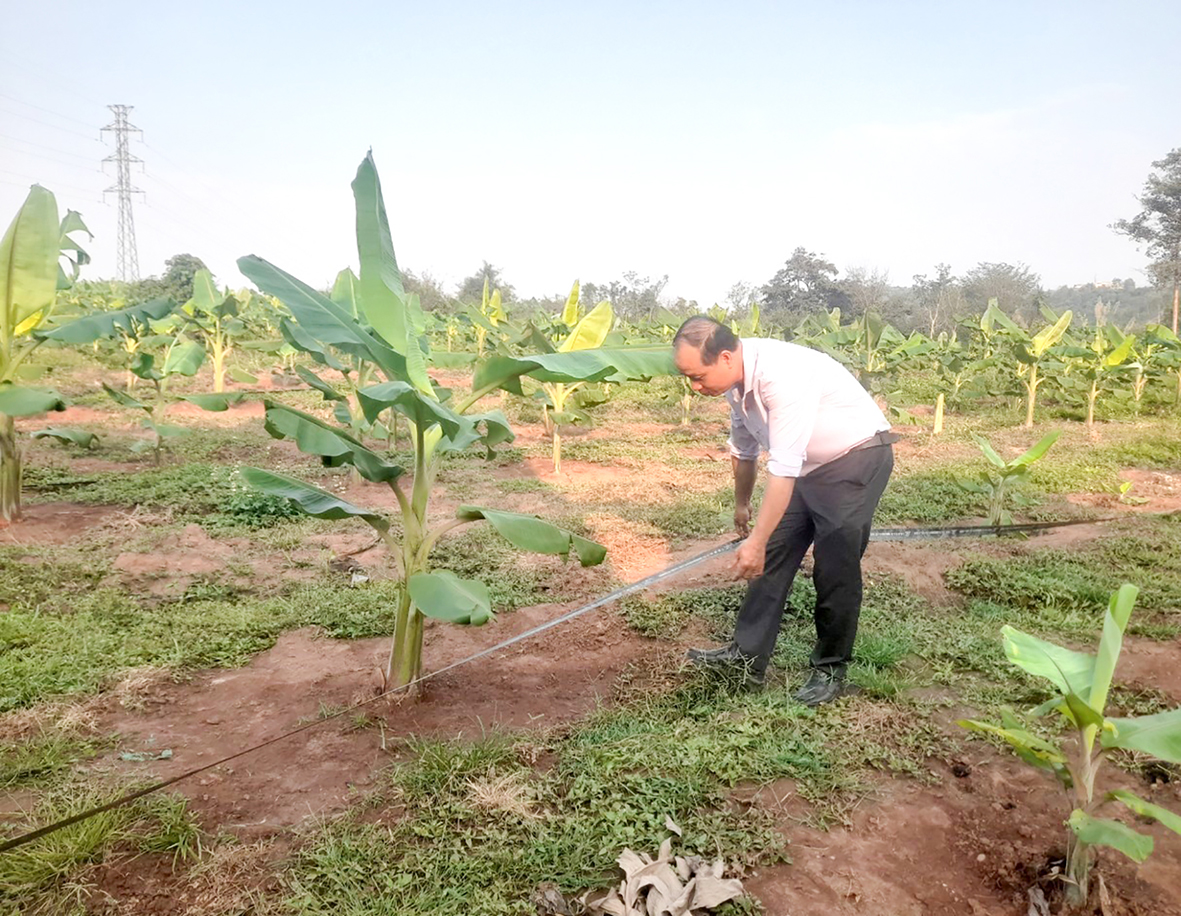
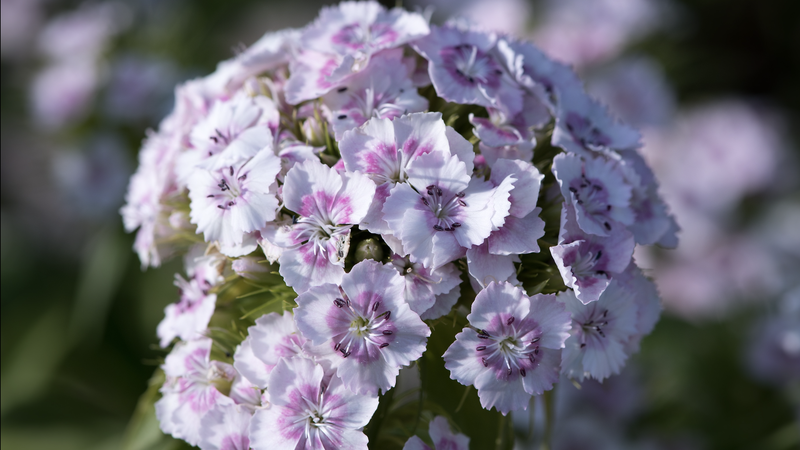
Model of banana cultivation using tissue culture in Tan Long commune - Photo: SH
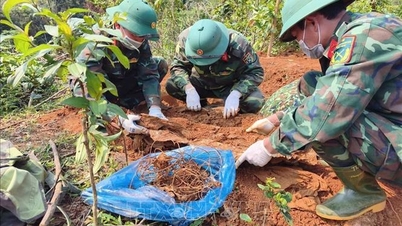
For nearly a month (from September 4th to 28th, 1975), trucks covered in oil and mud transported 415 households from the villages of Bich Khe, Tan Dinh, An Mo, Bich La Thuong, Dai Loc, Dau Kenh, Phu Luu, Ve Nghia, and Phuong Ngan (Trieu Long commune, Trieu Phong district) to the new land of Tan Long. At that time, Tan Long was just a desolate, mountainous area. A few scattered, impoverished stilt houses of the Van Kieu and Pa Ko ethnic minorities were dimly visible in the biting evening mist of the border region. The people began clearing the bushes and shrubs to build shelters. They slept at night and spent their days clearing trees and reclaiming land amidst the numerous bomb craters. Many tragic deaths occurred due to unexploded bombs and mines left over from the war.
At that time, the fear of those who moved to the new economic zone to start a new life was not hunger or the dangers of bombs and mines, but malaria. Many people were tormented by malaria and, unable to bear it, abandoned their dream of living in the new countryside to return to their old homes or go elsewhere to make a living. And nearly one-third of the population of Tan Long commune (130 households) could not continue to live in the new countryside.
And then, Tan Long continued to welcome hundreds of households from all over the country to develop their economy. Those who have stayed in Tan Long from the very beginning still remember the story of "the land does not betray the people." It's a lesson about choosing the right crops for agricultural land; if you choose the right crop, the day of reaping the rewards will not be far off. The journey to find a suitable crop for the soil of this region took decades. Many people experimented with various fruit trees but all failed, and the cycle of poverty continued. Until the people here discovered that the honey banana variety was quite suitable for the climate and soil conditions of the commune. The honey bananas grown here grow quickly, produce large, round fruits with a sweet, fragrant taste, and do not turn black even after being stored for a long time.
"Good news travels fast," and traders from many places traveled to Tan Long commune to buy bananas directly from the orchards. Soon after, Tan Long bananas became an export commodity. By 2005, the entire Tan Long commune had 410 hectares of banana plantations. The bananas supplied the market within the province and in Ha Tinh and Quang Binh provinces, contributing to increased income and improved living standards for the local people.
Besides traditional banana cultivation, local people are also researching and adopting new banana cultivation methods that yield higher economic value. Mr. Nguyen Van Quan in Tan Long commune is one of the pioneers in tissue culture banana cultivation in Huong Hoa district. In October 2023, he began building a tissue culture banana cultivation model, and his banana plantation is now yielding a harvest.
At that time, it was observed that many banana plantations in Tan Long commune, due to being planted for many years, were experiencing declining yields and production. The reason stemmed from the fact that people mainly planted bananas on hillside and hilly land, completely dependent on soil quality and climate, and hardly invested in fertilization or irrigation.
Furthermore, the consumption of fresh bananas is unstable, heavily dependent on the Chinese and Thai markets, so at times the price of bananas drops very low, only about 4,000 - 5,000 VND/kg on normal days, and 8,000 - 10,000 VND/kg during holidays and Tet (Lunar New Year), causing many banana growers to lose interest in taking care of their banana plantations.
Mr. Quân has researched and planted nearly 6,000 tissue-cultured banana trees on an area of nearly 4 hectares. To implement the model, he invested in a drip irrigation system. He followed proper technical procedures for caring for the tissue-cultured banana plantation, adhering to organic farming practices. He then expanded the area to 7 hectares. To date, about two-thirds of the area has begun yielding harvests, generating hundreds of millions of dong in revenue annually. This model will serve as a foundation for local people to learn from and change their banana cultivation methods, further developing the potential and advantages of this crop in Tân Long.
According to Vo Van Cuong, Chairman of the Tan Long Commune People's Committee, Tan Long commune has 750 hectares of honey banana plantations, accounting for nearly 40% of the total honey banana area in Huong Hoa district. In recent times, Huong Hoa district has actively supported banana growers in Tan Long commune and throughout the district in finding ways to expand export markets to increase the value of bananas. They have sought resources to support people in gradually improving productivity, yield, and product quality. Banana growers are encouraged to apply scientific and technological advancements to production; focusing on intensive farming to increase productivity and product quality, linking production with the exploitation and protection of resources and the ecological environment.
Strengthening linkages with businesses to invest in and maintain the stability of existing banana cultivation areas, building and promoting brands and geographical indications for agricultural products, especially OCOP products, as well as investing in new construction and upgrading of agricultural infrastructure systems to develop the local economy.
Support is provided to businesses regarding mechanisms for leasing land and access to capital for investing in machinery and equipment to improve productivity, efficiency, and the quality of processed banana products. In addition, people in Tan Long commune are currently shifting towards developing integrated farm and household-based economies, especially livestock farming.
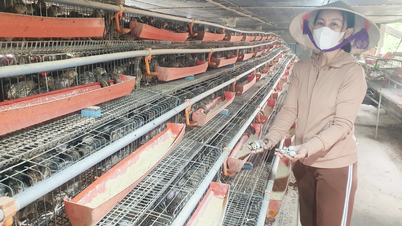
To date, Tan Long commune has 392 livestock farms and family farms, including 128 farms raising buffalo and cattle; 249 farms raising pigs; and 15 poultry farms. Cattle fattening also yields high economic returns.
Now, the hard and difficult days of settling in this new land are only memories for the people of Tan Long commune.
And in that once impoverished countryside, the vast green expanse of banana trees now brings prosperity, abundance, and happiness... The lush green banana land of Tan Long has truly "transformed into a dragon."
Sy Hoang
Source: https://baoquangtri.vn/may-mua-qua-ngot-บน-dat-tan-long-193962.htm
![[Image] Nguyen Tat Thanh Street is expected to be widened, reducing traffic congestion.](https://vphoto.vietnam.vn/thumb/1200x675/vietnam/resource/IMAGE/2026/03/24/1774326200262_ndo_br_3-6869-jpg.webp)
















































Comment (0)