And A Chia would always whisper to her, "It's humiliating for you to go to school and then work in the fields. I'll take you to Laos for a few days and you'll see the light. With money, you can have anything you want! We can't continue living like our parents, like the people in our village!"

|
Illustration: Hoang Bau |
Here in Muong Ban, back when we were in seventh and eighth grade, the two of us would huddle together in a plastic bag to cross the Nam Hua stream to school. During heavy rains, the water would rush down like a pig being slaughtered, tearing apart the rafts tied to the bank and swallowing everything along with the trash. Strong young men would drag each plastic bag ashore. Everyone would sit there, breathless, their hair soaking wet. Looking at the purple lips of her friends, Nu Cho understood that life wasn't measured in breaths, but that luck was more fragile than the thread her mother used to embroider flowers on her dress.
A Chia crossed the stream to go to school for a few days before giving up. The eager teenager, carrying a worn-out backpack, joined the other young men in the village as they crossed mountain peaks in search of work. Luong Van Khao shook his head and said, "With Chia's personality, going over there will only lead to a dead end." Nu Cho didn't believe him. A Chia was as cunning as a hedgehog in the forest. In just over a year, he had built the biggest five-room house in the village, painted white with red tiles.
A Chia's mother no longer carries corn down the mountain to trade for rice. A Chia's older brother's family has also bought a car. As for Khao, whose stilt house burned down on the thirtieth day of the Lunar New Year, he had to drop out of school to care for his father, who was hospitalized in the provincial hospital for long-term cancer treatment. Everyone says it's probably because of his envious and jealous words that his family has had so much bad luck.
***
Nụ Chọ had a group of friends she'd known since elementary school, but then they all got married one by one. It was impossible for them not to get married, but while they were just celebrating Tet together, a young man came and tried to drag her away. Nụ Chọ burst into tears, but luckily, the adults sitting nearby intervened, saying that if he didn't intend to marry the girl, he shouldn't drag her away as it would damage her reputation. The young man then let go.
Cai Mua was dragged to the boy's house to stay for three days, essentially becoming his wife, though unwillingly, she was forced to accept living like that. If she returned home, no one would dare marry her later because the ghost of their house would also return. One time, while the whole family was out working in the fields, Nu Cho was home studying when A Chia and his friends came to invite her out, but she refused, knowing it wouldn't be that simple. In a flash, A Chia lifted Nu Cho onto his shoulder, sat on the back of a motorbike, and sped deep into the forest despite her struggles. A Chia even took her phone.
- Marry A Chia, Nu Cho. Don't even dream of marrying into the Luong family. The Thai family is poor, but they don't want to marry into our Hmong family.
Nụ Chọ struggled to pry the strong hands off her waist, shouting loudly:
But I don't like you.
The complete stranger behind the wheel yelled with joy:
- Tonight, the two of us will just like each other.
The two men laughed hideously. On the way, Nu Cho thought about jumping out of the car, but worried that if she broke her arm or leg, her parents would lose a large sum of money, and they hadn't paid the bank interest for the past two months. Two strange women came and pushed Nu Cho into a room and locked the door. Nu Cho was terrified and confused, unable to believe she would have to marry A Chia, as they had never been in love and didn't know each other well. She felt disrespected and had no one left to turn to for help.
But Nụ Chọ believed this wasn't the life she'd always dreamed of. Thinking of Mua, of the Mua who had become someone else's wife, her longing to go to school burned even brighter. All night, Nụ Chọ couldn't sleep, plotting her escape. She overheard two women talking about A Chía being busy and not returning for several more days. After three days, she knocked on the door demanding to use the restroom. They looked at each other for a long time before cautiously opening the door for her to come out into the middle room, their eyes never leaving her. When one of them answered A Chía's phone call, Nụ Chọ suddenly ran outside, quickly disappearing into the forest before finding the main road and asking someone to call her father to come pick her up.
Many people from the village and A Chia's family came to demand that Nu Cho return for the ritual of presenting her to the spirits. Her father said nothing. He didn't even bother drinking alcohol as usual. Her mother, distraught, wept, worried that Nu Cho would become like a withered tree in the village, forgotten by everyone. But since there were still the pair of oxen, she gritted her teeth and gave them to her daughter as a dowry to marry into a wealthy family. Nu Cho refused; she hadn't even shared a bed with A Chia. He only spoke venomous words, causing Nu Cho's family to be scorned by the whole village, making everyone feel terrible.
With only a few days left until her high school exams, Nụ Chọ wandered down to the market, inquiring if any companies in the lowlands were hiring workers. To avoid the gossip about her, the best way was to go to a strange place. Standing by the roadside, Nụ Chọ saw Mua carrying her child, her drunken husband constantly pinching and hurling vulgar insults at her, causing the baby to cry incessantly. What was the point of marrying someone who would suffer like this? Was every penny Mua spent her husband's money? Even the money from selling her beautiful black hair, the kind many people envied?
Perhaps, even if Mua suffered more, she still feared she wouldn't find anyone else besides that drunken man. Nụ Chọ wondered: Is this the life she wants now? She's a girl, like a flower that only blooms once. No! Even if she wants to be a factory worker, she has to finish her studies first. Gradually, she calmed down and focused on studying for her exams, ignoring the gossip that poured down on her like a torrential rain in the village.
You may also like

Family - the foundation for shaping the character of young people.On the afternoon of June 27th, at the Ho Chi Minh City General Science Library, within the framework of the 2026 Ho Chi Minh City Children's Book Fair, Thai Ha Book Company organized a discussion with author Nguyen Can on the occasion of the launch of his book "Youth and the Preparation for Life" (Industry and Trade Publishing House). 
I want to go to school.Diagnosed with leukemia since childhood and undergoing prolonged hospitalizations, Dao Nhu Y, a 7th-grade student at Dong Hoa 1 Junior High School in Dong Hoa commune, has never wanted to leave school. For her, attending school is the motivation to continue fighting the disease. Lately, Muong Ban has seen a decline in the number of young people. Nu Cho, having graduated from medical school, returned to the fields to help her mother plant corn and tend to the rice paddies. Khao has gotten married and has a young son. Seeing the beautiful scenery in the village, the couple decided to develop a community tourism model, moving closer to the Thai ethnic village, renting out traditional costumes and playing the zither to serve both domestic and international tourists. In the beginning, Luong Van Khao and his wife struggled to make ends meet due to lack of capital and experience. Seeing that A Chia hadn't given up on his intention to court Nu Cho, Khao advised:
- Khao tried to borrow money from the bank several times but failed. People thought he was borrowing to traffic drugs because there are many drug traffickers in Muong Ban. Just between us, A Chia's house is their hideout, built as a complex system with multiple layers of fencing, an underground bunker, a surveillance camera system, and stockpiles of gas, gasoline, and flintlock guns. His brothers frequently recruit recently released prisoners and drug addicts to stay there, guarding and protecting the place.
Every day, at the first crow of the rooster, Khao would ride his motorbike to the town nearly thirty kilometers from Muong Ban to buy milk and vegetables, and had to return before six o'clock so that the guests would have breakfast. His wife would get up to slaughter a chicken and cook noodles. They hadn't yet bought a refrigerator, so Khao spent his days riding his motorbike. Watching them chirping like a pair of birds, Nu Cho was happy for her classmate. The forests, stripped bare after the destruction and deforestation by illegal loggers, had become extinct in Muong Ban and other villages. A Chia said that with just a nod, Nu Cho's hands would never be stained with dirt again. But, she regretted all the effort she had put into her studies.
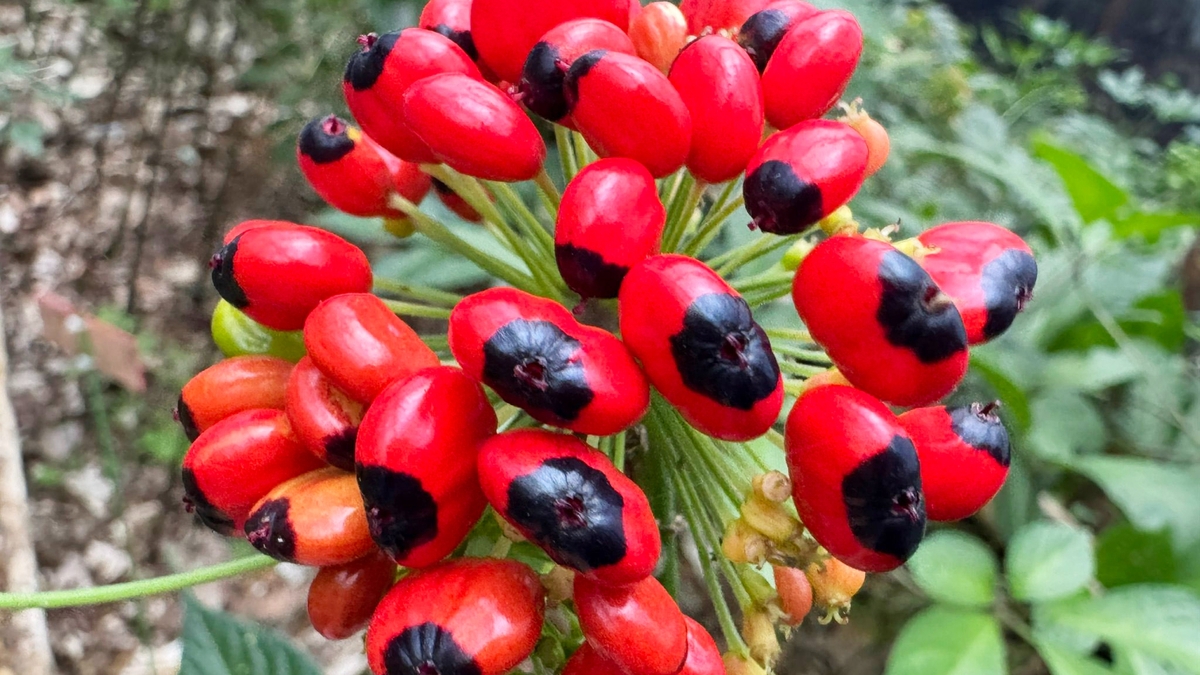
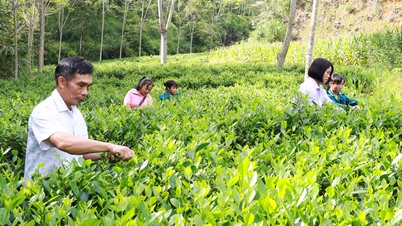
Seeing that growing corn and upland rice didn't yield much, she decided to cultivate red Polygonum multiflorum to extract its essence. Nụ Chọ taught herself how to grow the plants. Every day, every week, even every month, she meticulously measured how much the plants had grown. Thanks to her careful observation, she could tell just by looking at the color of the leaves whether the plants were getting enough nutrients and whether they were healthier. If she saw a new shoot emerge, she knew that a new layer of roots had grown under the plant, allowing it to anchor itself more firmly to the soil...
Then, a few years later, one day, Nụ Chọ saw that the plant had grown taller than the weeds, able to survive on its own without needing human care. Although the plant she had grown hadn't yet become the dense, layered forest she had hoped for, she was certain she would have her own forest, supporting the sprouts of Polygonum multiflorum that spread their leaves, intertwining and climbing the tree trunks under the sun like green hearts. During a rare moment of respite, looking at the beehive nestled in the foliage, Nụ Chọ saw the bees diligently building their beautiful home. Then, one fine day, they all left. It seems only humans spend time arguing with each other about living in harmony with nature...
***
As the sun set, Nụ Chọ followed the Nậm Hua stream from her fields back to her village. The kapok flowers blazed brightly across the gray rocky landscape. The days of braving the floods to go to school felt like yesterday. Now, in class, she listened intently to her teacher's words with her mouth wide open. Thanks to the support of newspapers, radio, and many others, the Mường Bân village had a bridge built connecting it to Mường Đin and the town. Oh, her friends now each had their own worries! The moonlight on the mountain shone down on her soft, cool shoulders. Nụ Chọ stopped by Khao's house to ask for more information about tourists who wanted to buy fresh red Polygonum multiflorum roots for medicinal purposes.
Reaching the bottom of the stairs, she heard a child crying incessantly. The house was pitch dark. The couple must have been working late while the child was asleep. She was about to turn back, but the heart-wrenching cries made Nụ Chọ take a chance and go upstairs to turn on the light. The little boy had wet his pants. Seeing the light, he thought his mother had returned, so he hiccuped excitedly and crawled closer. Recognizing a stranger, he stared blankly for a while, then his mouth twitched, he looked around, and whimpered.
Nu Cho took off the wet pants and grabbed a dry diaper to wrap the boy in. Mosquitoes buzzed around. She looked around; the furniture was in disarray, the fire in the kitchen was out. Khao lay sprawled in the middle of the room, near the entrance to the bedroom, reeking of alcohol.
After much effort, Nụ Chọ finally cooked the little boy a bowl of crumbled instant noodles. The boy was hungry and ate it with relish. She set him aside to play by himself on the floor and went to wake Khao. As soon as he saw her, Khao burst into tears like a child.
- It... it's followed A Chia.
The banknotes were sharper than the leaves of the forest, so much so that the Piêu scarf that Khao's wife wore less than two years after returning home was now torn in two. A Chía wasn't handsome, but he often told Nụ Chọ: "Once a woman's hands smell of money, she won't bother digging the soil to plant corn anymore." With his father dead, his wife abandoned him for another man, and the last remaining plot of land belonging to the Lường family sold to pay off the bank loan, and he stopped welcoming tourists, Khao was almost driven mad. Out of desperation, Nụ Chọ had to go and take care of the boy and cook for him. Khao's mother wiped away her tears, returning from her youngest son's house, and embraced Nụ Chọ, her words choked in her throat.
One day, A Chia's brother secretly transported drugs out of Muong Ban village on a motorbike to trade with contacts in Laos. However, while he was en route to Hua Phan, he was arrested by border guards along with the drugs. A search of A Chia's house yielded over ten kilograms of heroin, one thousand synthetic drug pills, a gun, and a small scale used in drug trafficking.
Khoang's wife was also arrested along with the ring. A Chia also couldn't escape handcuffs. But he suddenly fell ill, and even being transferred to the Central Hospital didn't improve his condition. In his final days, he returned to his old house in the forest. Nu Cho stood close to Khao, listening to him whisper:
- I like you, Nụ Chọ. If I didn't like you, I would have sold you to Laos the day I brought you back. But even when I die, I still won't know what love is! You can't force love!
***
A younger brother, who rarely visited, suddenly knocked on the door and sat down to talk for a long time. After much beating around the bush, he finally asked Nụ Chọ:
- I heard you bought four more adjacent plots of forest land, is that true?
- That's right, but it was all before 2022. Last year, I bought a car so I couldn't buy more forest land. This year, if I have the means, I'll expand again.
- I've just been assigned a medicinal plant conservation project. I'd like to buy about three hectares; could you help me find some land?
- In my sister's village, every family owns land ranging from ten to twenty hectares. If you want to buy that much, it shouldn't be difficult.
Strengthening the friendship between Vietnam and the United States.On July 3rd, as part of the Pacific Partnership - Friends of the Pacific 2026 program, the U.S. Army Pacific delegation, led by Lieutenant General Joel Vowell, Deputy Commander of the U.S. Army Pacific, paid a courtesy visit to the Quang Tri Provincial Military Command. - Could you help me find it then?
- But the land in my village is quite expensive! Because I always buy it for one and a half times the market price.
Why is that?
- Because she's a woman, she's easily bullied just for looking after the house, let alone managing a large plot of land. That's why she's always paid a high price to buy adjacent land. The whole Muong Ban village sells at high prices. The land is expensive, but the soil quality is excellent, and she thinks buying it is better than buying cheap, infertile land.
- But high prices make the project difficult to implement.
- Besides, after buying the land, she gave each family a high-quality Polygonum multiflorum root extract to use for a lifetime, which is why everyone agreed to sell their land to her!
- Then I give up. I'll have to ask someone else!
Khao received a phone call from a guest booking a room for the weekend, carefully recorded it in his logbook, and then turned to his younger brother and said:
- I don't consider myself rich at all. Right now, my wife and I are heavily in debt, but we feel it's worth it. Because everyone in the village is involved in community tourism, we get to take care of our grandparents back home, and celebrate Tet (Lunar New Year) right in our hometown. Everyone has an income, and being able to take care of each other when sick is the best thing. The forest will grow green again, the intoxicating effects of the rocks will still be felt, but rest assured that in Muong Ban, the drug epidemic and illegal border crossings have been eradicated along with the illegal loggers.
Source: https://baothainguyen.vn/van-nghe-thai-nguyen/sang-tac-van-hoc/202603/men-da-con-say-e1d3576/