

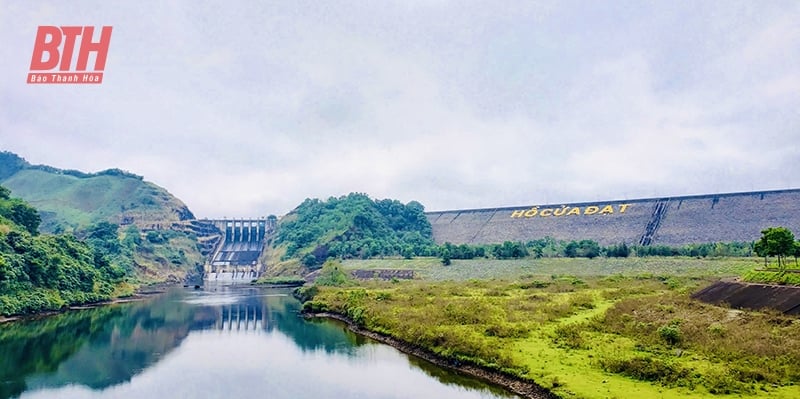
A scenic area in Cua Dat (Thuong Xuan). Photo: HT
Cửa Đặt is an estuary where the Đặt River flows from the "5 Xuân" region and merges with the Chu River. It was once a small town with picturesque scenery, a riverbank, and sand dunes. For a long time, from the time the French colonialists began logging in Thường Xuân (early 20th century) until the 1980s, Cửa Đặt served as a gathering point for timber and forest products from the Trịnh Vạn region downstream along the Đặt River, and from Nhân Sơn commune downstream along the Khao and Chu rivers.
Visiting the Cua Dat area, tourists have the opportunity to explore Xuan Lien National Park, a vast 25,601-hectare area with towering, mist-shrouded mountains such as Pu Gio and Pu Xeo. The pristine forests within Xuan Lien National Park are home to a rich diversity of flora and fauna. It is considered one of the top five biodiversity conservation centers in Vietnam, containing many rare and endemic species.
Mentioning Cua Dat immediately brings to mind the reservoir with a capacity of nearly 1.45 billion cubic meters, housing the Cua Dat Hydropower Plant with two commercial generating units. This is a key national project, aiming to create a stable water source for irrigating a large area of cultivated land, playing a crucial role in flood control, supplementing water during the dry season for the downstream Ma River to combat salinity, and improving the ecological environment; supplementing electricity and water sources for industrial production and daily life; and creating conditions for tourism development... Cua Dat Lake is often likened to the "green eye" of the vast forest. That eye sparkles with affection, harboring a poetic, gentle charm mixed with a free-spirited, powerful spirit. Imagine the feeling of sitting in a boat gliding across the lake, admiring the river, the sky, and the endless green of the trees and leaves... it would truly be a delightful and unforgettable experience.
Besides the lake, the complex terrain with many high mountains and narrow valleys has created many beautiful waterfalls and large streams with water all year round in the Cua Dat area, a unique tourism resource that few places possess.
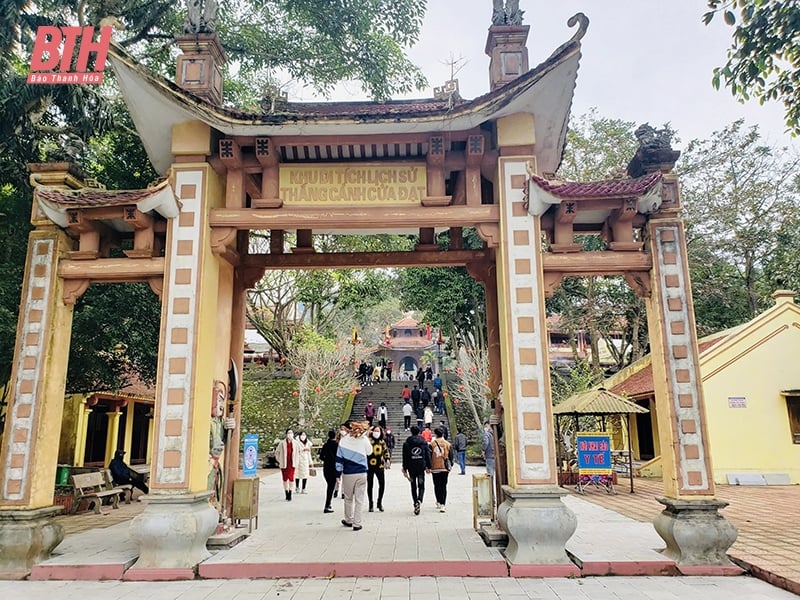
The Cua Dat historical and cultural site and scenic area attracts a large number of tourists.
Yen Waterfall is the most beautiful and largest waterfall in this area. It is formed from small streams cascading down from the summit of Pu Gio Mountain, which is over 1,600 meters above sea level. Yen Waterfall has year-round flowing water, cool in summer and warm in winter. A unique feature that sets Yen Waterfall apart from other waterfalls in Thanh Hoa is the presence of numerous rocks of varying sizes blocking the flow of water. At points where the water falls and contacts the rocks, it creates a layer of white foam that sprays in all directions, forming a cool and refreshing waterfall atmosphere.
Thien Thuy Waterfall (also known as Mu Waterfall) is a complex of four waterfalls cascading down from the peaks of the Pu Ta Leo mountain range, over 1,400 meters above sea level. The highest tier of the waterfall is 500 meters above the stream bed. From afar, the waterfall appears like a silver thread amidst the vast, verdant forest. Thien Thuy Waterfall is relatively easily accessible from the Hon Can area. Currently, there is a concrete road leading to the waterfall area, along with supporting facilities such as restrooms, temporary accommodation in the forest, a parking lot, and a system of directional signs.
Besides its natural values, the Cua Dat area is also known as a land of spiritual significance and outstanding people, associated with many distinctive historical and cultural relics, such as: the Cua Dat Historical and Cultural Relic and Scenic Area; the Thai people's temple dedicated to Heaven located on the top of Pu Pen hill, Lum Nua village, Van Xuan commune; the Muong Temple (Son Muong) dedicated to the god who governs the village (Cai Son) according to Thai ethnic beliefs; the Ban Pa Temple dedicated to the god who watches over the village (Cai Ban) according to Thai ethnic beliefs in Xuan Loc commune; the Cay Thi Temple and Thung Pagoda (Phuc Thang Tu) dedicated to Buddha; Ho village communal house, Lung Nhai Oath Ceremony...
Among them, the most famous are the temple dedicated to the renowned figure Cam Ba Thuoc and the temple of the Goddess of the Upper Mountains, located within the Cua Dat Historical and Cultural Relic Area. The temple is situated on high ground at the foot of Pu Roc mountain, with the Dat River flowing in a circle from right to left and merging with the Chu River about 200 meters from the temple. Every year, during the Lunar New Year, it attracts a large number of visitors who come to admire the scenery, offer incense, and express their hopes and wishes for a year of good fortune, good health, and success. Ms. Le Thi Phuong, a permanent staff member of the Cua Dat Historical and Cultural Relic Area Management Board, said: “During the Lunar New Year of the Year of the Snake 2025, the relic area welcomed over 40,000 visitors. The cultural and spiritual activities held here have promoted the beauty of the land and people of Thuong Xuan, boosting tourism development.” Ms. Phuong added: "In the future, the traditional festival of the temple will be organized, not only to meet the needs and aspirations of the people in the region but also to contribute to preserving and promoting traditional cultural values, diversifying tourism products, and continuing to attract more tourists from inside and outside the province to the historical site."
In particular, around the Cua Dat area, there are many place names associated with legends and stories told by the local people about the national hero - King Le Loi and the Lam Son Uprising, such as: the Ink Grinding Rock, the Sitting Rock... Legend says this was where the rebel army set up camp to train and forge weapons. The traces of the camp are gone, but a rock remains on the river where Le Loi and Nguyen Trai ground their brushes and ink (some stories say that to prepare for the upcoming battles, Le Loi chose this place to forge weapons. When the swords and spears were finished, they brought them to this rock to sharpen them, working so diligently that the water in that section of the river turned black like ink, hence the name Ink Grinding Rock). About 1km away, along the Dat River, there is a small stream called Sitting Rock, with a large rock that is indented in two places. Legend says that Le Loi passed by many times, sitting for countless hours to observe the terrain, ponder, and plan his military strategy...
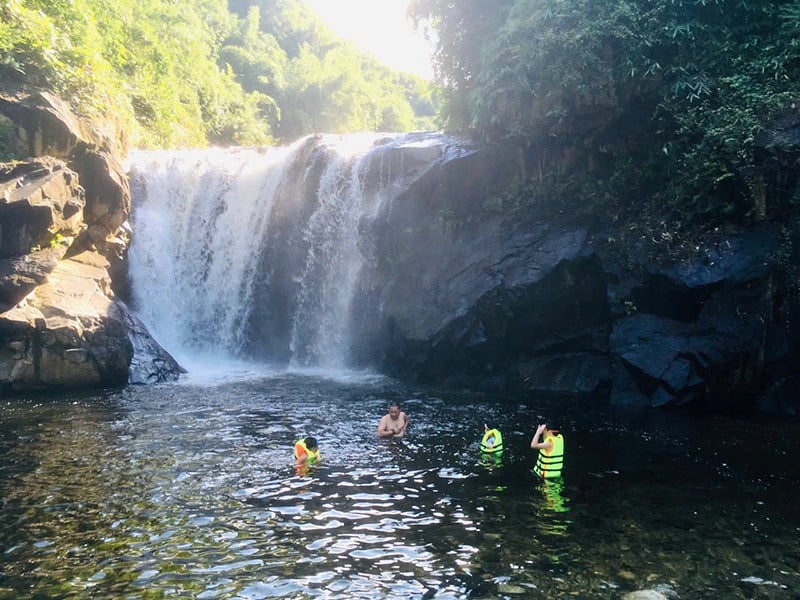
Tourists experience bathing in the waterfall at Cua Dat area. (Photo: HT)
For generations, the villages and communities living here have nurtured, passed down, and continued many typical intangible cultural values, enriching the experience for tourists visiting the Cua Dat region, such as: stilt house architecture, culinary culture, costumes, traditional crafts, a treasure trove of folk culture and arts, traditional festivals (Nang Han festival (Lum Nua and Kang Khen, Van Xuan commune), Sac Bua festival of the Muong ethnic group in Xuan Cam and Luong Son communes; Cam Doi custom (Tay Muong/Do), Lau Kha custom, E Xa custom, Xang Khan custom, Van Xuan commune...).
The natural landscape, intertwined with historical and cultural relics in the Cua Dat region, is a rich tourism resource, deeply rooted in local identity. This is a crucial element in creating highly competitive tourism destinations, routes, and products. Over the years, thanks to the attention and support of the province, and the dynamic and proactive implementation of comprehensive solutions by the local government and the Xuan Lien National Park Management Board, tourism development in the Cua Dat region has achieved many remarkable results. Tourism activities not only help the community appreciate the values of nature and biodiversity but also help them better understand the cultural values and identity of the locality. Developing tourism is an effective and sustainable approach that provides local communities with more jobs, increased income, and stable family livelihoods, reducing dependence on natural resources. This, in turn, contributes to better forest management and protection, ensuring social order and safety, and national defense and security.
Thanh Thuy
Source: https://baothanhhoa.vn/menh-mang-cua-dat-246155.htm





Comment (0)