

Open up trade, overcome inflation.
In the memories of many people in Hai Phong city, the late 1970s and early 1980s were a particularly difficult time. Volume 4 of the History of Hai Phong records that it was a period of scarce goods, disrupted circulation, soaring market prices, and inflation that at times reached triple digits.
Faced with this situation, the City Party Committee and the City Administrative Committee identified the provision of food and essential goods as a top priority. The city allocated a significant amount of funding and goods, proactively organizing convoys of trucks and ships to the South and mountainous areas to purchase and exchange food and supplies. The city improved the distribution process and increased sales points to gradually stabilize the market. Along with ensuring supply, the city focused on reorganizing the circulation of goods, prioritizing the transportation of essential items, and leveraging the role of waterway and sea transport in conditions where traffic congestion was still prevalent.
At this time, while agricultural production saw positive changes thanks to the contract system, industrial and service production, including port services, remained stagnant. These prolonged limitations not only exacerbated the imbalance between money and goods but also created an urgent need to re-examine the city's production and circulation organization.
Mr. Pham Dinh Thuy (80 years old), a resident of Le Chan ward and former official in the transportation and public works sector, recalled that on October 2, 1981, General Secretary Le Duan visited and worked with Hai Phong. During the meeting, the General Secretary pointed out the bottlenecks and stagnation in industry and services. These frank analyses provided insights that helped the city choose a more suitable direction.
Based on these practical requirements, the city's foreign economic activities underwent significant changes during the period of 1983-1985. When financial conditions permitted, the city purchased additional ships for the Hai Phong Maritime Transport Company, thereby enhancing its ability to independently transport goods, opening up trade to import materials for production, and promoting economic development.
The effectiveness of this approach is clearly documented in Volume 4 of the History of Hai Phong, in 1985, when the country's exports faced many difficulties, Hai Phong city still achieved 100.5% of its export plan with a value of 14 million rubles-dollars. From that foreign currency, the city proactively imported 7.6 million rubles-dollars of essential goods and materials to serve production and daily life.
Also during this period, after many years of deficits, the city budget recorded a surplus of 24 million VND for the first time, demonstrating the positive impact of opening up trade and proactively managing transportation on socio-economic stability.
Global connectivity
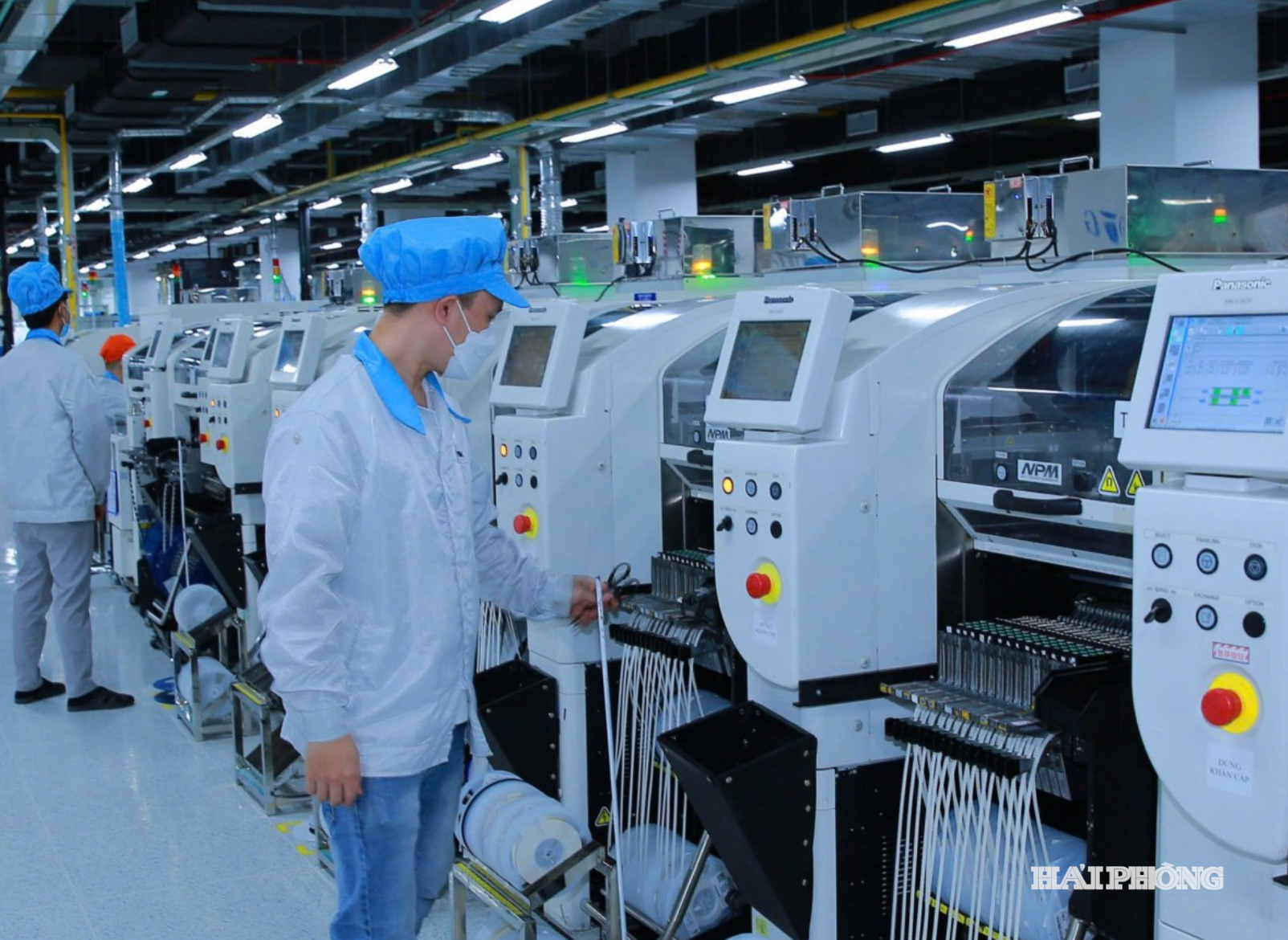
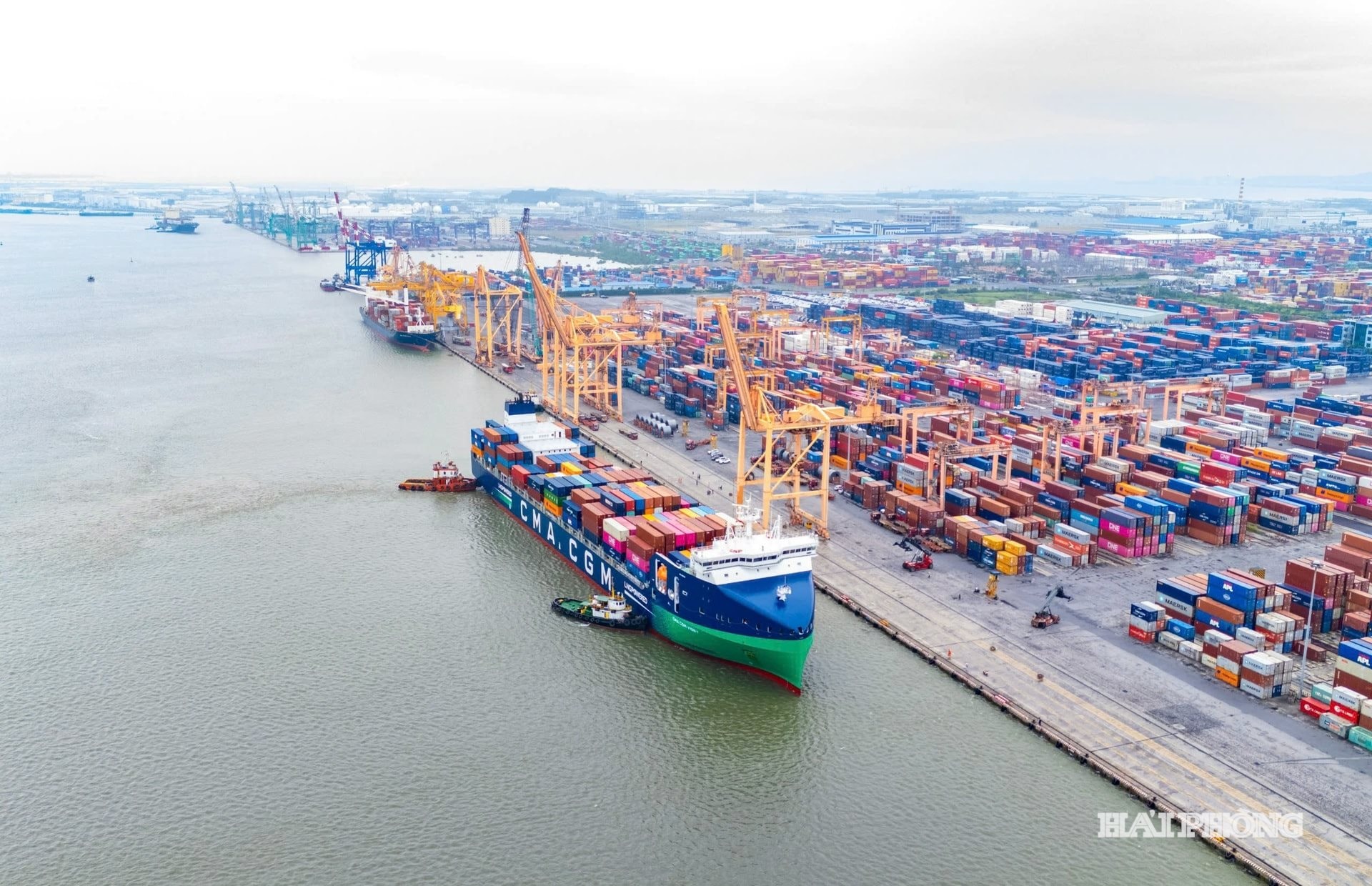
Forty years have passed, and inheriting the lesson of "opening up trade" to overcome difficulties, Hai Phong city today is continuing that story with the mindset of an era of self-improvement and the aspiration to reach international standards. To realize that vision, the city is investing heavily in deep-water seaports, airports, and logistics infrastructure, transforming it into a crucial link in the global supply chain. As a result, by 2025, the volume of goods handled through Hai Phong seaports is expected to reach 114.5 million tons, an increase of nearly 10 million tons compared to 2024, exceeding the set plan.
In 2026, the port area aims for a cargo throughput of 122 million tons. Specifically for the Lunar New Year (Year of the Horse) in 2026, the total cargo throughput is expected to exceed 1.8 million tons, an increase of nearly 15% compared to the same period of the Lunar New Year (Year of the Snake) in 2025.
Mr. Nguyen Van Tien, General Director of Hateco Hai Phong International Container Port Co., Ltd., said: "Currently, goods from the North can go directly to Europe and America without having to be transshipped through ports in the region. Many of the world's most modern international shipping routes choose Hai Phong as a destination, contributing to expanding trade for the city."
Alongside changes in policies and institutions, port infrastructure continues to receive investment, expanding its reach to the open sea and increasingly asserting its role as a logistics gateway for Southeast Asia, capable of competing with ports in Singapore, Hong Kong (China), South Korea, and other regions. Currently, the city has established cooperative relationships with 26 international localities. Economic diplomacy plays a pioneering role with 52 cooperation agreements across various fields, opening 3 international flight routes and attracting direct investment from 42 countries.
Comrade Le Trung Kien, Vice Chairman of the People's Committee of Hai Phong City, affirmed that, having identified international integration as a driving force for rapid and sustainable development, Hai Phong is not only focusing on improving the investment environment or building infrastructure, but is also researching the development of a free trade zone model to enhance national competitiveness.
Looking at the city's development today, we can see the consistency in the strategic choice of using open trade as the driving force for the development of this coastal region.
In 2026, construction is expected to begin on six new berths at Lach Huyen (berths 7 to 12), further enhancing the capacity of Hai Phong seaport. Simultaneously, Vingroup plans to invest in the Nam Do Son port and logistics center, covering over 4,300 hectares with nearly $14.2 billion in capital. The project includes 21 berths and 42 piers, capable of accommodating vessels up to 200,000 tons, and will be integrated with a post-port logistics area, expanding the logistics development space for the port city.
Source: https://baohaiphong.vn/mo-giao-thuong-vuon-bien-lon-536671.html

![[Photo] Solemn bathing ceremony and Buddha procession in Hue](https://vphoto.vietnam.vn/thumb/1200x675/vietnam/resource/IMAGE/2026/05/31/1780228263543_1-jpg.webp)
![[Photo] Admire the coral "masterpiece" amidst the million-year-old heritage of Dak Lak province.](https://vphoto.vietnam.vn/thumb/1200x675/vietnam/resource/IMAGE/2026/05/31/1780221235105_anh-man-hinh-2026-05-31-luc-16-53-27.png)
![[Image] Hanoi Police officially crowned champions of V-League 2025/2026](https://vphoto.vietnam.vn/thumb/1200x675/vietnam/resource/IMAGE/2026/05/31/1780244769054_ndo_br_039d561b692be875b13a-jpg.webp)

![[Photo] The General Secretary, President and his wife begin their state visit to the Philippines.](https://vphoto.vietnam.vn/thumb/1200x675/vietnam/resource/IMAGE/2026/05/31/1780230559452_anh-man-hinh-2026-05-31-luc-19-28-11.png)









![[Video] Sunset at Lap An Lagoon – Where the sun sets over the fishing nets](https://vphoto.vietnam.vn/thumb/340x192/vietnam/resource/IMAGE/2026/05/31/1780192137701_beach-landscape-sea-water-nature-grass-745871-pxhere-com.jpeg)





























![[Photo] Admire the coral "masterpiece" amidst the million-year-old heritage of Dak Lak province.](https://vphoto.vietnam.vn/thumb/402x226/vietnam/resource/IMAGE/2026/05/31/1780221235105_anh-man-hinh-2026-05-31-luc-16-53-27.png)



























Comment (0)