

At the National Conference on the Implementation of Politburo Resolutions 66 and 68 on the morning of May 18th, Prime Minister Pham Minh Chinh announced that a nationwide movement would be launched to encourage all citizens to compete in enriching themselves, contributing to the building and protection of the socialist Vietnamese Fatherland.
This call to action attracted public attention due to its profound generalization, powerful message, and very clear direction for development.
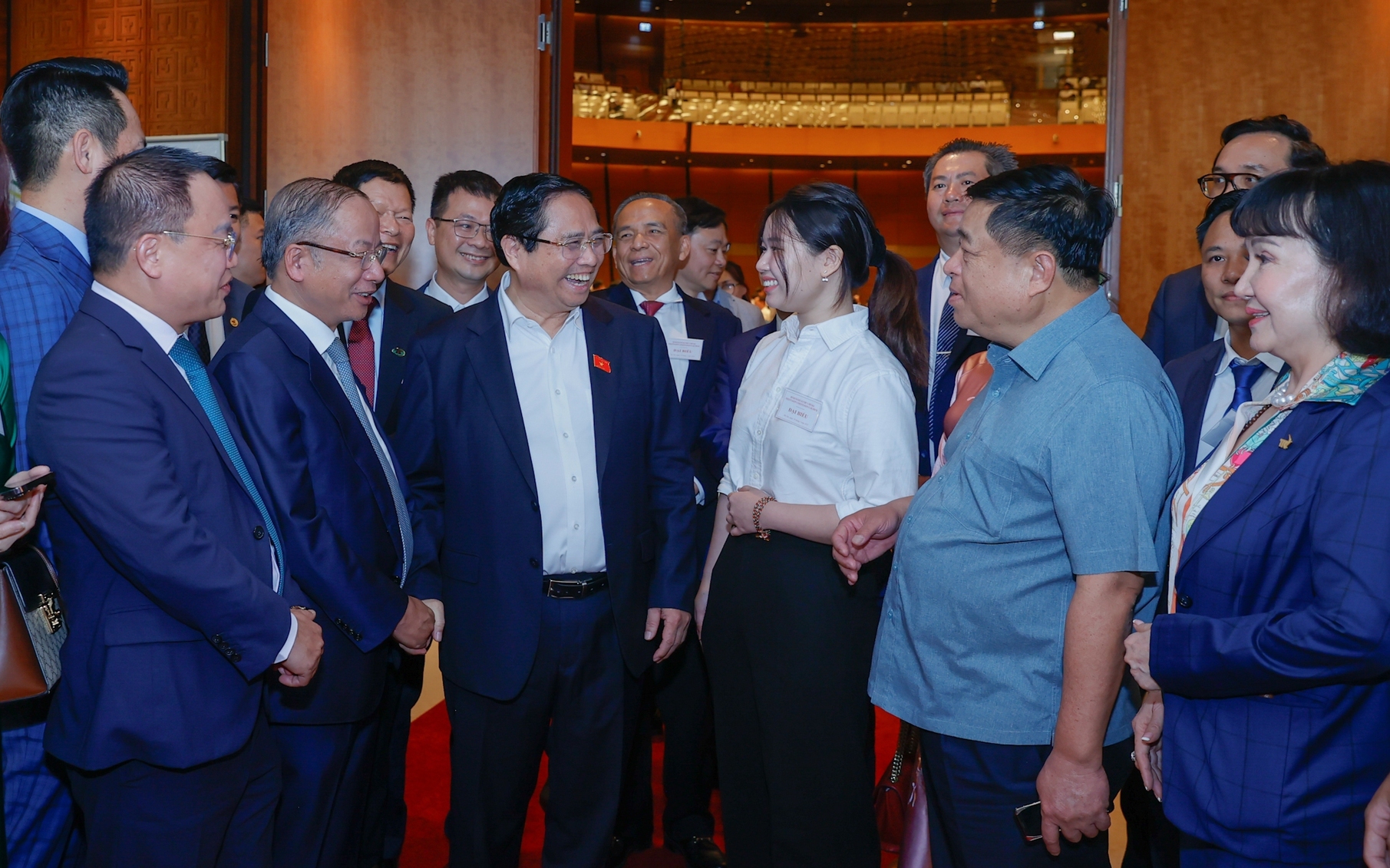
Prime Minister Pham Minh Chinh converses with business leaders on the sidelines of the Conference on the Implementation of Politburo Resolutions 66 and 68. (Photo: VGP)
A reporter from VTC News interviewed Dr. Nguyen Si Dung - former Deputy Head of the National Assembly Office, member of the Prime Minister's Policy Advisory Council - to further clarify the layers of meaning and conditions for realizing the "competition to get rich" movement in socio -economic life.
Speaking about the socio-economic development orientation of our country in the coming period, in relation to the Prime Minister's statement, Mr. Nguyen Si Dung said that the Prime Minister's call to launch the movement "the whole people compete to get rich, contribute to building and protecting the socialist Fatherland" is a profound political declaration, containing three important layers of orientation for the socio-economic development of our country in the coming period.
Firstly, it affirms the central role of citizens and businesses in the new development model. While previously the State was often seen as merely the "bearer" of development responsibilities, the mindset has clearly shifted: national development is a shared endeavor, with each citizen and each business acting as a creator and a soldier on the front lines of legitimate wealth creation. Introducing the concept of "competition for wealth creation" into national policy represents a breakthrough in thinking – not only encouraging wealth creation, but also viewing it as an act of patriotism.
Secondly, this movement reflects a strong connection between the goal of economic growth and the requirements of national defense and development. The keyword "socialism" in the speech is not merely decorative. It emphasizes that the path to wealth cannot be separated from social responsibility, fairness, and inclusive development. Legitimate wealth creation goes hand in hand with fostering a sense of community, contributing to social welfare, and building a prosperous nation that leaves no one behind.
Thirdly, this is a call to action aimed at unleashing the nation's inner strength during this crucial transitional period. In a volatile world, external resources cannot be a long-term reliance. Sustainable development must be based on endogenous foundations – that is, the creativity, labor power, dedication, and aspiration for prosperity of the entire population.
The Prime Minister's speech is a hallmark of progressive development thinking, igniting a national entrepreneurial spirit, connecting patriotic emulation with economic development, and placing people at the center of the innovation process. It is not just an administrative directive, but a call to action for the times – full of inspiration, responsibility, and expectation.
The Prime Minister's speech is a hallmark of progressive development thinking, igniting a national entrepreneurial spirit, connecting patriotic emulation with economic development, and placing people at the center of the innovation process. It is not just an administrative directive, but a call to action for the times – full of inspiration, responsibility, and expectation.
Dr. Nguyen Si Dung
- In your opinion, should "enrichment" in this message be understood in terms of individual, community, or national significance?
I believe that "enrichment" should be understood comprehensively, integrating all three levels of meaning: enriching the individual, enriching the community, and enriching the nation. These are not three separate levels, but rather three concentric circles, spreading and complementing each other in a development model based on civic spirit, social consciousness, and national aspirations.
First and foremost, personal enrichment is the starting point and a legitimate right. A society cannot prosper if each citizen lacks the right and motivation to genuinely enrich themselves through intellect, labor, and creativity. When citizens are guaranteed property rights, the right to freedom of business, and are supported by the state in a fair competitive environment, then "enrichment" is no longer the privilege of a small group, but becomes the goal of the majority.
Next, enriching the community is a higher stage of the "patriotic emulation" spirit. A businessman who shares his achievements with society, a farmer who cooperates with his village, an intellectual who contributes his knowledge to the community – these are all vivid examples of "enriching the community." Wealth is not only measured by money, but also by the ability to create social value – this is the ethics of development, the core of national unity.
And enriching the nation is the ultimate goal. When millions of individuals and tens of thousands of communities legitimately enrich themselves, the nation will prosper. But national enrichment is not just about GDP or government revenue – it's also about enriching its standing, enriching its confidence, enriching its identity, and enriching its resilience in a volatile world.
In other words, the Prime Minister is not just calling on each citizen to enrich themselves individually, but is also inspiring a deeper ideal: transforming the journey of personal enrichment into part of the nation-building mission. This is a combination of modern entrepreneurship and traditional patriotism, of active individualism and liberal communityism, and of the development of each individual and the destiny of the entire nation.
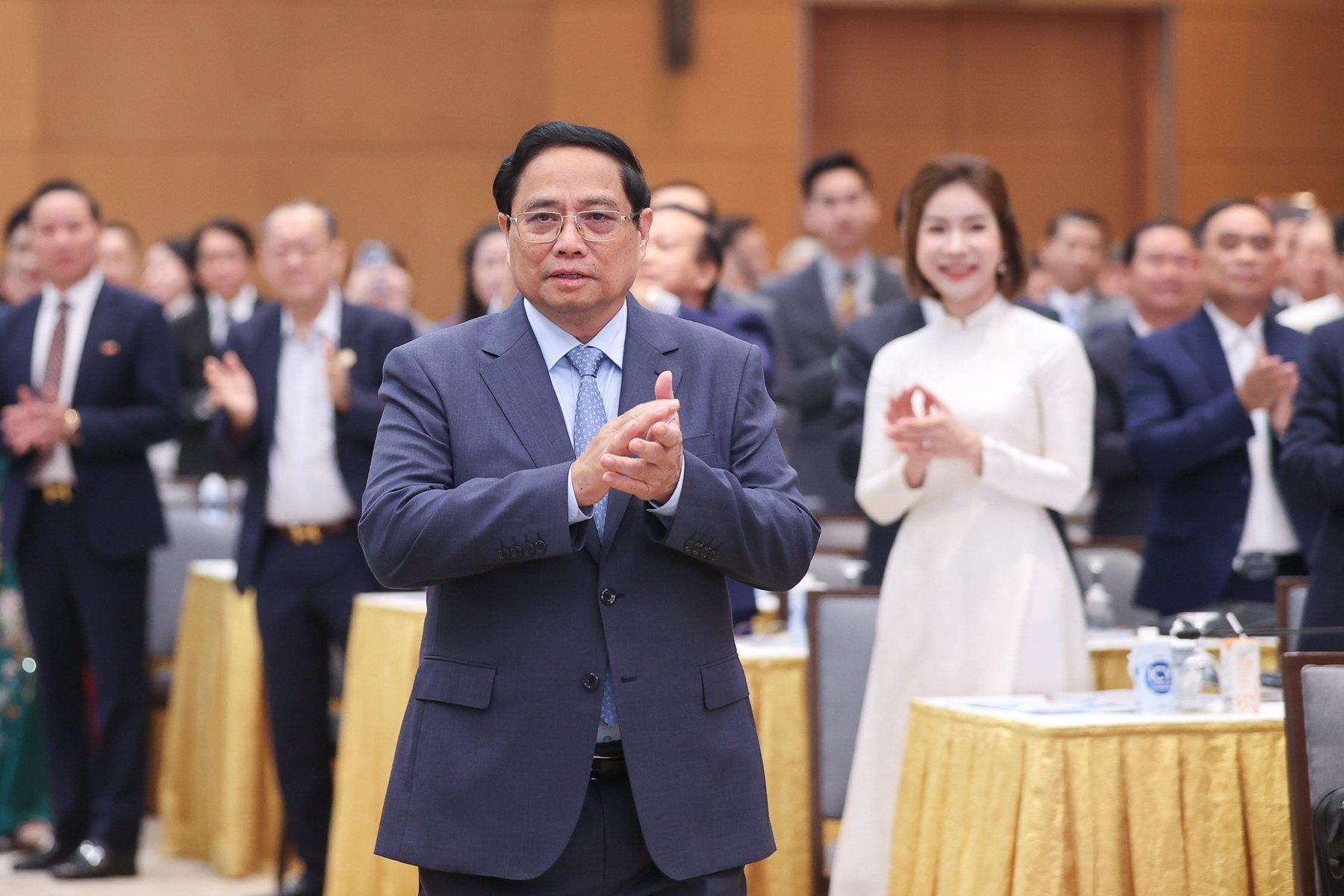
Prime Minister Pham Minh Chinh attends a meeting of the Government Standing Committee with representatives of businesses on the occasion of Vietnamese Entrepreneurs' Day. (Photo: VGP)
So how should this spirit be implemented so that every segment of society can participate and benefit in a legitimate way?
We cannot condense the message of the head of government into the concept of wealth accumulation; the greater expectation of this movement is to create a new class of citizens and entrepreneurs who are capable, responsible, and patriotic, who dare to think, dare to act, and dare to innovate in order to legitimately enrich themselves.
They will become aware of their responsibility not only to enrich themselves but also to create value for society. For example, citizens, through paying taxes and connecting with the community; and businesses, through creating products, generating jobs for workers, and bringing value to the economy…
If the movement is implemented effectively, any citizen – regardless of economic background or region – will know and develop a mindset for wealth creation, although of course, not everyone will be the same.
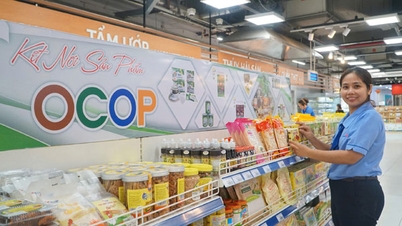
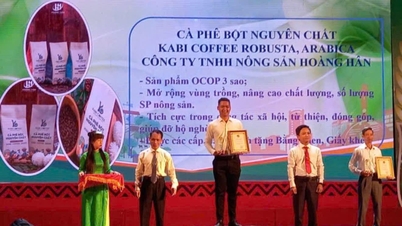
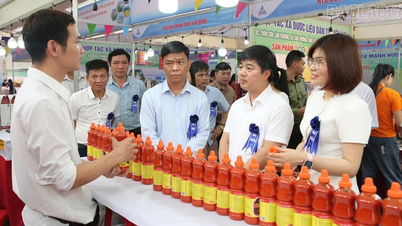
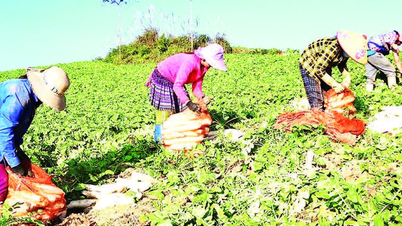
Farmers can become wealthy through education, developing high-tech agriculture, new cooperative models, OCOP products, agricultural tourism, and exporting agricultural products.
People in remote areas can leverage their local advantages to develop unique cultural and tourism products, enriching themselves through indigenous knowledge, medicinal products, traditional handicrafts, and clean agriculture.
Urban entrepreneurs have more opportunities in investment, technology, innovative startups, high-end services, logistics, and more.
- What factors are necessary to launch such a movement successfully, sir?
I believe that for the "competition to get rich" movement to succeed, it cannot rely solely on appeals or moral appeals. It must be a comprehensive development strategy in which policies, institutions, resources, and the participation of the private sector are all essential and mutually supportive components.
First, policies must be guided by vision, designed on the principles of partnership and facilitation. A national wealth-building movement cannot develop if the policy system is restrictive, has high legal risks, or discriminates against different economic sectors. Policies on taxation, credit, labor training, digital transformation, and startup support need to be synchronized and interconnected.
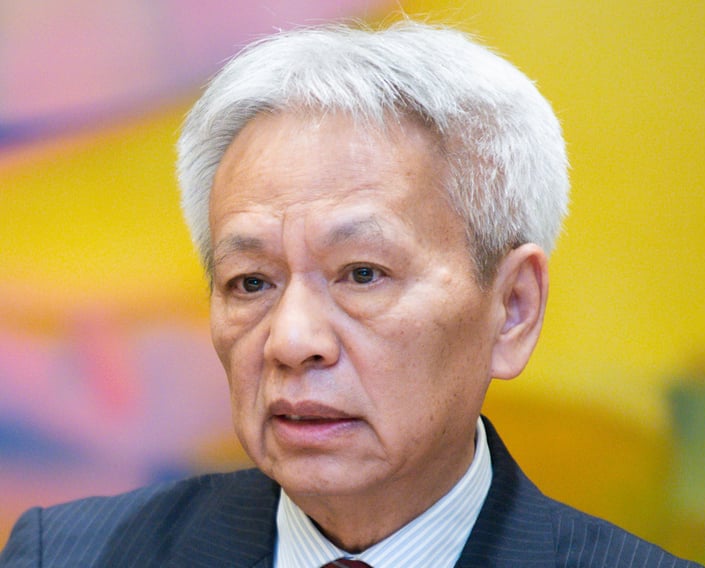
ts-nguyen-si-dung-2 (1).jpg
And finally – and most importantly – is the active, proactive, and creative participation of the private sector… They need to be given confidence, opportunities, and a constructive role. The state acts as a "launching pad," but businesses and the people are the "engines of growth."
Dr. Nguyen Si Dung
Next, institutions must be transparent, stable, and encourage innovation. No one dares to get rich without a clear legal framework and confidence in the protection of the law. Institutions must guarantee property rights, freedom of business, and fair competition. Good institutions are a stronger motivator than investment capital or budget subsidies.
On the other hand, state resources need to be allocated intelligently to "activate" rather than replace the market. What the State needs to do is to facilitate capital flows, provide infrastructure, support disadvantaged areas, and design risk-sharing mechanisms (such as credit guarantees, agricultural insurance, etc.). The goal is to create an environment where all citizens have the opportunity to rise up, and no one is left behind.
And finally – and most importantly – is the active, proactive, and creative participation of the private sector. It is entrepreneurs, producers, farmers, intellectuals, and young people who, more than anyone else, can transform the movement into action, turning political will into development results. They need to be given confidence, opportunities, and a constructive role. The state acts as a "launching pad," but businesses and the people are the "engines of growth."
For the movement to encourage wealth creation to succeed, a synchronized development ecosystem is needed – where institutions are the foundation, policies are the tools, resources are the catalysts, and the private sector is the active agent. When these four elements work in harmony, the movement will not only achieve temporary success but can also become a sustainable driving force for the entire economy.
Thank you, sir!
Source: https://vtcnews.vn/moi-nguoi-dan-la-chien-si-lam-giau-ar953279.html



![[Photo] “Red Journey” 2026: Vietnamese Youth Continue Building the Bridge of Friendship Between Vietnam and China](https://vphoto.vietnam.vn/thumb/1200x675/vietnam/resource/IMAGE/2026/04/20/1776629730866_4055880775670638308-9618-4200-jpg.webp)



























































Comment (0)