The rice is growing well.
Following the favorable weather and water conditions for the winter-spring crop production as in the previous year, in mid-March 2026, the northern rice granary in the southeastern communes and wards of the province is entering the heading and flowering stage, with lush green rice fields stretching as far as the eye can see.
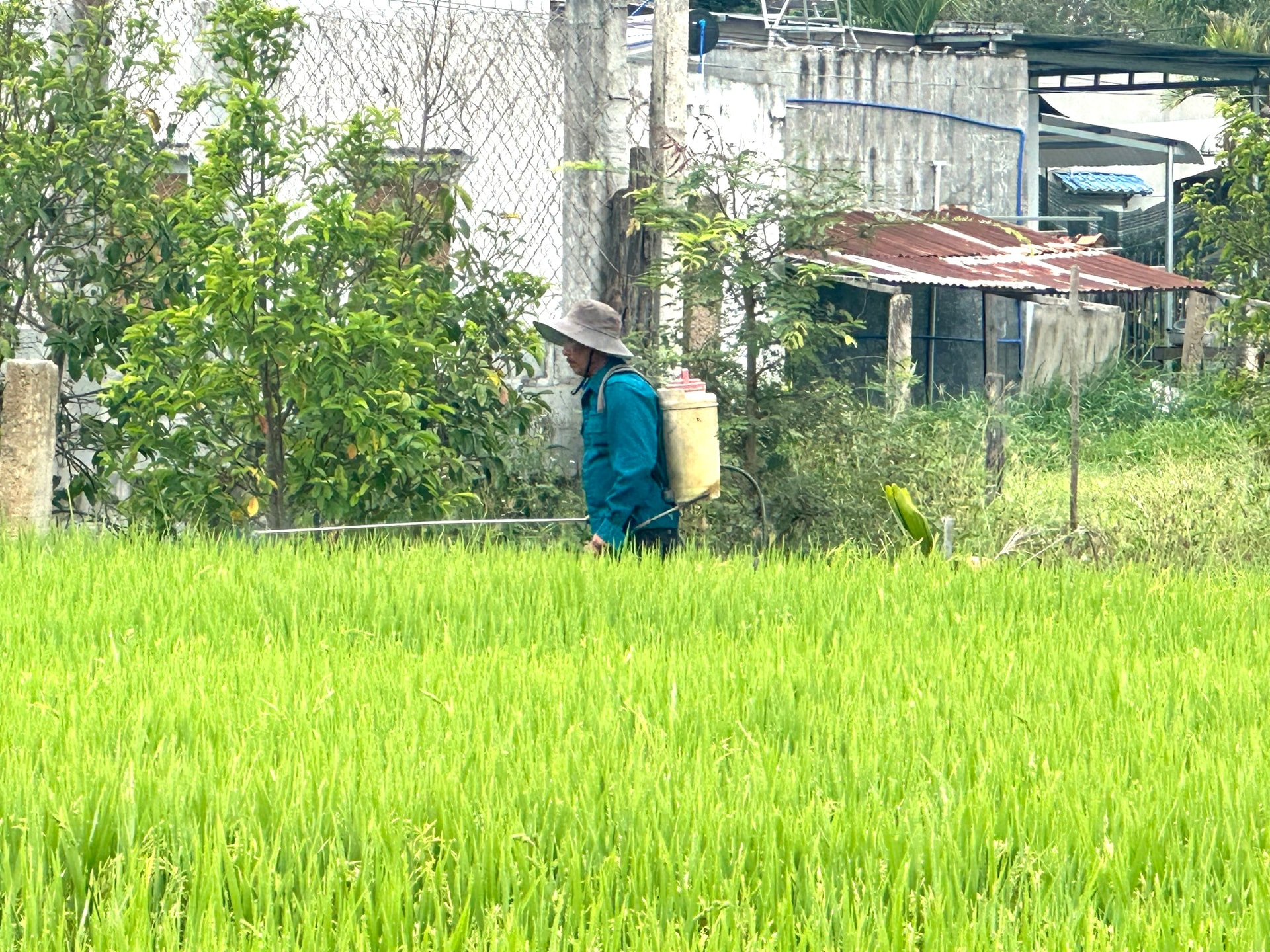
Under the scorching sun, Mr. Phung Van Sy (Tu Son village, Song Luy commune) cautiously wades through the rice field, meticulously removing weeds and unwanted rice plants that could affect the yield and quality of his family's rice crop. This winter-spring season, Mr. Sy's family cultivated 7.5 sao (approximately 0.75 hectares) of rice in the Tu Son village field, benefiting from the water flowing in from Dai Ninh Lake. Looking at the rice plants, which are densely covered with ripening grains and developing well, Mr. Sy said that the rice will be ready for harvest in about a month and he estimates a higher yield.
Another farmer in the same village, Mr. Dam Van Hien, who cultivates over 1 hectare of winter-spring rice, shared a similar assessment: This year's winter-spring crop has had plenty of sunshine, favorable irrigation, and minimal pest and disease damage, resulting in very good rice growth for his family, with an estimated average yield of over 6.5 quintals per sao (approximately 650 kg per 1000 square meters). However, the farmers hope that the price of rice will be higher at harvest time to bring them a profit.

According to the People's Committee of Song Luy commune, in the 2025-2026 winter-spring crop season, the locality has approximately 570 hectares of rice, with many new high-yield, high-quality rice varieties such as Dai Thom 8, OM 18… Up to this point, thanks to favorable weather conditions, pests and diseases have only caused scattered damage, and the rice plants are developing very well.
Not only in Song Luy commune, but also in other communes such as Hong Thai, Bac Binh, and Ham Liem, many rice fields are developing favorably, with expectations of a bumper harvest. Similarly, in the rice-growing areas of Tanh Linh and Bac Ruong communes, local authorities have had specific production plans since the beginning of the winter-spring crop season. These plans prioritize rice production in areas with reliable irrigation, promoting large-scale rice farming, and linking it with high-quality rice-growing regions.
Optimizing existing water resources
For example, in Tanh Linh commune, the People's Committee reported that this year's winter-spring crop covers nearly 3,600 hectares, including 2,930 hectares of rice. Based on the production plan, the water-using cooperatives in the commune have proactively scheduled irrigation water distribution in the fields, allowing farmers to prepare the land, sow seeds, and care for their crops.
In addition, the local authorities advise farmers to proactively dredge main canals and field irrigation ditches to ensure water flow into the fields. Simultaneously, they recommend arranging crop varieties with similar growth periods to facilitate supply, ensure good production, and increase economic efficiency. Furthermore, farmers are advised to limit the use of pesticides, especially during the harvest season, to avoid pesticide residue and ensure product safety.
To ensure production plans and harvest values during the dry season, the provincial agricultural sector requests that localities and farmers regularly inspect and dredge canals and reservoirs, promptly addressing leaks to optimize existing water resources. In addition, they should apply rotational irrigation methods and advanced irrigation techniques (sprinkler irrigation, drip irrigation) to maximize water savings for both short-term and perennial crops. Farmers should regularly inspect their fields and implement pest and disease control measures such as thrips, stem borers, brown planthoppers, white-backed planthoppers, leaf blast, neck blast, and black kernel disease, which can occur during critical periods of rice growth, to achieve the highest possible production efficiency.


According to the Provincial Department of Crop Production and Plant Protection, the entire province has currently cultivated over 54,600 hectares of winter-spring rice, of which the southeastern region accounts for over 38,840 hectares, currently in the seedling, tillering, heading, flowering, ripening, and harvesting stages (depending on the area).
Source: https://baolamdong.vn/mong-cho-vu-lua-boi-thu-429752.html