

The risk of rabies outbreaks and fatalities in humans remains very high if effective prevention and control measures are not implemented. Notably, the hot summer months can trigger rabies outbreaks.
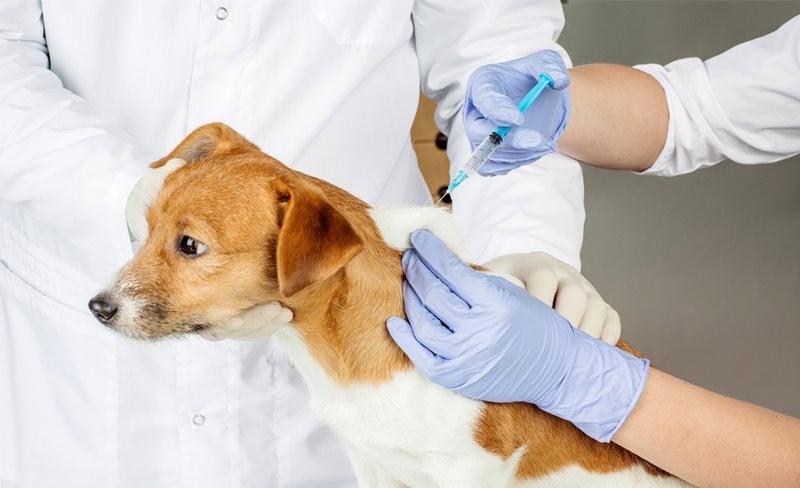
Over 5 years, 410 people died from rabies.
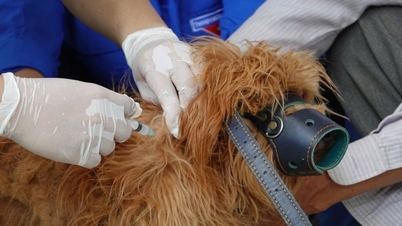
Over the past five years, Vietnam has recorded 410 deaths from rabies and more than 2.7 million people have received preventative treatment. Specifically, in 2022, the country recorded 70 deaths, and in the first three months of 2023, there were 23 deaths due to rabies. This information comes from the Ministry of Health . In Binh Thuan province, in 2022, the province recorded 3 deaths suspected to be due to rabies. Recently, a patient in Lien Huong (Tuy Phong) died suspected of rabies. The patient was bitten by a domestic dog six months prior to the bite, and this dog had not been vaccinated against rabies. Notably, the patient did not receive rabies vaccination after being bitten. This is the first suspected rabies death in Binh Thuan since the beginning of 2023. This highlights the high risk of rabies outbreaks and fatalities in humans if effective prevention and control measures are not implemented.
According to doctors, the incubation period for rabies varies from person to person; it is usually 2-8 weeks, but can be as short as 10 days or as long as a year. The incubation period depends on the amount of virus that enters the body, the depth of the bite, and the distance from the wound to the brain. When rabies symptoms appear, both animals and humans die. Therefore, rabies vaccination is necessary for dogs and cats, and for humans after being bitten by them. Notably, this is the hot summer season – conditions favorable for rabies outbreaks.
However, the situation of dogs not being muzzled or leashed, roaming freely everywhere, is easily encountered when traveling on the streets. Besides the risk of dog attacks causing injuries and transmitting rabies, dogs also defecate indiscriminately in residential areas and public places. Furthermore, dogs running across the road unexpectedly can cause drivers to fall or cause traffic accidents.
The law stipulates it, but it is not being followed.
Meanwhile, Clause 2, Article 7 of Government Decree No. 90 stipulates administrative penalties in the field of veterinary medicine ranging from 600,000 to 800,000 VND for the act of not vaccinating animals against rabies when vaccination is mandatory, not muzzling dogs, or not keeping dogs on a leash or having someone accompany them when taking dogs to public places. Point b, Clause 1, Article 7 of Government Decree No. 144 stipulates a warning or a fine of 300,000 to 500,000 VND for the act of letting pets roam freely in urban areas or public places. Although legal documents have been issued with specific regulations on the responsibilities of dog owners and the penalties for letting dogs roam freely, in reality, many households raising dogs and cats violate these provisions without being penalized.
Looking beyond the province, several provinces and cities have established teams to catch stray dogs without muzzles and animals infected with rabies, and have been enforcing rabies vaccination for dogs and cats since 2022. In addition, dog and cat owners must register and make commitments with the local authorities, keeping their dogs leashed, confined, or within their family premises; when taking them outside, they must be leashed, muzzled, and accompanied by a person…
Dr. Le Van Hong, Deputy Director of the Binh Thuan Department of Health, shared: Following a suspected rabies death in Tuy Phong, the Binh Thuan Department of Health has requested the Provincial Department of Agriculture and Rural Development to continue focusing on rabies prevention and control in animals. This includes promoting and encouraging families to vaccinate their dogs and cats against rabies; providing guidance on managing stray dogs and cats in the community; and implementing measures to address stray dogs and cats in the community. Furthermore, it emphasizes strengthening communication on rabies prevention and control in animals to prevent transmission from animals to humans; monitoring, detecting, and handling rabies outbreaks in animals; and promptly sharing information so that the health sector can proactively implement measures to prevent transmission to humans.
Source

![[Photo] General Secretary and President To Lam and the President of the Philippines hold talks.](https://vphoto.vietnam.vn/thumb/1200x675/vietnam/resource/IMAGE/2026/06/01/1780283481955_vna-potal-tong-bi-thu-chu-tich-nuoc-to-lam-va-tong-thong-philippines-hoi-dam-8797519-1429-jpg.webp)










































































































Comment (0)