

This natural resource is considered a "gift from heaven," as it contains many nutrients beneficial to human health, and it also provides many people with an additional source of income. However, searching for mushrooms requires extreme caution to avoid mistakenly picking poisonous ones.
Termite mushrooms are not easy to find.
Termite mushrooms, scientifically known as Termitomyces albuminosus, are so named because they typically only appear in areas with termite nests (distinguishing them from tree-dwelling termites). Termite mushrooms have a distinctive aroma and are rich in calcium, phosphorus, iron, protein, and other nutrients, making them very beneficial to human health. They only appear during the early months of the rainy season, from approximately May to July each year.
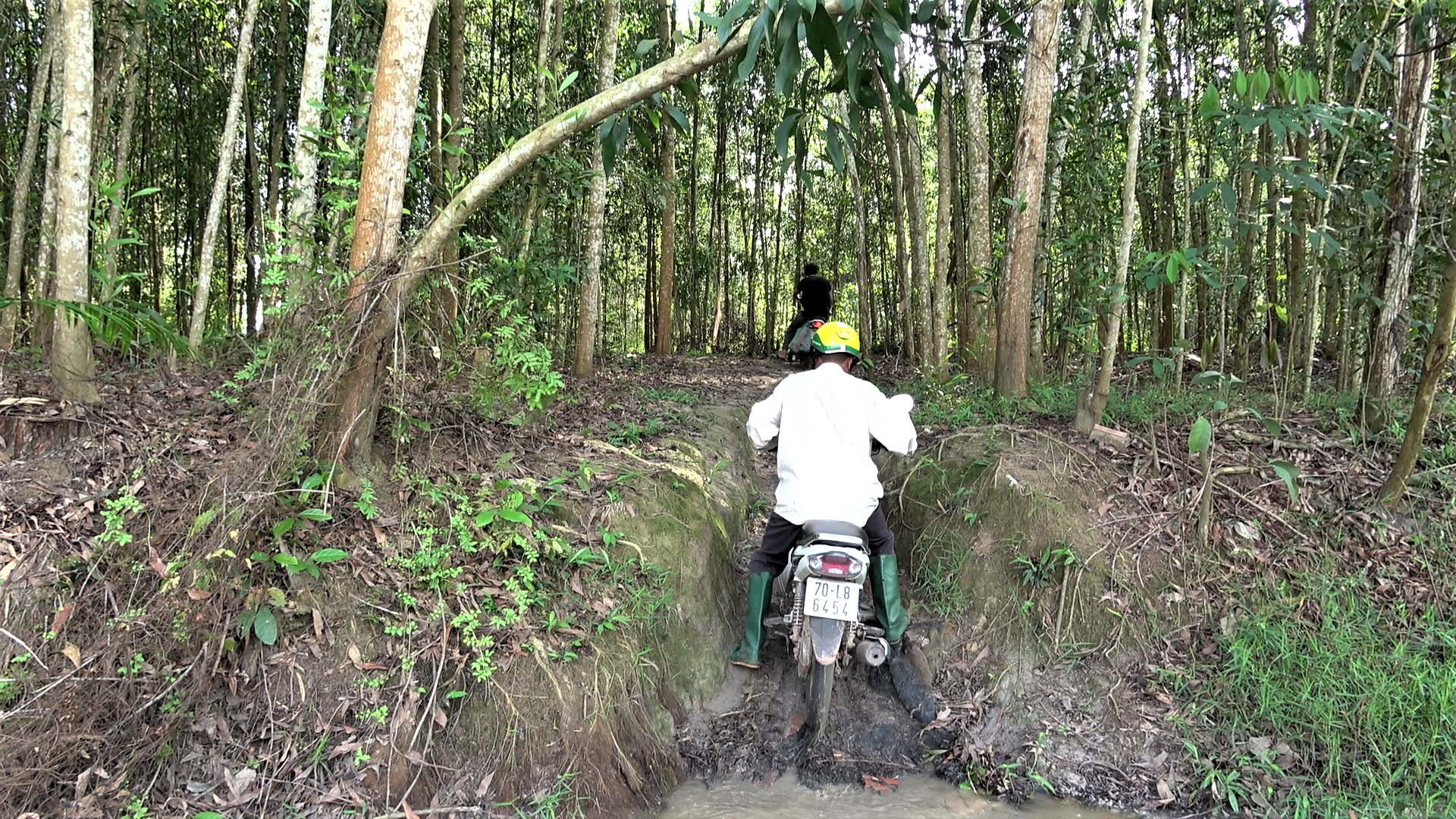
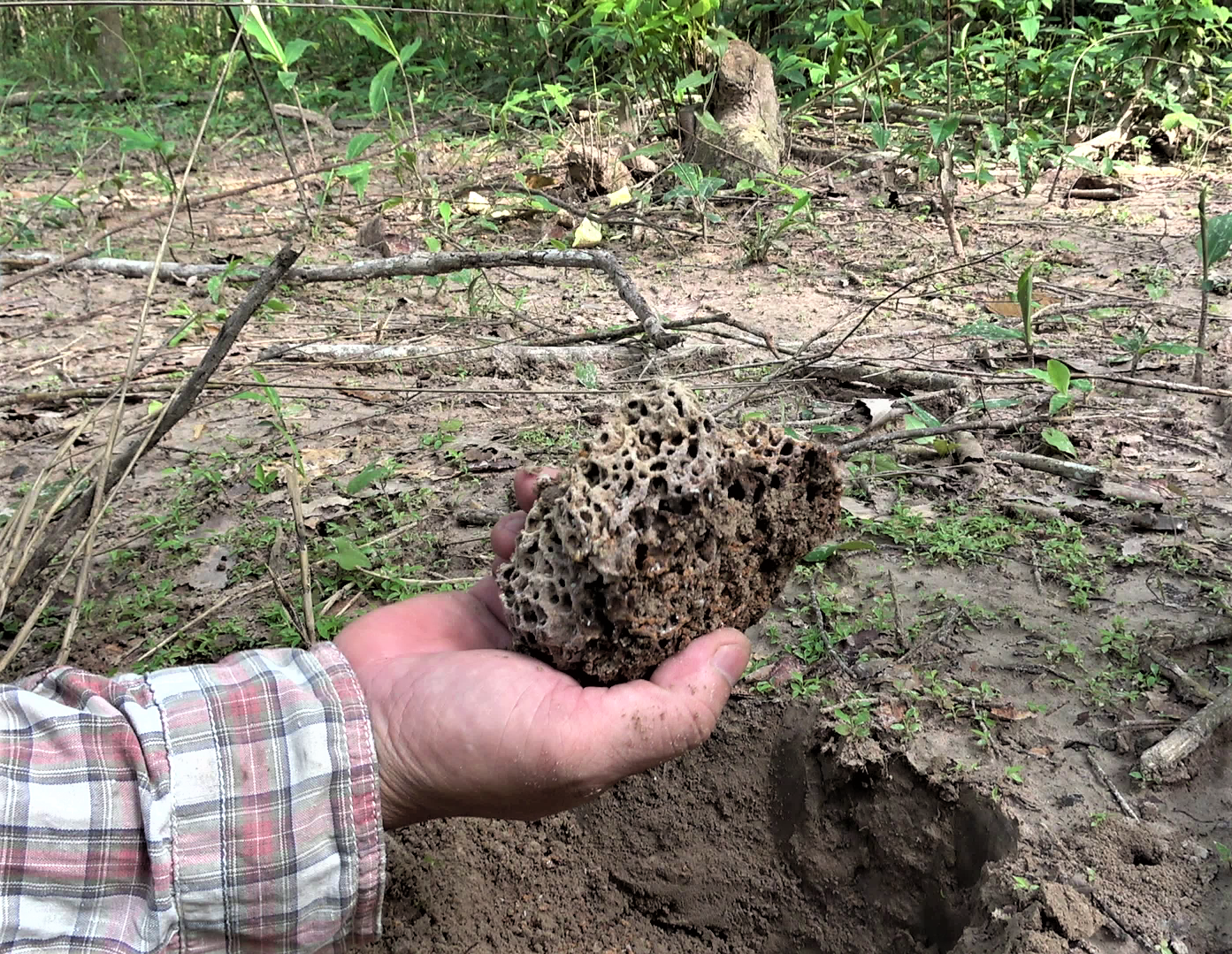
In Tay Ninh province, termite mushrooms typically grow in rubber plantations, under the canopy of natural or planted forests. Notably, this type of organism only grows in areas where termite nests are present or have previously existed. Most termite mushrooms grow from a type of mycelium found in the termite nest's "lungs" (a round mass about 15cm in diameter). In reality, not every location with termite nests will have termite mushrooms, making the search for them extremely difficult, relying mainly on experience and luck.
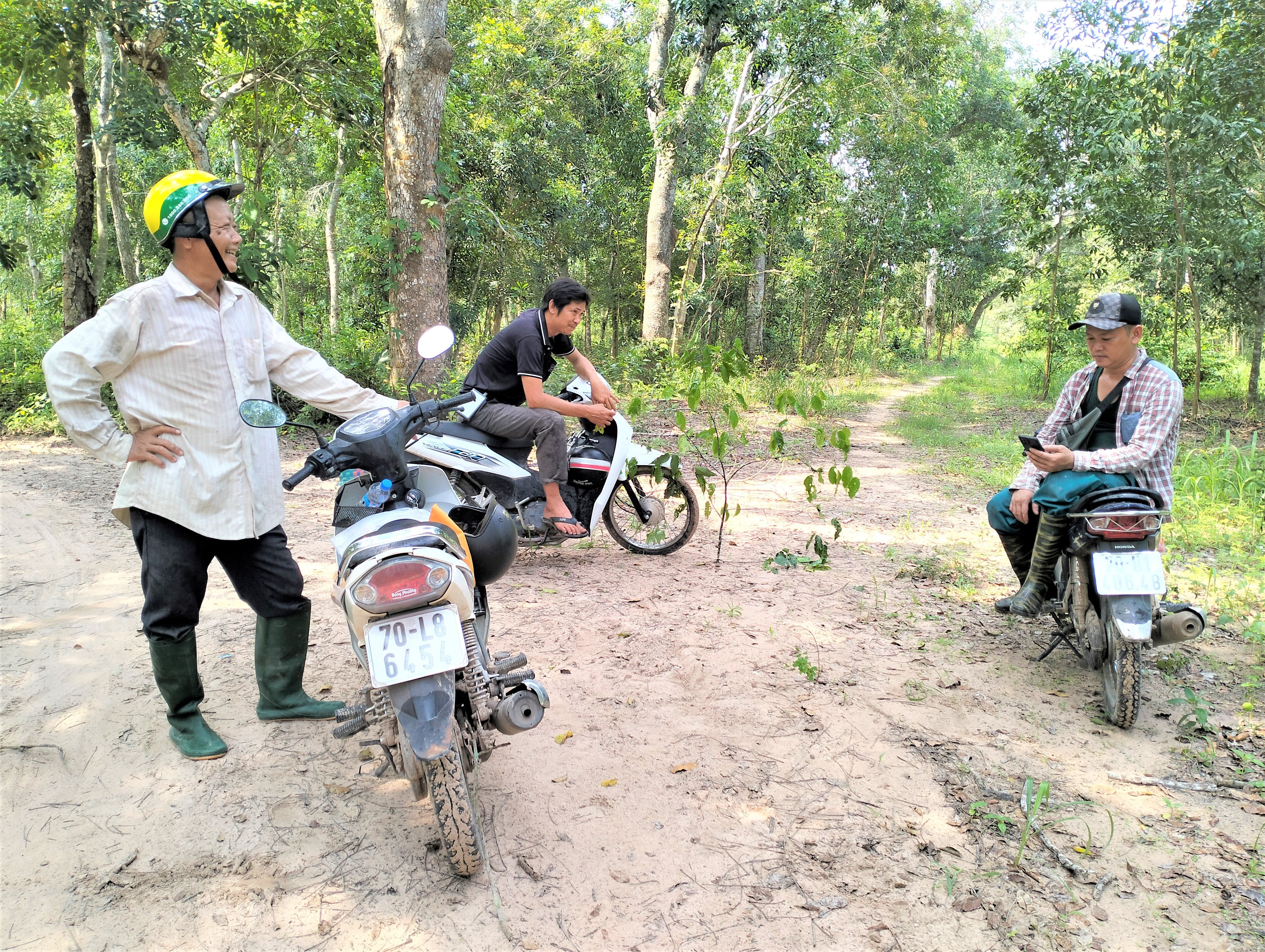
Recently, reporters from Tay Ninh Newspaper and Radio and Television had the opportunity to accompany a group of three people, including Mr. Chu Van Quang, Mr. Nguyen Thanh Tu (both residing in Thanh Binh commune, Tan Bien district), and Mr. Le Van Ben (residing in Hoa Thanh town), on a mushroom hunting trip.
Mr. Quang said that during mushroom season, dozens of people in Thanh Binh commune specialize in searching for mushrooms to sell and earn extra income. When they set off, they usually travel together, creating a lively atmosphere. However, once they reach the area where they need to find mushrooms, they split into smaller groups to expand their search area and achieve greater efficiency.
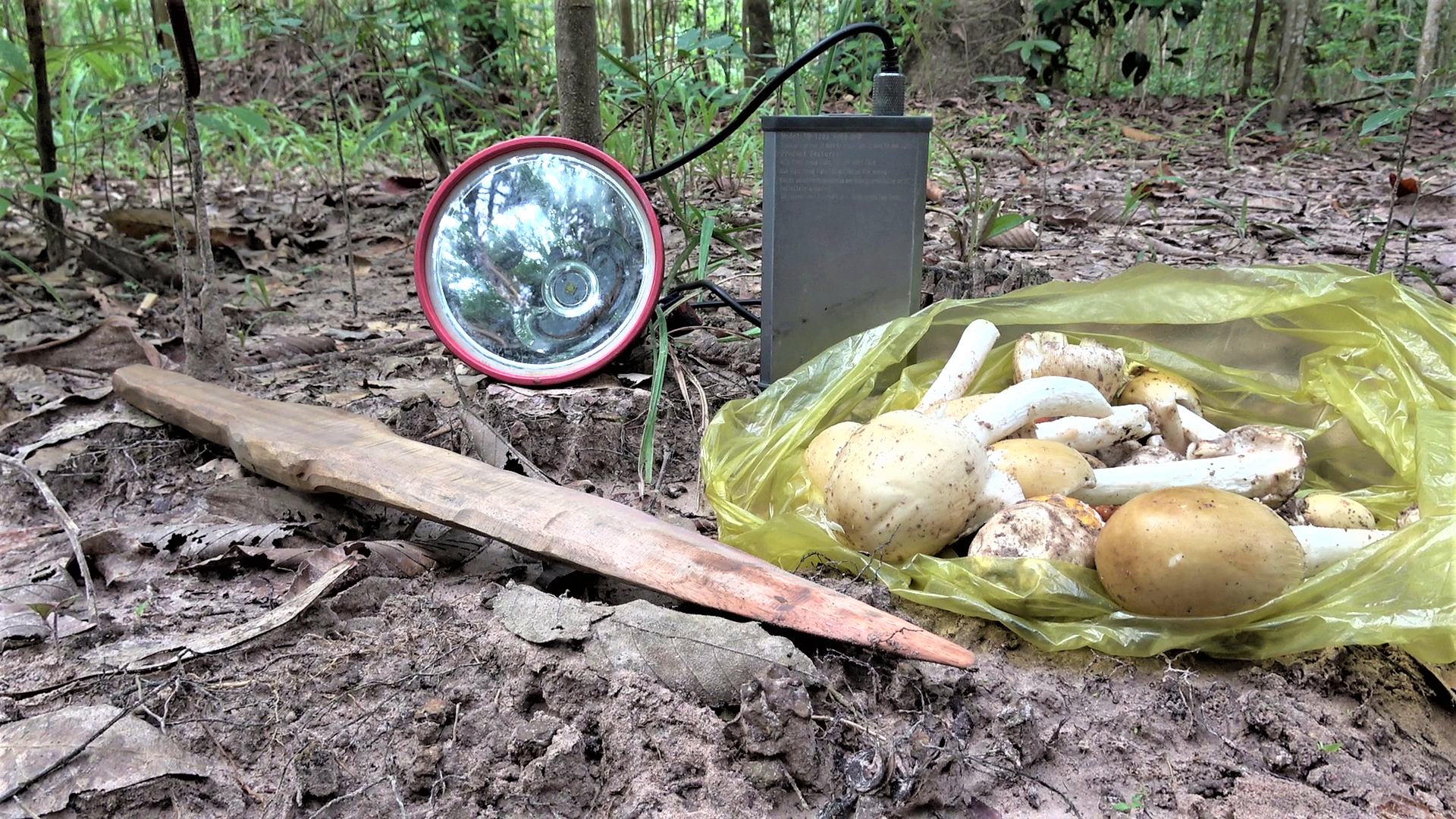
According to Mr. Quang, before setting off to hunt for mushrooms, each person must proactively fill up their motorbike's gas tank, bring food, water, a headlamp, a fully charged mobile phone, and a sharpened wooden stick resembling a knife blade for picking mushrooms.
When starting to search for mushrooms in the field, the small group would often split up, each person going in a different direction, venturing into large plantations, natural forests, and rubber plantations. Therefore, getting temporarily separated from the group was common, as mushroom searching mainly took place at night, limiting visibility, leading to lost routes, and loss of phone signal. In such situations, the preparations each person had to make were essential to ensure the safety of all group members and to help them find their way back to the meeting point.
Mr. Quang further shared that the ideal time to find termite mushrooms is at night, because when the flashlight beam shines on the mushrooms, there is a reflection effect, making them easy to spot. Furthermore, at this time, the mushroom caps are still in bud, so traders buy them at a higher price. However, nighttime often brings rain, posing dangers such as lightning, falling trees, and reduced visibility, making it difficult to avoid venomous animals in the dark, dense forest.
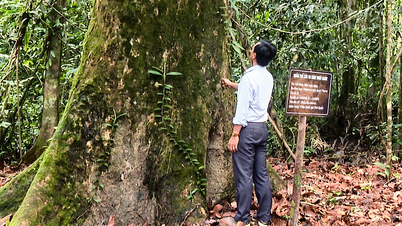
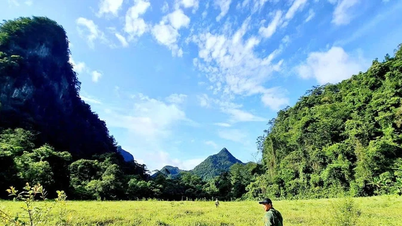
On this mushroom hunting trip, Mr. Quang's group chose the morning hours. Their destination was the planted forests and a portion of the adjacent natural forests within the Lo Go – Xa Mat National Park; they also expanded their mushroom search to rubber plantations stretching from Tan Lap commune through Thanh Bac commune in Tan Bien district.
Spending an entire day following mushroom hunters, one truly understands the hardship, difficulty, and even danger involved in searching for this "gift from nature." Most mushroom hunters spend their time walking and carefully observing the ground in the forest, crawling or hiding under low-lying bushes close to the ground, and dense thickets of vines; only in rubber plantations is it possible to drive a vehicle.
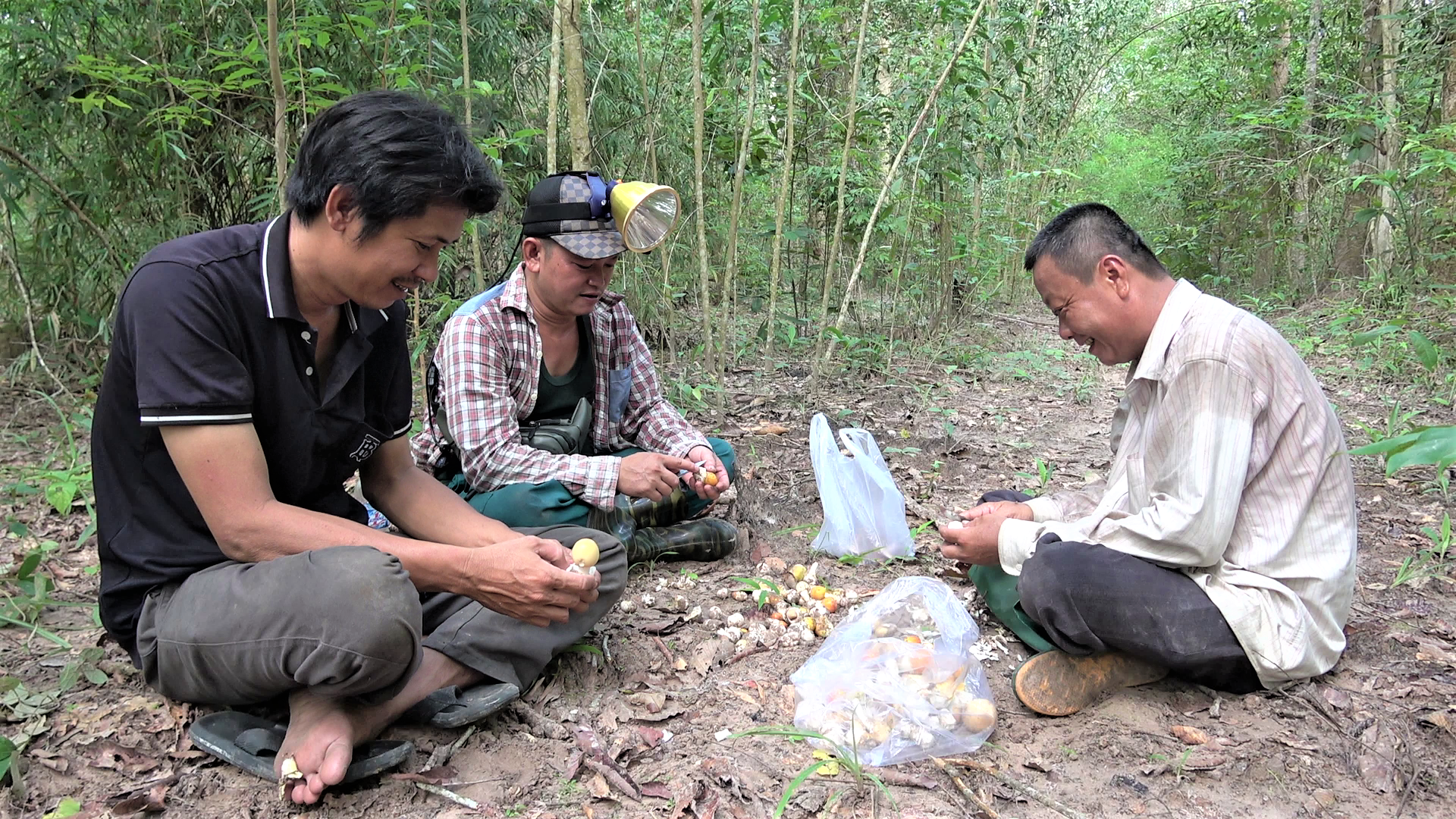
Even in broad daylight, mushroom hunters still had to use flashlights, hoping that the focused beam of light would help them spot the reflective properties of termite mushrooms. After more than four hours of walking and hiding in the forest, Mr. Quang's group found no termite mushrooms; each person only managed to find a little over 2 kg of egg-shaped mushrooms.
After the group cleaned the remaining soil from the mushroom eggs at the collection point, Mr. Quang decided to head to the rubber plantations to continue searching for termite mushrooms. After another two hours of driving through the rubber plantation, Mr. Quang was lucky enough to find a "nest" of termite mushrooms; all the mushrooms, after being dug up, weighed approximately 2 kg.
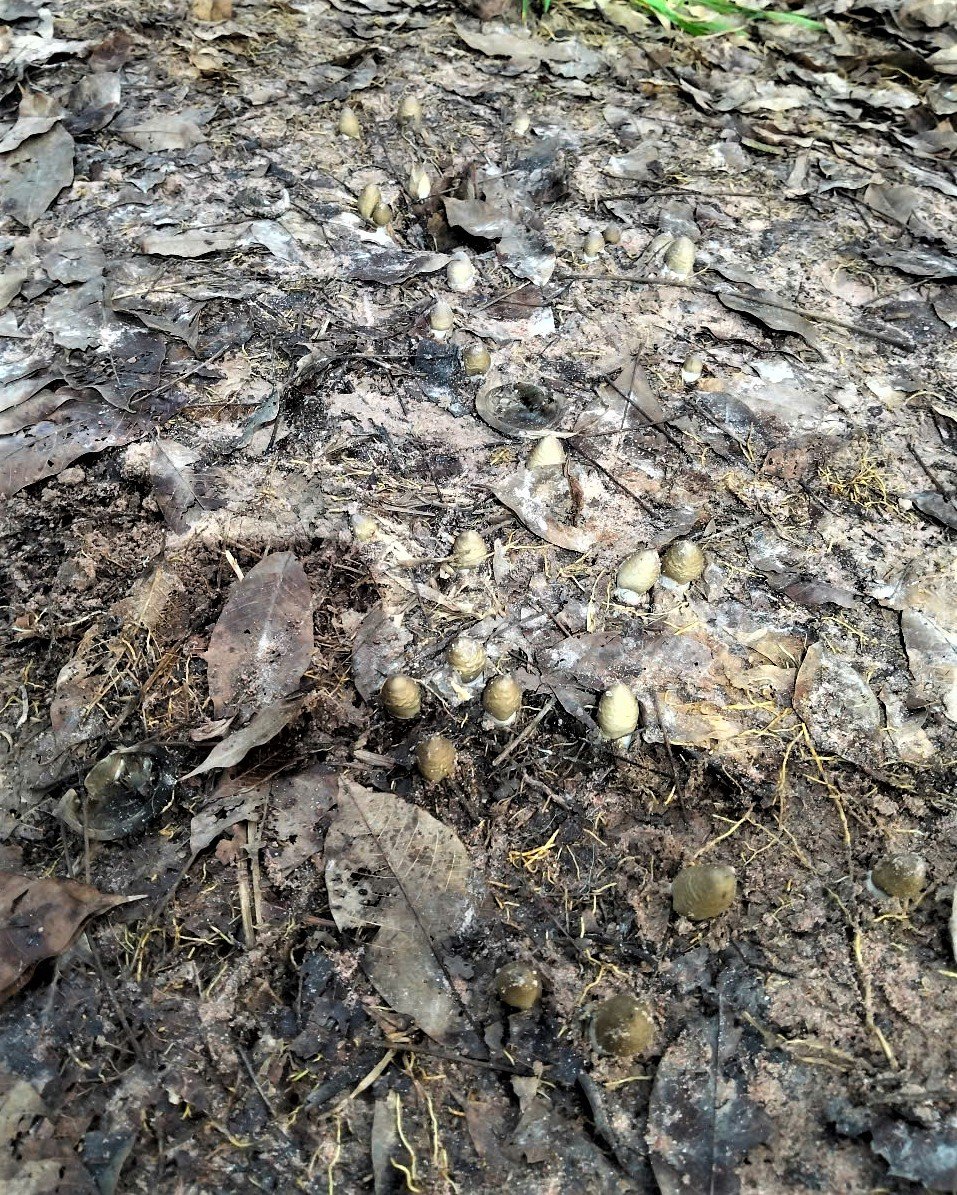
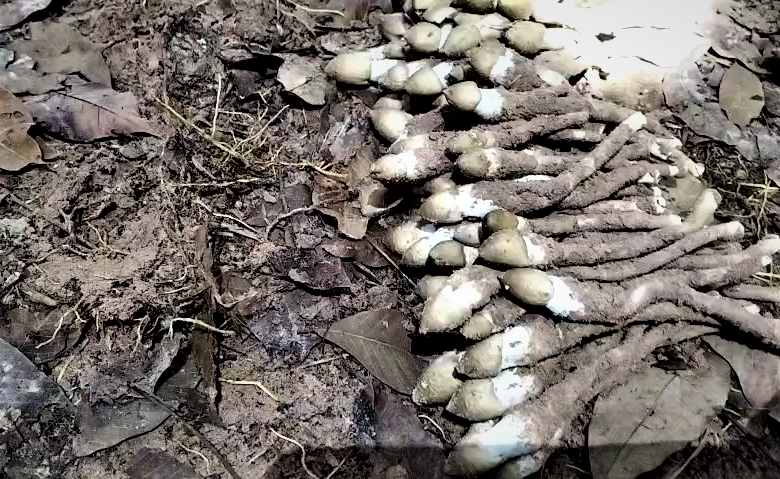
With current selling prices ranging from 500,000 to 600,000 VND per kilogram (depending on the number of mushrooms in each cluster), Mr. Quang earned approximately 1 million VND from this termite mushroom hunting trip. According to the agreement, while splitting into groups to search for mushrooms, whoever discovers a "nest" of mushrooms gets to keep it all.
Mr. Quang confided that in recent years, termite mushrooms are not as abundant as before. The search for this rare treasure, a gift from nature, is mainly a hobby and a passion, as no one in the group has found a single termite mushroom nest in recent days. The reason could be the erratic weather patterns, prolonged heatwaves, and the increasing number of mushroom hunters who don't know how to maintain the nests for the next season.
According to Mr. Quang's experience, if a termite mushroom cluster is dug up with iron tools such as hoes, shovels, knives, crowbars, etc., that cluster will not regenerate the following year. Therefore, professional termite mushroom hunters only use wooden tools to dig up the mushrooms, and they must do so very carefully so that the soil around the mushroom's growth is not exposed, so that the mushrooms will grow again the following year.
Switch to hunting for egg mushrooms.
That morning, Mr. Ben and Mr. Tu couldn't find any termite mushrooms, so they stayed in the planted forest in Bau Ben hamlet, Thanh Bac commune, to look for chicken egg mushrooms and goose egg mushrooms (commonly called egg mushrooms by the locals). They're called that because their shape and color resemble chicken or goose eggs, and their nutrients and flavor are considered rare delicacies. In Tay Ninh province, egg mushrooms usually grow in areas with Dipterocarpus trees and other similar trees, coinciding with the termite mushroom season.
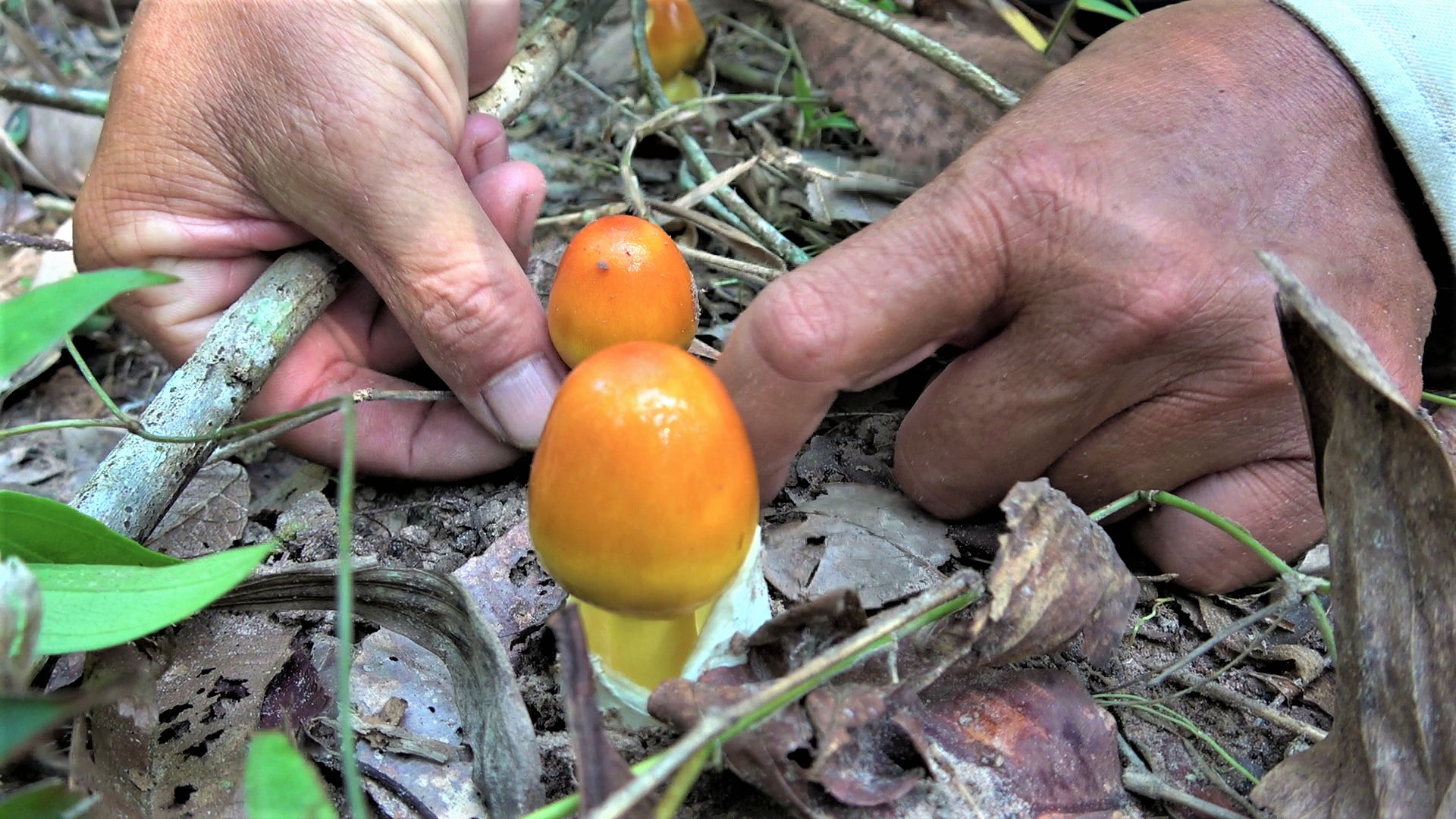
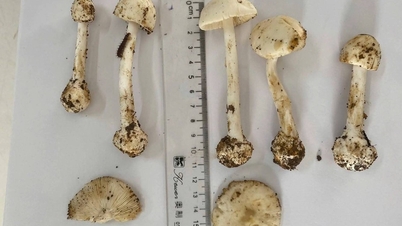
Mr. Tu further explained how to distinguish between the two types of mushrooms: the egg mushroom has an external shape similar to a chicken egg, with a bright orange cap and a certain smoothness on the surface; the stem is cylindrical, light yellow, and the part of the stem that touches the ground is surrounded by a thick white membrane.
Goose egg mushrooms are similar in shape and size to chicken egg mushrooms, but both the stem and cap are off-white. In terms of taste when cooked, they are equally delicious. Chicken egg mushrooms usually grow in clusters, while goose egg mushrooms grow individually.
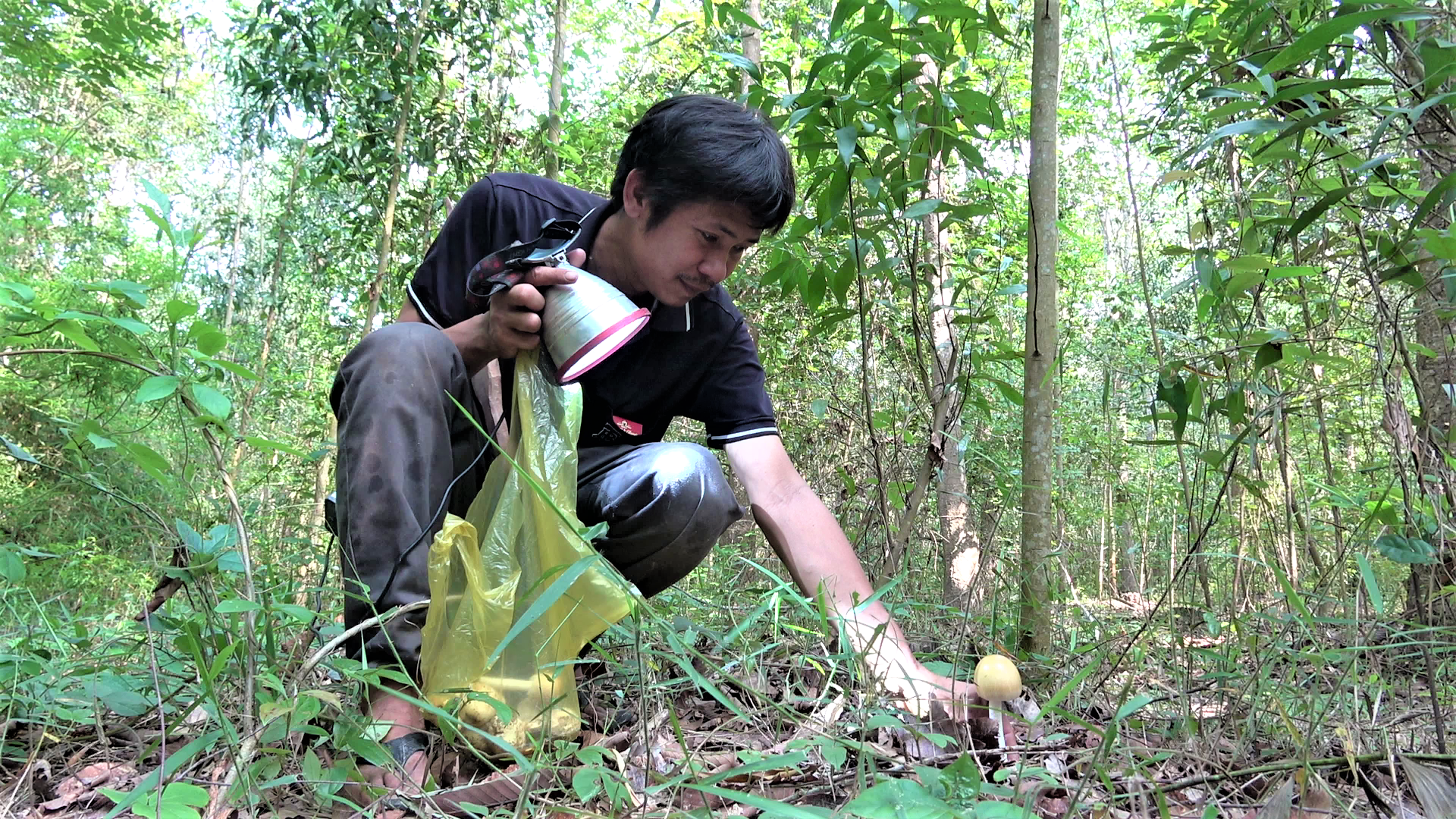
Mr. Ben said that hunting for egg mushrooms is relatively easier than hunting termite mushrooms. Egg mushrooms mainly grow scattered in forest plots planted with Dipterocarpus and Shorea trees, sprouting from a type of mycelium found on the layer of decaying leaves or dry branches of these two types of trees. A person who is willing to walk through the forest to find egg mushrooms can harvest about 5 kg in a day. Currently, traders buy egg mushrooms at prices ranging from 80,000 to 130,000 VND/kg, depending on the size of the mushrooms; those with buds still open fetch a higher price than those that have fully bloomed.
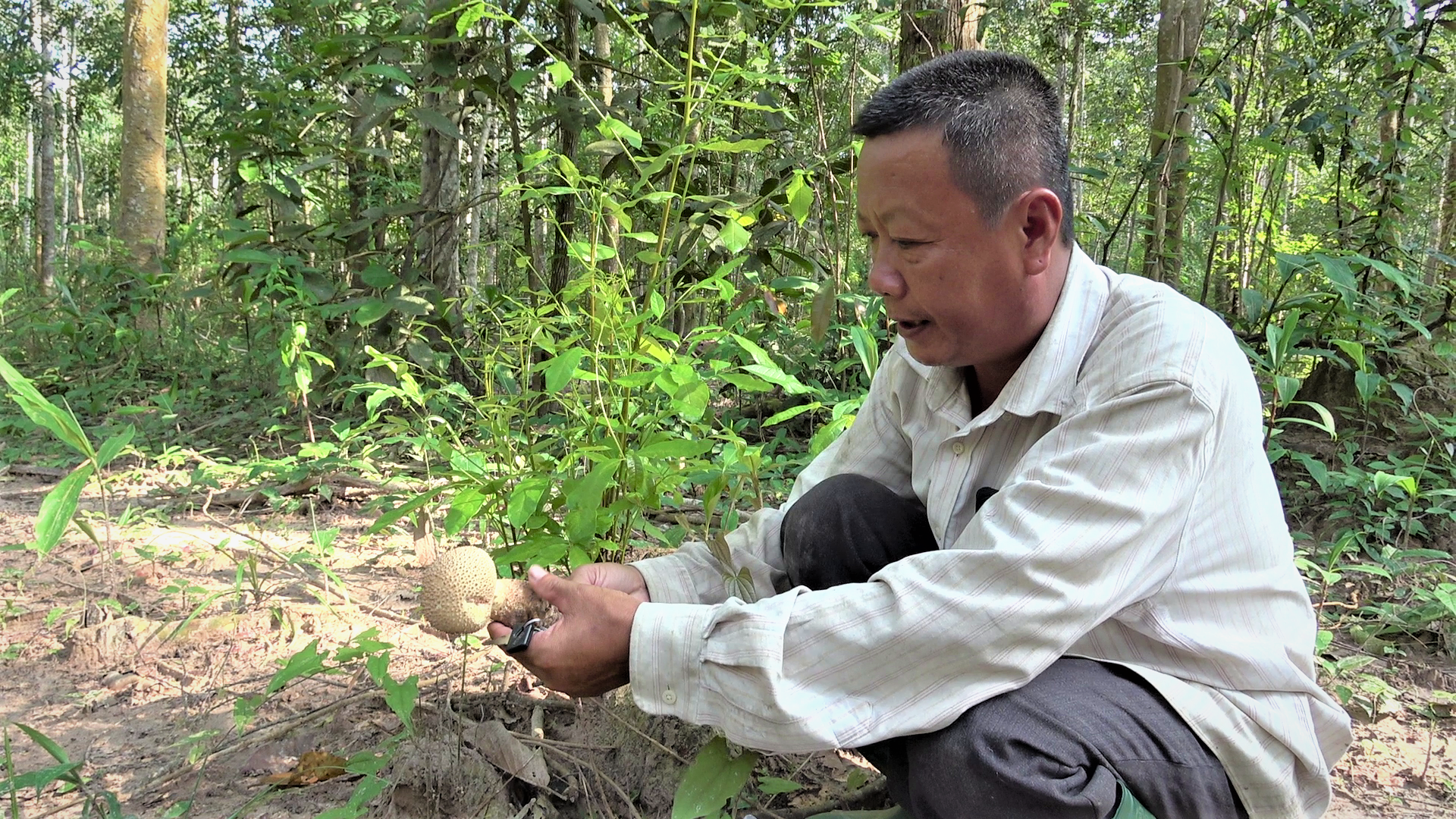
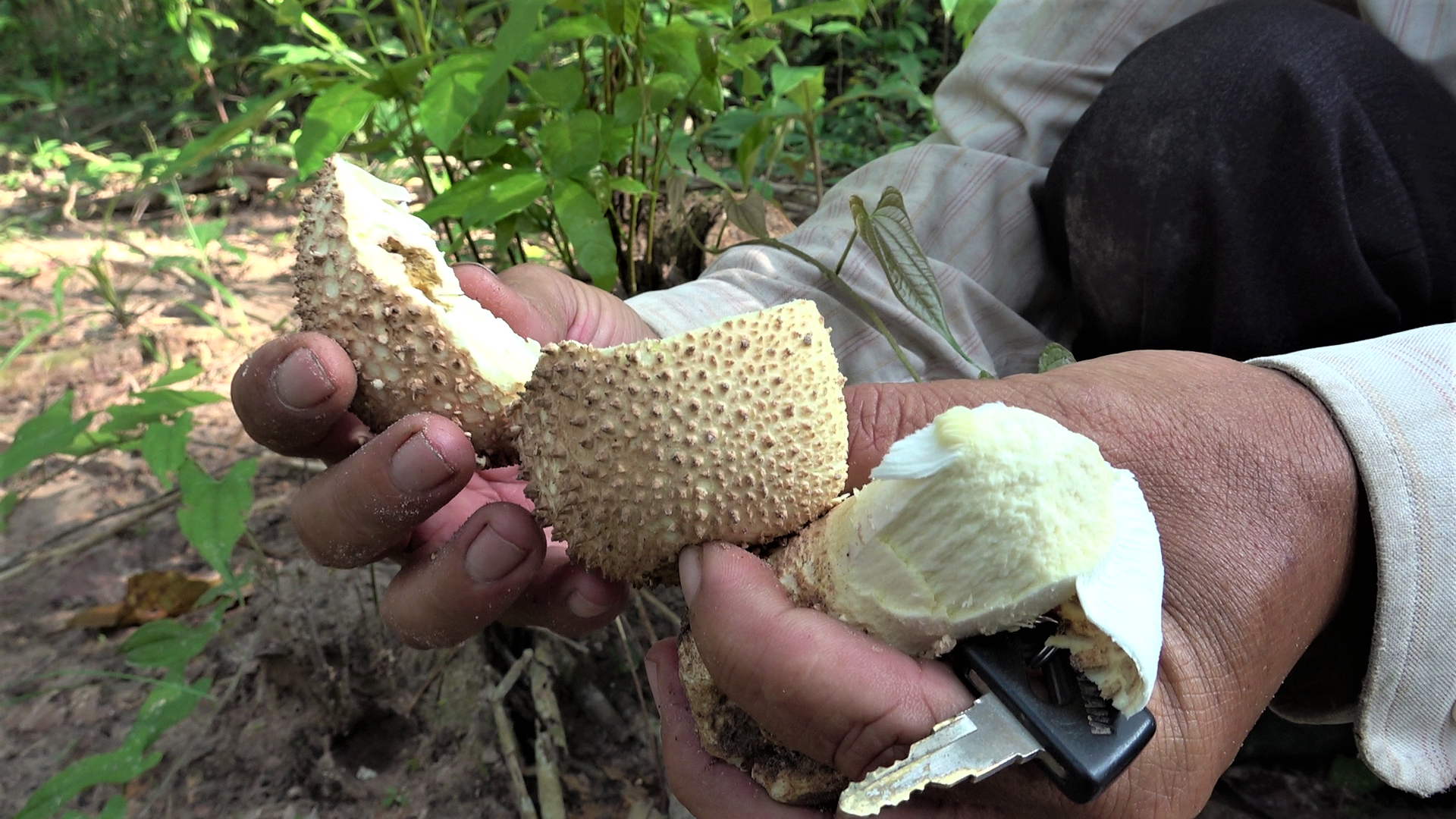
Mr. Ben specifically noted that at the beginning of the rainy season, many types of poisonous mushrooms with shapes similar to termite mushrooms, chicken egg mushrooms, and goose egg mushrooms appear in the forest. Therefore, those without experience with mushrooms need to be extremely careful to avoid mistakenly picking poisonous mushrooms.
In fact, there is a type of poisonous mushroom that looks very similar to the termite mushroom, but its stem is thin, soft, and short, clinging shallowly to the ground rather than deeply embedded like the termite mushroom. Another type of poisonous mushroom also has a similar appearance to the goose egg mushroom, but upon closer inspection, one can see many small, light brown spots on the mushroom cap.
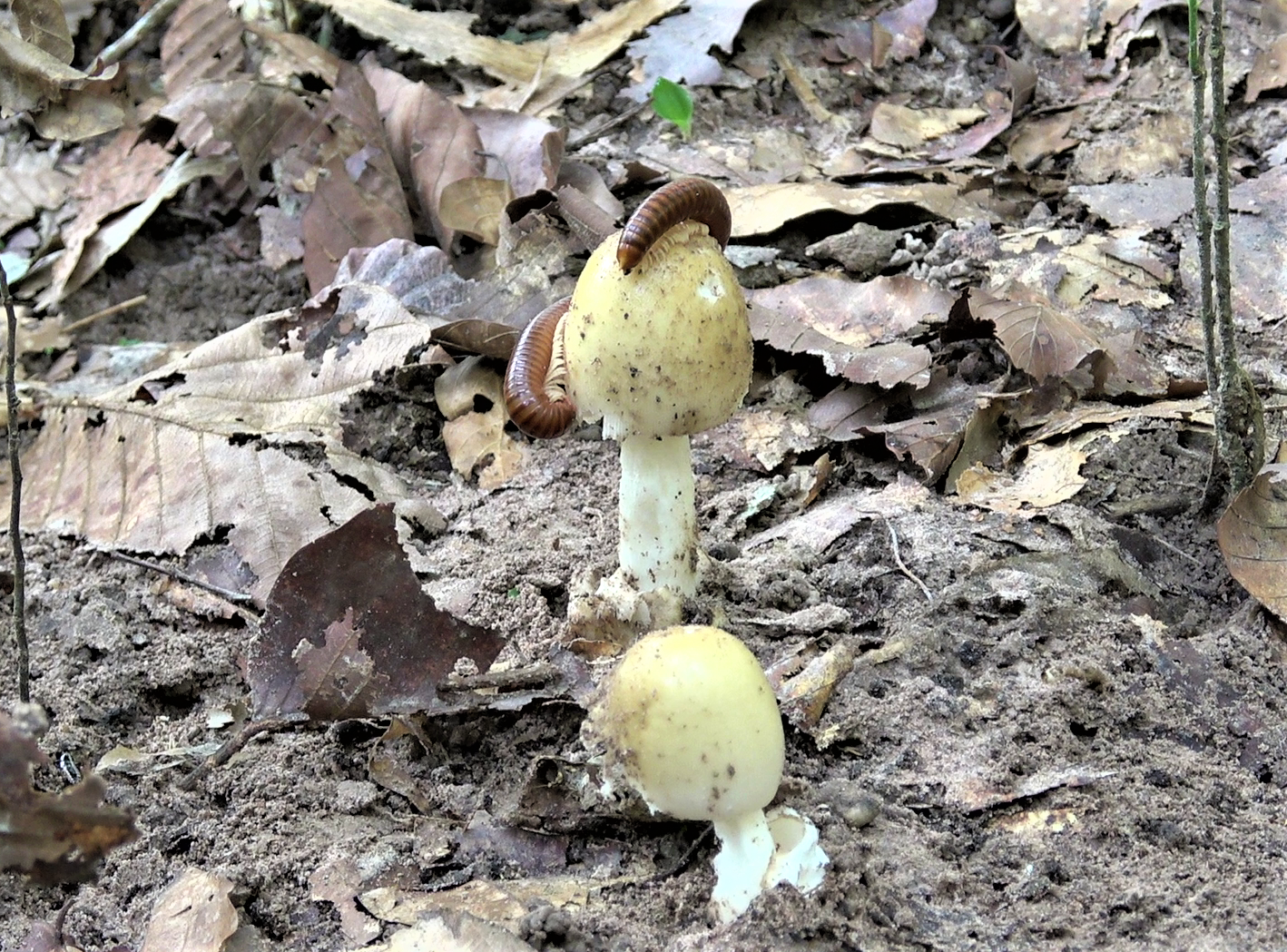
According to Mr. Ben, non-toxic mushrooms usually attract many insects, especially millipedes, which are very fond of eating mushroom eggs and termite mushrooms. However, this method of identification carries many risks, as poisonous mushrooms are occasionally found being gnawed by insects. Ideally, if someone is unfamiliar with mushrooms, before picking them for cooking or selling to traders, they should ask an experienced person to identify them to ensure safety and avoid mushroom poisoning incidents like those that have occurred in the past.
Quoc Son
Source: https://baotayninh.vn/mua-san-nam-a191905.html
![[Photo] Admire the coral "masterpiece" amidst the million-year-old heritage of Dak Lak province.](https://vphoto.vietnam.vn/thumb/1200x675/vietnam/resource/IMAGE/2026/05/31/1780221235105_anh-man-hinh-2026-05-31-luc-16-53-27.png)
![[Photo] Solemn bathing ceremony and Buddha procession in Hue](https://vphoto.vietnam.vn/thumb/1200x675/vietnam/resource/IMAGE/2026/05/31/1780228263543_1-jpg.webp)
![[Image] Hanoi Police officially crowned champions of V-League 2025/2026](https://vphoto.vietnam.vn/thumb/1200x675/vietnam/resource/IMAGE/2026/05/31/1780244769054_ndo_br_039d561b692be875b13a-jpg.webp)

![[Photo] The General Secretary, President and his wife begin their state visit to the Philippines.](https://vphoto.vietnam.vn/thumb/1200x675/vietnam/resource/IMAGE/2026/05/31/1780230559452_anh-man-hinh-2026-05-31-luc-19-28-11.png)




















![[Video] Sunset at Lap An Lagoon – Where the sun sets over the fishing nets](https://vphoto.vietnam.vn/thumb/340x192/vietnam/resource/IMAGE/2026/05/31/1780192137701_beach-landscape-sea-water-nature-grass-745871-pxhere-com.jpeg)




































![[Photo] Admire the coral "masterpiece" amidst the million-year-old heritage of Dak Lak province.](https://vphoto.vietnam.vn/thumb/402x226/vietnam/resource/IMAGE/2026/05/31/1780221235105_anh-man-hinh-2026-05-31-luc-16-53-27.png)



























Comment (0)