

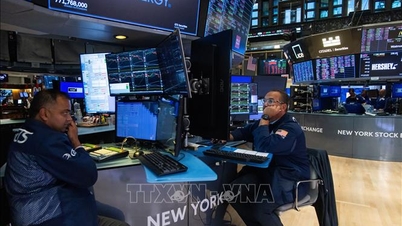
Against the backdrop of a projected continued strong economic growth in 2026 and the entry into a new phase, the stock market has increasingly proven to be an effective channel for mobilizing medium and long-term capital for the economy. In particular, the stock market is expected to be upgraded in 2026 according to FTSE's announcement, thereby boosting both domestic and foreign capital inflows into the market.
In this new phase of development and deep international integration, to ensure solid and stable growth, capital flows into the market must also be of higher quality and more sustainable. So, what kind of quality capital flows does the capital market and stock market need, and how can we attract these capital flows into the Vietnamese market more strongly in 2026, as well as in the new development phase?
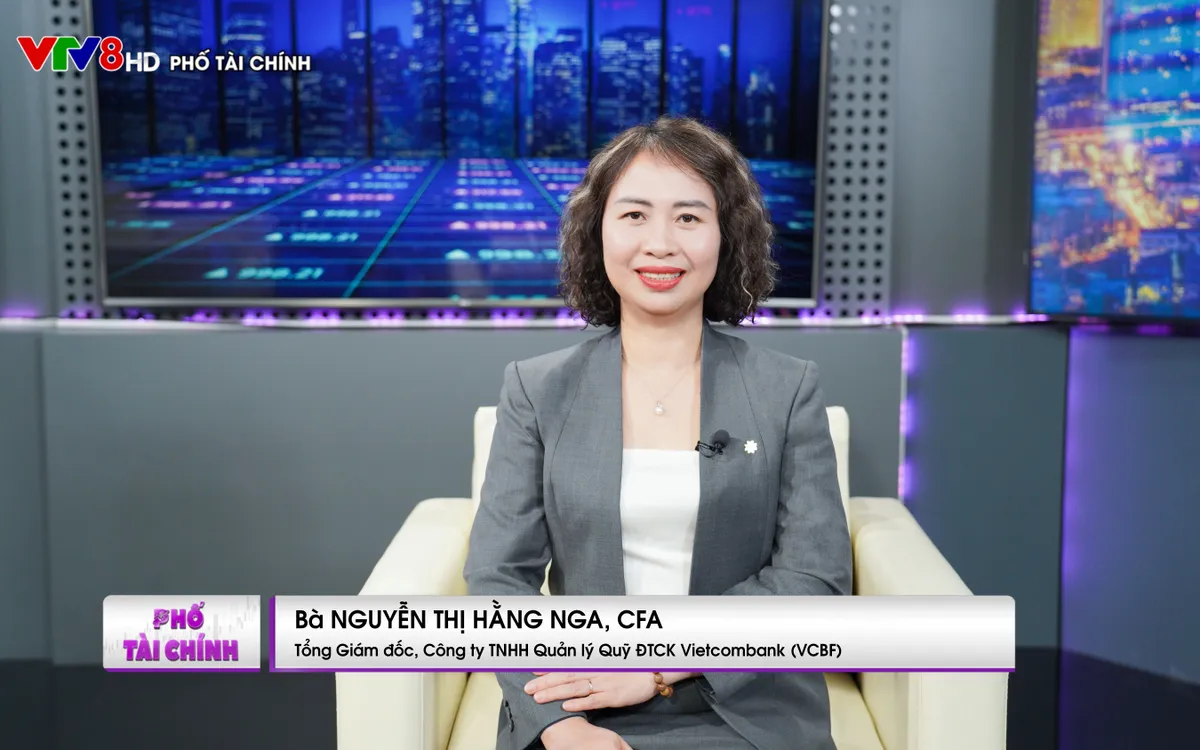
Discussing this issue on the Finance Street Talk show on VTV8, Ms. Nguyen Thi Hang Nga, CFA and General Director of Vietcombank Investment Fund Management Company Limited (VCBF), stated that to increase both the quantity and quality of capital inflow into the market, it is necessary to promote solutions, especially the development of institutional investors and professional investment funds, thereby increasing the stability and sustainability of the stock market in the new phase.
Editor Mui Khanh Ly : As you know, according to the planned schedule, the Vietnamese stock market will be announced to be upgraded this March and officially upgraded to FTSE Russell status in September. So, in your opinion, what will the capital flow into the market be like?
Ms. Nguyen Thi Hang Nga, CFA, General Director of Vietcombank Investment Fund Management Company Limited (VCBF): Typically, the stock market will react both before and after information is released. Therefore, I believe that capital inflow into the market will occur in three phases.
Prior to March 2026, active capital flows increased as investors traded based on expectations of an upgrade, coming from both domestic and foreign investors. For example, Kuwait received a net inflow of $700 million in the second half of 2018 before being upgraded by FTSE (up from $200 million/year previously). We also witnessed this anticipated capital flow in Vietnam's securities sector in Q3 2025, with this group increasing by over 60% from the end of June to the beginning of September 2025.
From March to September 2026, FTSE is expected to continue evaluating the potential upgrade of the Vietnamese stock market during its mid-term review in March, before the official upgrade takes effect in September 2026. During this period, we expect continued capital inflows into the market. Foreign investment will primarily come from actively managed funds.
After September 2026, the period following Vietnam's official upgrade, passive capital flows from ETFs benchmarked by FTSE Emerging will begin to be disbursed. Vietnam is expected to attract $0.5 billion in passive capital. Inflows from active funds are also expected to continue gradually if attractive investment opportunities arise. Domestic investors may seek to realize profits during this period if the market has already experienced strong growth.
Editor Mui Khanh Ly : In this new phase of development, the flow of capital into the market also needs to change as the market integrates more deeply. How do you assess the quality of capital flows in the stock market today?
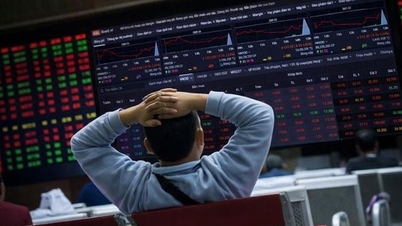
Ms. Nguyen Thi Hang Nga, CFA, General Director of Vietcombank Investment Fund Management Company Limited (VCBF): The Vietnamese stock market currently still mainly comes from domestic individual investors. Individual capital flows are often short-term, highly speculative, and are strongly influenced by sentiment and leverage pressure, thus easily causing strong market fluctuations.
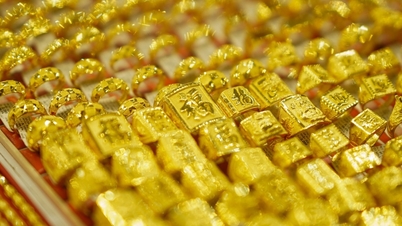
Foreign investors account for approximately 9% - 10% of transaction value. Previously, the market was often driven by foreign capital flows. However, in the past few years, domestic capital flows have dominated and are no longer significantly affected. In 2026, with stricter regulations on foreign exchange trading in the free market, gold investment will become more difficult, and with the US continuing to lower interest rates, the depreciation of the VND is expected to be lower, reducing selling pressure from foreign investors. Along with the prospect of an upgrade in market status, we expect foreign capital flows to contribute more positively to the Vietnamese stock market.
Meanwhile, institutional investor funds mainly come from proprietary trading by securities companies and domestic ETFs. Domestic open-ended equity funds are still very small, only about $1.5 billion by the end of 2025, and usually trade infrequently, so they haven't had a significant impact on the market. On the positive side, investors are increasingly interested in open-ended funds, and the size of these funds is growing rapidly, about three times in the last three years. It is hoped that these funds will contribute more to market trading, helping stocks trade closer to their true value, and thus contributing more to market stability.
Editor Mui Khanh Ly : So, in your opinion, what are the solutions to improve the quality of capital flows in the Vietnamese stock market in 2026 and beyond, drawing on the experiences of developed countries?
Ms. Nguyen Thi Hang Nga, CFA, General Director of Vietcombank Investment Fund Management Company Limited (VCBF): Foreign institutional investors have high demands. Regarding the quality of corporate growth, strategic vision and integrity of the management team, financial stability, market capitalization size, free float ratio, foreign ownership limit, information transparency, international ESG standards, etc., in order to attract foreign institutional investment, I believe the following solutions are necessary:
Firstly, it involves expanding and improving the quality of goods on the market. This will help increase market size and diversify industries to maintain and increase Vietnam's market share in the emerging market index. To achieve this, I think the government should... The government should encourage IPOs and new listings through tax incentives to create a new wave of listings. It should also restart the privatization program and reduce ownership in state-owned enterprises.
Furthermore, the government should also ease foreign ownership limits and open up to international investors: For example, in Saudi Arabia, after being upgraded to an emerging market in 2019, investment conditions for foreign institutional investors were relaxed, allowing all international investors to participate directly from 2019, thus increasing the weight of this market in the emerging market index from 3.2% to 4.7%.
Next, improving administrative procedures and infrastructure, as well as transaction and payment methods, is also a key focus. Circular No. 08/2026/TT-BTC, recently issued by the Ministry of Finance on February 3, 2026, is one of the important steps forward, allowing foreign investors to place orders through foreign brokers, meaning they do not have to open accounts at Vietnamese securities companies.
Finally, it is necessary to continue improving transparency and information disclosure according to international standards, providing information in English, and applying international ESG standards to facilitate foreign investors, thereby increasing the attractiveness of the market.

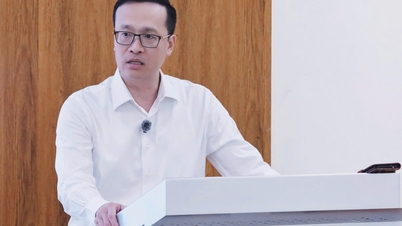
Ms. Nguyen Thi Hang Nga (right) converses with editor Mui Khanh Ly at the Financial Street Talk show.
Editor Mui Khanh Ly : In fact, we have already seen proposals for restructuring investors and developing the fund industry in the new phase. In your opinion, what implementation solutions should these proposals focus on to achieve the best results?
Ms. Nguyen Thi Hang Nga, CFA, General Director of Vietcombank Investment Fund Management Company Limited (VCBF), stated: "The fund industry is very important for attracting capital from individual investors, helping to reduce pressure on the banking system, especially given our high credit-to-GDP ratio, which is nearly 150%. The investor restructuring and fund industry development plan was created with seven groups of solutions to comprehensively address the industry's issues, from inputs (products and goods) to outputs (tax incentives, investor training, and distribution systems). The plan was approved in September 2025, and we see that the proposed solutions have begun to be implemented. The most notable example is the issuance of Circular 136 amending Circular 98 regulating the operations of securities investment funds."
Accordingly, new fund products such as Infrastructure Funds and Money Market Instruments Funds now have their own legal frameworks. The types of assets that can be invested in securities investment funds have also been expanded, and some investment restrictions have been removed. Regarding tax incentives, the amended Personal Income Tax Law stipulates tax exemption for individual investors when selling fund certificates after 2 years of holding, or a 50% reduction in personal income tax when receiving dividends from securities investment funds. The Ministry of Finance is also promoting the amendment of Decree 88 on supplementary retirement insurance and related documents to address difficulties and obstacles. The Decree on corporate income tax has also increased the contribution to the supplementary retirement fund, which is considered a reasonable and legitimate expense of the company, from 3 million to 5 million VND/month.
In the coming period, we are very much looking forward to the implementation of solutions related to expanding and standardizing fund certificate distribution channels, especially the distribution channels through banks and independent financial advisors. The promotion of awareness campaigns and knowledge dissemination about securities in particular and financial management in general also needs to be intensified soon, in order to positively impact the awareness and behavior of individual investors.
Editor Mui Khanh Ly : It is known that funds in Vietnam have recently demonstrated the effectiveness and quality of capital flows and investments in the stock market. How do you assess this trend in the future?
Ms. Nguyen Thi Hang Nga, CFA, General Director of Vietcombank Investment Fund Management Company Limited (VCBF): In recent years, investment funds in Vietnam have increasingly demonstrated their role in improving the quality of capital flows and investment quality in the stock market through their outstanding investment results. Especially after the wave of novice investors (F0) entering the market during the Covid-19 period poured into highly speculative stocks and suffered significant losses when the market corrected sharply in 2022, many accounts remain in the red to this day, while the funds have achieved very attractive returns during this period. For example, on average over the past three years, both equity funds, VCBF-BCF and VCBF-MGF, have achieved an average return of approximately 21% per year, placing them among the highest-performing funds in the market during this time.
Looking at the longer term, VCBF's oldest equity fund, VCBF-BCF, has achieved an average annualized return of nearly 14.4% since its inception as of January 29, 2025, with the price increasing from VND 10,000 to VND 46,000 per unit. The VCBF-MGF fund, established in February 2021 when the market peaked at 1,500 points, has also increased by an average of 11% per year, totaling 53% since its inception. The VCBF-AIF fund, established in February 2025, has also increased by 22.5%. Notably, the VCBF-TBF fund has led the market in investment performance among balanced funds for the second consecutive year, with an average annual return of 16.8% over three years. With these outstanding results, the size of VCBF open-ended funds has grown rapidly, increasing 5.3 times, and the number of investors has also increased 14 times in the past 5 years. The industry-wide figures are also very impressive at 79% and approximately 4 times.
TV Presenter Mui Khanh Ly : As a market participant, what development strategy will your company implement to support investors and contribute even more to the stock market in this new phase?
Ms. Nguyen Thi Hang Nga, CFA, General Director of Vietcombank Investment Fund Management Company Limited (VCBF): With over 20 years of operation in the Vietnamese stock market, VCBF clearly recognizes that funds are a national product, an essential investment product in the asset portfolio of every family. Meanwhile, the current size of open-ended funds is less than 1% of the total mobilization of individual investors in the banking system. Therefore, we have set VCBF's mission as "contributing to changing the investment habits of Vietnamese people" and our vision as "together with parent bank Vietcombank, becoming a trusted asset management partner for every Vietnamese family."
Entering a new phase of development, VCBF is implementing a synchronized strategy across multiple pillars. Regarding products, in 2026, we plan to add 1-2 new investment funds to complete our product range, helping investors diversify their portfolios, cater to the risk appetites of all investor segments, and serve various financial goals. Simultaneously, we will also accelerate the development of voluntary supplementary pension funds, especially in light of the upcoming amendments to Decree 88, which aims to resolve existing obstacles and open up long-term growth opportunities for this product. We will continue to focus on communication and financial education through regular livestream programs and direct meetings and discussions with investors, helping to improve understanding of investment funds and personal financial management.
In terms of investment, VCBF remains committed to pursuing a fundamental, long-term investment philosophy, staying ahead of the market and going against the crowd, aiming to generate sustainable returns for investors and contribute positively to the healthy and professional development of the Vietnamese stock market. We believe that the coming period will be a period of strong growth for the fund management industry, and VCBF is committed to being an active part of that development journey for the industry in particular and the Vietnamese stock market in general.
TV presenter Mùi Khánh Ly: Thank you for the information you just provided!
Source: https://vtv.vn/muon-hut-von-ngoai-ben-vung-thi-truong-can-thay-doi-gi-100260224135658948.htm
![[Photo] First session of the 14th Congress of the Vietnam Trade Union](https://vphoto.vietnam.vn/thumb/1200x675/vietnam/resource/IMAGE/2026/06/03/1780465947883_ndo_br_img-3852-jpg.webp)

![[Photo] General Secretary and President To Lam presides over a meeting with the Central Organizing Committee.](https://vphoto.vietnam.vn/thumb/1200x675/vietnam/resource/IMAGE/2026/06/03/1780482764658_a1-bnd-4741-3342-jpg.webp)
![[Photo] Secretary of the National Assembly Party Committee, Chairman of the National Assembly presides over the meeting of the Standing Committee and Executive Committee of the National Assembly Party Committee.](https://vphoto.vietnam.vn/thumb/1200x675/vietnam/resource/IMAGE/2026/06/03/1780480353201_ndo_br_bnd-2585-jpg.webp)














































![[Video] Sunset at Lap An Lagoon – Where the sun sets over the fishing nets](https://vphoto.vietnam.vn/thumb/1200x675/vietnam/resource/IMAGE/2026/05/31/1780192137701_beach-landscape-sea-water-nature-grass-745871-pxhere-com.jpeg)
























Comment (0)