

Yesterday (March 15), The New York Times, citing several well-informed US officials, revealed that the administration of President Donald Trump is considering restricting entry for citizens of 43 countries, a broader measure than similar actions taken during Trump's first term.
Specifically, this list was compiled based on recommendations from U.S. diplomatic and security officials and is divided into three groups: yellow, orange, and red. The red group includes 11 countries: Afghanistan, Bhutan, Cuba, Iran, Libya, Somalia, Sudan, Syria, North Korea, Venezuela, and Yemen, meaning all their citizens are banned from entering the U.S. The orange group includes 10 countries: Belarus, Eritrea, Haiti, Laos, Myanmar, South Sudan, Russia, Pakistan, Sierra Leone, and Turkmenistan, whose citizens are restricted from entering the U.S. with some exceptions.
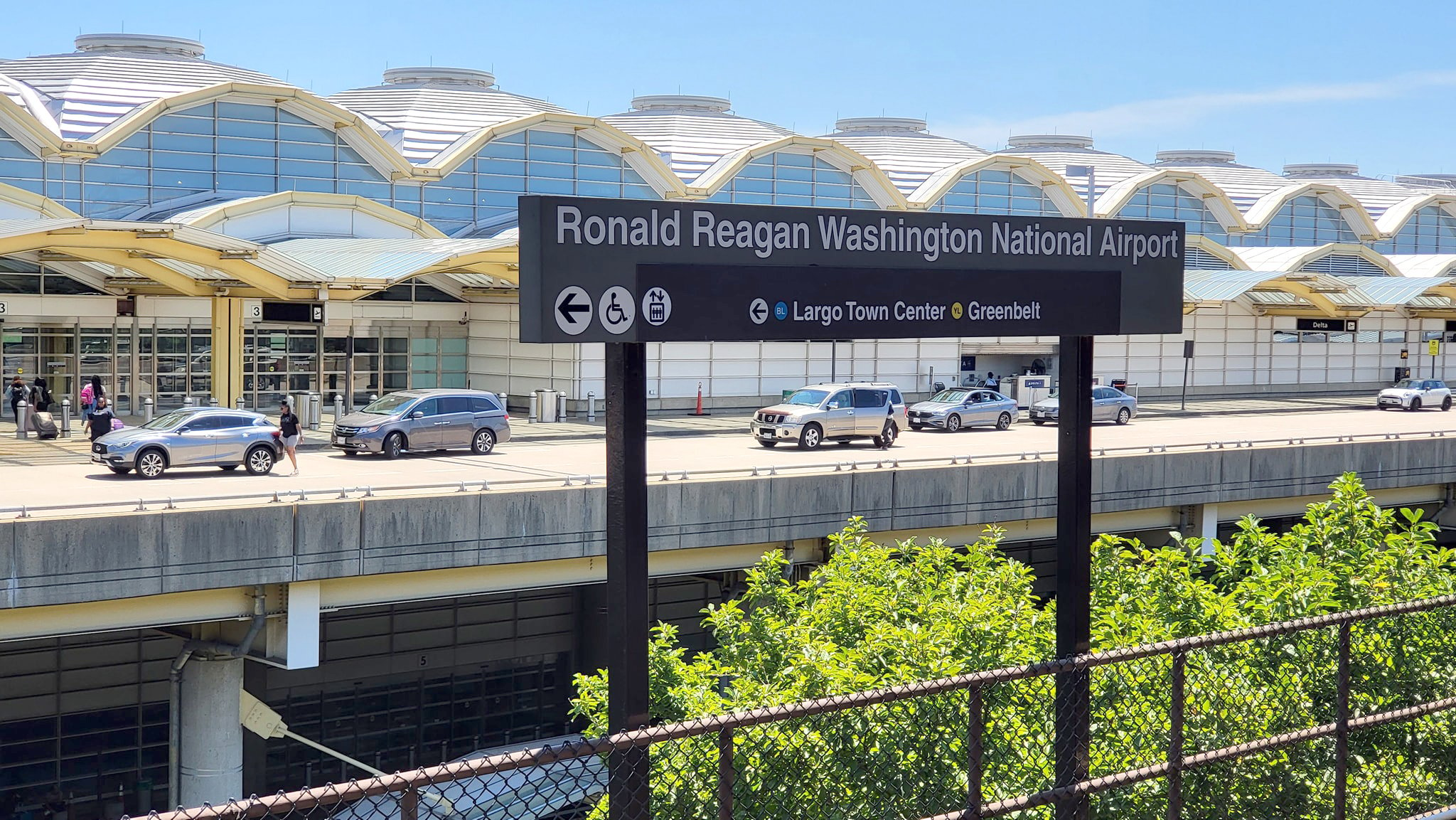
Ronald Reagan Airport in Washington D.C. Photo: Phat Tien
The yellow list includes Angola, Antigua and Barbuda, Benin, Burkina Faso, Cambodia, Cameroon, Cape Verde, Chad, the Republic of Congo, the Democratic Republic of Congo, Dominica, Equatorial Guinea, Gambia, Liberia, Malawi, Mali, Mauritania, St. Kitts and Nevis, St. Lucia, Sao Tome and Principe, Vanuatu, and Zimbabwe. These countries are considered to be uncooperative with the U.S. in sharing information on immigrants, lacking security standards in passport issuance, or selling citizenship to people from banned countries. Yellow-listed countries have 60 days to address these issues; otherwise, they may be moved to the red or orange list. U.S. officials said the preliminary lists are subject to change and have not yet been approved by the administration. The White House has not commented on the information.
During his first term, President Trump banned citizens of seven predominantly Muslim countries from entering the United States. The ban underwent several changes but was ultimately upheld by the U.S. Supreme Court in 2018. Joe Biden, after taking office in 2021, overturned the ban.
In January, shortly after taking office, President Trump signed an executive order reinstating the ban to protect American citizens from foreigners who intend to attack or threaten national security, support hate speech, or exploit immigration laws for nefarious purposes. That order required several cabinet members to submit lists by March 21st of countries whose entry into the U.S. should be partially or fully suspended because their background checks and screenings were deemed "inadequate."
Also yesterday, US Secretary of State Marco Rubio announced the expulsion of South African Ambassador Ebrahim Rasool because the diplomat "hates America and President Trump." Rubio cited an article on the conservative news site Breitbart, which claimed Rasool had made "offensive" remarks about President Trump regarding racial issues. According to Reuters, the South African government called the incident "regrettable" and emphasized its continued commitment to building a mutually beneficial relationship with the US.
Source: https://thanhnien.vn/my-sap-han-che-nhap-canh-with-citizens-of-43-countries-185250315225156431.htm


![[Photo] Enchanting ancient rose garden on the mountainside in Nghe An](/_next/image?url=https%3A%2F%2Fvphoto.vietnam.vn%2Fthumb%2F1200x675%2Fvietnam%2Fresource%2FIMAGE%2F2025%2F12%2F19%2F1766109900916_vuon-hong-chin-do-thu-hut-du-khach-toi-check-in-o-ha-noi-3-20162778-1671624890024-1671624890104198100259.jpeg&w=3840&q=75)
![[Photo] General Secretary To Lam visits the exhibition space showcasing books, photo exhibitions, and achievements of digital transformation in journalism.](/_next/image?url=https%3A%2F%2Fvphoto.vietnam.vn%2Fthumb%2F1200x675%2Fvietnam%2Fresource%2FIMAGE%2F2025%2F12%2F19%2F1766110879215_1766110240024-jpg.webp&w=3840&q=75)































































































Comment (0)