

The story of Pac Ta Mountain
Just by setting foot on Co Yeng Pass, in the former Thanh Tuong commune, and gazing into the distance, anyone would be amazed by the majestic Pac Ta mountain rising proudly amidst the swirling clouds, its imposing reflection shimmering in the hydroelectric reservoir. Locals say that calling Pac Ta mountain the symbol of Na Hang is absolutely correct.
According to the elders, this majestic mountain is also known as Elephant Mountain because it resembles an elephant bowing its head beside a wine gourd. The story goes that: In the past, when foreign invaders attacked the land, the people gathered their strength and troops. Among the elephants the villagers had assembled was a fierce, untamable male elephant, the leader of the herd. However, an elephant keeper from afar came and volunteered to take on this task.
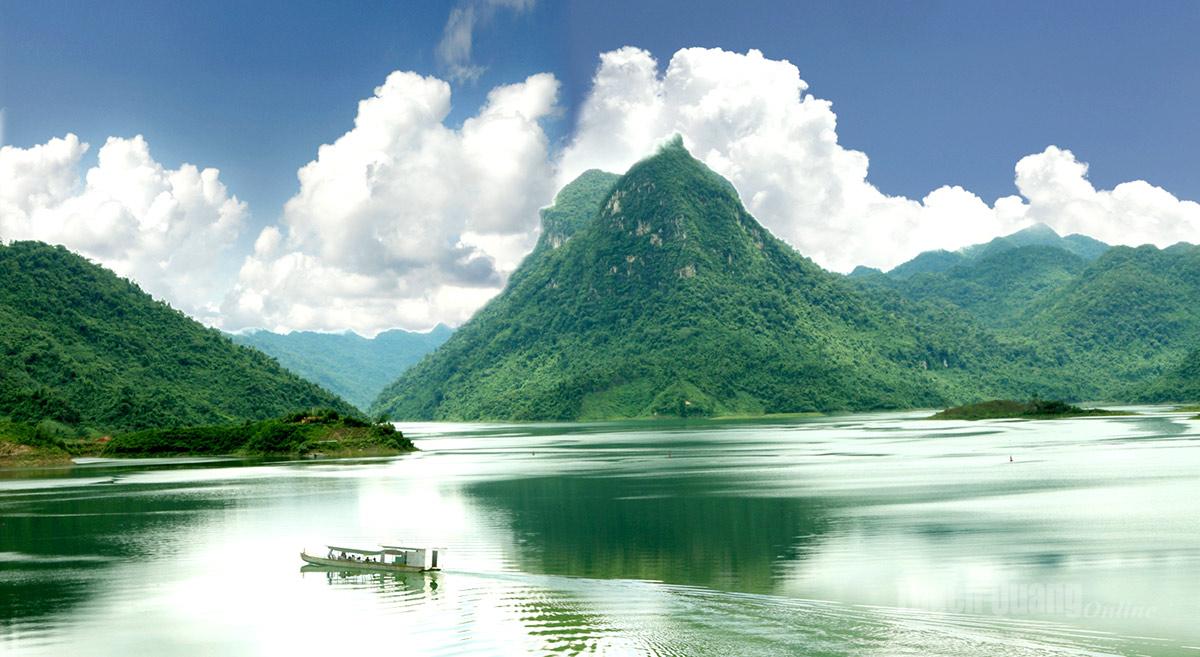 |
| Pac Ta Mountain, Na Hang commune. |
First, he blocked all the water sources around the elephant's habitat. Three days later, when the elephant was very thirsty, he poured wine onto a rock, and the elephant came to drink from it instead of water. Gradually, the elephant became accustomed to the wine and its mahout. On the day of battle, the wine-drinking elephant bravely led the charge, inflicting heavy casualties on the enemy. After the defeat, the king celebrated with a feast, bestowing upon the elephant the title of Elephant Duke and hosting a lavish banquet for the generals and soldiers. That night, the elephant transformed, and the next morning, people found that the elephant and the wine flask had turned to stone, becoming the majestic Pac Ta mountain standing tall against the blue sky.
Mr. Hoang Minh Dang, former Head of the Culture and Information Department of Na Hang District, said that when one returns from afar and sees Pac Ta mountain, one feels like they are returning home, their homeland. Strangely, the mountain takes on a different shape from every angle. From one angle, one sees a pensive elephant; from another, a giant wine flask; and from yet another, it appears amidst the clouds swirling over the Tuyen Quang hydroelectric lake, associated with many legends about the land of "99 mountains, where the Phoenix flies to build its nest." Even though they have lived in this land for a long time, many people in Na Hang are still curious about its mysterious and sacred nature.
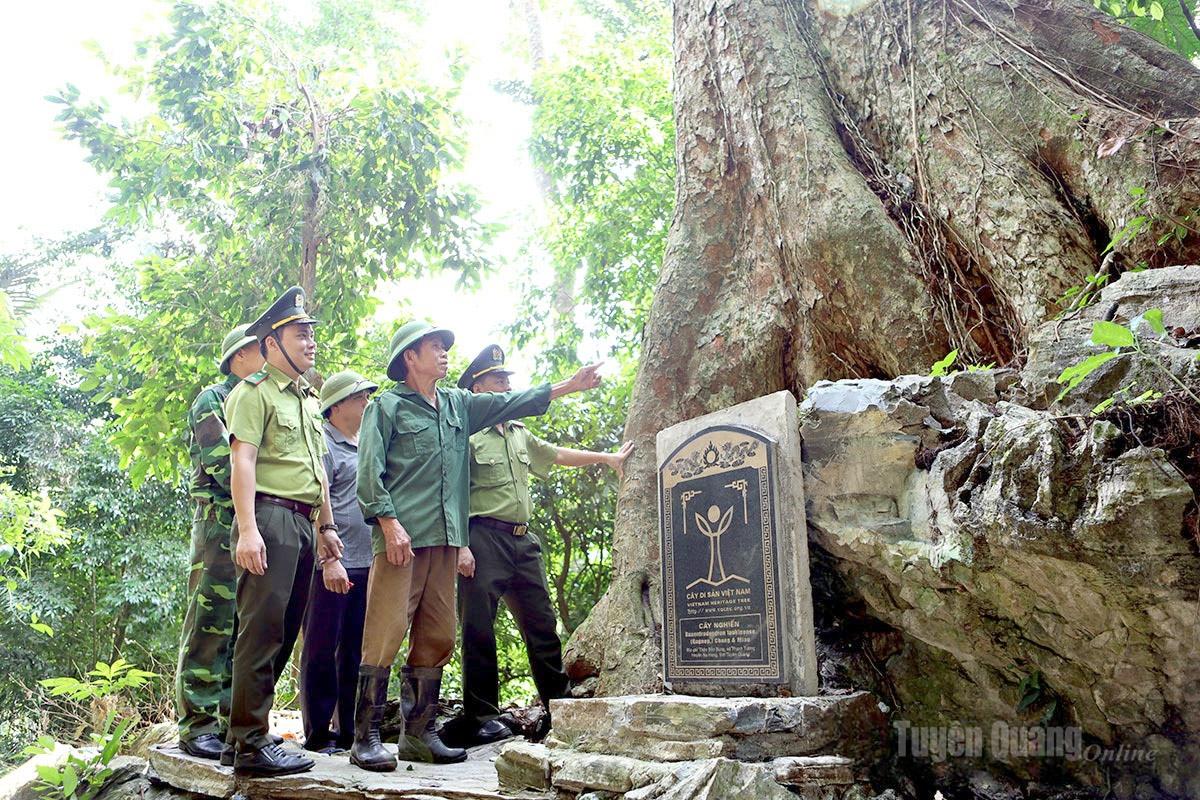 |
| The heritage ironwood tree in Ban Bung village, Na Hang commune, has been preserved for many generations. |
At the foot of Pac Ta Mountain lies the remains of an ancient temple, located at the confluence of two rivers, dedicated to the local fiancée of the skilled general Tran Nhat Duat, who was then defending Tuyen Quang province to repel the Mongol invasion for the second time. After several changes of location and renovations, the Pac Ta Temple was rebuilt in 2008, inaugurated in 2009, and classified as a National Monument by the Ministry of Culture, Sports and Tourism. The fiancée of General Tran Nhat Duat is revered by the people as the Holy Mother beneath the legendary Ta Mountain.
Rich cultural features deeply rooted in tradition.
Visiting Na Hang is an opportunity for tourists to immerse themselves in the poetic scenery. Amidst the hazy clouds of the highlands, the simple, gray-brown stilt houses perched precariously on the mountainside offer a chance to witness firsthand the skillful hands of Tay and Dao ethnic women at their looms, weaving vibrant brocade fabrics.
But the allure of this land doesn't stop there; visitors are also captivated by the unique culture of many ethnic groups. These include the Then, Lượn, and Cọi songs of the Tay people accompanied by the Tinh lute; the Lồng Tồng festival of the Tay people; the Cấp Sắc ceremony, Tơ Hồng ceremony, and wedding procession of the Dao people; and the wedding ceremony of the Tay people… All these elements combine harmoniously to create the beauty of a multi-ethnic cultural region.
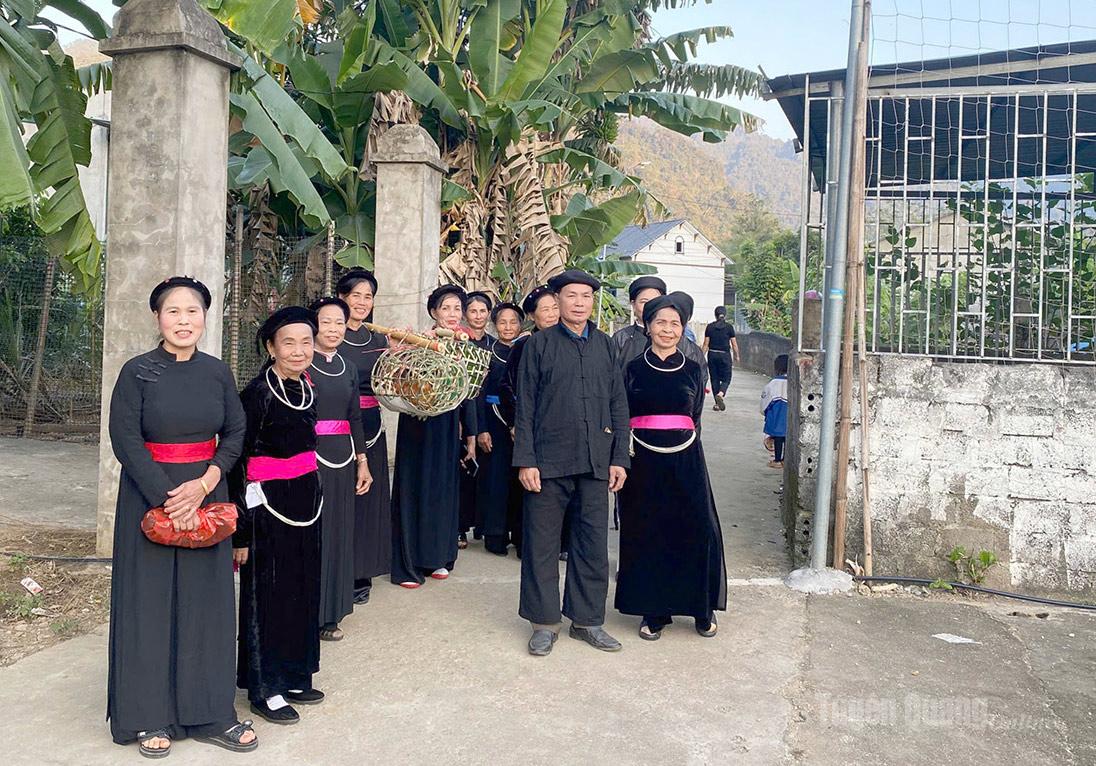 |
| Recreating a Tay ethnic wedding ceremony in Na Lang village, Na Hang commune. |
In 2007, the Tuyen Quang hydroelectric power plant was completed and put into operation, transforming the Na Hang - Lam Binh ecological lake into an 8,000-hectare area with picturesque natural landscapes that captivate the hearts of visitors. The area is home to primeval forests with thousand-year-old ironwood trees and the snub-nosed monkey, a species listed in the World Red Book of endangered species.
Comrade Nguyen Tien Sy, Vice Chairman of the People's Committee of Na Hang commune, shared that tourists visiting Na Hang are amazed by the beautiful scenery, the pristine and pure beauty of the primeval forests, the waterfalls cascading down with white foam, and the cool, pleasant, and fresh climate. Anyone who visits once will remember it, and the memories of the simple and kind nature of the people are unforgettable.
Looking ahead, Na Hang commune will conduct a comprehensive assessment of key tourist destinations in Ban Bung village – considered the "heart" of Na Hang commune's ecotourism. Highlights of the itinerary include destinations rich in scenic and ecological value such as Bo Kim cave, the Vietnamese heritage ironwood tree, the Tat Ke - Ban Bung nature reserve exploration route, along with the red rock stream, ancient tea forests, and the area of the Four-Pillar Lim tree. These locations not only possess pristine and fascinating beauty but also offer great potential for developing experiential tourism, ecotourism, and community-based tourism.
Le Duy
Source: https://baotuyenquang.com.vn/van-hoa/202604/na-hang-huyen-thoai-d5361a1/

![[Photo] General Secretary and President To Lam presides over a meeting with the Central Organizing Committee.](https://vphoto.vietnam.vn/thumb/1200x675/vietnam/resource/IMAGE/2026/06/03/1780482764658_a1-bnd-4741-3342-jpg.webp)
![[Photo] First session of the 14th Congress of the Vietnam Trade Union](https://vphoto.vietnam.vn/thumb/1200x675/vietnam/resource/IMAGE/2026/06/03/1780465947883_ndo_br_img-3852-jpg.webp)

![[Photo] Secretary of the National Assembly Party Committee, Chairman of the National Assembly presides over the meeting of the Standing Committee and Executive Committee of the National Assembly Party Committee.](https://vphoto.vietnam.vn/thumb/1200x675/vietnam/resource/IMAGE/2026/06/03/1780480353201_ndo_br_bnd-2585-jpg.webp)









































![[Video] Sunset at Lap An Lagoon – Where the sun sets over the fishing nets](https://vphoto.vietnam.vn/thumb/1200x675/vietnam/resource/IMAGE/2026/05/31/1780192137701_beach-landscape-sea-water-nature-grass-745871-pxhere-com.jpeg)



























Comment (0)