

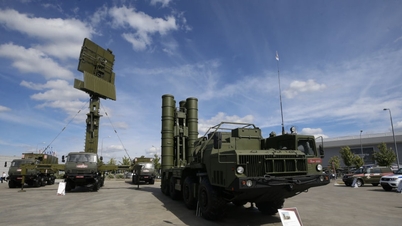
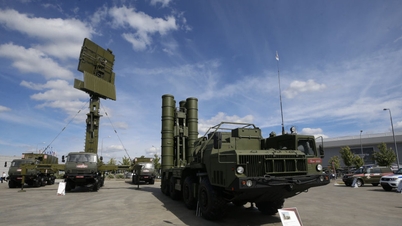
The Cuban Armed Forces recently deployed Soviet-supplied S-125M/M1 medium-range air defense missile systems in large-scale exercises. This activity took place amidst changing military developments in the region. Currently, the S-125 is considered the most crucial component of the country's air defense network.
The strategic role of the S-125 in air defense.
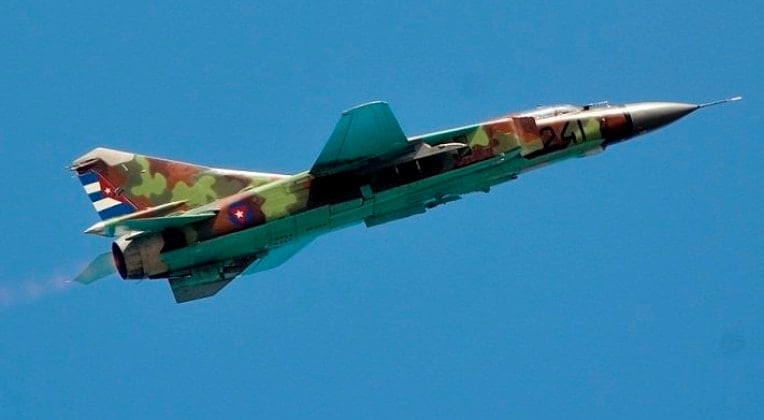
The S-125 plays a central role because the MiG-23 fighter squadron – once a symbol of Cuban power – is now past its service life and must be decommissioned. The remaining fighter jets in the air force have limited combat capabilities and are unlikely to meet the demands of high-intensity battles. Therefore, Cuba has become one of the few countries that places the entire responsibility for air defense on this missile system.

Developed in the late 1950s by the KB-1 Design Bureau (Soviet Union), the S-125 was designed to destroy low- and medium-flying targets. These were areas where the earlier S-75 system often struggled. The system officially entered service in 1961 and proved effective in numerous conflicts, particularly the Yom Kippur War in 1973.
Technical analysis and improved variations
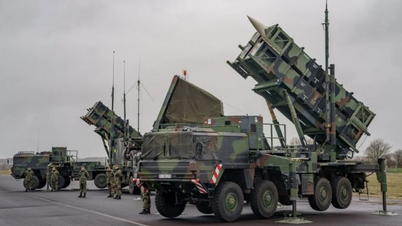
Compared to the S-75, the S-125 has a more compact and flexible design. The system uses a two-stage solid-fuel missile. Modernized variants in service with the Cuban military are the S-125M and S-125M1, using the 5V27 missile. This structure includes a detachable booster stage and a cruise stage optimized for maneuverability.
| Specifications | Early variant | S-125M/M1 variant |
|---|---|---|
| Maximum range | 15 km | 35 km |
| High-altitude target destruction | Limit | 15,000 m |
| Lowest target altitude | But | 100 m |
| Warhead weight | But | 60 – 70 kg |
The S-125M1 missile is equipped with a proximity fuse combined with a fragmentation warhead, creating a dense cloud of debris to destroy the target instead of requiring direct impact. The electronic systems on the radar have also been upgraded to enhance anti-jamming capabilities and shorten reaction time to low-flying attack formations.
Efforts towards self-reliance and modernization
To increase their survivability on the modern battlefield, the Cuban army has modified its launchers by mounting them on T-55 tank chassis. This allows the system to move quickly after firing, avoiding counter-fire.
Notably, a domestic program called Pechora-2BM has also been implemented to overhaul the electronics, improve the guidance radar, and extend the service life of the missiles. Furthermore, military analysts have noted potential cooperation between Cuba and North Korea – a country with extensive experience in upgrading Soviet-standard air defense systems – in maintaining and renewing these air defense shields.
Source: https://baonghean.vn/nang-luc-he-thong-ten-lua-phong-khong-s-125-cua-quan-doi-cuba-10338088.html
![[Photo] Ba Lang An Lighthouse - the "eye of the sea" amidst the "rock museum" of Quang Ngai province.](https://vphoto.vietnam.vn/thumb/1200x675/vietnam/resource/IMAGE/2026/05/29/1780038698840_anh-man-hinh-2026-05-29-luc-14-10-42.png)


























![[Image] Pleasant weather helps students enter the 10th grade entrance exam with confidence.](https://vphoto.vietnam.vn/thumb/1200x675/vietnam/resource/IMAGE/2026/05/29/1780034401612_ngay-1-thi-lop-10-minh-duy-8-5009-jpg.webp)



























































Comment (0)