

According to folk beliefs, salt symbolizes warmth, connection, and lasting bonds. The saying "Buy salt at the beginning of the year, buy lime at the end of the year" reflects the belief that buying salt at the start of the year will bring good luck, help families live in harmony, strengthen relationships, and ensure a fulfilling and complete life. A small packet of salt, yet it holds a great wish for peace and happiness throughout the year.

The child was introduced to the custom of buying salt at the beginning of the year by her grandmother.
In Phu Tho , the cradle of the Vietnamese nation, this custom is still preserved and practiced in the cultural life of the people. During the Lunar New Year, at traditional markets or around temples, pagodas, and historical and cultural relics, the sight of packages of pristine white salt being sold from early morning has become familiar. Many people, after visiting temples and pagodas for the New Year's prayers, often buy a small package of salt to bring home, wishing for family peace, harmonious life, and smooth business.
With the development of the market, the variety of salt products available at the beginning of the year has increased. Besides the simple white salt bags, sellers have creatively packaged salt in glass jars, cloth bags, and packaging printed with peach blossoms, apricot blossoms, or the characters for "Happiness," "Prosperity," "Peace," and "Wealth." Some products are combined with rice, herbs, lucky coins, or matches and lighters, creating "lucky salt" packages that symbolize prayers for wealth and peace, satisfying the spiritual and aesthetic needs of the people.
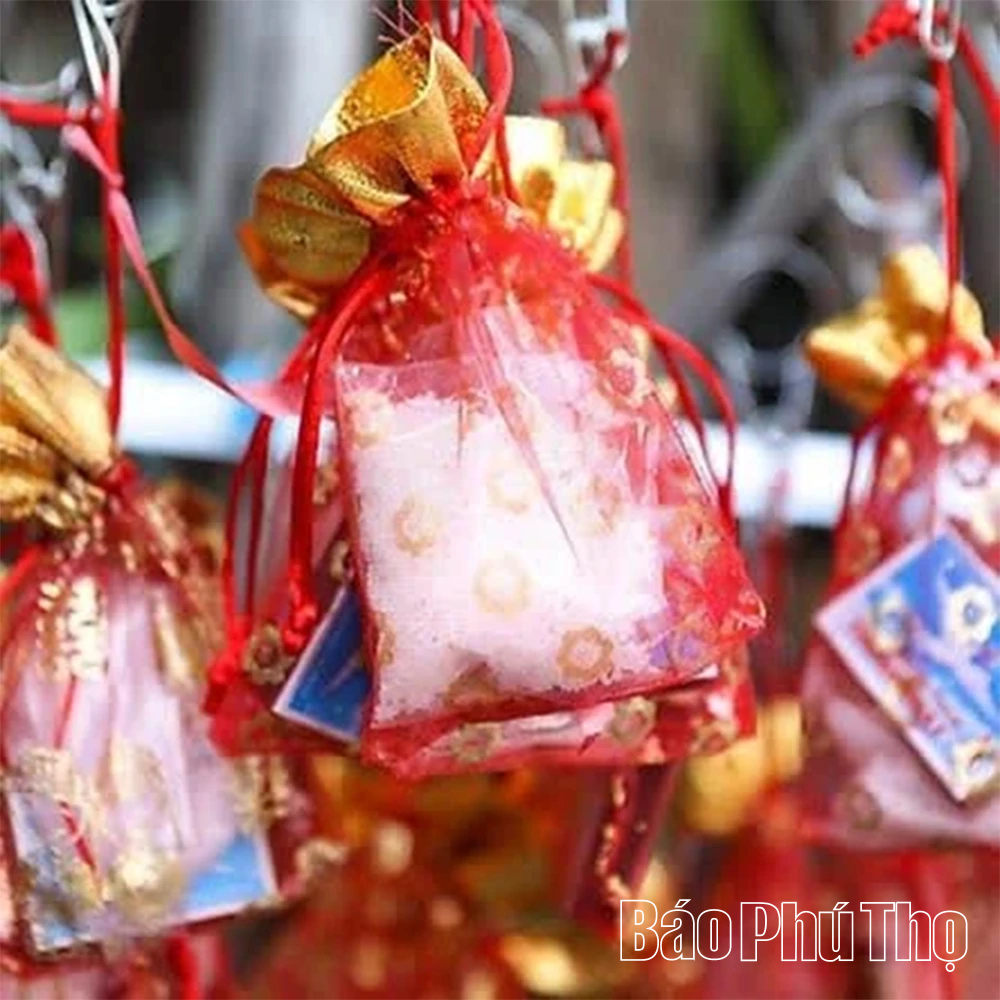
These beautifully packaged "lucky salt" packets, symbolizing wishes for wealth and peace, are a popular choice for many people.
The salt trading activity at the beginning of the year not only contributes to maintaining traditional customs but also creates additional livelihoods for small-scale traders. The simple salt vendors and gentle greetings in the early spring morning become a vibrant highlight of the Tet market, reflecting the harmonious blend of traditional cultural values and the modern market economy .
Ms. Thu Hien, a resident of Viet Tri ward, shared: "Buying salt at the beginning of the year isn't about the material value, but about the spiritual significance. Even with a small amount of money, buying a packet of salt on the first day of spring brings a feeling of peace and joy, as if bringing good luck home. Through this, this custom continues to be maintained naturally and sustainably within the community."
In modern life, as material comforts increase, the custom of buying salt at the beginning of the year still retains its profound spiritual value. It serves as a reminder for each family to preserve their traditions, emphasize love and togetherness, and express respect for the values passed down from their ancestors.
In the context of integration and development, promoting and educating the younger generation to understand, appreciate, and continue the beautiful customs of the nation is an essential task. Through cultural activities, traditional festivals, and community life, preserving the custom of buying salt at the beginning of the year needs continued attention and dissemination, contributing to the enrichment of cultural identity and building a healthier and more distinctive cultural life at the grassroots level.
Preserving the tradition of buying salt at the beginning of the year is not only about preserving a folk custom, but also about safeguarding the essence of Vietnamese culture in general and the culture of the ancestral land in particular - a place where faith, connection, and aspirations for a peaceful and sustainable future converge.
Khanh Duy
Source: https://baophutho.vn/net-dep-mua-muoi-dau-nam-247841.htm































































































Comment (0)