

The highest growth rate since 2019.
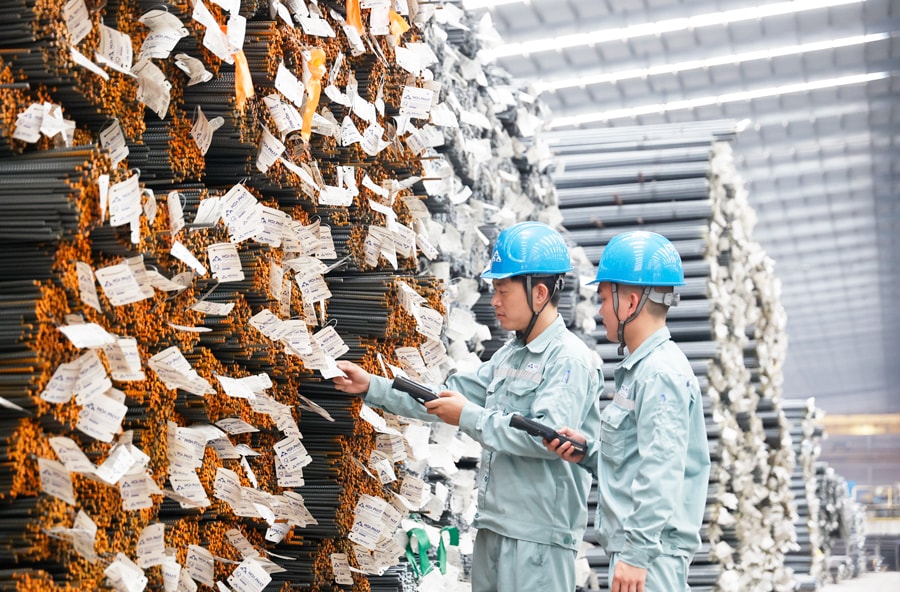
In September 2025, blast furnace No. 2 of the Hoa Phat Dung Quat 2 project (Hoa Phat Group) officially commenced operation, marking the completion of the entire project on schedule. With the contribution of Dung Quat 2, Hoa Phat's production capacity is expected to reach 16 million tons of steel per year by the end of 2026, placing the company among the top 30 largest steel producers globally. In 2025 alone, the group's crude steel production will exceed 10 million tons for the first time, a 25% increase compared to the previous year.
The growth momentum is also reflected in impressive sales figures. In December 2025 alone, Hoa Phat's sales of construction steel and high-quality steel surged by 52% compared to the same period. In particular, supplying steel to demanding technical segments such as automobile tires, prestressed cables, and mechanical engineering demonstrates a shift towards high value-added products. The booming domestic demand, driven by key public investment projects and the resurgence of the consumer market, has helped Hoa Phat maintain its number one market share in Vietnam (over 36%), thereby making a significant contribution to the overall growth of the industrial sector.
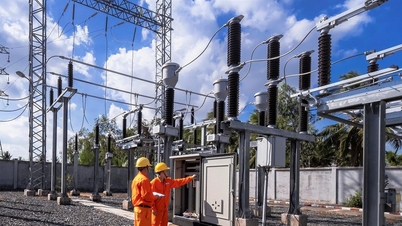
Data from the General Statistics Office ( Ministry of Finance ) shows that the industrial production index in 2025 is estimated to increase by 9.2% compared to the previous year, the highest increase in the past 7 years (since 2019). Notably, the manufacturing sector increased by 10.5%; the electricity production and distribution sector increased by 6.7%; and the mining sector increased by 0.5%.
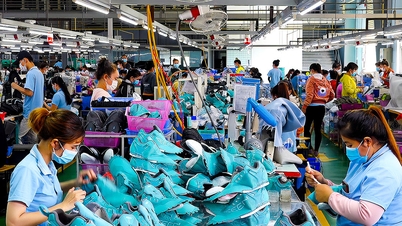
The industrial production index for several key second-tier industries in 2025 is projected to increase significantly. Specifically, motor vehicle production is expected to rise by 22.0%; production of other non-metallic mineral products by 16.2%; production of rubber and plastic products by 15.7%; metal production by 15.4%; garment production by 13.2%; and production of prefabricated metal products (excluding machinery and equipment) by 12.5%. Several key industrial products are projected to see significant year-on-year increases: automobiles by 39.1%; rolled steel by 17.6%; televisions by 17.4%; aquaculture feed and everyday clothing by 13.8%; cement by 13.6%; and leather shoes by 13.3%.
This result far surpasses the 2019-2024 period and further affirms the pivotal and leading role of the industrial sector in Gross Domestic Product (GDP) growth.
Continue to remove more bottlenecks.
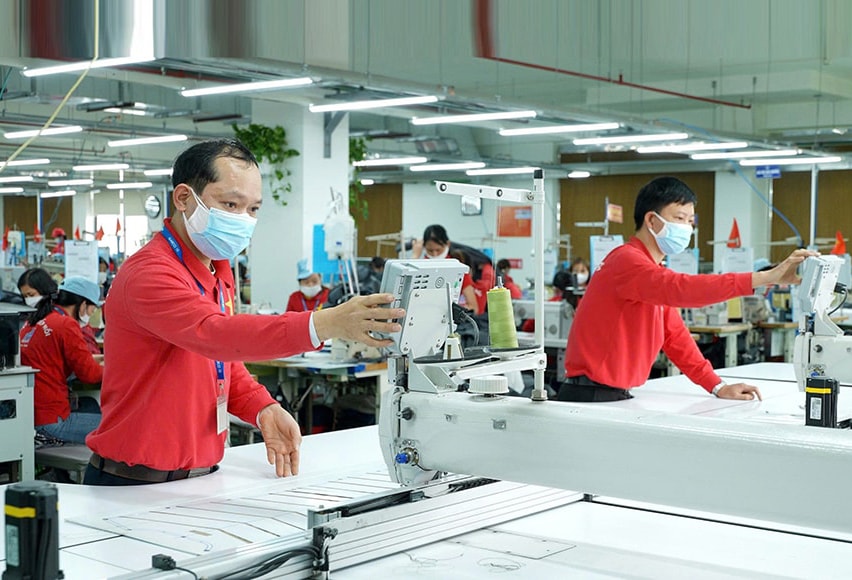
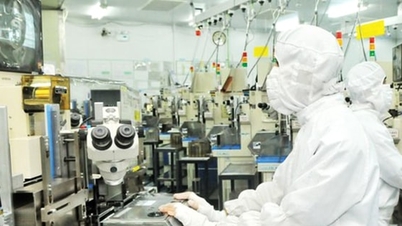
Despite achieving impressive results, Vietnam's industrial production still faces many fundamental challenges. Notably, the foreign investment sector accounts for approximately 60% of industrial output value and almost dominates the electronics, computer, and telephone sectors – industries with high export turnover but limited domestic value added.
According to economist Dr. Le Quoc Phuong, the added value of Vietnam's industrial production remains low because it mainly participates in processing and assembly stages, and has not yet mastered foundational industries and core technologies. The slow development of supporting industries makes it difficult for domestic businesses to participate deeply in the supply chain, while pressure regarding environmental standards and sustainable development is increasing.
To achieve the target of an industrial production index increase of over 10% in 2026 and lay the foundation for the next development phase, the industrial sector needs to shift strongly towards a growth model based on innovation, green transformation, and digital transformation. In this, developing foundational industries is considered a key factor. “We need to prioritize several key sectors such as semiconductors, renewable energy, new materials, metallurgy, mechanical engineering, and dual-use defense industries, thereby creating a foundation for the entire industrial ecosystem,” said Dr. Le Quoc Phuong.
From a value chain perspective, Associate Professor Dr. Nguyen Thuong Lang (National Economics University) emphasized that the biggest challenge facing Vietnam's industry today lies not only in costs or markets, but also in the structure of the supply chain. The supporting industries are not strong enough, making it difficult for businesses to meet localization requirements, thus hindering their ability to effectively utilize the benefits from free trade agreements.
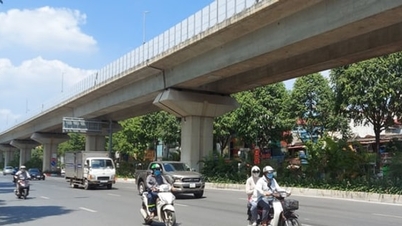
To maintain its leading role, the industrial sector needs a comprehensive removal of bottlenecks in institutions, capital, infrastructure, and inter-industry linkages. Completing the legal framework towards stability and transparency; encouraging investment in deep processing; and strongly developing supporting industries, value chains, and the domestic market are considered key solutions. Alongside this, accelerating investment in transportation, logistics, and energy infrastructure will help reduce costs and enhance the competitiveness of businesses.
With a solid growth foundation in 2025, coupled with sound development orientations and comprehensive solutions, the industrial sector is expected to continue to be a key driving force of the economy in 2026 and beyond, contributing to the realization of Vietnam's goal of faster, more sustainable, and more self-reliant development.
Source: https://hanoimoi.vn/nganh-cong-nghiep-giu-vi-the-dan-dat-tang-truong-730018.html



























![[Photo] Reception to welcome General Secretary and President To Lam and his wife on their State visit to the Philippines](https://vphoto.vietnam.vn/thumb/1200x675/vietnam/resource/IMAGE/2026/06/01/1780295488620_vna-potal-chieu-dai-chao-mung-tong-bi-thu-chu-tich-nuoc-to-lam-va-phu-nhan-tham-cap-nha-nuoc-toi-philippines-8798060-7855-jpg.webp)





























































Comment (0)