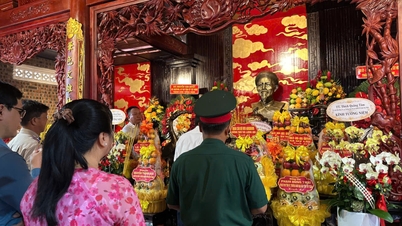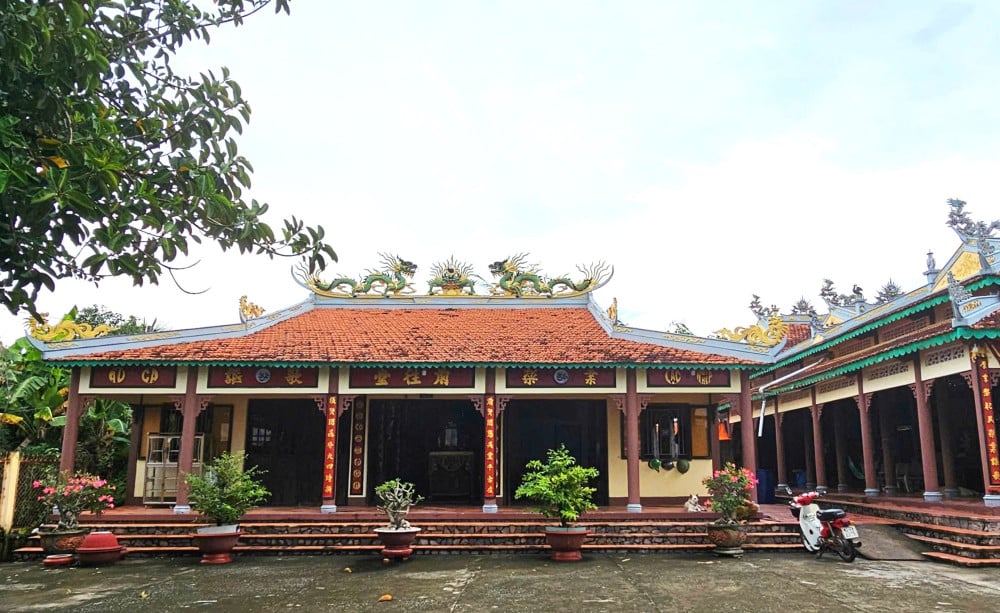
A unique feature of Khanh Hau communal house is the Ancestral Hall, built next to the Main Hall, dedicated to the worship of the ancestors and benefactors who have contributed to maintaining and preserving the cultural heritage of the communal house over time.
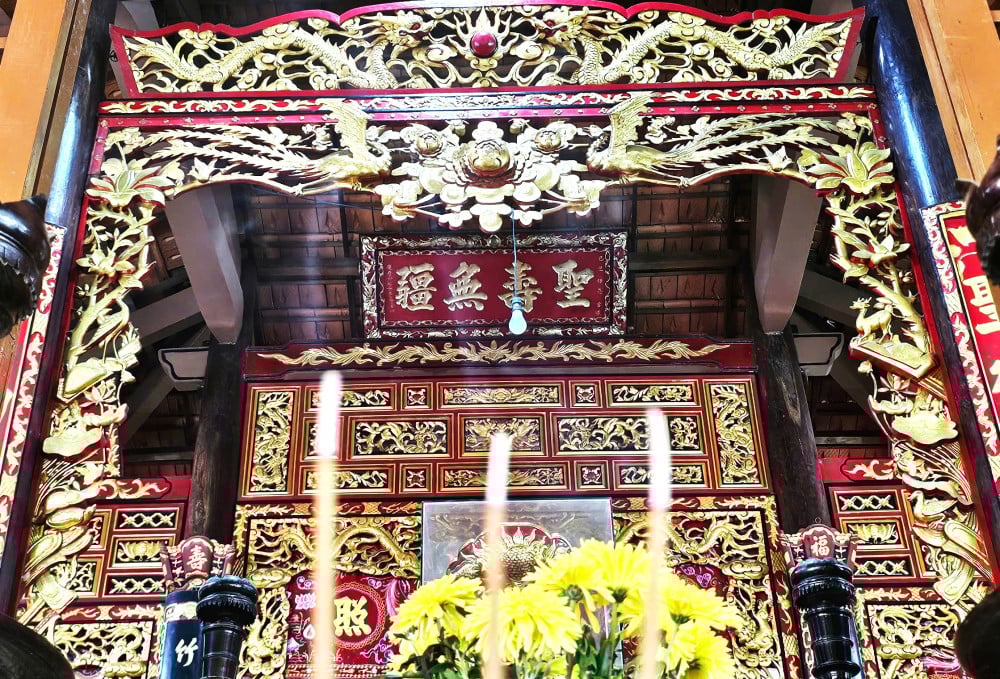
The four pillars of the main hall of Khanh Hau communal house are decorated with patterns. Between the two front pillars, above are two layers of decorative panels depicting "Two Dragons Facing the Sun" and "Two Phoenixes Worshipping Peonies," symbolizing the harmony of yin and yang. The horizontal plaque "Sacred Longevity Without Limits" behind it is placed on three tiers of "Pine - Chrysanthemum - Bamboo - Plum" motifs and the "Two Dragons Facing the Sun" panel.
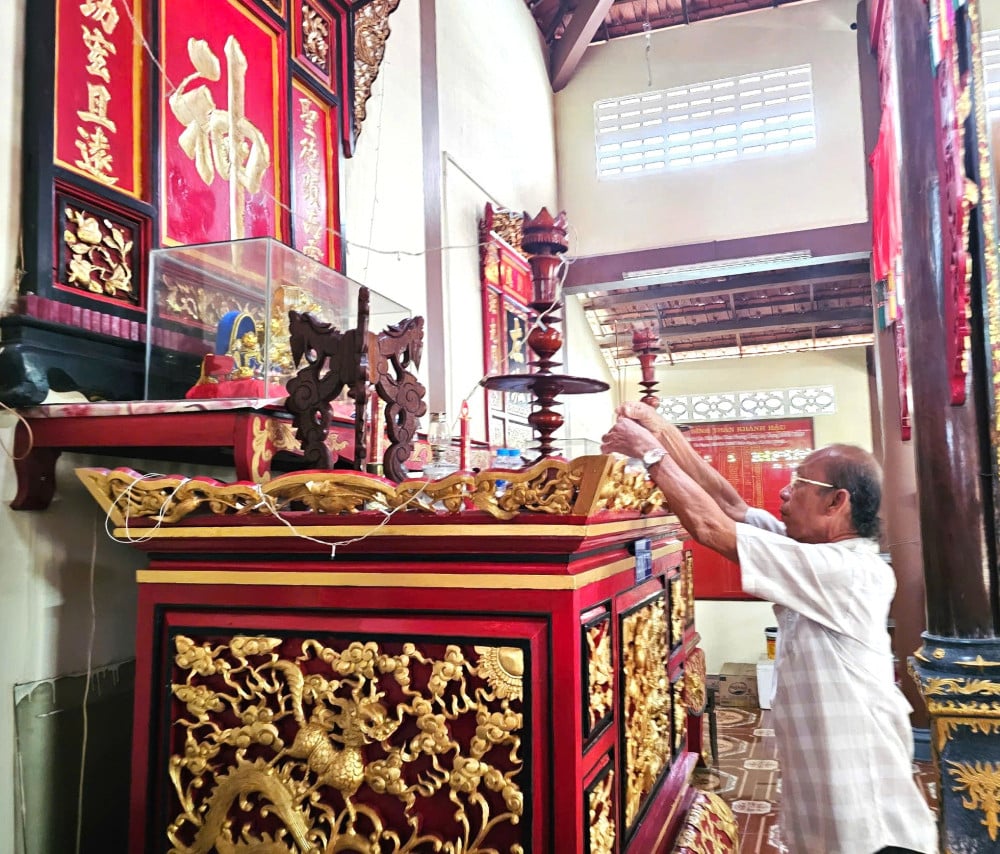
The main deity worshipped in Khanh Hau communal house is the tutelary deity of the locality. Currently, the communal house still preserves six royal decrees from Emperors Thieu Tri and Tu Duc.


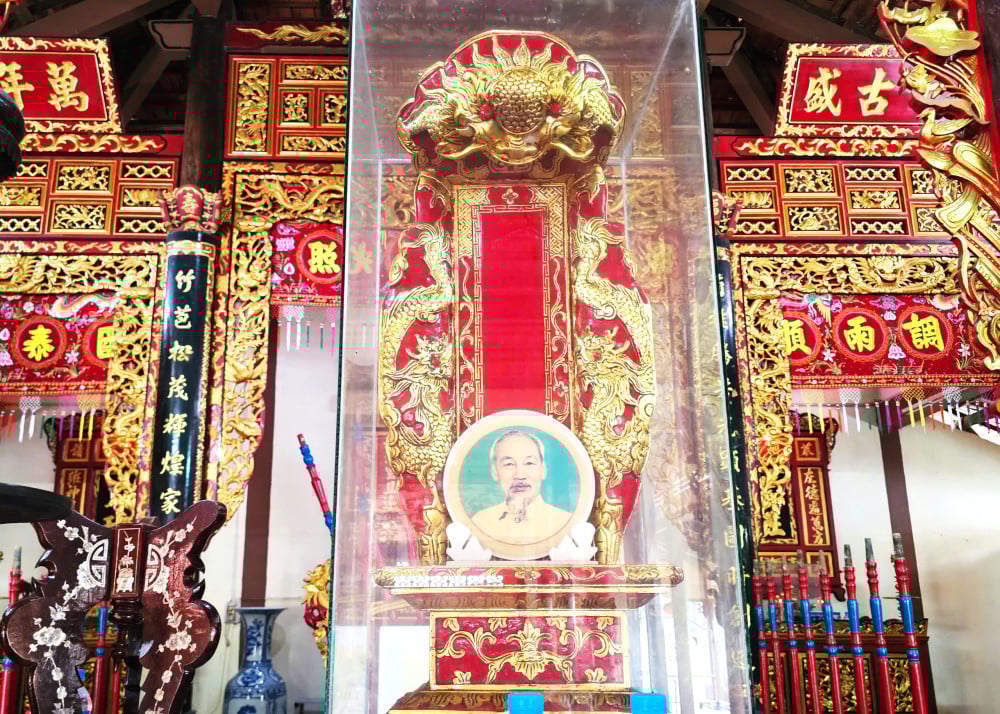
The temple also houses an altar dedicated to President Ho Chi Minh and an altar for soldiers who "died for the nation." The Khanh Hau temple is also a historical "witness" to the resistance against French colonialism in Tan An. During the historic month of August, the Khanh Hau temple was where the Youth Vanguard forces from three villages—Khanh Hau, Loi Binh Nhon, and My Lac—trained in martial arts and prepared for the uprising. It was also the starting point for the Youth Vanguard forces on August 21, 1945, to participate in the uprising to seize power in Tan An, and on the morning of August 22, to hold a rally at the football field to celebrate the victory.
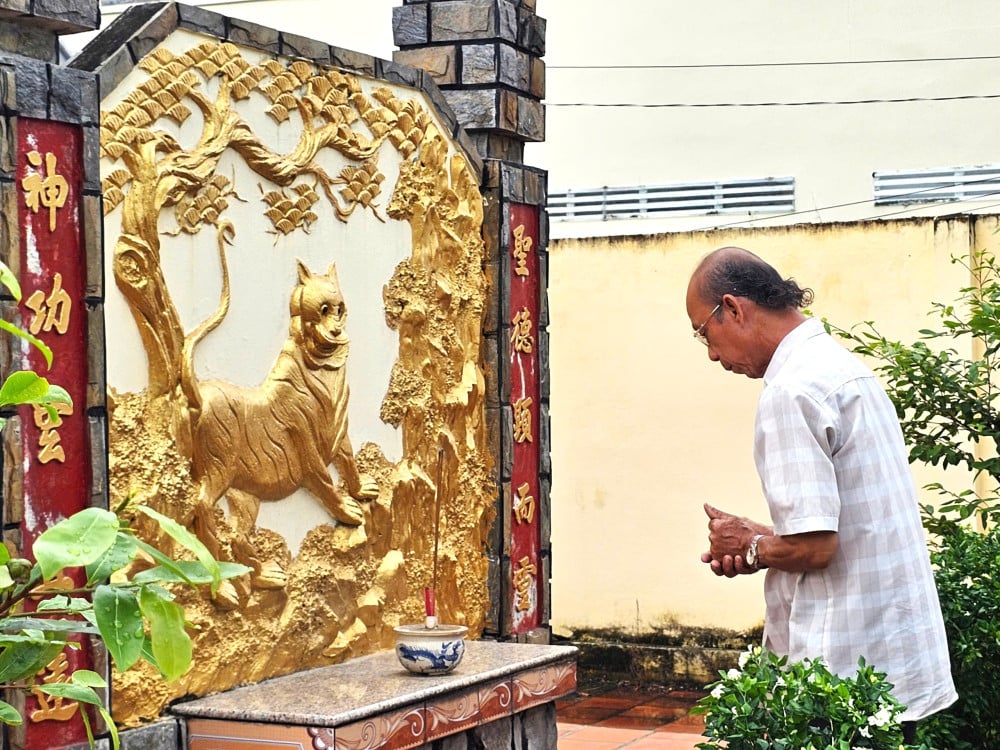
According to the temple's management board, the custom of worshipping the Tiger God may have originated from the fact that the area of Khanh Hau (Tuong Khanh village) was quite wild and home to many wild animals, so the people worshipped the Tiger God to pray for peace. Oral stories from the time of land reclamation in this region still tell of heroes killing tigers to help the people.
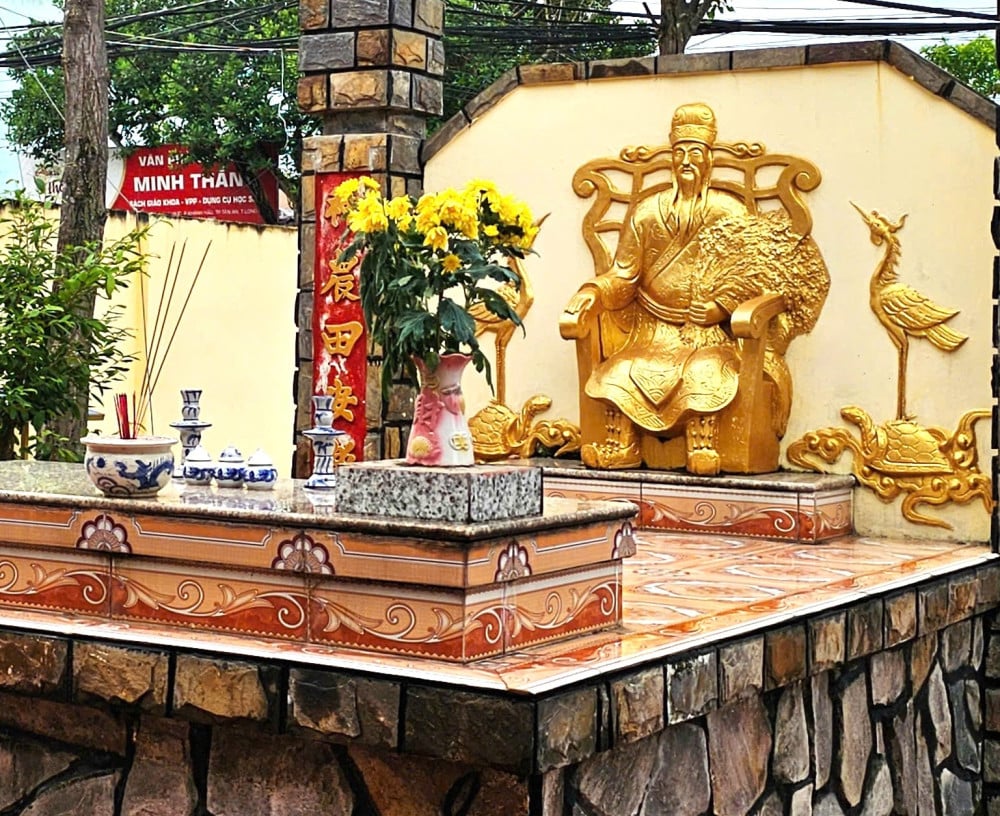
Besides worshipping the Tiger God, Khanh Hau communal house also worships the God of Agriculture, as a way for our ancestors to express their hopes for successful farming. Each year, the communal house holds four major ceremonies, two of which are related to the God of Agriculture: the Lower Field Ceremony (June 16th of the lunar calendar) and the Upper Field Ceremony (October 16th of the lunar calendar).
Guilin
Source: https://baotayninh.vn/ngoi-dinh-tram-tuoi-giua-long-pho-thi--a192323.html