

At the foot of Phuoc Ly mountain lies a village of the same name, now part of Hoa Minh ward, Lien Chieu district, Da Nang . Through countless transformations, from "beach to mulberry fields" and the ups and downs of time, the village, nestled against the mountainside, has undergone many changes but still preserves its traditional village culture amidst modern urban life.
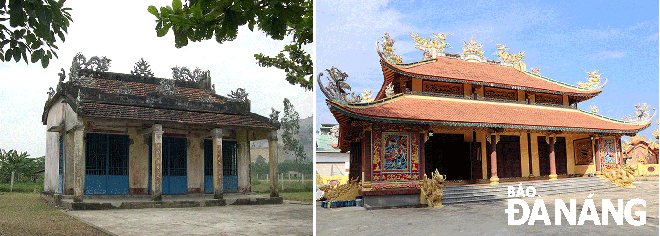 |
| The old (left) and new Phước Lý village communal house. Photo: VTL |
Twenty years ago, when I first visited Phuoc Ly village, I was surprised to find that this area, nestled at the foot of the mountain of the same name, though only a little over a kilometer as the crow flies from National Highway 1A, had once been a "remote and isolated" part of Hoa Minh ward. At that time, in the middle of the fields beside the Phuoc Ly mountain range, stood a small communal house, like a simple one-story house, facing north, recently renovated and cleaned in time for the ancestral commemoration ceremony that year.
According to the village elders, the communal house faces north, a choice made by their ancestors to commemorate their homeland and origins. Long ago, among the group of people leaving their hometown of Thanh Hoa to head south were two individuals from the Nguyen and Mai families. Stopping at the foot of Phuoc Ly mountain, they recognized that this desolate area, with its back against the mountain and its face towards the sea – according to ancient feng shui – was a place of spiritual significance and home to many talented people. They decided to settle here and make it their second home. These two individuals, who were instrumental in establishing the village, are honored as the founding ancestors of Phuoc Ly village. Later, other families such as the Ho, Duong, Tran, Do, Bien, Nguyen Van, Phung, and Phan also came to settle here, and are known as the later generations.
In ancient documents preserved at the home of Mr. Nguyen Dinh Phung - a descendant of the Nguyen Tien Hien clan - there is a document dated April 24th, the forty-second year of Canh Hung (1781, during the reign of Emperor Le Hien Tong) mentioning that the two Tien Hien Nguyen and Mai established a land registry and submitted a request to the court to create a new commune named "Phuoc An Ha". During the reign of Thieu Tri (1841-1847), in a royal decree dated April 12th, the third year of Thieu Tri, "Phuoc An Ha" was changed to "Phuoc Ly", a name that has remained to this day.
In addition, Mr. Phung also kept the land register of Phuoc Ly commune, compiled on April 10th, the seventh year of Bao Dai (1932), which bore the rectangular seal of the village headman with the inscriptions "P. QUANG NAM" (P stands for province, in French), and "D. HOA VINH" (D = district). Mr. Phung explained: Hoa Vinh, written in Chinese characters, is 和荣, which was later mispronounced as Hoa Vang.
The Nguyen clan church in Phuoc Ly village still preserves many official documents and certificates from various dynasties. Besides the Tay Son dynasty kings such as Thai Duc (Nguyen Van Nhac, 1778-1793) and Canh Thinh (Nguyen Quang Toan, 1793-1801), there are also those of the Nguyen dynasty kings such as Gia Long, Minh Menh, and Tu Duc. Specifically, at Phuoc Ly communal house, 12 royal decrees are still preserved. The oldest is dated September 17th, the seventh year of Minh Menh (1826), and the newest is dated July 25th, the ninth year of Khai Dinh (1924).
The village of Phuoc Ly originally had 18 royal decrees. During the French colonial period, the enemy burned down all the villagers' houses, but the nearby thatched-roof temple remained untouched by the fire, so the decrees were unharmed. During the American war, on one occasion, American soldiers, suspecting the box containing the decrees contained secret documents, took them all back to their base for "investigation." The whole village panicked, entrusting Mr. Phung with the task of finding an interpreter to explain everything to the American soldiers. When the decrees were brought back to the village temple, a check revealed that 6 were missing. In the past, villagers only heard about the royal decrees; no one dared to look at them. Occasionally, on important holidays, only the village elders were allowed to glance at them.
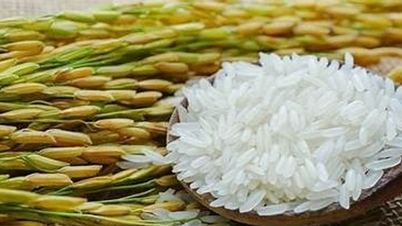
According to ancient tradition, Phuoc Ly village holds three main annual ceremonies based on the lunar calendar: the Ancestor Commemoration Ceremony on April 16th, the Ceremony to Ward Off Evil Spirits on August 16th, and the Ancestor Commemoration Ceremony on December 16th. Mr. Mai Dinh Lich, a descendant of the Mai clan, said that in the past, the expenses for these ceremonies were covered by the profits from four acres of "first-class" rice paddies, specializing in growing Can rice – a type of rice renowned for its delicious taste and nutritional value, considered by the locals to be "the best Can rice, second best fish liver" – left behind by the two ancestors. Besides scholars, the village is also famous for its traditional medicine practitioners. The Mai clan was once renowned for its traditional Chinese medicine specializing in treating typhoid fever. The Ho clan had practitioners of traditional Vietnamese medicine specializing in treating measles. The Nguyen clan has a tradition of treating broken bones and dislocated joints, known in folklore as "Phuoc Ly's Master."
Previously, the villagers of Phuoc Ly were mostly farmers, relying on rainwater. Although life was difficult, their spiritual devotion to their ancestors was always deeply ingrained in their hearts. Seeing that neighboring villages were organizing village festivals, and that the village communal house helped to foster community spirit and revive traditional village culture, the people of Phuoc Ly village, after several meetings, decided to upgrade the Ancestor Commemoration Ceremony into a Village Commemoration Festival.
In 2005, the Phuoc Ly Village Festival was held for the first time on the occasion of the Ancestor Commemoration Ceremony on the 16th day of the 4th lunar month. After the 2012 Village Festival, Phuoc Ly underwent land clearance and was allocated 2,000 square meters at Tổ 128, Le Hien Mai Street. The people of Phuoc Ly, representing various clans, rebuilt a new, spacious and dignified village temple with a budget of 2.354 billion VND. This year, the inauguration of the village temple took place along with the 8th "Village Festival in Hoa Minh Town," hosted by Phuoc Ly.
Mr. Mai Dinh Vuong, Head of the Council of Clans of Phuoc Ly Village, and Head of the Organizing Committee for the inauguration ceremony of Phuoc Ly Village Temple and the 8th Village Festival in Hoa Minh Town, said that from the two original founding clans, Phuoc Ly now has nearly 40 clans with 1,700 households and over 3,000 inhabitants. Long-time residents and newcomers alike live together on the two former areas known as Go Du Hamlet and Trang Hamlet (also called Lang Hamlet), and the Phuoc Ly Urban Area, all gathering at the new temple to offer incense and commemorate the founding ancestors. Mr. Phung has passed away, and Mr. Lich is now over ninety years old. Both are content that the village temple and the people have been resettled on the land their ancestors painstakingly cultivated, fulfilling their duty to those who opened the land and established the village.
VAN THANH LE
Source link

![[Photo] General Secretary and President To Lam presides over the meeting to approve the draft report on the results of the second inspection by the Politburo of the Standing Committee of the Hanoi City Party Committee.](https://vphoto.vietnam.vn/thumb/1200x675/vietnam/resource/IMAGE/2026/05/26/1779789811432_a2-bnd-4430-9620-jpg.webp)














































Comment (0)