

A treasure trove of documents
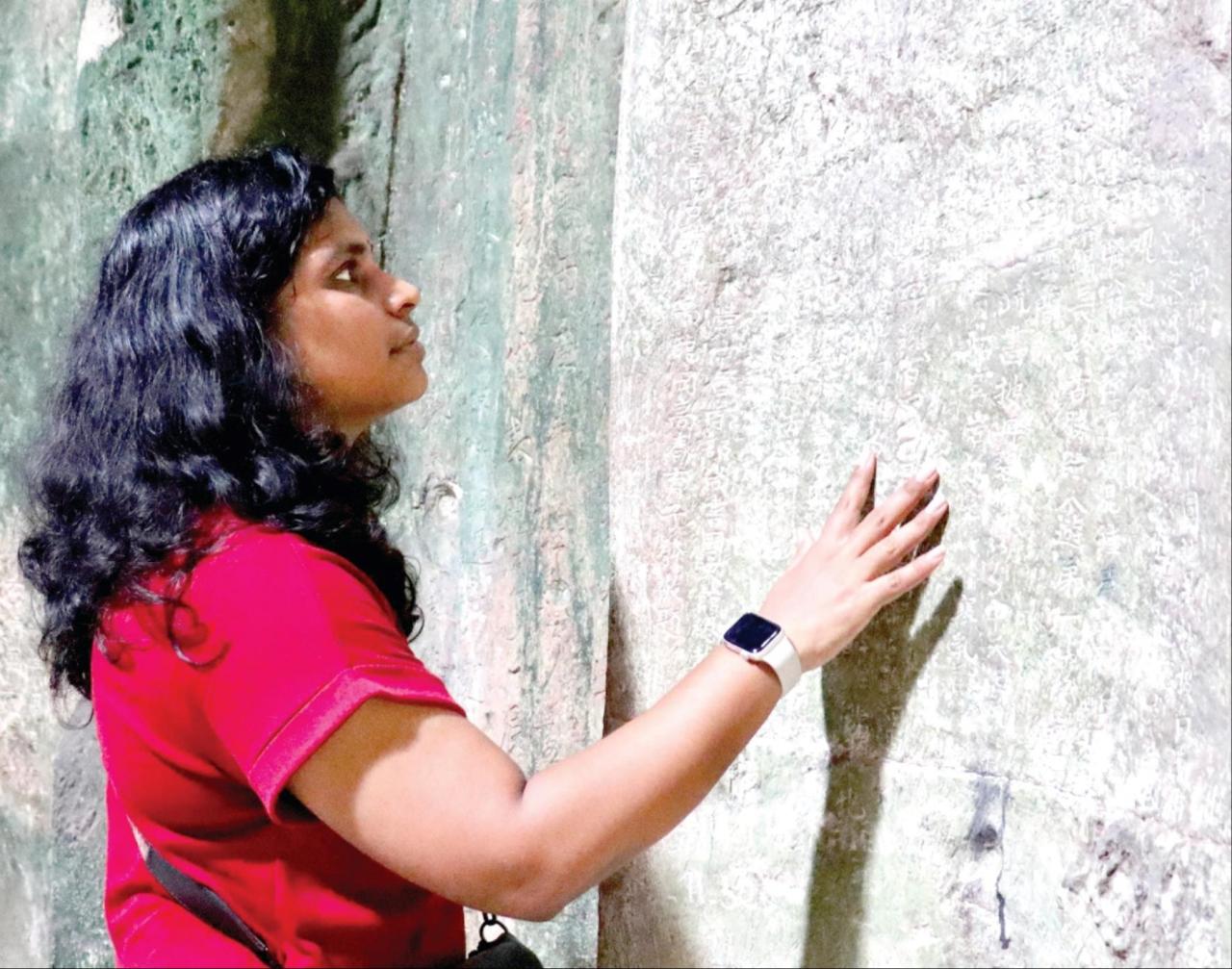
"Ma" means grinding, and "nhai" means cliff. Therefore, "Ma nhai" is a type of inscription in Chinese or Vietnamese characters, carved directly onto natural cliff faces after the stone surfaces have been ground and polished.
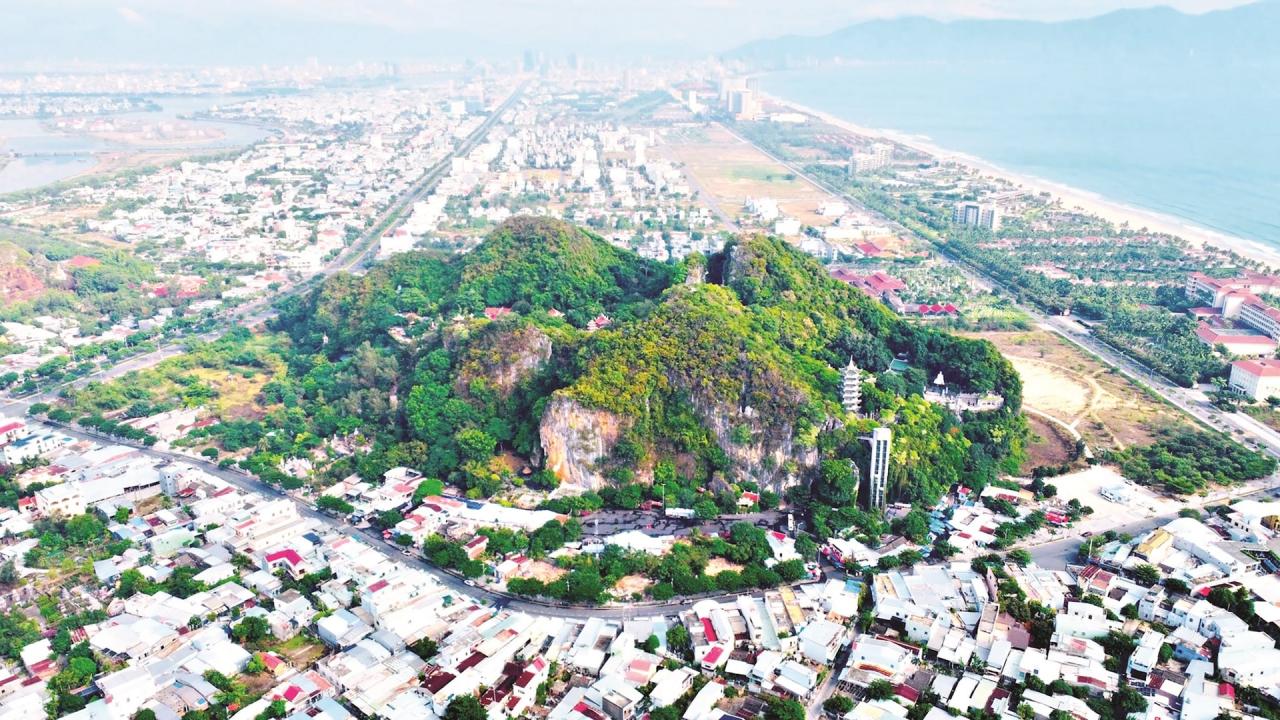
Through surveys, Da Nang city authorities have compiled a list of 79 documents written in Chinese and Nom script (Chinese-Nom) by Nguyen dynasty kings, officials, high-ranking monks, and intellectuals, dating from the first half of the 17th century to the 20th century. These documents are mainly found scattered in the Hoa Nghiem, Huyen Khong, Tang Chon, Van Thong, and Linh Nham caves on Thuy Son mountain.
According to Ms. Nguyen Thi Anh Thi, Vice Chairman of the Da Nang City People's Committee, at the 9th Plenary Meeting of the Asia-Pacific Regional Committee of the Memory of the World Programme (November 2022) in South Korea, members highly appreciated the rock formations at the Ngu Hanh Son scenic area. The Ngu Hanh Son rock formations fully meet the criteria set by UNESCO, such as authenticity and integrity; regional significance; gender significance; and a plan for sustainable and scientific conservation and promotion of their value.
According to the Da Nang Department of Culture and Tourism, each rock carving is an independent and unique entity, never to be repeated. The system of rock carvings at the Marble Mountains is the only original document personally inscribed by Emperor Minh Mang on the cliffs and caves.
Vietnam currently has 3 documentary heritage items under the Memory of the World Programme: the Nguyen Dynasty woodblocks, the Doctoral Examination Stele at the Temple of Literature, and the Nguyen Dynasty Imperial Archives. For the Memory of the World Programme in the Asia-Pacific region, Vietnam has 7 documentary heritage items, including: the Nguyen Dynasty Imperial Archives; the Vinh Nghiem Pagoda woodblocks; the poetry and literature on Hue imperial architecture; the Phuc Giang School woodblocks; the Hoang Hoa Su Trinh Do; the rock carvings at the Ngu Hanh Son scenic area; the Han Nom texts of Truong Luu village, Ha Tinh; and the relief castings on 9 bronze cauldrons in the Hue imperial palace.
In particular, the rock carvings at Ngu Hanh Son (specifically the "Phu Da Linh Trung Buddha" stele) have always been an important source of information for all researchers, both domestic and international. This information is especially important when discussing the cultural and economic diplomacy of Vietnam, China, and Japan, and maritime exchanges in the Asia-Pacific region in general.
Compared to other famous rock carving sites in Vietnam, Ngu Hanh Son (Marble Mountains) excels in terms of quantity, integrating carvings from multiple periods, rich in genre, and bringing together many generations of authors, including prominent figures from all three regions of the country as well as overseas Vietnamese.
Furthermore, the rock carvings on the cliffs of Ngu Hanh Son, with their exquisite stone carving art preserved through the system of inscriptions from the Nguyen lords' era, mark a proud highlight on the map of inscription distribution in Vietnam.
Witnesses of the land
Over nearly 400 years, starting from the Nguyen Dynasty, due to the influence of climate, time, war, and human activity, only 52 out of 79 Han-Nom inscriptions on the Marble Mountains are still legible. The rest have been eroded by time, covered with layers of paint and cement, cracked by war, or chiseled away by later generations, sometimes with added Vietnamese characters, distorting or erasing some of the Chinese characters.
According to experts from the Da Nang Museum, the rock carvings at the Marble Mountains are a valuable source of information revealing the original appearance and beauty of a historically famous scenic area. Almost all of the poetic rock carvings at the Marble Mountains mention the scenic beauty of the river. This refers to the Co Co River (also known as Lo Canh Giang), which winds around the Marble Mountains, connecting Cua Dai (Hoi An) to Cua Han (Da Nang).
In the Marble Mountains of Ngu Hanh Son, many place names are mentioned, referring to ancient villages and communes of the locality. Many of these villages and communes no longer exist, or only exist as blocks of neighborhoods, residential areas, or are only known through street names. Thus, the appearance of the names of some villages and communes in Sino-Vietnamese documents will help in the study of place names (original names, name changes, and evolution) of villages and communes in Quang Nam province, supplementing ancient documents such as "O Chau Can Luc" and "Phu Bien Tap Luc," as well as later geographical works of the Nguyen dynasty.
Furthermore, the rock carvings at the Marble Mountains (Ngũ Hành Sơn) are a source of authentic historical evidence reflecting the cultural, economic, and social exchange between the three countries: Vietnam, China, and Japan over a long period several centuries ago. In addition, the rock carvings at the Marble Mountains are historical records concerning Buddhism in the Marble Mountains in particular and Vietnam in general, and also provide insight into the political ideology of the Nguyễn dynasty.
Source: https://baoquangnam.vn/ngon-nui-chua-ky-uc-the-gioi-3142761.html




































































































Comment (0)