

Sleeping naked can easily cause rashes and skin irritation due to contact with dirt on the bed sheets, leading to nasal congestion, coughing, or sneezing.
According to research by mattress company Casper, over 28% of Americans surveyed said they sleep naked every day, and over 71% said they never go to bed without clothes. In fact, sleeping naked isn't uncommon, but it's not suitable for everyone, especially those who sweat at night or have sensitive skin.
According to Julius Patrick, head of sleep research at Bupa's Cromwell Hospital, sweat accumulates and traps on the body while sleeping. Sleeping without clothes allows sweat to evaporate quickly, making you susceptible to colds. "Wearing light clothing to sleep will absorb the sweat, helping to cool you down," Patrick says.
Bed sheets and mattresses often accumulate dust, oil, dead skin cells, and sweat. Skin in direct contact with the bedding can develop rashes and irritation. Wearing clothes while sleeping helps prevent dirt from clinging to the skin, clogging pores, and causing acne. During sleep, the body sheds dead skin cells. Mites and ticks feed on this dead skin, which can cause allergies, nasal congestion, coughing, and sneezing.
Experts recommend washing bed sheets at least twice a week. People with eczema or psoriasis should not sleep naked on polyester or other synthetic fabrics.
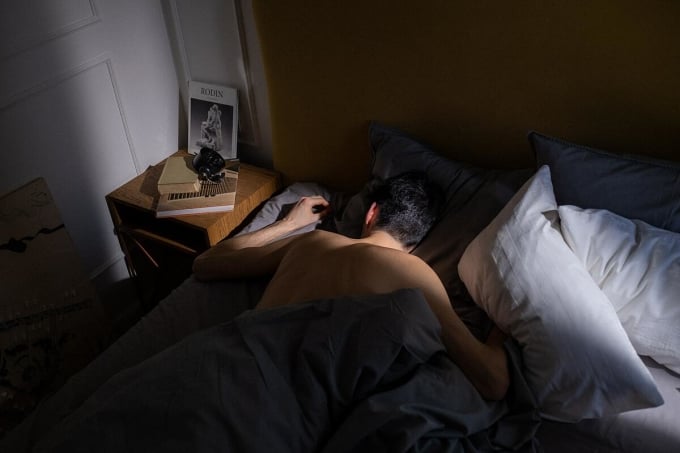
Sleeping naked can easily lead to dermatological problems. Photo: Pexel
One method for getting a good night's sleep without taking off your clothes is to close the curtains during the day to block out the sunlight, and open the windows when the temperature inside the room is higher than outside.
Experts also recommend taking a shower before bed. Some people believe that a hot shower or bath helps reduce body temperature, promoting faster and deeper sleep.
Thuc Linh (According to Cnet )
Source link

![[Image] National Assembly discusses the implementation of the socio-economic development plan.](https://vphoto.vietnam.vn/thumb/1200x675/vietnam/resource/IMAGE/2026/04/20/1776696707422_ndo_br_img-20260420-185419-jpg.webp)


![[Photo] General Secretary and President To Lam meets with National Assembly delegates from ethnic minorities.](https://vphoto.vietnam.vn/thumb/1200x675/vietnam/resource/IMAGE/2026/04/20/1776696701056_a1-bnd-8331-3342-jpg.webp)




























































































Comment (0)