

At 2 PM on August 10th, Mr. Hai (from Ho Chi Minh City) was brought to Tam Anh General Hospital in Ho Chi Minh City by his family in a state of semi-consciousness and weakness/paralysis in his limbs. An emergency 3 Tesla MRI scan revealed a large brain hemorrhage measuring 4 cm.
The hematoma compresses the surrounding nerves, which are areas of the brain responsible for motor and language functions. Without emergency surgery, the patient faces hemiplegia, difficulty speaking, blurred vision, and even death.
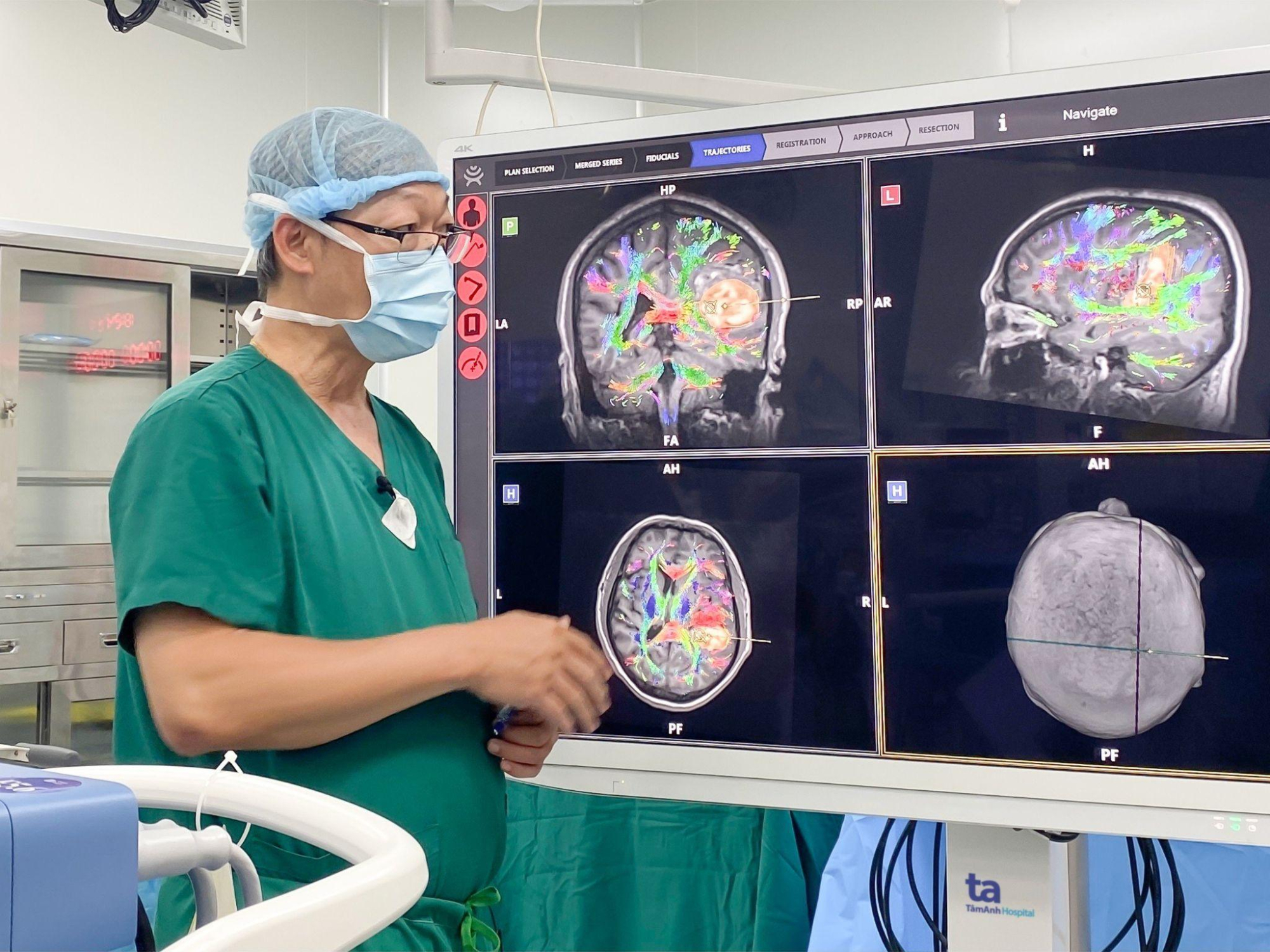
AI robots are using MRI and DTI imaging to clearly show nerve fiber bundles and hematomas compressing the brain of patients. Photo: Nguyen Tram.
In this emergency situation, the patient had missed the "golden hour" for stroke resuscitation, and a large hematoma and ruptured blood vessels continued to bleed, causing increasing intracranial pressure and worsening vital signs. Dr. Chu Tan Si, Head of the Neurosurgery Department at the Neurological Center, and doctors from various specialties consulted and decided to choose a new awake brain surgery technique with the powerful assistance of the Modus V Synaptive AI robot and the latest generation Neuro-Navigation AI system.
Performing hematoma removal and hemostasis using awake surgery allows patients to escape danger quickly and facilitates assessment of surgical effectiveness as they can interact with doctors, move, and ask questions. However, the difficulty and danger of awake brain surgery are many times higher than surgery under general anesthesia, where the patient is ventilated and remains still, easily controlled with medication. However, because of general anesthesia, doctors cannot ask the patient to speak or move to directly assess function during the manipulation of the corresponding brain region. “In this emergency case, we decided on a 2-in-1 awake surgery. The reason we were confident in this decision is that we have the most advanced AI brain surgery robot available today, and we have a high-level anesthesia and intensive care team right at the hospital. Without top-notch local anesthesia and intensive care specialists, awake surgery would be impossible,” said Dr. Tan Si.
At 5 PM that same day, just two hours after the patient was admitted, the challenging surgery began. Dr. Luu Kinh Khuong, Head of the Anesthesia and Resuscitation Department at Tam Anh General Hospital in Ho Chi Minh City, meticulously planned the strategy for controlling the patient's airway, blood pressure, and neurological function. An ultrasound machine was placed on-site to accurately identify the four nerve branches leading to the crown of the head (where the incision would be made), and a block anesthesia was administered.
In particular, the medications used are carefully dosed to ensure the patient remains conscious during surgery but does not experience pain, nausea, or seizures, and that their body and nervous system remain as stable as possible during and after the operation. "Without pain relief and proper control of neurological and motor functions, patients risk agitation, anxiety, pain, and restlessness during surgery, affecting the surgeon's work and increasing the risk of dangerous cerebral edema," Dr. Khuong assessed.
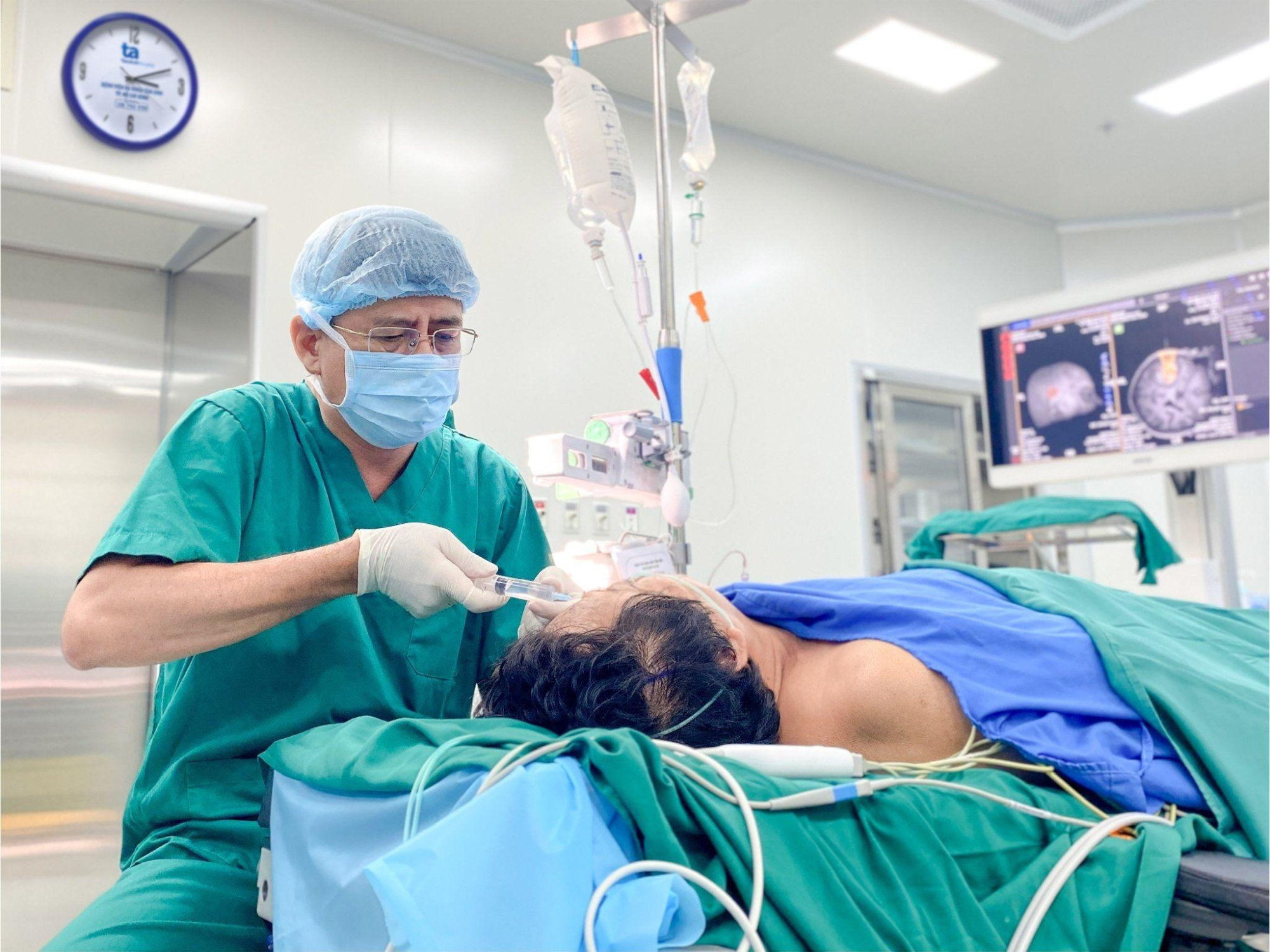
Doctor Luu Kinh Khuong administers local anesthesia to the patient before surgery. Photo: Nguyen Tram.
Before the surgery, the AI application of the Modus V Synaptive robot integrated all images and data from MRI, DTI, CT, and DSA scans of the patient. Nerve fibers and hematomas were clearly visible on a single, vivid, and detailed 3D image. Dr. Chu Tan Si then performed a simulated surgery using the robot's specialized software, selecting the precise and most effective surgical approach to the hematoma, ensuring safety without cutting through surrounding healthy nerve fibers and brain tissue.
Because the entire brain and hematoma areas were visible, the surgeon only needed to make a 5 cm incision in the scalp, exposing the skull and drilling a 3 cm opening in the epidural space, then skillfully cutting open the dura mater. The patient's brain was tense and its pulse was weak. Following the path established from the previous simulated surgery and under the close supervision of a robot with a "traffic light" system to warn of the precise surgical path, the surgeon inserted a specialized Brainpath catheter precisely into the hematoma in the right cerebral hemisphere, aspirating about 40 ml of clotted and dark blood.
While operating, Dr. Tan Si said to the patient, "I'm removing the blood clot from your brain. Do you feel better now?" Mr. Hai replied, "Much better, thank you, doctor."
The team continuously conversed with the patient, asking him to bend his left and right legs… to ensure that the relevant neurological functions were preserved as much as possible. Relieved that all the blood clot in the brain had been removed, both Dr. Chu Tan Si and Mr. Hai sang cheerfully while the team continued to repair the dura mater, reposition the skull cap, and suture the skin.
Just over 30 minutes after the skull was opened and closed, the surgical team, anesthesiologists, nurses, and the patient all wanted to cheer and rejoice when Dr. Chu Tan Si announced, "The surgery was successful. Congratulations to Mr. Hai, and thank you to everyone."
Thirty minutes after the surgery, the patient met with relatives and made a phone call to his family. Half a day later, the results of the 768-slice CT scan showed no more blood clots in the brain, and the patient's movement, vision, and cognitive abilities were completely normal. Mr. Hai smiled comfortably but couldn't help but feel emotional, saying, "This is the first time in my life I've been in an operating room. The doctors drilled into my skull and removed the blood clot while I was still conscious. Even now, I still think it's a dream."
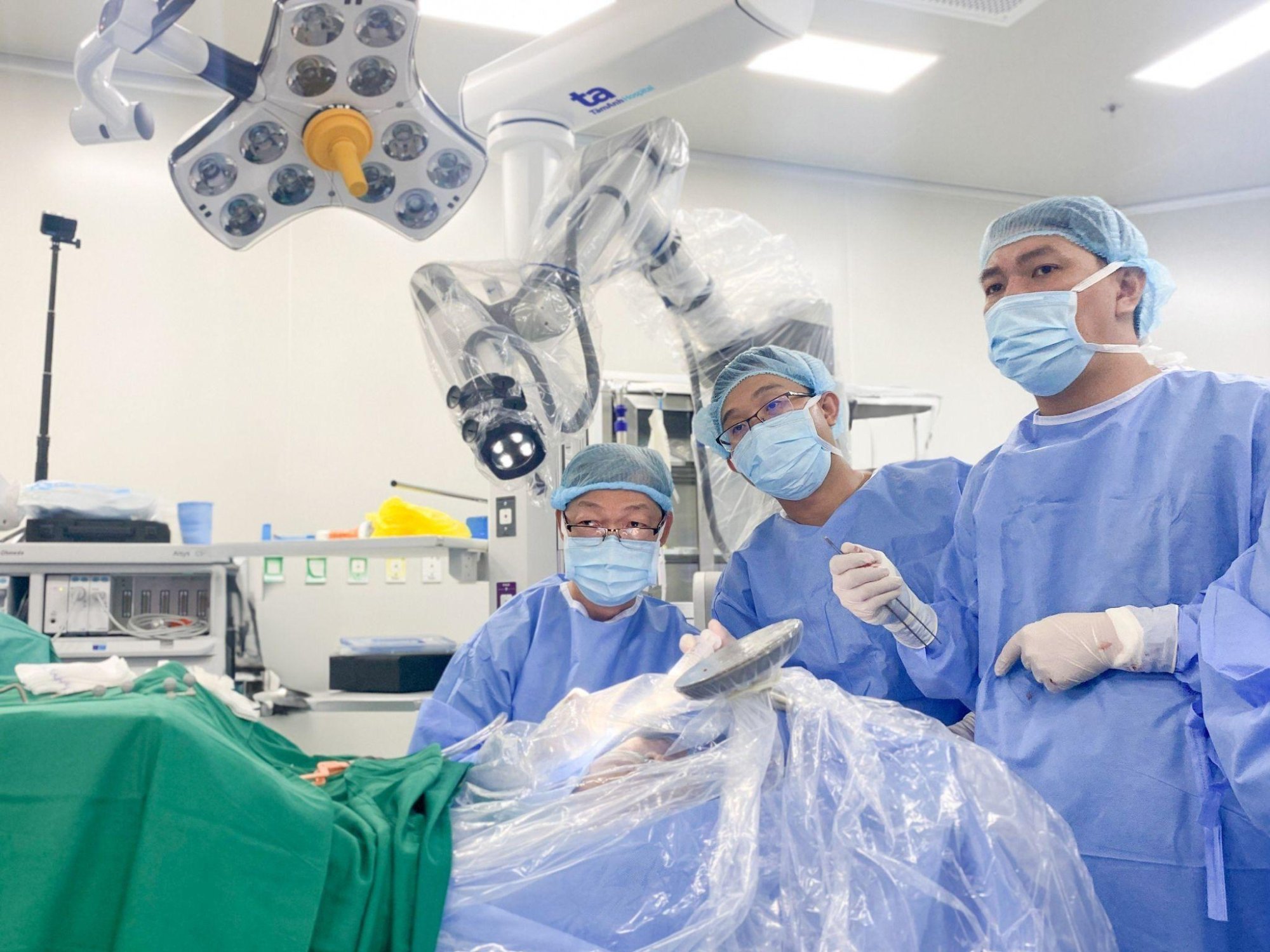
Doctor Tan Si (seated) and his colleagues during awake brain surgery on a patient using the Modus V Synaptive robot. Photo: Nguyen Tram.
According to the patient's family, two days prior, Mr. Hai drank a can of beer at a friend's house. Afterward, he experienced persistent dizziness, headaches, and vomiting. The following day, the symptoms did not improve, leading the family to suspect a stroke and request urgent hospitalization. However, at the first hospital Mr. Hai was admitted to, doctors stated that it was too late to effectively treat him with traditional techniques. Mr. Hai was then transferred to Tam Anh General Hospital in Ho Chi Minh City after learning about the AI Modus V Synaptive brain surgery robot.
According to Dr. Chu Tan Si, approximately 2 million brain cells are destroyed every minute after a stroke. Therefore, emergency stroke treatment should be administered as soon as possible. The AI Modus V Synaptive robotic awake brain surgery method is highly effective for cases of cerebral hemorrhage due to stroke, ruptured cerebral aneurysms, or surgery on brain regions responsible for motor function, especially when traditional techniques are difficult to perform effectively. In these cases, the 2-in-1 awake surgery allows doctors to simultaneously remove blood clots, control bleeding, and monitor the effectiveness of the surgery while talking to and instructing the patient to perform movements to ensure that the corresponding nerve fibers are not damaged.
“Robot-assisted surgery for cerebral hemorrhage offers many benefits to patients, saving lives and minimizing sequelae in cases of cerebral hemorrhage that were previously untreatable. We continue to plan the development and application of this technique to brain tumor surgery, ensuring the highest effectiveness and preservation of patient functions. There will be more opportunities for patients to live healthy lives without having to go abroad or facing the limitations of previous treatments,” said Dr. Tan Si.
Nguyen Tram
Source


![[Image] Central Party Office summarizes work in 2025](/_next/image?url=https%3A%2F%2Fvphoto.vietnam.vn%2Fthumb%2F1200x675%2Fvietnam%2Fresource%2FIMAGE%2F2025%2F12%2F18%2F1766065572073_vptw-hoi-nghi-tong-ket-89-1204-jpg.webp&w=3840&q=75)






















































































Comment (0)