

Loyal to an ideal
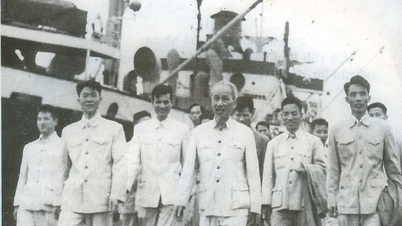
Comrade Phùng Chí Kiên, whose birth name was Nguyễn Vĩ, was born on May 18, 1901, in Mỹ Quan Thượng village, Vạn Phần commune, now Hùng Châu commune, Nghệ An province. Growing up in a poor peasant family in a region rich in patriotic, studious, and revolutionary traditions, Nguyễn Vĩ witnessed the suffering of the people under colonial and feudal oppression; this shaped his patriotism and his determination to find a way to save the country and its people.
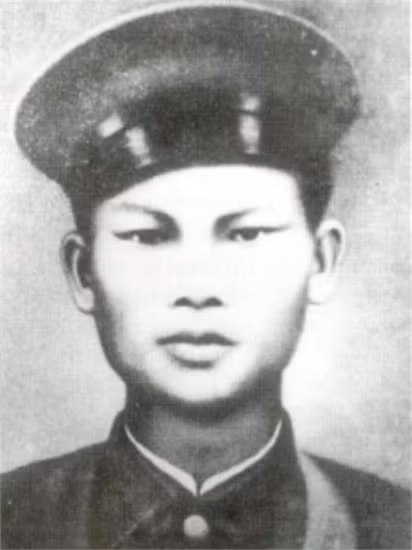
From a young laborer at Yen Ly railway station, Nguyen Vi actively read progressive books and newspapers, connected with like-minded people, and participated in patriotic propaganda activities. Enlightened by comrades Nguyen Nang Tuu and Le Huu Lap, Nguyen Vi joined the Vietnam Revolutionary Youth Association. In October 1926, he went to Guangzhou to attend a political training course organized by Leader Nguyen Ai Quoc. From then on, the name Phung Chi Kien became associated with a vibrant, persistent, and unwavering revolutionary life.
After political training, Comrade Phung Chi Kien was introduced by Leader Nguyen Ai Quoc to study at the Whampoa Military Academy, then participated in the Guangzhou Uprising in 1927, honing his skills in the international revolutionary movement. Despite imprisonment, fighting, and injuries, and operating under extremely harsh conditions, Comrade Phung Chi Kien maintained the integrity of a communist. In 1930, he joined the Indochinese Communist Party; from 1932 to 1934, he studied at the University of the East of the Communist International in Moscow, acquiring a solid foundation in political theory.
Returning to revolutionary activities, Comrade Phung Chi Kien joined the Party's Overseas Command, contributing to the restoration of the Party's organizational system, preparing for the First Party Congress in 1935, and was elected to the Central Executive Committee. During the period 1936-1939, he continued to demonstrate the capabilities of a shrewd leader, making significant contributions to consolidating the organization, overcoming limitations in mass mobilization methods, and promoting the development of the revolutionary movement.
In 1941, Comrade Phung Chi Kien, along with Leader Nguyen Ai Quoc, returned to Vietnam to directly lead the revolutionary movement. In Cao Bang, he participated in training cadres, building revolutionary bases, organizing the pilot Viet Minh Front, establishing national salvation organizations, and preparing political and armed forces for the revolution. As the Commander of the First National Salvation Army, he contributed to laying the foundation for the Vietnamese revolutionary armed forces.
During the battle at the Bac Son base in Vo Nhai, Comrade Phung Chi Kien bravely commanded the forces, protecting the Party's headquarters. On August 22, 1941, he was captured by the enemy and heroically sacrificed his life at the young age of 40. Although his revolutionary life was short, it left a shining example of patriotism, proletarian internationalism, political acumen, organizational talent, and unwavering communist integrity.
The lesson of today will shine brightly forever.
Comrade Phung Chi Kien's contributions to the Vietnamese revolution were evident in many aspects: he was one of the early cadres trained and educated by Leader Nguyen Ai Quoc; he was trained in politics, military affairs, and international practical activities; he was a pioneering cadre who participated in building and restoring the Party organization during difficult times; and he was a leader who made important contributions in preparing forces, building base areas, and laying the foundation for the revolutionary armed forces.
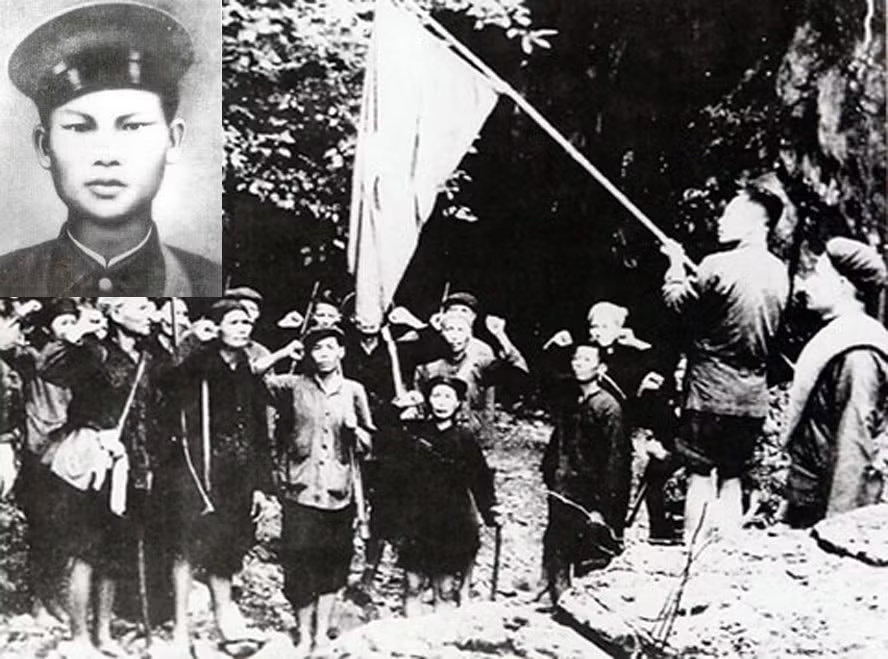
In Phung Chi Kien, what stands out is the unity between words and deeds, between theory and practice, between political acumen and the capacity for action; not just learning to know, but learning to do revolution; not just loyal to his oath, but loyal to the very last moment of his life. Therefore, Phung Chi Kien's name is associated with the noble qualities of the older generation of cadres: having great ideals, knowledge, discipline, organization, daring to go to the most difficult places, daring to take on the most challenging tasks, and ready to sacrifice for the independence and freedom of the Fatherland.
For Gia Lai today, the lessons from the life of Comrade Phung Chi Kien are even more relevant. In the new development space, from the mountains to the sea, the province is facing the requirement of achieving rapid and sustainable development while maintaining national defense and security, protecting the Party's ideological foundation, and consolidating the great national unity. This demands that every cadre and Party member constantly study, train, stay close to the people and the grassroots, practice what they preach, dare to think, dare to act, and dare to take responsibility for the common good. The spirit of Phung Chi Kien reminds every cadre today to take the ideal of serving the Fatherland and the people as their foundation; to use the effectiveness of their work and the satisfaction of the people as their measure; and to use political acumen, revolutionary ethics, and practical capabilities as the basis for their actions.
The 125th anniversary of the birth of Phung Chi Kien is not only an occasion to pay tribute to a steadfast communist and a prominent senior leader of the Party, but also a profound reminder to each of us today to live with ideals, work responsibly, be closely connected with the people, and bring the spirit of "lifelong dedication to the Party and the people" to every specific task, contributing to building Gia Lai into a rapidly and sustainably developing province in the new era.
Source: https://baogialai.com.vn/nguoi-cong-san-tron-doi-vi-dang-vi-dan-post587388.html
![[Photo] Capturing the moment the tide recedes at Yen Binh Son rapids - a million-year-old scenic spot in Quang Ngai.](https://vphoto.vietnam.vn/thumb/1200x675/vietnam/resource/IMAGE/2026/05/19/1779175463885_yen9-1199-jpg.webp)
![[Photo] General Secretary and President To Lam presides over a meeting on the implementation of Directive No. 34-CT/TW of the Party Central Committee.](https://vphoto.vietnam.vn/thumb/1200x675/vietnam/resource/IMAGE/2026/05/19/1779187768672_a1-bnd-2350-631-jpg.webp)
![[Photo] National Assembly Chairman Tran Thanh Man attends the groundbreaking ceremony for the National Highway 1A spatial axis project.](https://vphoto.vietnam.vn/thumb/1200x675/vietnam/resource/IMAGE/2026/05/19/1779161360398_ndo_br_bnd-1412-jpg.webp)

































![[Photo] General Secretary and President To Lam receives Indian Defense Minister Rajnath Singh](https://vphoto.vietnam.vn/thumb/402x226/vietnam/resource/IMAGE/2026/05/19/1779184046302_anh-man-hinh-2026-05-19-luc-16-46-58.png)












Comment (0)