

In Vietnam, according to statistics from the Ministry of Health , approximately 200,000 people die from cardiovascular diseases each year, accounting for 33% of all deaths. How should people with cardiovascular disease maintain their diet and medication regimen during Tet (Lunar New Year) to prevent their condition from worsening?
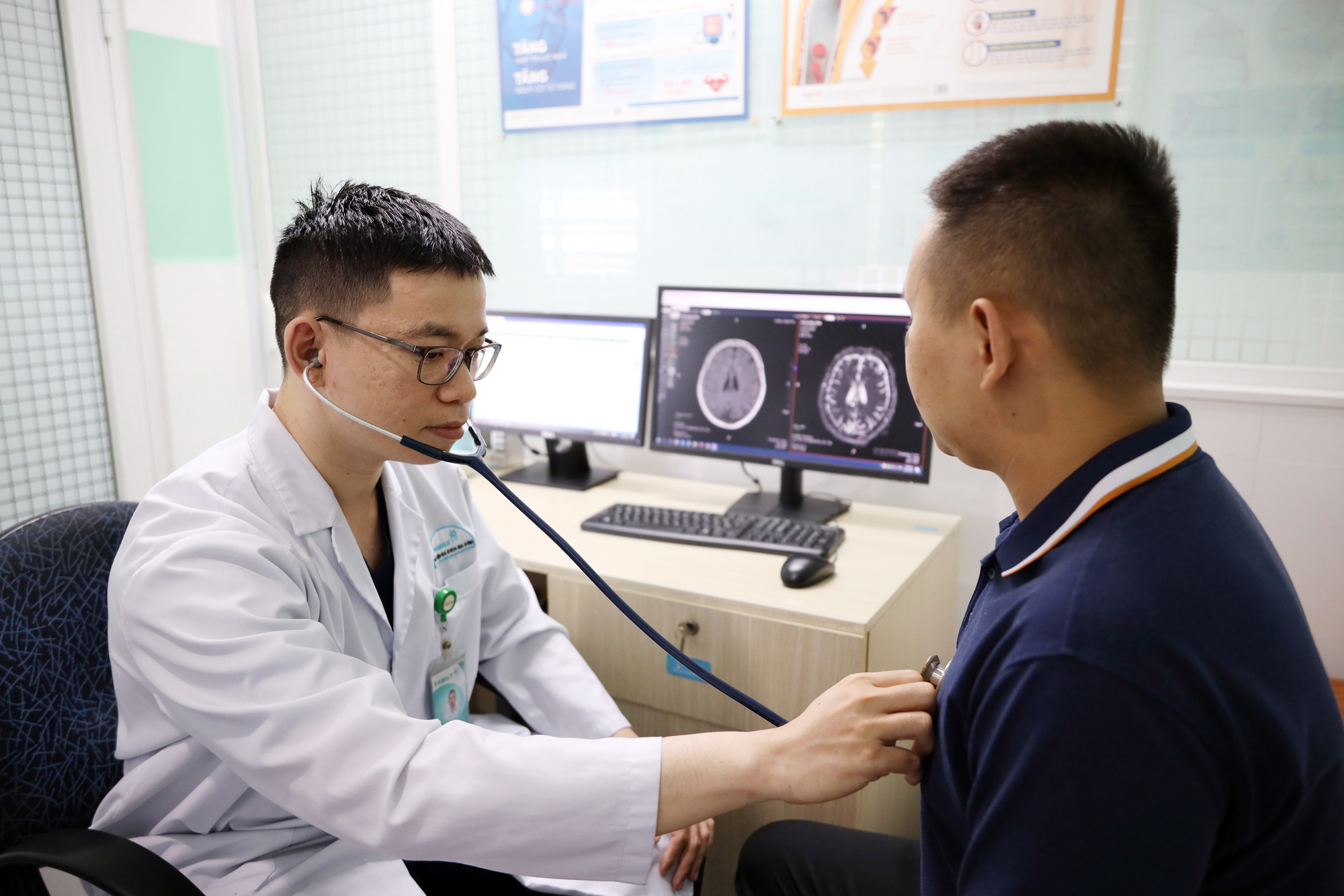
A doctor examines a patient with cardiovascular disease - Photo: PT
During the Lunar New Year holiday, many people disrupt their daily routines. Experts advise those with underlying health conditions to pay close attention to their diet and medication to prevent their illnesses from worsening.
So, what should patients with cardiovascular conditions do, what kind of diet and medication regimen should they follow to have a happy and healthy Lunar New Year?
Associate Professor Dr. Nguyen Thi Thu Hoai, Director of the National Cardiovascular Institute, Bach Mai Hospital, will provide some advice for cardiovascular patients during the Lunar New Year of 2025.
General notes
Adhere to your medication regimen: Take your medication on time, and do not stop or change the dosage without consulting your doctor, even when busy.
Diet : Avoid foods high in saturated fat (fatty meats, fried foods), sugar (sweets), and salt (pickled vegetables, fish sauce).
Avoid alcohol : Excessive alcohol consumption should be avoided as it can lead to increased blood pressure and heart rhythm disorders.
Avoid strong emotional states : excessive joy, excessive sadness, etc.
Physical activity : Avoid strenuous activities (mountain climbing, lifting heavy objects). Maintain a routine of light exercise, walking, and yoga.
Monitor symptoms : If you experience fatigue, leg swelling, or increased shortness of breath, seek medical attention immediately.
Follow-up appointment: Schedule a follow-up appointment before or immediately after Tet to ensure that treatment is not interrupted.
Maintain a relaxed state of mind : Avoid excessive anxiety and stress, as these can increase blood pressure or cause symptoms to recur.
Be mindful of the weather : Dress warmly in cold weather and avoid sudden temperature changes.
Specific considerations for cardiovascular patients
Limit salt intake: Avoid salty foods such as pickled vegetables, pickled onions, sticky rice cakes (bánh chưng, bánh tét) as they can cause water retention and put extra strain on the heart.
Pay attention to your water intake: Ensure you drink enough water; too much can cause shortness of breath and swelling, but too little can lead to kidney failure or low blood pressure.
Monitor your weight daily; if you gain more than 2kg in 2-3 days, inform your doctor.
For patients taking anticoagulants: Limit foods rich in vitamin K (green leafy vegetables, broccoli) as it may affect the effectiveness of the anticoagulants.
Avoid falls: Cardiovascular patients are often prescribed antiplatelet or anticoagulant medications, so their risk of bleeding is higher than normal. Therefore, they should avoid activities that carry a risk of injury as they could cause serious bleeding.
When does a patient need immediate hospitalization?
Severe chest pain, serious shortness of breath.
Rapid heartbeat, irregular heartbeat, or feeling faint.
Swollen legs, abnormally rapid abdominal enlargement.
Blood pressure that is too high or too low
The symptoms did not improve with medication.
Source: https://tuoitre.vn/nguoi-mac-benh-tim-mach-can-chu-y-gi-dip-tet-20250124110304289.htm


![[Image] Central Party Office summarizes work in 2025](/_next/image?url=https%3A%2F%2Fvphoto.vietnam.vn%2Fthumb%2F1200x675%2Fvietnam%2Fresource%2FIMAGE%2F2025%2F12%2F18%2F1766065572073_vptw-hoi-nghi-tong-ket-89-1204-jpg.webp&w=3840&q=75)




















































































Comment (0)