

From agricultural waste to green products
As the year draws to a close, research work becomes even busier, but for Nguyen Bui Anh Duy, it's a joy on his journey to pursue the goal of minimizing agricultural waste, reducing environmental pollution, and contributing to the promotion of sustainable agricultural development.
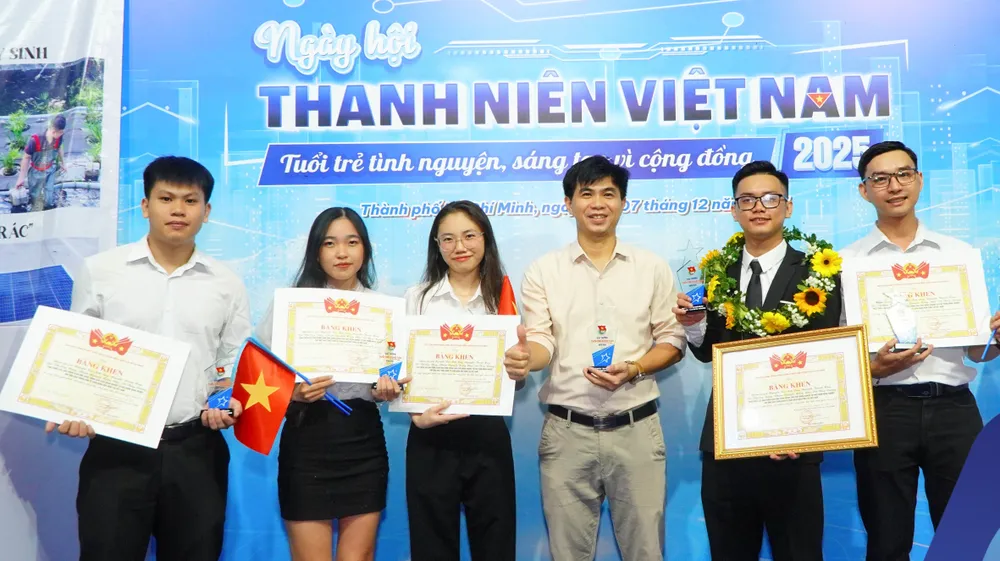
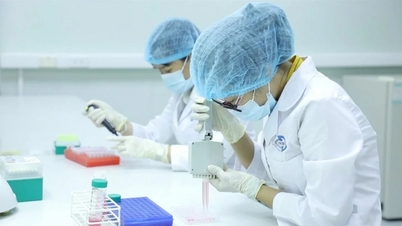
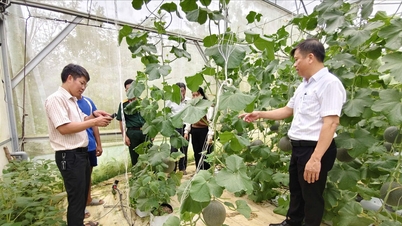
As the team leader, Duy and his members have developed green products from agricultural waste, including biodegradable seedling pots and biodegradable agricultural mulch film.
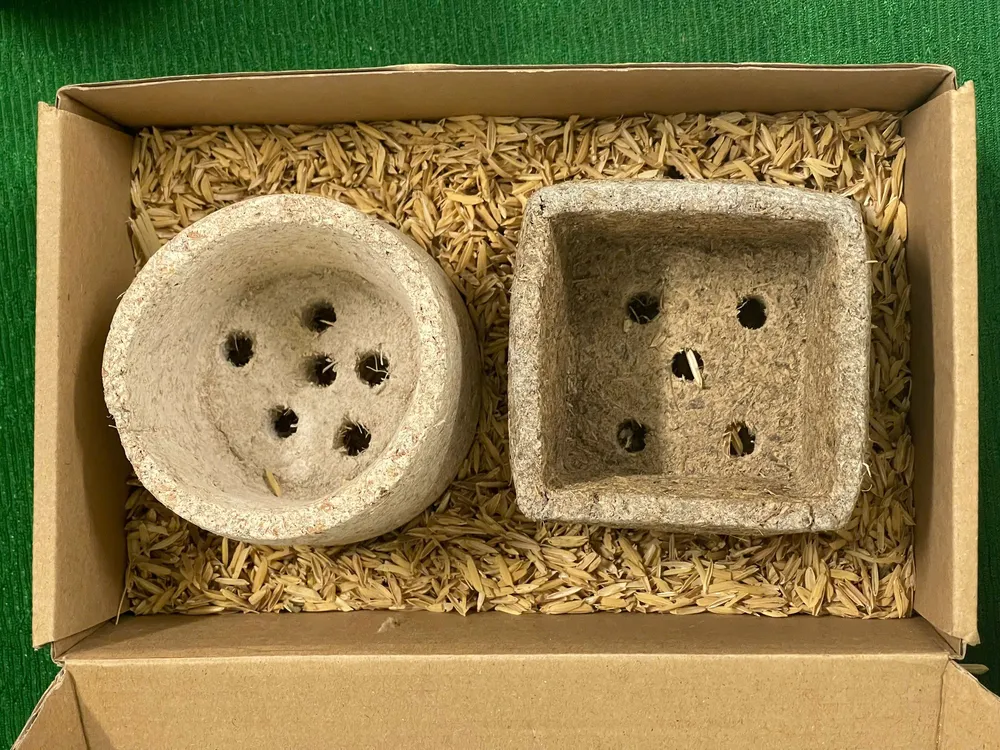
The seedling trays are made from processed peanut shell powder, burnt rice husk powder, bound together with starch extracted from jackfruit seeds, mango seeds, and a small amount of fungus.
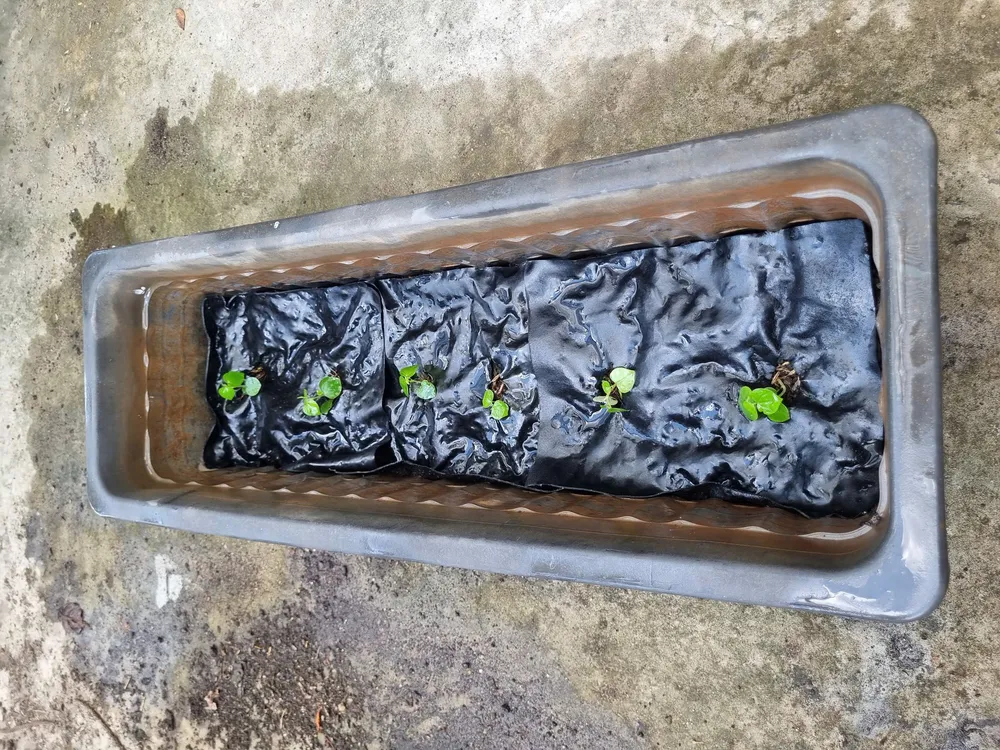
Once the seedlings are fully grown, farmers can place the entire pot in the ground without removing it. The pot gradually decomposes and transforms into organic matter beneficial to the soil and plants. This is in parallel with biodegradable agricultural mulch, an alternative to traditional plastic film, which leaves behind a large amount of waste after each harvest.
"Using these green products also helps reduce labor in the collection and processing of post-farming waste," Nguyen Bui Anh Duy shared.
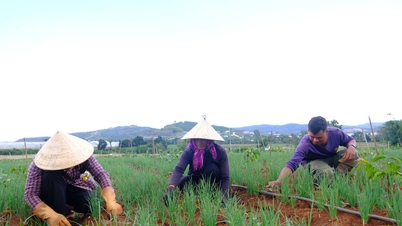
The idea didn't originate in a laboratory, but took root in real life. As the son of a farmer, growing up surrounded by fields and gardens, Duy and his colleagues were troubled to see that most agricultural products were only harvested for their fruits or seeds, while many by-products were discarded, generating organic waste and leading to environmental pollution in agriculture.
Upon entering the lecture halls of Ho Chi Minh City University of Technology and Education (now Ho Chi Minh City University of Technology), that concern became the driving force for Duy to pursue his research topic systematically.
"What keeps us going isn't just the research itself, but the feeling that we're giving back something useful to the fields and gardens that nurtured us," Duy said.
Duy also maintains a simple, green lifestyle: his workspace always has plants, and he reuses instead of throwing away plastic items… For him, it's not a trendy choice, but a way to live consistently with the values he pursues.
A green meeting place for young people.
On a weekend, following a small alley in Hoa Hung ward (Ho Chi Minh City) up to the third floor of a house, we stepped into a refreshing green space.
Here you'll find radiant faces, from young people to elderly folks, carrying old clothes, cardboard boxes, batteries, plastic bottles… all to exchange for pretty little potted cacti and succulents.
This is the space of the "House of Many Leaves" project, initiated by Mr. Hoang Quy Binh in late 2020. Items that seemed to have lost their value, when they come to "House of Many Leaves," begin a new and meaningful journey.
Usable items will be donated to free stores; clean paper will be recycled into notebooks; and books will continue their journey to free libraries or charitable organizations in remote areas.
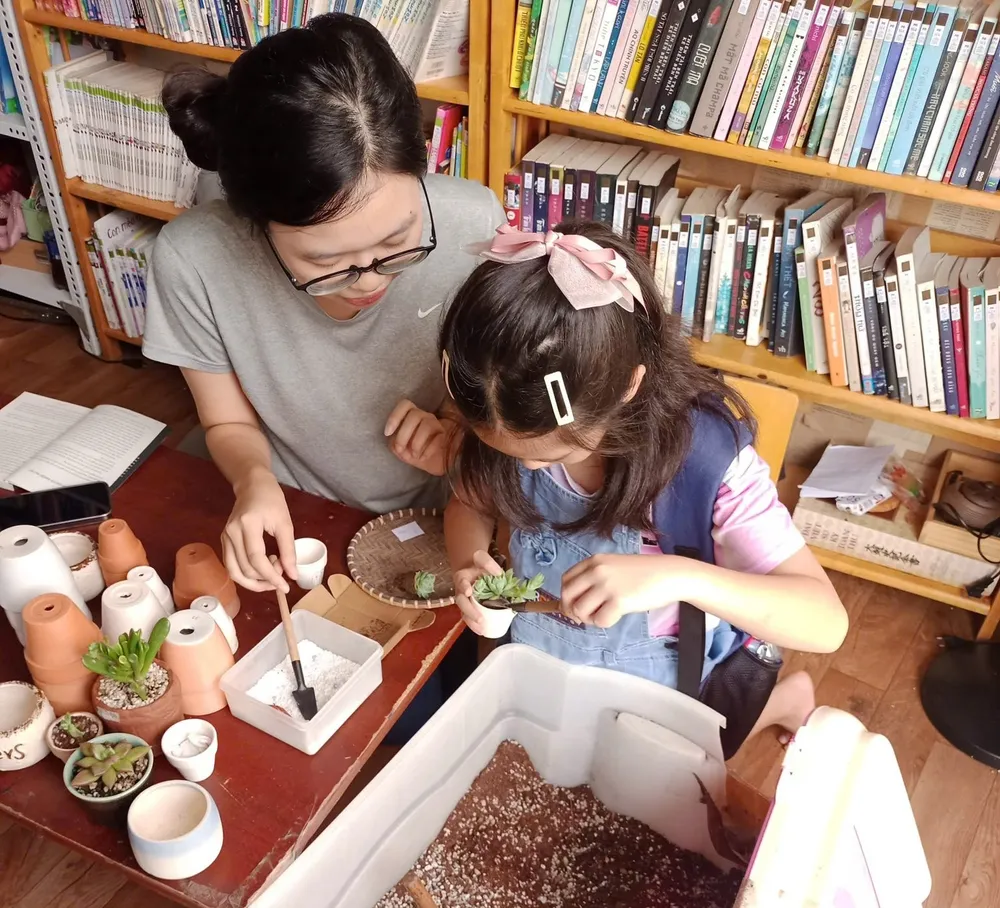
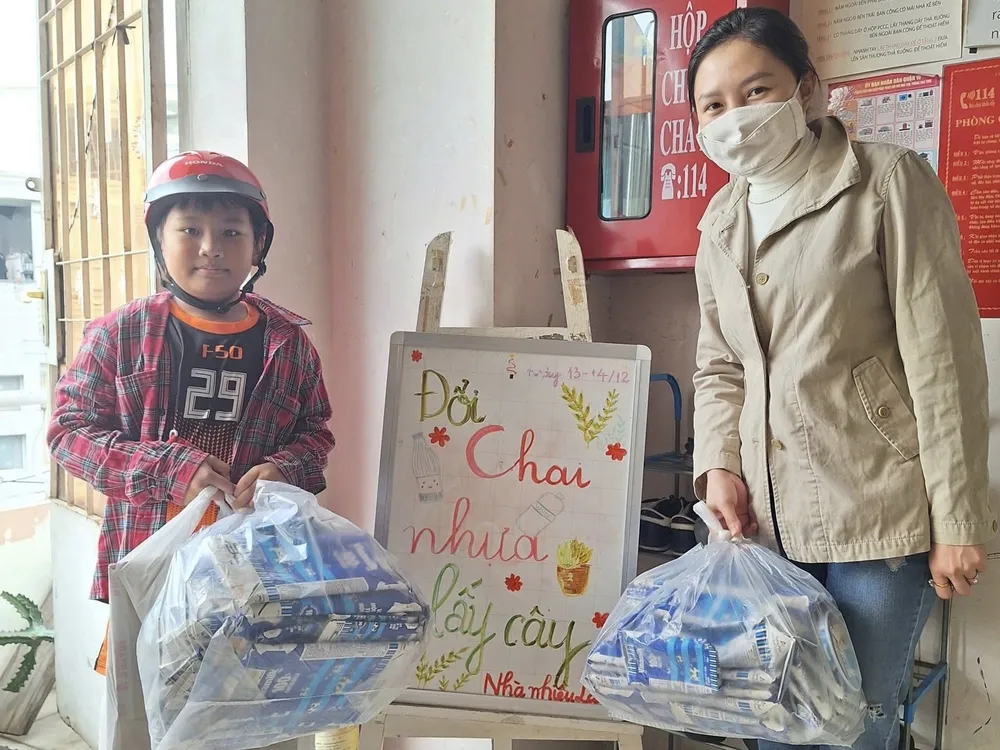
That space has gradually become a familiar meeting place for many families. For example, Ms. Ngo Thi My Hang (residing in Binh Thanh ward) often brings empty milk cartons, plastic bottles, etc., with her son to exchange for green plants. For her, it's not just an environmental protection activity, but also a way to teach her child to gradually form small but lasting habits.
"The House of Many Leaves," affectionately known as "The House," is also a place that connects young people with shared interests. Truong Hoang Phuong Nhi, a student majoring in Environmental Engineering at the University of Technology, Vietnam National University Ho Chi Minh City, has grown from an initial interest to a regular participant in "The House's" activities as a volunteer every weekend.
Over the past five years, "The House of Many Leaves" has collected more than 620,000 batteries; 28 tons of paper; 72 tons of clothing; 4.5 tons of plastic; 2.5 tons of milk cartons; organized dozens of workshops and fundraising activities; and donated thousands of books.
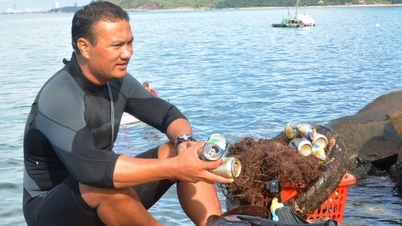
In a different setting, the "green dream" manifests itself in a more forceful way. Under the scorching midday sun, Rach Chua Lon 1 (Nha Be commune, Ho Chi Minh City) becomes more vibrant with the presence of dozens of volunteers from the Saigon Green Club.
Dressed in protective suits, gloves, and masks, they waded into the black water, immersing themselves in the mud to remove trash and clear the waterway.
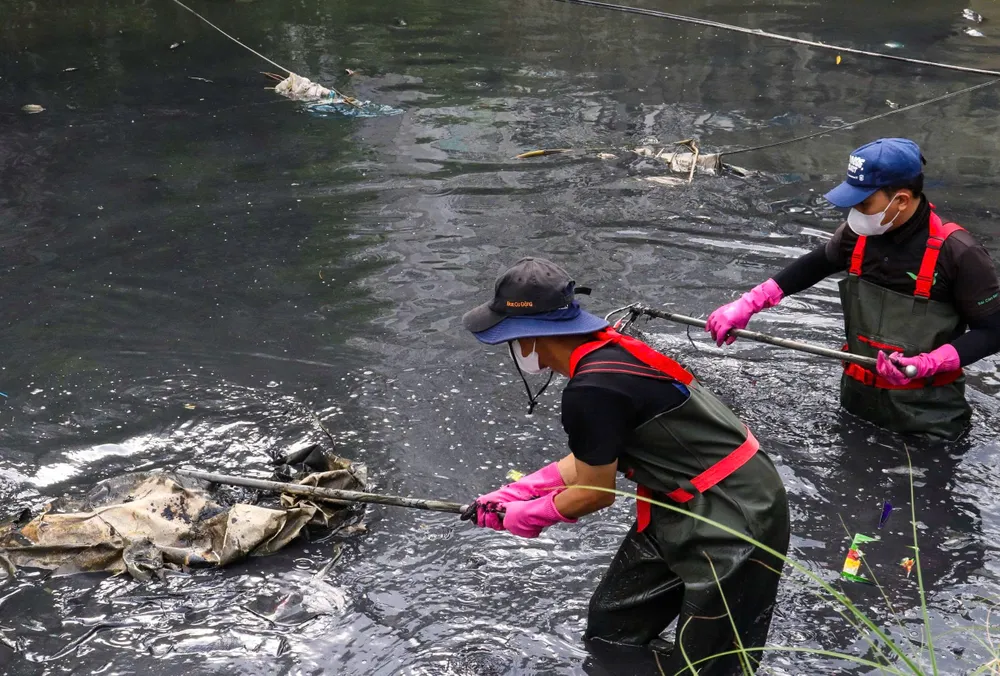
Such outreach events have become a familiar activity for Saigon Green since the club was founded in 2022.
Witnessing the pollution of canals and waterways in many areas, Nguyen Luong Ngoc and his young friends chose to directly confront the waste problem, instead of just making appeals. Each cleanup campaign not only cleans a section of the canal but also sends a message about shared responsibility for the environment.
These small but persistent actions are gradually fostering a green living awareness within the community. From there, a green Vietnam is slowly taking shape through collective effort and daily responsibility.
Source: https://www.sggp.org.vn/nguoi-tre-cham-vao-giac-mo-xanh-post838618.html

















![[Photo] Reception to welcome General Secretary and President To Lam and his wife on their State visit to the Philippines](https://vphoto.vietnam.vn/thumb/1200x675/vietnam/resource/IMAGE/2026/06/01/1780295488620_vna-potal-chieu-dai-chao-mung-tong-bi-thu-chu-tich-nuoc-to-lam-va-phu-nhan-tham-cap-nha-nuoc-toi-philippines-8798060-7855-jpg.webp)














































Comment (0)