

Young Chinese people are increasingly flocking to rural areas for work amid rising urban unemployment and record college graduation rates.
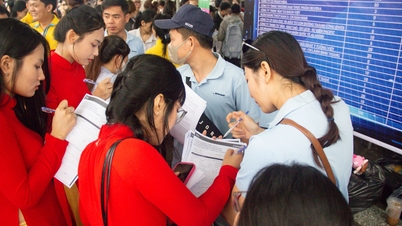
In recent years, Wendy Li has seen programs encouraging graduates to work in vast, underdeveloped rural areas. These aren't new in China, but they've seen the number of applicants more than triple this year, according to Li.
Working for the student union at a university in Zhuhai (Guangdong), Li said that a few years ago only about a dozen people registered, but now the number is 40. "The program seems to have become more attractive this year," she said.
China is stepping up efforts to encourage young people to start businesses in rural areas amid increasing job pressure. Chinese President Xi Jinping has also called for "revitalizing the countryside" to narrow the development gap between urban and rural areas.
According to the action plan issued in February, graduates will work as grassroots officials, entrepreneurs, or volunteers to contribute to the "return of talent, resources, and projects" to rural areas. Along with Guangdong, most provinces have also expanded the program by increasing the number of personnel and the scope of deployment.
In Jiangsu, the program previously targeted underdeveloped areas in five relatively poor regions. However, it was expanded to the entire province last year, aiming to send at least 2,000 graduates back to rural areas each year.
Peng Peng, executive chairman of the Guangdong Reform Association, a think tank affiliated with the Guangdong provincial government, said such moves are aimed at providing young people with more job opportunities in a challenging labor market.
"Young people in urban areas are facing significant difficulties in finding jobs due to the impact of the pandemic and the unprecedented number of university graduates," said Mr. Peng.
Unemployment among those aged 16-24 in China hit a record high of 20.4% last month, compared to 19.6% in March. Meanwhile, the number of university graduates this year will peak at 11.58 million, equivalent to the population of Belgium.
"The second purpose of these policies is to revitalize rural areas, where talent and technology are most needed," Peng said. According to him, rural areas are a weak link in China's modernization path. Therefore, revitalizing this region is considered a national strategy for Beijing.
The income gap between urban and rural China remains large, despite slight improvements over the past decade. Last year, the average disposable income of rural residents was 20,133 yuan (US$2,853) per year, compared to 49,283 for urban residents, according to the National Bureau of Statistics.
Emphasizing that China cannot become a true superpower without a strong agricultural sector and prosperous villages, Xi Jinping urged local governments to attract not only university students but also entrepreneurs and farmers who had previously left their hometowns to seek work in the cities.
"We should guide graduates, skilled workers, migrant workers, and entrepreneurs to rural areas in an orderly manner, while also helping to address their concerns so they can stay and establish themselves," he said at the national rural employment conference in December 2022.
Zheng Fengtian, a professor at Renmin University's School of Agricultural and Rural Development, said talent is one of the most needed resources for underdeveloped regions. In some parts of central China, a number of businesses have emerged from poverty alleviation efforts. Others have migrated from wealthier areas like Shenzhen and Guangzhou. "Now they need talent to develop further," he said.
For many, joining rural development programs is more of a post-graduation transition phase—as finding an ideal job becomes difficult—than a long-term commitment to living there. Li Qing, who graduated in 2022, has been working in the rural revitalization program of the town government in Yangzhou, Jiangsu province, since the beginning of the year.
She joined the program after failing her master's degree and not knowing what she really wanted. "I thought this opportunity could be a good transitional option, especially since my family suggested I become a civil servant," she said. Li receives a monthly allowance of "a few thousand yuan" to cover housing and transportation. She says she hasn't learned much from her current job except for the serious work ethic and conduct expected of a government agency.
Most participants from Li's university in Zhuhai will work as teachers or volunteers in village schools, or as officers monitoring the risk of people falling back into poverty. After two years of service, they can choose to stay or pursue new jobs elsewhere. "From what I know, very few people actually stay and settle in those villages, as the authorities expect," Li said.
Joan Huang, a sophomore at a university in Guangzhou (Guangdong), is uninterested in rural education programs because she sees no career prospects. She believes participants mostly end up in low-level positions in grassroots government agencies.
There are still opportunities in large-scale infrastructure or smart agriculture, but these opportunities are not for the average student. "The economy in these areas is terrible, and graduates can barely start a business, except for opening a bubble tea shop," she said.
Furthermore, this student analyzed that if they worked for local companies, the salary would be low and might not be enough to cover the university tuition fees that their family had paid for. Upon returning to big cities, the rural work experience would be useless.
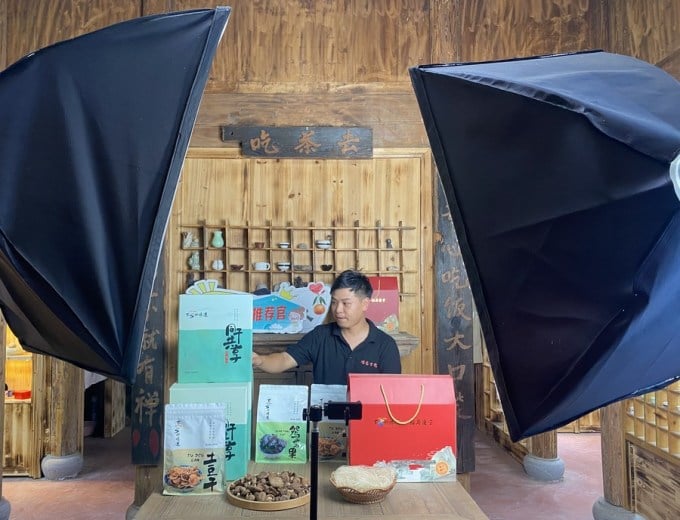
Xia Meixiong, 34, live-streamed her sales in Shouning, Ningde, Fujian on August 25, 2022. Photo: Xinhua
But for some, living in a small town might not be worse than living in a city. They might be able to buy a house after working for just a few years. Janice Wang, 28, returned to her hometown in Anji County (Zhejiang) three years ago.
She worked as a teacher in the city after graduating from university in 2016. However, she was later drawn to the increasingly developed rural areas, with lower living costs and a slower pace of life, so she decided to return to her hometown in 2020 to start a guesthouse business.
Although recent graduates may find it difficult to see a future in rural areas, she said that starting a business in the countryside has become a viable and desirable option after accumulating some savings.
Janice Wang doesn't spend money on rent or buying a house because her family already owns one. She points out the advantages of good infrastructure and fresh air. Additionally, while running a guesthouse isn't easy, it offers more freedom and happiness.
"Business isn't bad, despite some negative impacts from the pandemic lockdowns in recent years. The number of retirees is increasing, and they have a great need for affordable travel and accommodation. So, overall, I feel less pressure living this way," Wang said.
Phiên An ( according to SCMP )
Source link
![[Photo] General Secretary and President To Lam presides over a meeting on the implementation of Directive No. 34-CT/TW of the Party Central Committee.](https://vphoto.vietnam.vn/thumb/1200x675/vietnam/resource/IMAGE/2026/05/19/1779187768672_a1-bnd-2350-631-jpg.webp)
![[Photo] Capturing the moment the tide recedes at Yen Binh Son rapids - a million-year-old scenic spot in Quang Ngai.](https://vphoto.vietnam.vn/thumb/1200x675/vietnam/resource/IMAGE/2026/05/19/1779175463885_yen9-1199-jpg.webp)
![[Photo] National Assembly Chairman Tran Thanh Man attends the groundbreaking ceremony for the National Highway 1A spatial axis project.](https://vphoto.vietnam.vn/thumb/1200x675/vietnam/resource/IMAGE/2026/05/19/1779161360398_ndo_br_bnd-1412-jpg.webp)























































![[Photo] General Secretary and President To Lam receives Indian Defense Minister Rajnath Singh](https://vphoto.vietnam.vn/thumb/402x226/vietnam/resource/IMAGE/2026/05/19/1779184046302_anh-man-hinh-2026-05-19-luc-16-46-58.png)






















Comment (0)