

08:29, 15/10/2023
Udon Thani, a province in northeastern Thailand, is known as the "Capital of Thais of Vietnamese descent" because of the large number of Vietnamese people who have settled there.
In Udon Thani city, you'll find Vietnamese restaurants on almost every street. A large Vietnamese community lives in Ban Chik, right in the heart of Udon Thani, and scattered throughout the province. Udon Thani is also known as a gathering place for President Ho Chi Minh's troops fighting against the French. Currently, Udon Thani also has the Ho Chi Minh Historical Research and Tourism Zone.
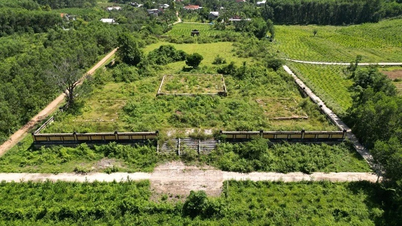
The Ho Chi Minh Historical Research and Tourism Area is located about 10 km from the center of Udon Thani, nestled in a quiet area, and features a large museum building. In front of the building is a replica of the house where President Ho Chi Minh lived, held meetings, and which also served as his school and military training center.
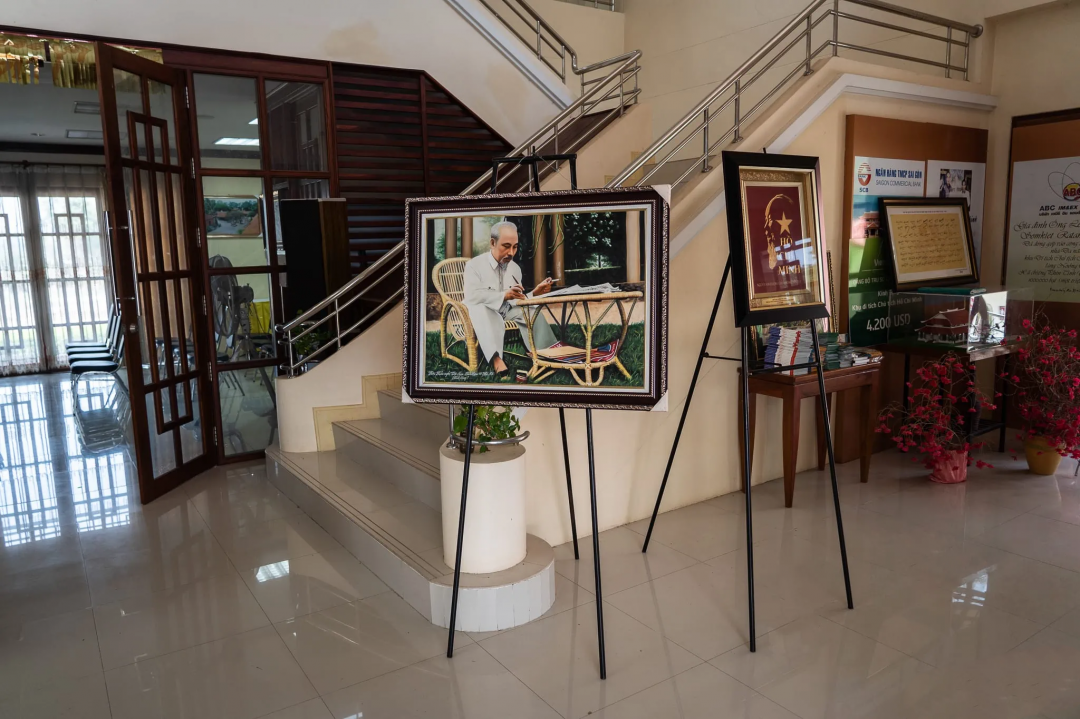 |
| Ho Chi Minh Historical Research and Tourism Area in Udon Thani. |
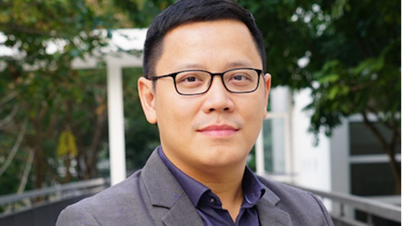
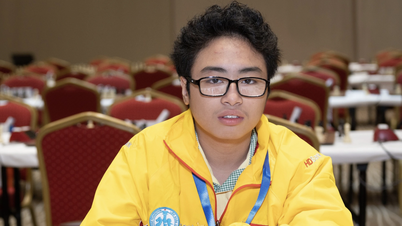
We met Mr. Pom - Atthaphon Ruangsirichoke, a lecturer at the Ho Chi Minh Historical Research and Tourism Area. He is a fifth-generation Thai of Vietnamese descent, counting from his ancestors who migrated from Vietnam, and his Vietnamese name is Van Viet Thanh. Mr. Pom recounted: “I was born and raised in Udon Thani. My parents were born in Sakon Nakhon, but my great-grandfather and grandfather were both Vietnamese.” Mr. Pom's ancestral home is in Huong Son district ( Ha Tinh province), near the Vietnam-Laos border crossing; his great-grandfather moved to work in Vientiane, Laos, during the French colonial period in Indochina. After World War II, Mr. Pom's family, along with many other Vietnamese in Laos, migrated to Thailand. Across the Mekong River, opposite Vientiane, lies northeastern Thailand. The provinces along the Mekong River in the Isaan region became a destination for Vietnamese expatriates seeking temporary refuge from the threat of war. The main evacuation area was from Thakhek in Laos to Nakhon Phanom in Thailand; from Vientiane to Nong Khai and extending to Nakhon Phanom, Mukdahan and Sakon Nakhon, places hundreds of kilometers from the Mekong River.
Most Vietnamese who crossed the Mekong River to Thailand never imagined they would settle there permanently. They only sought temporary refuge from the war. As Mr. Pom confided, "My grandparents' greatest dream was to return to Vietnam." This temporary refuge continued until the Viet Minh defeated the French in the Battle of Dien Bien Phu in 1954, and the Geneva Accords divided Vietnam into North and South along the 17th parallel; however, after the war against France, Vietnam and other Indochinese countries immediately entered another war: against the American invaders.
At that time, despite the ongoing war, an agreement was reached in 1959 between the Thai Red Cross and the North Vietnamese Red Cross to repatriate approximately 48,000 Vietnamese refugees. In reality, as many as 70,000 people expressed a desire to return to their homeland, and estimates suggest that the actual number of Vietnamese wanting to return home was likely much higher.
The first repatriation of Vietnamese took place from 1960 to 1964, with 45,000 Vietnamese returning home. A second wave of 36,000 was planned for 1965, but the route home was closed due to escalating fighting in Vietnam following the US invasion and destruction of North Vietnam. This meant that the dream of returning home never came true for many, who eventually died in Thailand.
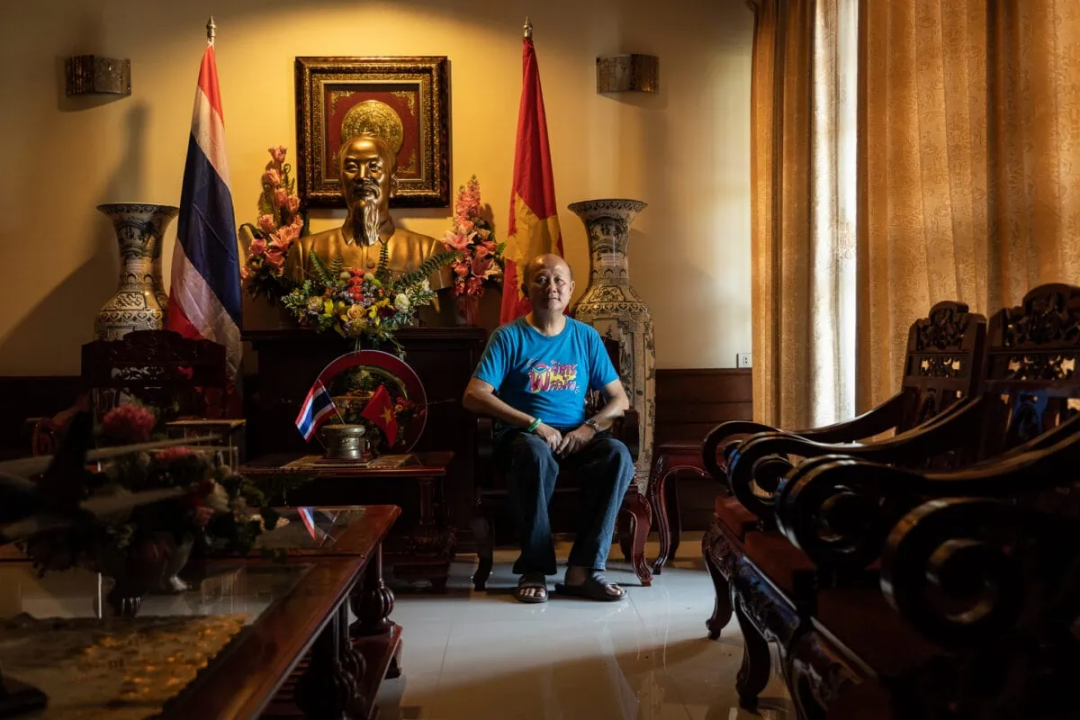 |
| Mr. Pom at the Ho Chi Minh Historical Research and Tourism Area. |
From the provinces along the Mekong River, the Vietnamese community gradually moved further into the bustling commercial provinces in the heart of the Isaan region, such as Khon Kaen and Udon Thani. Vietnamese people in Thailand live together in very close-knit communities. They share information about areas with good livelihoods. They pursue their permitted occupations, but face many restrictions, such as: not being allowed to own land, not being able to farm. Vietnamese expatriates in Thailand have to switch to trading, carpentry, tailoring, cooking, etc. These occupations help them accumulate capital and expand into other business fields suitable to the development trends in Thailand. Many Vietnamese in Thailand have become successful and have wealth to leave to their children and grandchildren.
Along with changes in the Thai government's foreign policy, the strict policies towards Vietnamese immigrants were gradually relaxed. A resolution of the Thai cabinet on May 29, 1990, granted Thai citizenship to the children of Vietnamese immigrants, and the term "Vietnamese immigrant" gradually disappeared, replaced by the term "Thai of Vietnamese origin".
The economy in Udon Thani is currently thriving, and the lives of Vietnamese people here are very good. Thai children of Vietnamese descent still learn Vietnamese alongside Thai; their Vietnamese identity is preserved while adapting to modern Thai society. As we said goodbye to Mr. Pom, we were deeply moved by his words: Vietnamese identity is essentially language, and therefore, Thai people of Vietnamese descent here strive to preserve their language, always remembering President Ho Chi Minh's teaching: No matter where you are born in the world, never forget that the blood flowing in your veins is Vietnamese blood.
Kham Keo Tha Na Sun Thon
Source































































Comment (0)