
The collection of short stories and essays "The Three-Leaf House" (People's Army Publishing House, 2020) by female writer Ngan Hang.
"The temple bells echo" - the tears of a woman in wartime.
It seems that all the women featured in the short story collection "Echoes of the Temple Bell" (People's Army Publishing House, 2016) by female writer Ngan Hang possess kind, compassionate hearts, always loving and yearning to be loved with all sincerity. However, life is unfair in rewarding these good qualities, always presenting countless twists and turns and events that plunge their lives into hardship and misfortune. Perhaps the ultimate embodiment of this life of hardship and misfortune is the character O in the short story "Echoes of the Temple Bell." The title of the short story is used as the title of the entire collection.
O was a strong-willed woman, living by ideals, not in a hurry for romance, but wholeheartedly wanting to participate in the fight and help her homeland and country. Her village welcomed a military unit to celebrate Tet (Lunar New Year). Among them was Uncle Hoi, a team leader about three years older than O. Like O, Uncle Hoi also lived by ideals; he had left his second year of university to enlist without his parents' knowledge. This shared idealism began to bridge the gap between them. Gradually, small interactions and encounters in life made the young woman's heart beat faster, stirring up emotions. O liked Uncle Hoi, and perhaps, Uncle Hoi also began to feel affection for O from those subtle, discreet stirrings.
Then, as feelings grew stronger in their hearts, the army unit had to leave the village and continue their march. They hadn't had a chance to express their love, but they had already shared moments of ecstasy, sowing seeds of longing in each other. Reluctantly parting ways, O waited patiently. When she received news of Uncle Hoi's death, O felt as if half her soul had died. Her love was too great, and the agonizing wait of so many years made it impossible for her to accept the truth. She decided to leave the village, following the call of love, defying danger, and volunteered to join the Bình-Trị-Thiên battlefield as a youth volunteer. She faced death countless times; one wound hadn't even healed before another began to bleed. But O ignored all the physical pain.
Tragedy struck O once again. Her unit fell into enemy hands. They mercilessly trampled on the women. Bombs and bullets couldn't kill these strong, courageous women, but the pain, humiliation, and disgust overwhelmed them. They all tried to commit suicide by biting their tongues. O, however, gritted her teeth and persevered, driven by a powerful desire: love. The enemy beat O and imprisoned her in a cellar.
O lived as if she were already dead. Readers can feel the physical and mental pain of the woman imprisoned in the dark cellar day after day. Perhaps, if her longing to find Uncle Hoi hadn't been strong enough to overcome the harsh reality, O would have died the moment she was humiliated by the enemy soldiers. Love caused O immense suffering, but she loved with all her heart. One of the things that brings the greatest happiness to a woman's life is love; and love is also one of the things that causes the greatest misfortune in a woman's life. That's how human life is, through countless lifetimes.
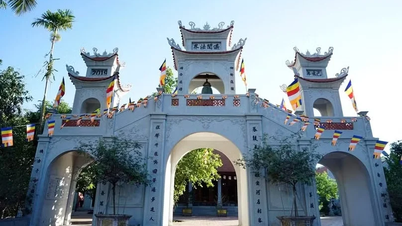
The character O is typical of the tragic life, filled with tears upon tears and pain upon pain, of a woman during wartime. When O was rescued from the pit, she was half-conscious, physically and mentally broken. It was the love and care of those around her that gradually helped her recover and led her to decide to seek refuge in a temple, a place of peace for a woman burdened with both physical and emotional wounds.
The story concludes when the knot in O's heart is untied. It's the moment O recognizes Uncle Hoi on a television broadcast. He's still healthy, his life is peaceful, and he has a wife and children. From his sharing on television, he mentioned the village and his lingering regrets about O. After so much longing, waiting, and sacrifice, O finally saw the man she loved so deeply, but she absolutely refused to meet him. O returned the hairpin from years ago to Uncle Hoi and peacefully closed her heart to the temple.
War is truly brutal. War tears apart the love of countless people, causing many lives to be ruined, and many youths to be lost to the earth. Among them, the lives of women are always depicted in tearful scenes. Ngan Hang has portrayed personal love intertwined with patriotism. Ngan Hang was born in peacetime, but she writes about women in war with deep empathy and gratitude.
"The Three-Leaf Clover" - a woman's instinct is to be forgiving.
If "The Echoing Temple Bell" is the resonant sound of love, then the collection of short stories and essays "The Three-Leaf House" (People's Army Publishing House, 2020) reveals a modern, individualistic, and sharp Ngan Hang, who quietly observes the movements of life and portrays its inner feelings through language, on the pages of her writing.

The short story collection "Echoes of the Temple Bell" (People's Army Publishing House, 2016) is a symphony of love, with each woman's face and life story contributing a resonant note.
"The Three-Leaf Clover House" is a fairy tale set in everyday life. Each character has a different fate, but the love and compassion shine brightly, symbolizing the beauty of Vietnamese women in all circumstances. It's a story that explores the post-war era in a realistic, profound, and moving way.
From the beginning of the story, the father – a veteran in the unique situation of being a single father raising his children – is portrayed as well-behaved and understanding. Everyone supports the idea of him remarrying, as he would have someone to keep him company.
Aunt Lam, the woman who lived right next door, volunteered to care for the veteran out of love and sympathy for his plight. His three daughters supported the idea, but their father adamantly refused. Then, one day, he fell seriously ill. When his daughters gathered around him, they saw another woman appear, not Aunt Lam. The daughters were annoyed and rejected the presence of this unfamiliar face. But no one knew that this stranger was a fellow soldier who had fought alongside them, the one who had shielded their mother from an enemy air raid. And now, with their father ill, she had come to care for him, voluntarily becoming their stepmother… More than love, it was a sacred bond of comradeship and camaraderie.
The plot intensifies towards the end of the story, when Aunt Lam arrives at the house and identifies herself as a familiar part of the home – the warm and loving three-leaf house. Indeed, life would be so much more beautiful if we knew how to put ourselves in each other's shoes, to share and empathize with everything.
With her simple yet profound storytelling style, conveying beautiful life messages, writer Ngan Hang always captivates readers with intense emotional resonance. One of the impressive aspects of Ngan Hang's short story writing is her ability to explore and portray the psychology of her characters; creating situations and stories within stories. As a result, behind these stories, the image of women in Ngan Hang's works leaves a lasting impression on readers because of their extraordinary resilience, kind and compassionate hearts, and warm hearts filled with love – love for life and humanity.
Text and photos: Nguyen Linh
Source: https://baothanhhoa.vn/nha-van-ngan-hang-and-nhung-trang-viet-ve-phu-nu-275694.htm
















































































Comment (0)