

 |
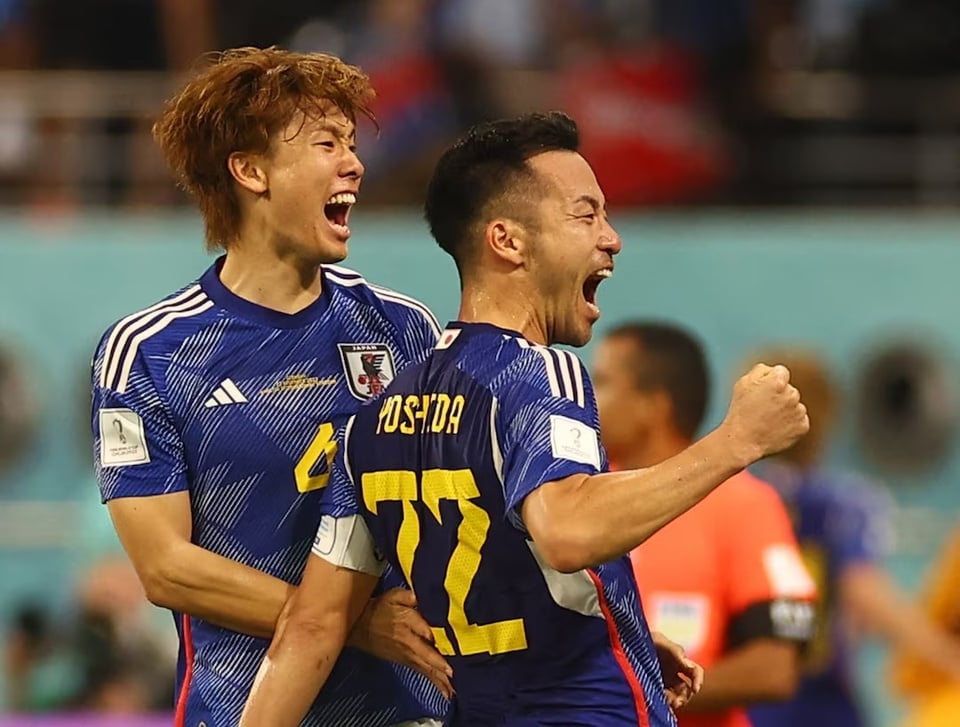
Japanese players are making remarkable progress. |
This statement is quite surprising because even traditionally strong teams like Brazil, Germany, or Argentina usually avoid talking too much about winning the championship before the tournament begins. Even more noteworthy is that Japan is in what is considered a "group of death" with the Netherlands, Sweden, and Tunisia. However, looking at the development of Japanese football over the years, the team from the Land of the Rising Sun has reason to think bigger. The only problem is that the World Cup is always a place where the line between confidence and complacency can be very thin.
Japan has the right to dream big.
Since their first World Cup appearance in 1998, Japan has become one of the most consistent representatives of Asian football. Unlike many teams whose success only comes in generations, Japan has almost made qualifying for the World Cup a regular occurrence.
More importantly, their performance has steadily improved over time. In the last four World Cups, Japan has advanced beyond the group stage three times. This is an achievement that few teams outside of Europe and South America have accomplished. The team also became the first Asian representative to advance beyond the group stage in two consecutive World Cups.
Unfortunately, Japan has always been very close to making history. In 2010, they lost to Paraguay on penalties. At the 2018 World Cup, Japan led Belgium by two goals but ultimately suffered a painful 2-3 defeat. Then, at the 2022 World Cup, they were eliminated by Croatia after a penalty shootout.
Those three defeats inadvertently showed that Japan is no longer in the position of a team that only comes to the World Cup to learn. They are now capable of competing on equal footing with major rivals. Japan's current confidence is also not something that came about spontaneously. At the 2022 World Cup, they surprised the world by successively defeating Germany and Spain.
Furthermore, recent friendly matches have continued to bring optimism to fans. Japan previously defeated Germany 4-1 in Wolfsburg, beat Turkey 4-2, and then went on to win against England, Scotland, Brazil, and Ghana.
The important thing is that Japan no longer plays the defensive style of massing players and waiting for counter-attacks as they used to. They have many players who play in Europe, possess better ball control, and can switch between attacking and defensive phases very quickly.
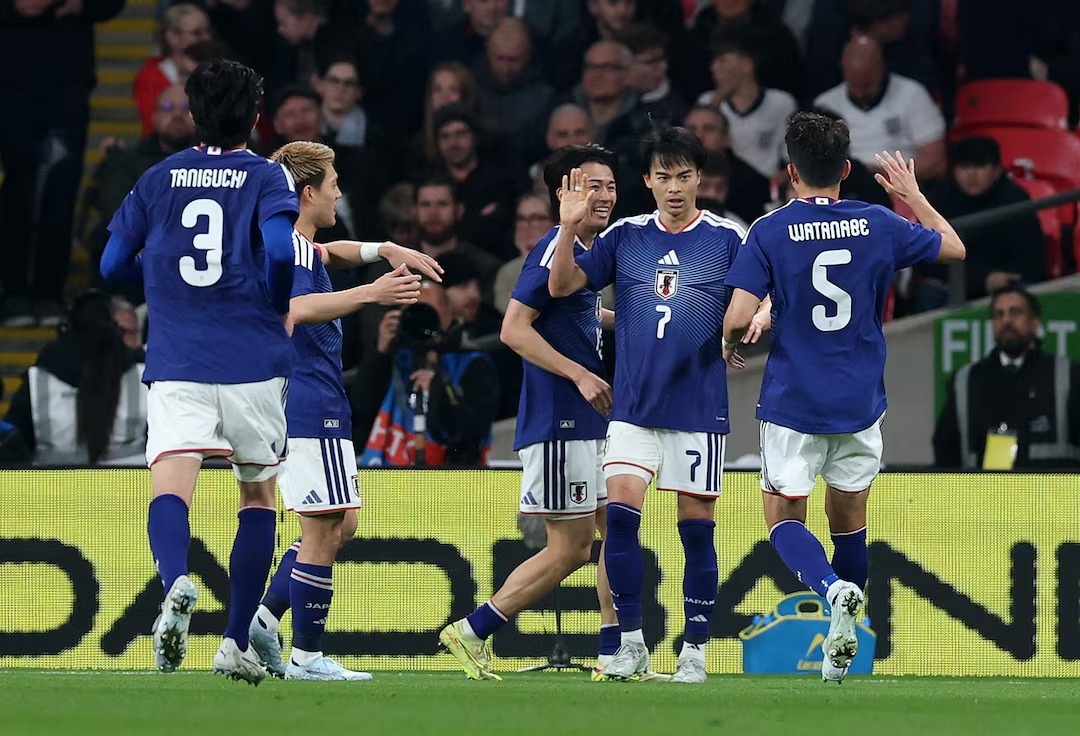 |
Japan defeated England at Wembley. |
Japan may pay the price for its overconfidence bordering on delusion of grandeur.
For the first time in history, Japan can aim beyond the Round of 16. However, the World Cup is always different from friendly matches.
Japan's group this time is anything but easy. The Netherlands possess experience and a well-balanced squad. Sweden is always a formidable team thanks to their physical fitness and tactical discipline. Tunisia, although considered the underdog, is strong and capable of winning tackles.
Interestingly, Japan often performs very well against stronger opponents but struggles against teams that prioritize pragmatism. The 2022 World Cup is the clearest example. Between victories against Germany and Spain, Japan unexpectedly lost to Costa Rica, considered the weakest team in their group. That defeat nearly cost them dearly.
This shows that Japan sometimes maximizes its strength when it's the underdog and has to carefully study its opponent. However, they struggle when playing as the favorite, against opponents with whom they haven't developed many strategies. At the World Cup, many unfamiliar opponents and unfamiliar playing styles await Japan.
Furthermore, declaring they'll win the World Cup could also put pressure on the team. Japanese football is known for its humility and discipline. Setting overly ambitious goals could inadvertently create unnecessary psychological pressure.
Another issue is coach Moriyasu's personnel decisions. His willingness to drop experienced players like Kaoru Mitoma or Takumi Minamino if necessary could jeopardize the team's balance. Perhaps Moriyasu is overly confident in his tactics even without his strongest players.
The 2026 World Cup will therefore be a crucial test for Japanese football. If they progress far, they can prove they have reached a new level. But if they are eliminated early, people will question whether Japan truly has the strength to become a title contender or remains just a team very good at creating big surprises.
Source: https://znews.vn/nhat-ao-tuong-suc-manh-khi-muon-vo-dich-world-cup-post1652475.html
![[Photo] First session of the 14th Congress of the Vietnam Trade Union](https://vphoto.vietnam.vn/thumb/1200x675/vietnam/resource/IMAGE/2026/06/03/1780465947883_ndo_br_img-3852-jpg.webp)
![[Photo] General Secretary and President To Lam presides over a meeting with the Central Organizing Committee.](https://vphoto.vietnam.vn/thumb/1200x675/vietnam/resource/IMAGE/2026/06/03/1780482764658_a1-bnd-4741-3342-jpg.webp)

![[Photo] Secretary of the National Assembly Party Committee, Chairman of the National Assembly presides over the meeting of the Standing Committee and Executive Committee of the National Assembly Party Committee.](https://vphoto.vietnam.vn/thumb/1200x675/vietnam/resource/IMAGE/2026/06/03/1780480353201_ndo_br_bnd-2585-jpg.webp)









































![[Video] Sunset at Lap An Lagoon – Where the sun sets over the fishing nets](https://vphoto.vietnam.vn/thumb/1200x675/vietnam/resource/IMAGE/2026/05/31/1780192137701_beach-landscape-sea-water-nature-grass-745871-pxhere-com.jpeg)

































Comment (0)