

Why is it necessary to set credit growth targets?
The State Bank of Vietnam (SBV) has just submitted a report to the 7th session of the 15th National Assembly on its research and move towards abolishing the management of credit growth targets for each credit institution.
Accordingly, from 2024, the State Bank of Vietnam (SBV) will no longer assign credit growth targets to branches of foreign banks, in line with the specific characteristics and scale of credit in this group, and will continue to assign credit growth targets to other credit institutions. The SBV is continuing to review the situation to gradually remove this measure completely.
However, during the implementation of this task, the State Bank of Vietnam has identified some difficulties and obstacles.
Currently, inflationary pressure remains, posing a challenge to the State Bank of Vietnam's monetary and credit policy management, as it must simultaneously support economic recovery and ensure inflation control.
The credit-to-GDP ratio has consistently remained high and is trending upwards (end of 2023: 132.75%; 2022: 124.89%; 2021: 123.05%).
Therefore, the State Bank of Vietnam believes that maintaining the credit limit tool aims to ensure the safety of the banking system's operations, thereby contributing positively to inflation control, supporting economic growth, and macroeconomic stability.
Prior to 2011, due to the unique characteristics of the Vietnamese economy, which relied heavily on bank credit to meet capital needs, credit was the primary source of funding for the economy and experienced very rapid growth. During the period 2007-2010, average credit growth across the entire system was approximately 36% per year.
The credit-to-GDP ratio also increased rapidly during this period, leading to a race among credit institutions to secure deposit interest rates for lending, resulting in corresponding increases in lending interest rates and a rise in bad debts within the banking system. Many credit institutions faced the risk of illiquidity, causing macroeconomic instability.
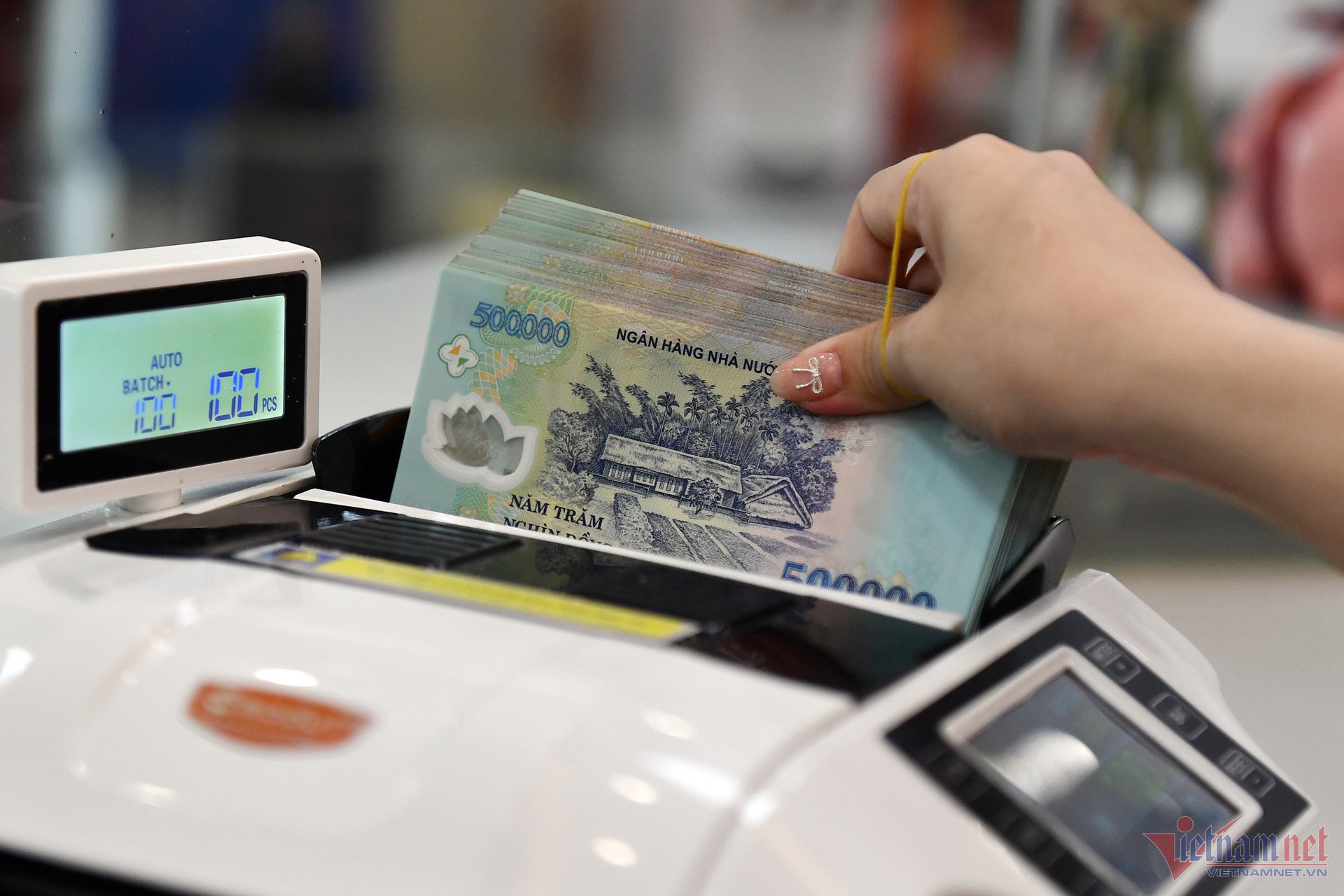
The implementation of credit growth management measures from 2011 to the present shows that credit growth across the entire system has decreased from over 30% per year (with some years reaching 53.8%) to around 12-14% per year in recent years. This has contributed to stabilizing the monetary market and controlling and maintaining inflation stable below 4%.
At the same time, this measure has contributed to encouraging credit institutions to improve their governance and management capabilities, enhance operational safety indicators, and lower market interest rates.
It's easy to return to "hot" credit growth.
To date, the Vietnamese economy remains heavily reliant on bank credit to meet the capital needs for production, business, and consumption.
In this context, the pressure to supply capital for economic recovery is immense. The economy's capital needs depend primarily on bank credit, so Vietnam's credit-to-GDP ratio is currently high, posing a risk of macroeconomic instability as warned by some international organizations.
At the same time, although inflationary pressure has been brought under control, it still poses risks and challenges for the State Bank of Vietnam's management, as it must both support economic recovery and ensure inflation control and the stability and safety of the credit institution system.
Given Vietnam's unique economic conditions, if credit institutions unilaterally increase credit growth without control measures through a system of operational safety indicators and credit growth limits, the credit institution system could revert to the overheated credit growth seen before 2011. This would not only lead to increased bad debt and threaten the safety of the banking system, but also pose risks of macroeconomic instability and inflation.
Therefore, maintaining credit limit instruments aims to ensure the safety of the banking system's operations, thereby making a positive contribution to controlling inflation, supporting economic growth, and stabilizing the macroeconomy.
The State Bank of Vietnam believes that lifting this measure requires caution, an appropriate roadmap, ensuring the necessary conditions are met, and gradual implementation in accordance with market conditions.
Currently, in its operational management, the State Bank of Vietnam (SBV) has been implementing a comprehensive combination of applying international safety standards to the operations of credit institutions, along with allocating credit growth targets to these institutions. This has helped stabilize the monetary market, contribute to inflation control, enhance governance and management capacity, and improve the operational safety indicators of credit institutions.
At the same time, in order to move forward and control credit through safety indicators, the State Bank of Vietnam is directing credit institutions to implement solutions for restructuring and handling bad debts, and improving governance standards in accordance with international practices; however, this also needs to go hand in hand with the effective implementation of the economic restructuring process to enhance the role and promote the healthy development of the capital market to meet the medium and long-term capital needs of the economy, reducing dependence on bank credit channels.
Tuan Nguyen
Source: https://vietnamnet.vn/nhnn-noi-ve-viec-can-thiet-duy-tri-cong-cu-han-muc-tin-dung-2286966.html
![[Photo] Secretary of the National Assembly Party Committee, Chairman of the National Assembly presides over the meeting of the Standing Committee and Executive Committee of the National Assembly Party Committee.](https://vphoto.vietnam.vn/thumb/1200x675/vietnam/resource/IMAGE/2026/06/03/1780480353201_ndo_br_bnd-2585-jpg.webp)
![[Photo] General Secretary and President To Lam presides over a meeting with the Central Organizing Committee.](https://vphoto.vietnam.vn/thumb/1200x675/vietnam/resource/IMAGE/2026/06/03/1780482764658_a1-bnd-4741-3342-jpg.webp)


![[Photo] First session of the 14th Congress of the Vietnam Trade Union](https://vphoto.vietnam.vn/thumb/1200x675/vietnam/resource/IMAGE/2026/06/03/1780465947883_ndo_br_img-3852-jpg.webp)



























































![[Video] Sunset at Lap An Lagoon – Where the sun sets over the fishing nets](https://vphoto.vietnam.vn/thumb/1200x675/vietnam/resource/IMAGE/2026/05/31/1780192137701_beach-landscape-sea-water-nature-grass-745871-pxhere-com.jpeg)





































Comment (0)