

It was a surprise when photographer Ton That Hung took us to visit the home of the eighth younger brother of martyr Nguyen Thai Binh in Tan An City (Long An province) - a charming house in the Bank's residential area on Vo Van Mon Street (Ward 4), with a garden that, though not very large, was cleverly arranged with various plants in brick planters built around the base of the trees, creating a picturesque landscape. In one corner of the garden is the tomb of Nguyen Thai Binh's parents, Mr. Nguyen Van Hai (87 years old) and Mrs. Le Thi Anh (100 years old).
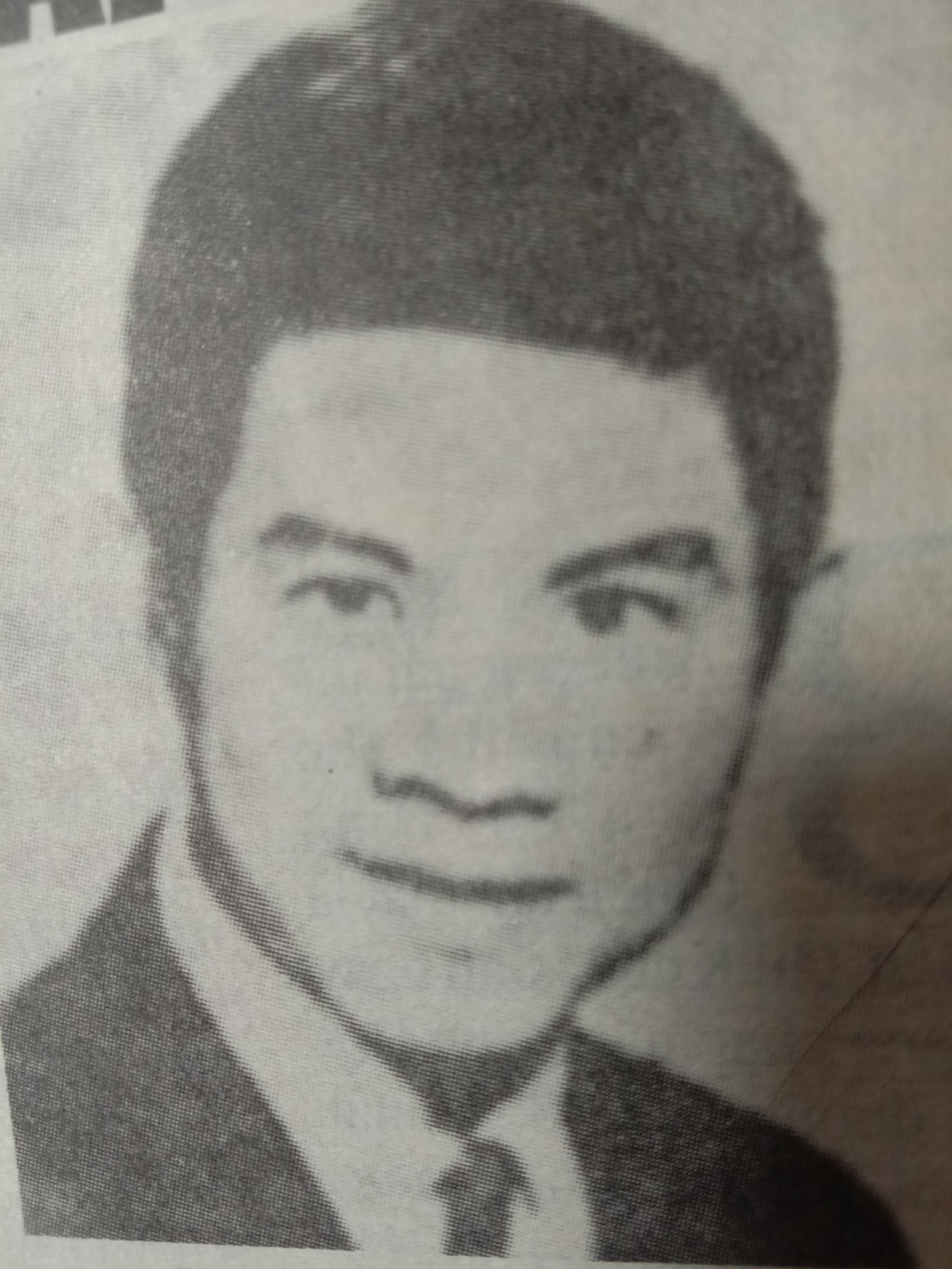
Portrait of student Nguyen Thai Binh. Photo reproduced from archives.
1. Around this time 51 years ago, in the attic of journalist and poet Kien Giang's Thao Lu May Tan apartment in Thu Thiem, Saigon, I lay reading a stack of newspapers reporting conflicting news about Nguyen Thai Binh's death.
According to American-backed reports, Nguyen Thai Binh was a "hijacker" who, armed with a knife, held a US pilot flying a Pan America Boeing 747 hostage, preventing him from landing at Tan Son Nhat airport and forcing him to fly directly to Hanoi . The US pilot then wrestled him to the floor of the plane, where US security personnel protecting the flight shot and killed him with a handgun.
But the "opposition" press said: Nguyen Thai Binh was targeted by the US for anti-American activities during his four years of studying in America: They arranged for pilot Gene Waughn to subdue him, and CIA agent William Heary Mills shot Binh four times in the chest before throwing his body onto the runway at Tan Son Nhat airport at 10:00 AM on July 2, 1972.
In the following days, the Saigon press (not " servile " newspapers) joined foreign newspapers and news agencies in reporting, commenting, and presenting numerous pieces of evidence exposing the vile plot of the invaders to stage the " political assassination" above.
A few days later, one afternoon, Kien Giang rode his motorbike to Thao Lu May Tan and called me and Vo Bao Dam, a student from Tra Vinh who was staying at the Faculty of Literature at the university: "You two come to Phung Son Tu Pagoda right now to have vegetarian food with me," then Kien Giang turned his motorbike around and left.
When Dam and I arrived at Phung Son Temple – an ancient temple hidden in a tranquil garden of old trees in District 11 – we saw a banner hanging on a raised platform that read, "Memorial service for student Nguyen Thai Binh".
Journalist Kien Giang, wearing an old, oversized vest, hosted the program. Monks and a large number of Buddhists were solemnly performing a memorial service.
The next day, I read in the newspaper that at the same time in California (USA), a large number of Vietnamese students and expatriates were also holding a memorial service for student Nguyen Thai Binh, showing that he was loved and mourned by many Vietnamese people living and studying in the United States.
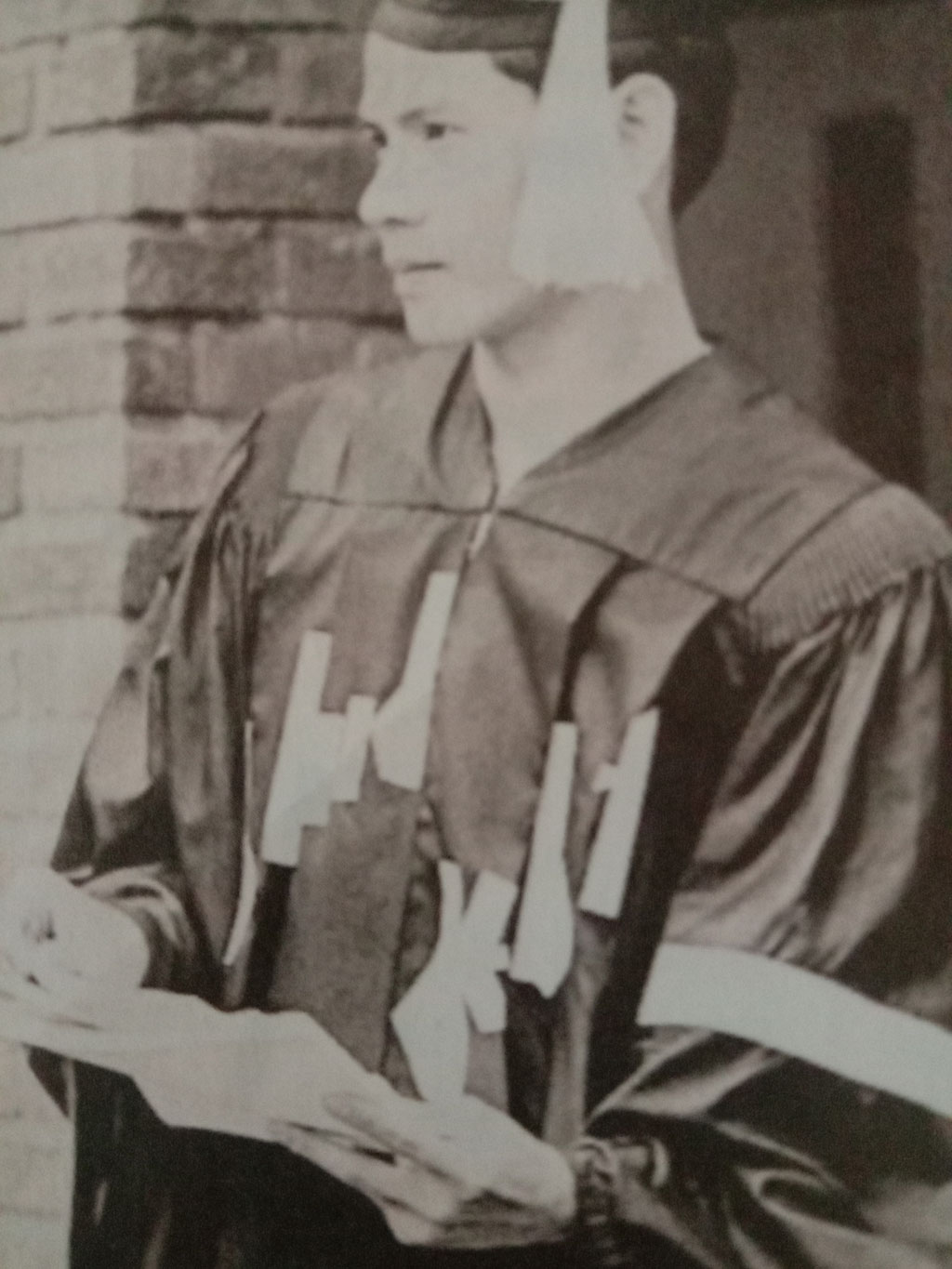
Nguyen Thai Binh distributed flyers on the streets of America immediately after receiving his honors degree from the University of Washington on May 26, 1972. (Photo taken from archives)
2. Fifty-one years have passed... Nguyen Huu Duc, the eighth brother of Nguyen Thai Binh, was only seven years old at the time. He heard the news that his older brother Binh had been shot dead at Tan Son Nhat airport while Duc was running and shouting, "Newspapers here! New newspapers here!" - he was selling newspapers to earn money for school, because his family had ten mouths to feed, all depending on his father's salary as a secretary at the Saigon Port Trading Company.
“My older brother was very studious and excellent at studying. After passing his high school diploma, he simultaneously passed the entrance exams for Medical University, Pharmacy University, the National Academy of Public Administration, and the University of Agriculture and Forestry, and chose to study Agriculture and Forestry. He loved us very much. Every time we came home from school, he would take us to the river to practice swimming. Back then, our house was in Nha Be District (Saigon) by the clear blue river. My brother Binh said that living near rivers and canals, we absolutely had to know how to swim, and he taught us. He even made toys for us…” – Duc recounted.
Duc still remembers that back then, newspapers with anti-American and anti-puppet regime tendencies were called "opposition newspapers," and were often closely monitored by the Saigon General Police; the Information and Repatriation Department (called the "Confiscation-Cutting-Drilling" Department (confiscation: to seize, cutting: to remove censored sections, and drilling: to remove the embossed characters on the printing plate that were censored)).
To evade both undercover and uniformed police, Duc would wrap new newspapers inside old ones. When confronted by the police, he would show the stack of newspapers and say, "These are old newspapers I sell to people who use them for wrapping things." Seeing that they were indeed old newspapers, the police would dismissively say, "Go away!" Then Duc would skip down the street, shouting, "Newspapers here! New newspapers here!"
Opposition newspapers always sell like hotcakes because they report truthfully and offer insightful commentary, unlike the "pro-government" newspapers that are boycotted by readers. Thanks to selling newspapers door-to-door, Duc earned money to study at Phu Tho University of Technology, earning a degree in mechanical engineering, and then opened a vocational training center for car repair in Long An and Vinh Long provinces.
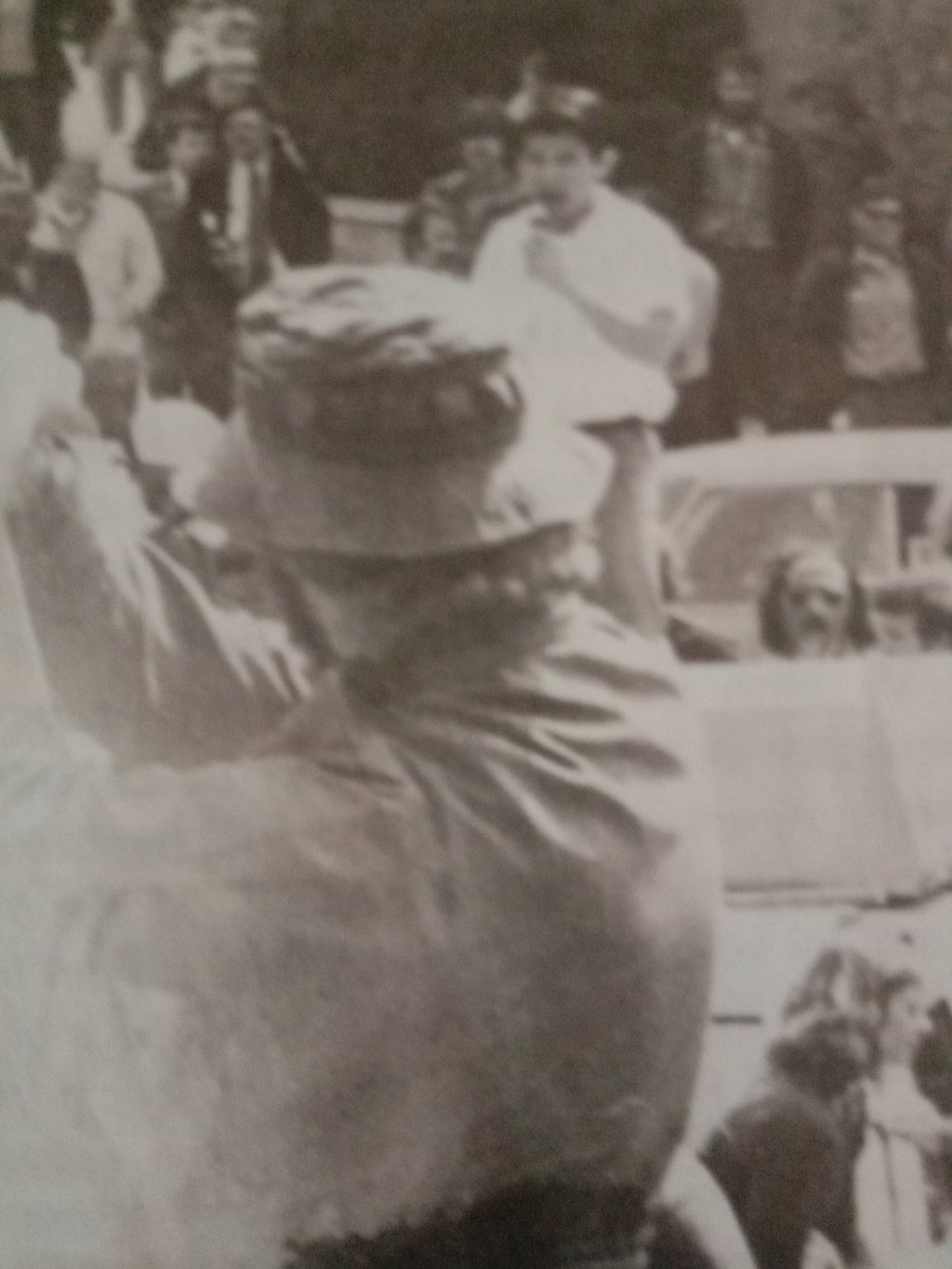
Nguyen Thai Binh (holding the microphone) is giving a speech condemning the American war in Vietnam. (Photo taken from archives)
3. Reading "Characters & Events" in "Past & Present" by the Vietnam Historical Science Association, which chronicles the biography and patriotic activities of student Nguyen Thai Binh, or "Vietnam - My Country" and "The Heart of Nguyen Thai Binh" by female writer and journalist Ngo Ngoc Ngu Long, and "The Daughters in Nguyen Thai Binh's Life" by female writer Tram Huong (both female authors had contact with Nguyen Thai Binh's mother and sisters to gather information), reveals the life of a heroic martyr with many special qualities.
He's not particularly handsome, but he's stylish, intelligent, and confident; he loves playing soccer (he was once a striker for the University of Washington soccer team); he has a talent for eloquent presentations and speeches; he's also a very graceful dancer; and most importantly, he's always at the top of his class academically.
That's why he was highly respected by his classmates. Many girls of different nationalities studying in America approached him out of admiration, but he only maintained a friendship, a brotherly bond, and didn't fall in love with any of them, not even a princess from a famous Asian royal family; if she wanted to be his "prince consort," he could have easily arranged it. He also received lucrative job offers from large American companies, but he refused them all.
Although he graduated with honors from the University of Washington, due to organizing a student-led celebration of President Ho Chi Minh's birthday on May 19th, and on February 10, 1972, he and other international students broke into and occupied the consulate of the Republic of Vietnam in New York demanding that the US withdraw from Vietnam, President Nguyen Van Thieu resign, and the Republic of Vietnam regime be dissolved, he lost his scholarship from the University of Washington and was forced to return home instead of continuing his graduate studies and potentially pursuing a doctorate.
Sensing that the flight was fateful, Nguyen Thai Binh seized the opportunity while the plane was landing on Guam Island en route to Tan Son Nhat International Airport to quickly write his farewells, expressing his feelings, aspirations, and will. Among them was the passage: “…I know my parents and siblings will suffer greatly in this separation of life and death (...) Today, for justice, for the survival of the entire nation, for truth, fairness, and humanity, even if I sacrifice myself, this death will not be an end but a beginning for the rebirth of future generations… My path will certainly follow in the footsteps of Vietnamese heroes, entering the annals of history, not clinging to the heels of foreign invaders to become a slave…”
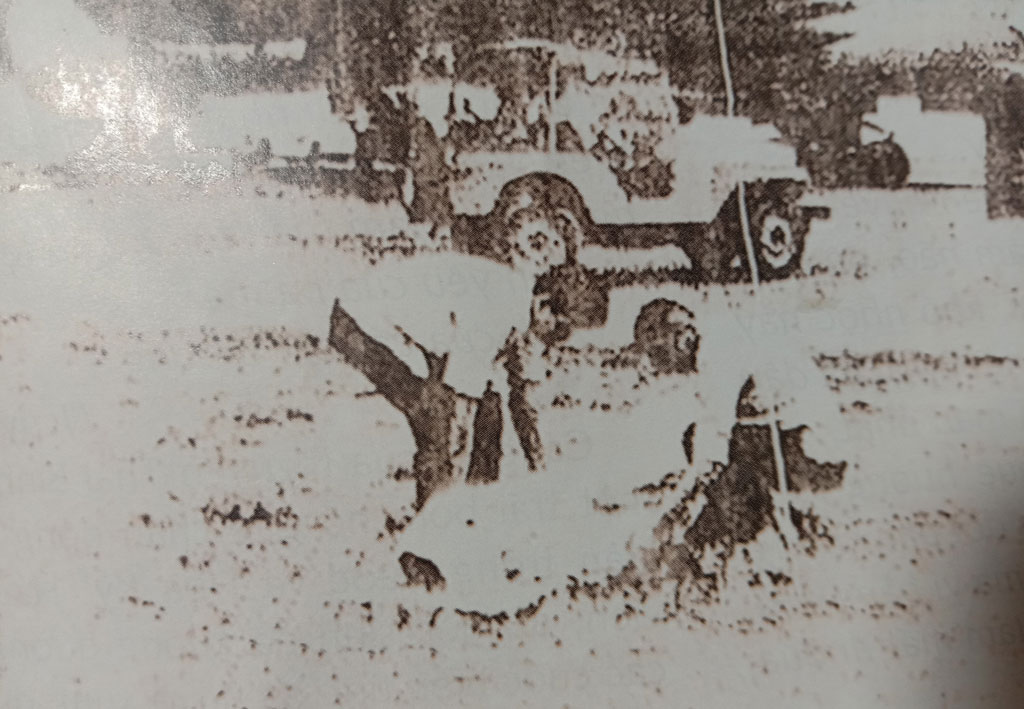
Two police officers are covering the body of Nguyen Thai Binh, who was shot dead by CIA agents and thrown onto the runway, with a plastic sheet.
Just as Nick Ut's "Napalm Baby" was more powerful than a bomb explosion, shocking the conscience not only of Vietnamese people in Vietnam but also of Vietnamese people living and studying in the US and foreigners, leading to numerous anti-war protests in the US, and countless pens and cameras exposing war crimes committed by the US and its brutal, puppet regime against the country and people of Vietnam,...
Today, the country enjoys a unified and peaceful existence, just as his name suggests. In his birthplace – Tan Kim commune, Can Giuoc district – stands a majestic monument to Nguyen Thai Binh, and a large, beautiful road in Tan An city bears his name. Throughout the country, there are numerous awards, schools, and streets dedicated to him. This demonstrates that the heroic martyr Nguyen Thai Binh has entered the annals of the nation, just as the heartfelt letters he left for his family before his passing.../.
Quang Hao
Source link
![[Image] Hanoi Police officially crowned champions of V-League 2025/2026](https://vphoto.vietnam.vn/thumb/1200x675/vietnam/resource/IMAGE/2026/05/31/1780244769054_ndo_br_039d561b692be875b13a-jpg.webp)


![[Photo] Solemn bathing ceremony and Buddha procession in Hue](https://vphoto.vietnam.vn/thumb/1200x675/vietnam/resource/IMAGE/2026/05/31/1780228263543_1-jpg.webp)
![[Photo] Admire the coral "masterpiece" amidst the million-year-old heritage of Dak Lak province.](https://vphoto.vietnam.vn/thumb/1200x675/vietnam/resource/IMAGE/2026/05/31/1780221235105_anh-man-hinh-2026-05-31-luc-16-53-27.png)
![[Photo] The General Secretary, President and his wife begin their state visit to the Philippines.](https://vphoto.vietnam.vn/thumb/1200x675/vietnam/resource/IMAGE/2026/05/31/1780230559452_anh-man-hinh-2026-05-31-luc-19-28-11.png)





![[Video] Sunset at Lap An Lagoon – Where the sun sets over the fishing nets](https://vphoto.vietnam.vn/thumb/340x192/vietnam/resource/IMAGE/2026/05/31/1780192137701_beach-landscape-sea-water-nature-grass-745871-pxhere-com.jpeg)























































Comment (0)