
The offerings are very diverse and varied, but the most popular is gac fruit sticky rice, often found on ceremonial trays due to its vibrant red color. There are also sticky rice dishes like "xôi vò" (boiling sticky rice) - so named because of the "vò" (boiling) and "trộn" (mixing), a very special technique in the preparation process: After cooking, the sticky rice is poured onto a tray, fanned to cool, then "vò" to mix with cooked, finely ground mung beans, formed into small balls and then finely chopped, creating individual, fluffy, and plump grains of sticky rice. A lemon-yellow color envelops a thin layer of bright yellow mung bean powder. The special flavor of cooked sticky rice blended with the aroma of mung beans creates the delicious, light, and visually appealing "xôi vò," a very elegant and unique Hanoi specialty .
Another delightful example is "xôi xéo" (sliced sticky rice). The origin of the name is unclear, but mentioning it immediately conjures images of steaming hot, golden-yellow sticky rice, with the rich, savory flavor of crispy fried shallots, rendered fat, and the sweet, nutty taste of thinly sliced mung beans, all blended with the aroma of fresh green lotus or banana leaves used to wrap the rice. It's a characteristic, familiar scent every morning on the old streets of Hanoi . Some jokingly suggest that the name "xéo" comes from the incredibly appealing flavor of the sticky rice, so much so that even if the vendor chased them away, customers wouldn't leave. Others believe the name might originate from the way the sticky rice is served. After placing the sticky rice on a lotus leaf, the vendor uses a knife to diagonally slice mung beans from a handful of cooked beans, rolled into small balls, onto the rice. The vendor then "xéo" the mung beans as customers buy them…
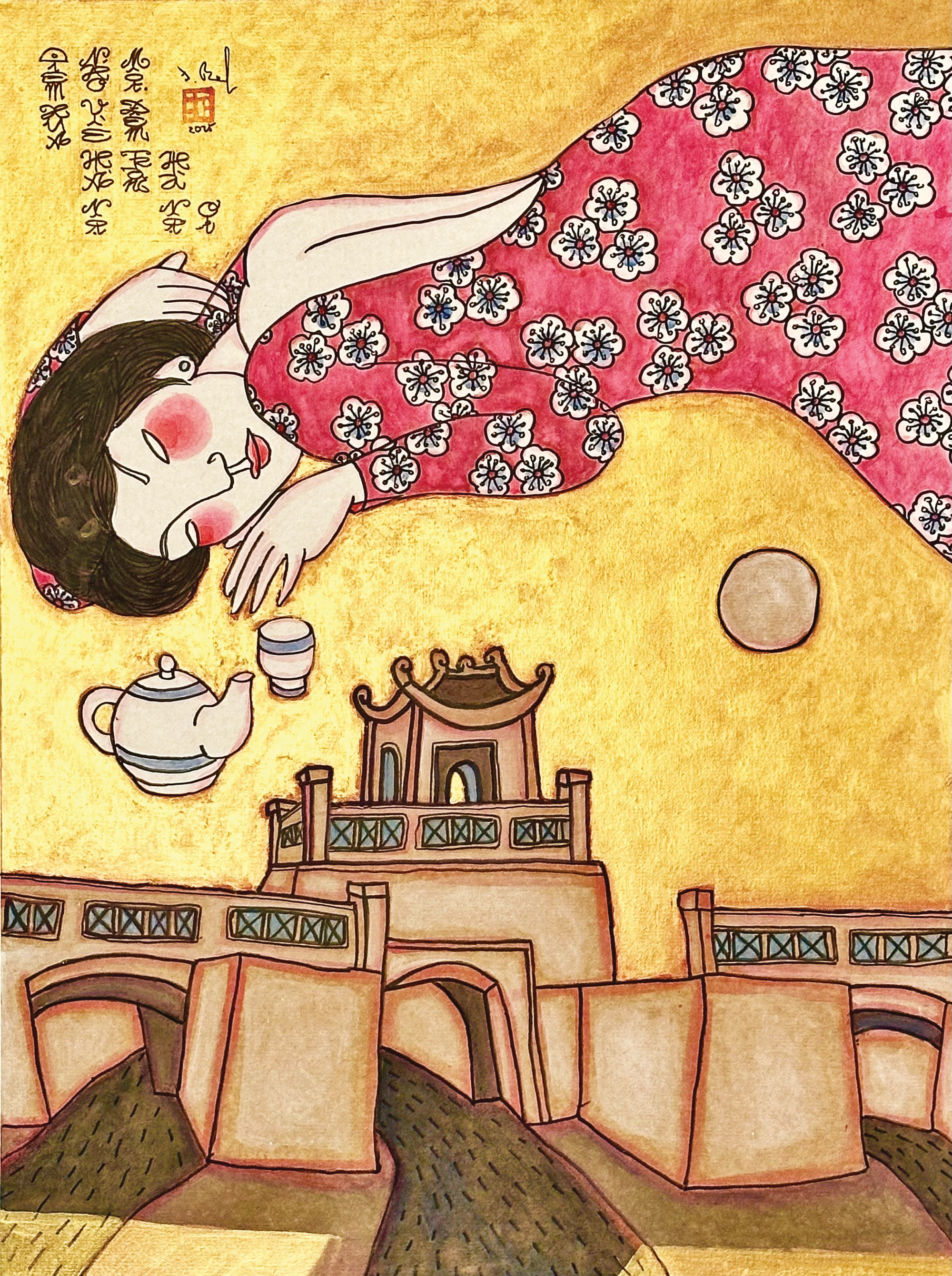
Paintings by DANG DUONG BANG
One of Hanoi's most distinctive breakfast dishes is sticky rice with mung beans, which at first glance appears canary yellow-lemon yellow. Beneath the layer of mung beans, hidden is the glossy ivory white of the popped corn kernels, like pearls in a string of pearls on the elegant necks of the ladies of old Hanoi. The pearly white of the popped corn blends surprisingly well with the golden yellow of the cooked glutinous rice, plump and smooth. On top are thinly sliced mung beans rolled up on the surface of the sticky rice, the slices curved like ancient roof tiles on the roofs of temples and pagodas.
The sticky rice vendor transforms into a skilled artist when serving the rice. Their small, delicate fingers move swiftly and passionately, scooping the rice, slicing the beans, spreading them on top, then quickly drizzling with lard and sprinkling with fried onions. Dried onions, sliced horizontally and fried until crispy in the lard, resemble golden-brown, amber-colored snail shells. Through skillful hands, they become the dark brown pistils of a golden flower, adorned with plump, ripe corn kernels. Sticky rice is usually served on lotus leaves. In old Hanoi, there was a unique way of wrapping sticky rice. A lotus leaf, shaped like a slightly open paper fan, is placed in a small, white-green Bat Trang ceramic bowl with a blue border. The vendor scoops the rice, slices the beans, drizzles with lard, adds fried onions, and then folds the corners.
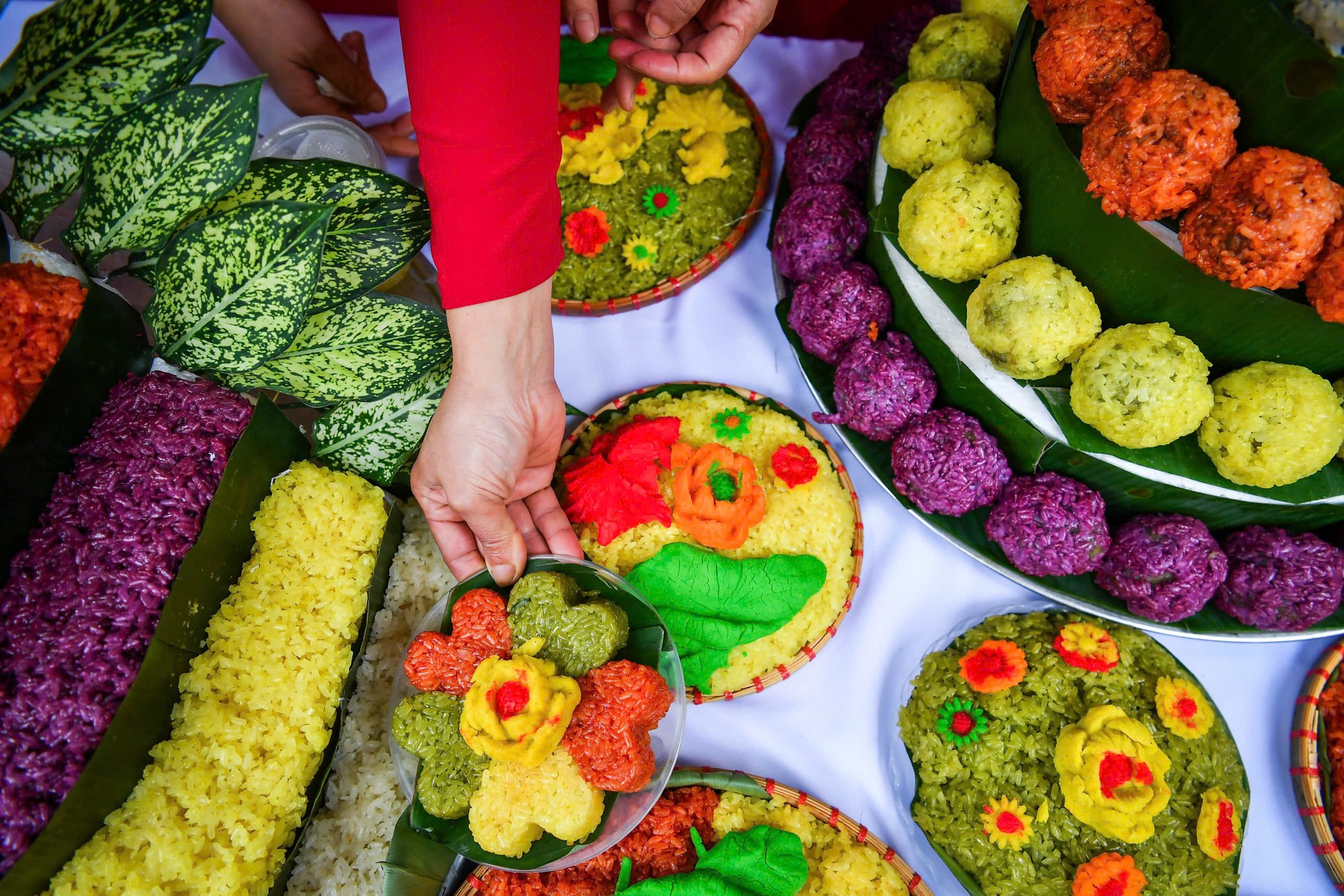
Sticky rice dishes are displayed at the traditional Phu Thuong Sticky Rice Festival (Tay Ho, Hanoi) in 2025. (Photo: THANH DAT)
Sticky rice is sometimes eaten alone or with meat, salads, etc., as a main dish in banquets, but it is also served with various sweet soups as desserts at the end of a meal or during tea time when gathering with friends or family. Sticky rice made with whole grains, sticky rice with shredded chicken, sticky rice with peanuts, and sticky rice with sesame seeds are often served for breakfast. Sticky rice with gac fruit is offered at the beginning of a banquet after rounds of drinks. Plain sticky rice is usually served with pork, chicken, goose, or duck at banquets. Sticky rice with mung beans and sticky rice with areca flower are often molded into small balls by mothers and grandmothers for children. Meanwhile, steamed sticky rice is served with various sweet soups such as areca flower sweet soup, mung bean sweet soup, coconut sweet soup, and jasmine-scented sugar sweet soup…
I'm writing a rambling reflection on my feelings and experiences about a delicious Hanoi dish – sticky rice: a dish I've loved since childhood. Living far from home has made me truly appreciate the precious value of traditional Hanoi cuisine . Those old memories live in my heart like grains of gold dust that I will forever want to collect, preserve, and carry with me.
Source: https://nhandan.vn/nho-xoi-ngon-ha-noi-post943161.html



![[Photo] General Secretary and President To Lam presides over a working session with the Central Policy and Strategy Committee on the development of the materials industry.](https://vphoto.vietnam.vn/thumb/1200x675/vietnam/resource/IMAGE/2026/05/21/1779359935432_a3-bnd-3129-1412-jpg.webp)


![[Photo] National Assembly Chairman Tran Thanh Man working with the Standing Committee of the Law and Justice Committee](https://vphoto.vietnam.vn/thumb/1200x675/vietnam/resource/IMAGE/2026/05/21/1779378929214_ndo_br_1-4610-jpg.webp)







![[Photo] National Assembly Chairman Tran Thanh Man working with the Standing Committee of the Law and Justice Committee](https://vphoto.vietnam.vn/thumb/402x226/vietnam/resource/IMAGE/2026/05/21/1779378929214_ndo_br_1-4610-jpg.webp)












![[Infographic] Stock market on May 21st: VN-Index falls 16.34 points, market liquidity decreases.](https://vphoto.vietnam.vn/thumb/402x226/vietnam/resource/IMAGE/2026/05/21/1779379204295_screenshot-2026-05-21-220948-jpg.webp)

![[Video] Hanoi plans to select two communes with 700,000 inhabitants to pilot the socialist model.](https://vphoto.vietnam.vn/thumb/402x226/vietnam/resource/IMAGE/2026/05/21/1779373741887_z7851174239346-8a83e741648b3fa19f4e711ad18c6234-jpg.webp)








































Comment (0)