

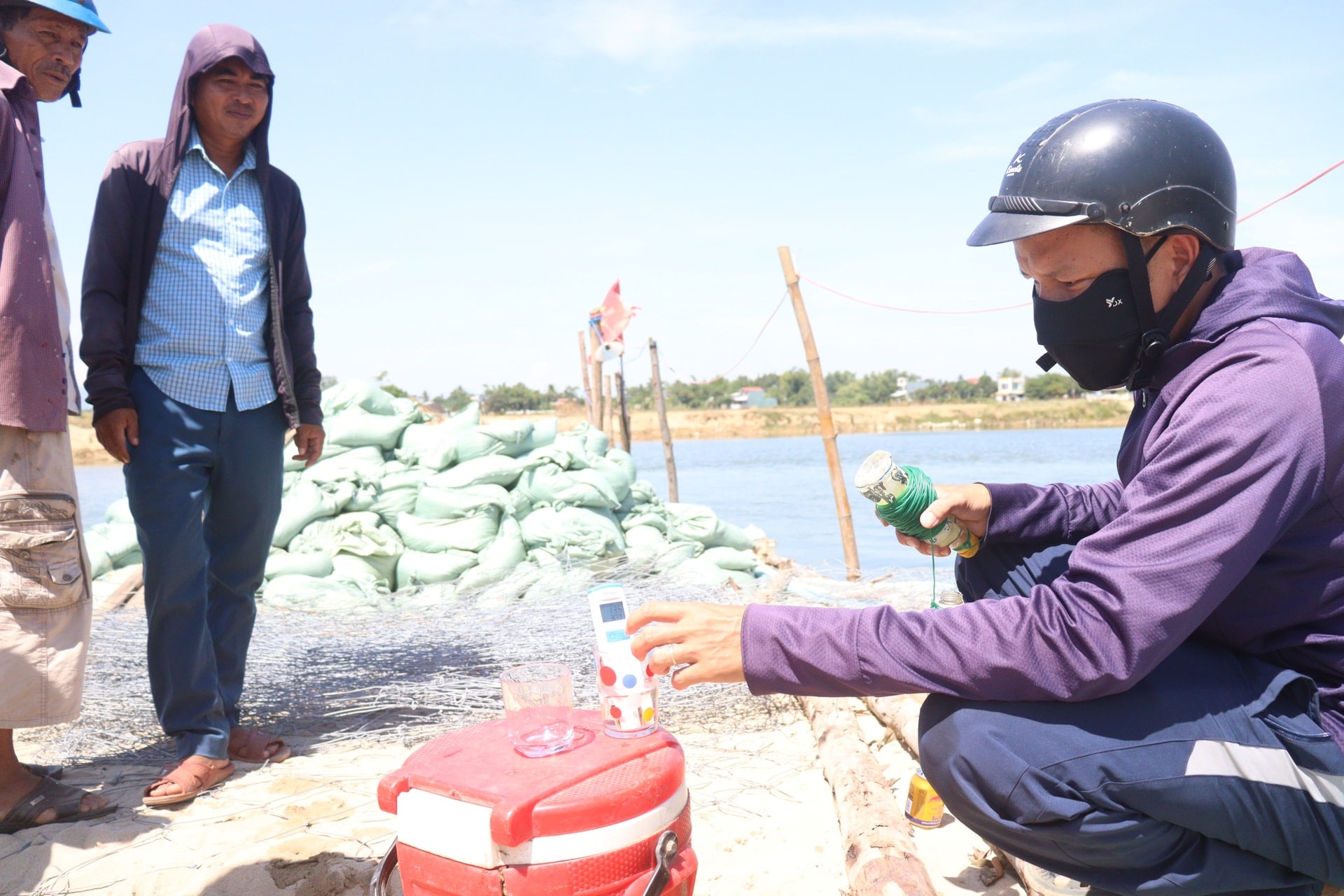
Implement various measures
In mid-May 2026, saltwater intrusion extended deep into the Yen, Tuy Loan, and Vinh Dien rivers, causing localized salinization at many pumping stations supplying water for agricultural production. To ensure the timely planting of the summer-autumn rice crop, the Department of Agriculture and Environment and the Sub-Department of Water Resources and Irrigation Management requested hydropower plants in the Vu Gia and Thu Bon river basins to increase water discharge downstream to push back the saltwater intrusion.
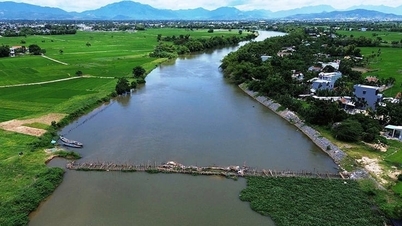
Mr. Ngo Xuan The, Deputy General Director of A Vuong Hydropower Joint Stock Company, said that upon receiving a request from the city, the company balanced water resources and released water through power generation at a high flow rate within the permitted limits according to the regulations of the inter-reservoir operation procedure on the Vu Gia - Thu Bon river basin. At the same time, they continued to release water to push some of the saltwater out of the upstream of the temporary dam preventing saltwater intrusion and retaining freshwater on the Vinh Dien river, in preparation for sealing the temporary dam on May 23rd.
With water released from hydroelectric power plants, pumping stations along the Yen and Tuy Loan rivers have been cleared of saltwater, allowing for timely operation of pumps to irrigate fields in Hoa Vang and Ba Na communes and Cam Le ward, serving the summer-autumn rice planting season.
Simultaneously, ensure sufficient water levels to operate the upstream pumping stations of the An Trạch, Hà Thanh, Bàu Nít, and Thanh Quýt dams at high capacity, and partially push back saltwater intrusion in the Thanh Quýt River and upstream of the temporary dam on the Vĩnh Điện River.
However, after the remaining 30m section in the middle of this temporary dam was completed on May 23rd, the freshwater flow from the Thanh Quyt dam not only slowed down the dilution of the salinity but also showed signs of pushing the saltwater upstream.
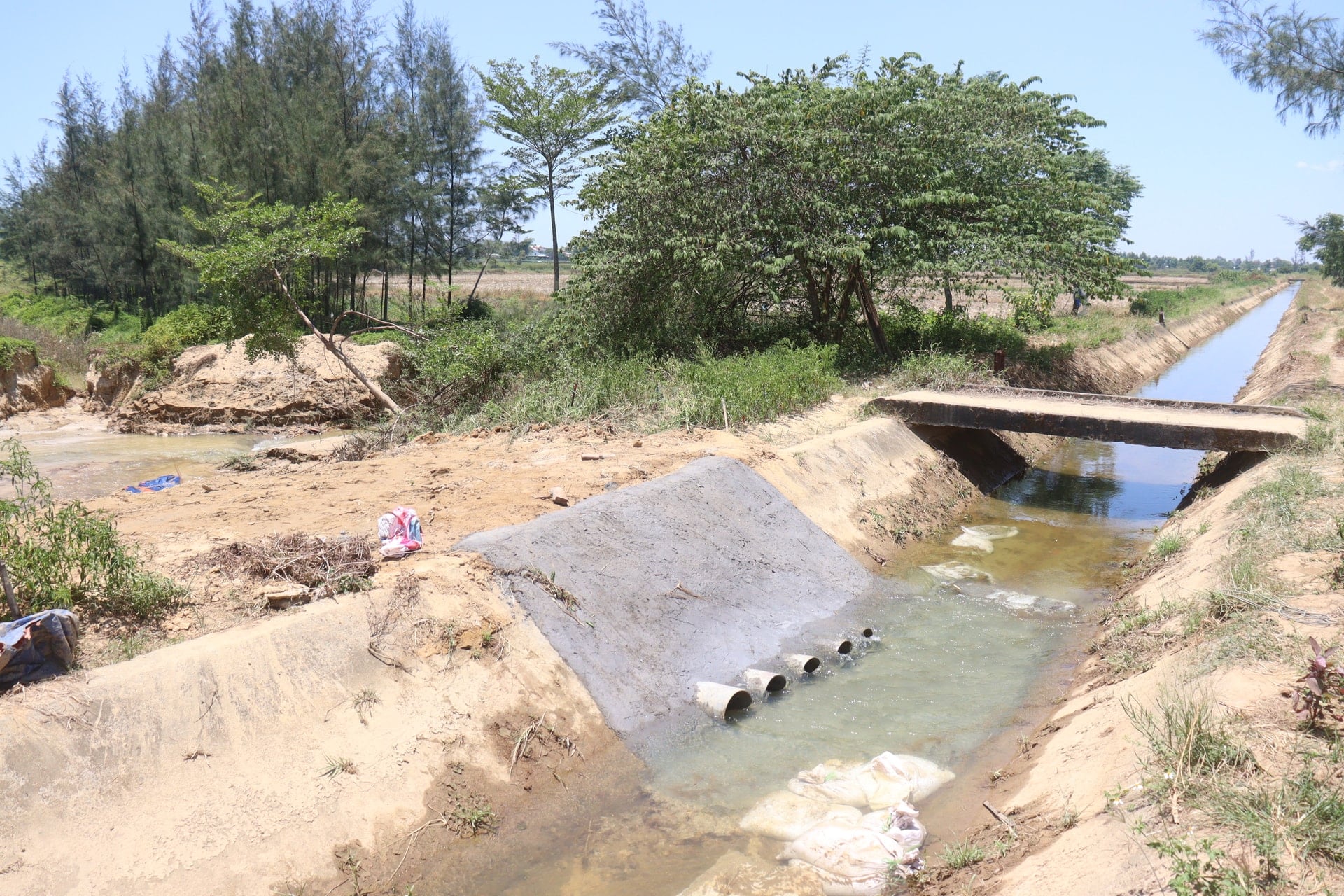
A series of pumps continued to be shut down to supply water to the fields for irrigation, especially the Tu Cau and Cam Sa pumping stations. Meanwhile, the Vinh Dien pumping station operated intermittently, only pumping water for irrigation when the measured salinity was below the permissible level.
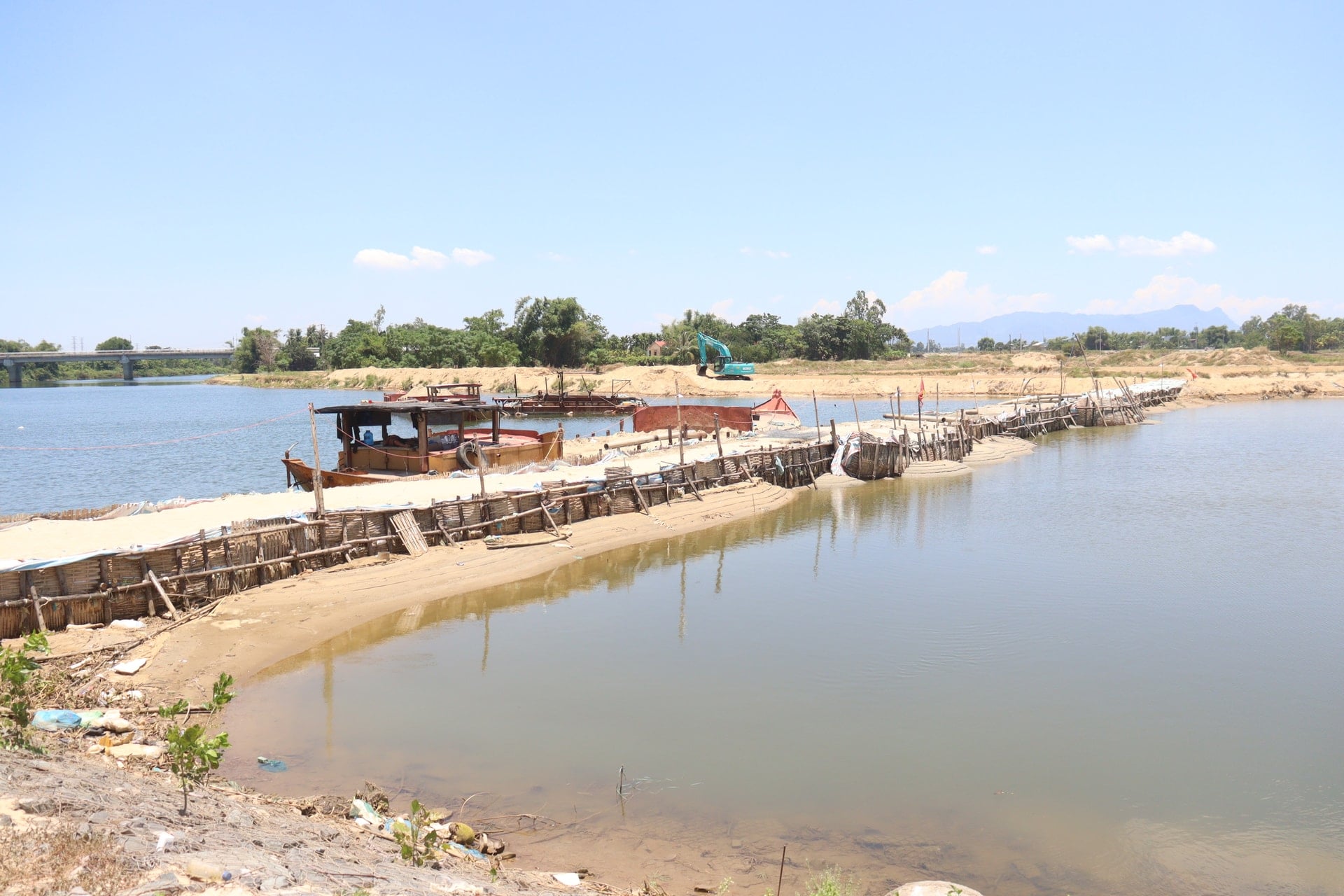
To accelerate the dilution of salinity upstream of the temporary dam on the Vinh Dien River, and to ensure timely water pumping for irrigation and sowing of the summer-autumn rice crop according to the schedule issued by the Department of Agriculture and Environment, various units and localities have made efforts to implement numerous solutions.
The People's Committee of Go Noi commune is accelerating the dredging of the upstream section of the Vinh Dien river to increase the flow of freshwater from the Thu Bon river to neutralize the saltwater intrusion. The Da Nang Water Resources Exploitation Company Limited is operating the Tu Cau pumping station to discharge saltwater into the drainage canal. The People's Committee of Dien Ban Dong ward is installing pumps at the temporary dam on the Vinh Dien river to pump out some of the saltwater downstream of the dam…
According to Le Thanh Long, Vice Chairman of the People's Committee of Dien Ban Dong Ward, on June 1st, the ward added another saltwater pump at the temporary dam on the Vinh Dien River to help reduce salinity upstream of the dam. In recent days, the unit operating the pumping stations has continuously measured salinity at the intake basin and operated the pumps when the salinity was below the permissible level to irrigate some rice fields.
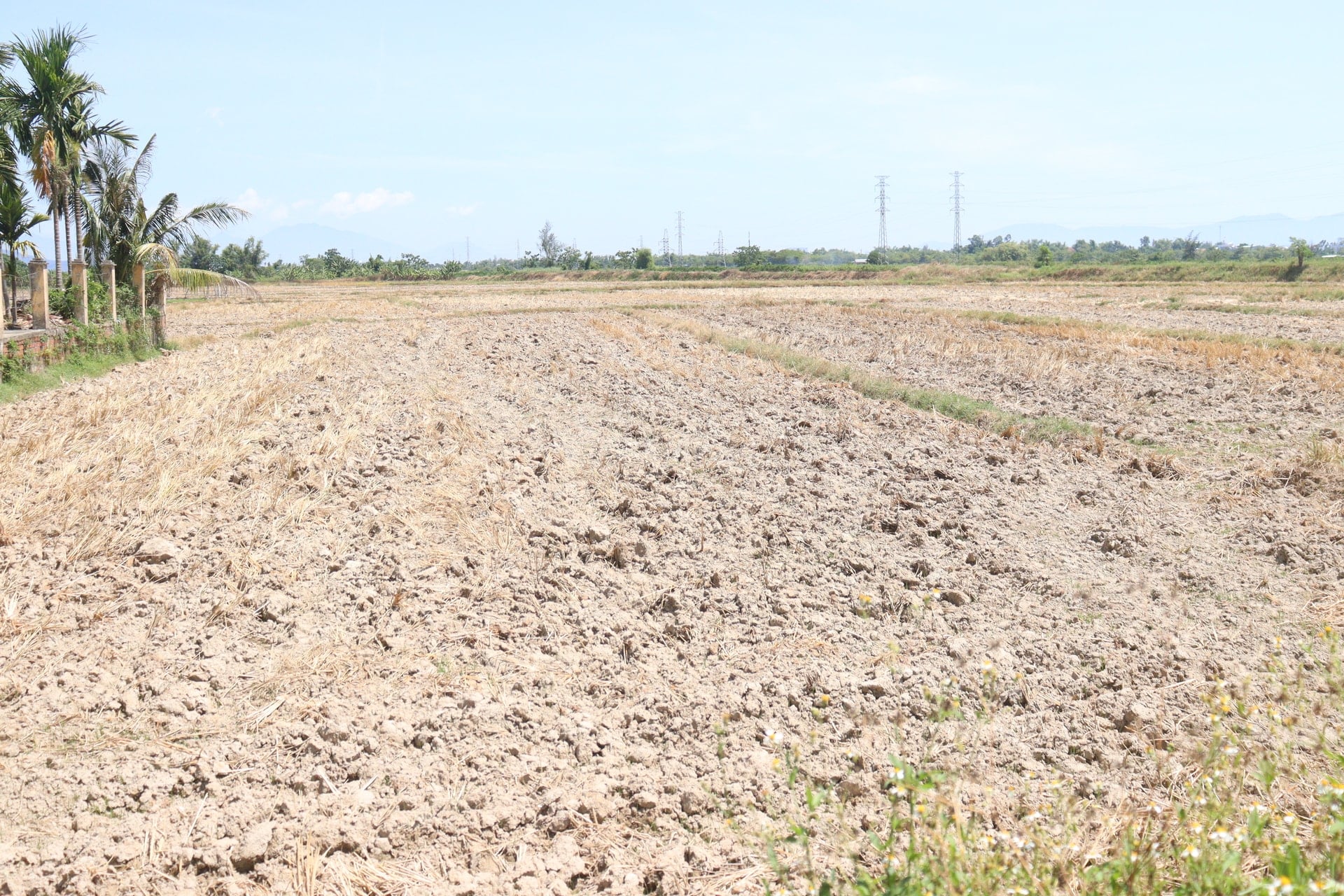
Wherever the water arrives, soak the seeds immediately.
According to the Da Nang Water Resources Exploitation Company Limited, as of May 31st, the Tu Cau pumping station is operating all three pumps to discharge saline water into the drainage canal, but has not yet released water for irrigation into the rice fields (approximately 235.6 hectares) because the salinity at the pumping station's intake is higher than the regulated level and is trending upwards (ranging from 1-1.07 parts per thousand).
The Cam Sa pumping station has irrigated 20 hectares of rice fields, while more than 64.8 hectares remain unirrigated because the station is currently out of operation due to rising salinity levels in the intake basin (ranging from 1-1.06 parts per thousand). The Vinh Dien pumping station is still operating intermittently, so it has only irrigated 65 hectares out of a total of over 710 hectares. The Thanh Quyt pumping station (with salinity levels in the intake basin ranging from 0.02-0.36 parts per thousand) has irrigated 90 out of 141.4 hectares (including 20 hectares already sown with summer-autumn rice). The Ha Chau pumping station has only irrigated 5 hectares out of 333.7 hectares…
According to Dao Van Thien, Deputy General Director of Da Nang Water Resources Exploitation Company Limited, the Vinh Dien River pumping stations have only been able to irrigate 180 out of 1,600 hectares. The Ha Chau and Cam Thanh pumping stations are also waiting for water to be supplied from the Vinh Dien pumping station. Meanwhile, the Vinh Dien pumping station is operating intermittently, adjusting the pump's operation according to tides and salinity levels measured at the intake basin.
Currently, the saline intrusion situation on the Vinh Dien River remains complex; water resources for production depend heavily on the discharge from upstream hydropower reservoirs, tidal patterns, and the ability of the temporary saline intrusion dam in the river to dilute the saltwater in the upstream area.
Given the situation, the company has worked with relevant units and localities and agreed to only operate water pumps at pumping stations when the measured salinity is below 0.8 parts per thousand as stipulated. If the salinity exceeds the permissible limit, the pumping stations must cease operation to avoid the risk of introducing saline water into the fields, which could affect agricultural production.
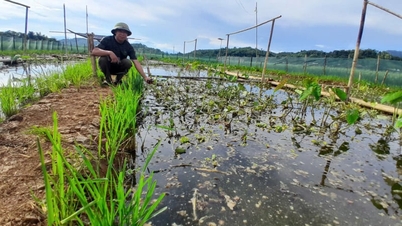
Under conditions where water sources ensure salinity levels do not exceed 0.8 parts per thousand, the company will operate flexibly, prioritizing water supply to nearby irrigation areas first, followed by more distant areas, and may abandon summer-autumn crop production in some areas. Therefore, farmers need to monitor the water supply to their fields and prepare their seeds accordingly. The People's Committees of communes and wards, agricultural cooperatives, and water users should closely coordinate with the company in measuring salinity and managing water supply; inspect and review actual production areas; and avoid planting outside of planned schedules or in areas at high risk of water shortage and salinity. Simultaneously, they should promote and encourage farmers to use water sparingly and share the difficulties faced by those experiencing water shortages and salinity issues.
Source: https://baodanang.vn/no-luc-chong-nhiem-man-de-bom-nuoc-do-ai-3339022.html








![Water security in the Mekong Delta: [Part 2] 'The vicious cycle of degradation' is difficult to reverse.](https://vphoto.vietnam.vn/thumb/402x226/vietnam/resource/IMAGE/2026/05/29/1780020596526_4209-han-dbscl1-094000_891.jpeg)












































































Comment (0)