

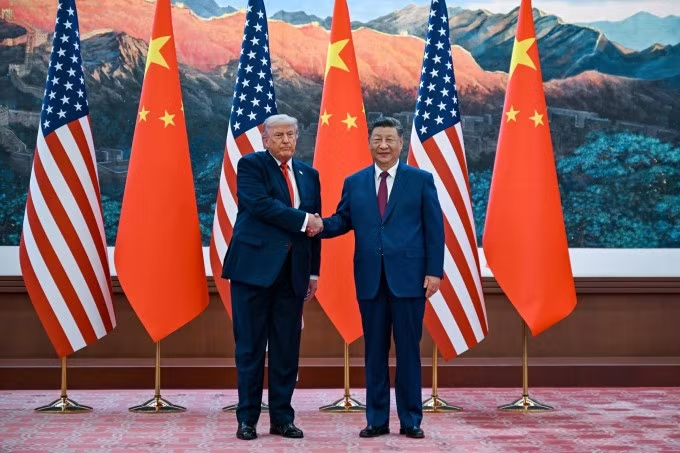
On May 15, US President Donald Trump concluded his first visit to China in his second term, with the highlight being talks at the Great Hall of the People and an exchange inside Zhongnanhai with President Xi Jinping.
Trump described the visit as "fantastic," while Xi said it marked a milestone opening up "a new bilateral relationship," but the two leaders did not offer any surprising or groundbreaking information about the visit's outcome.
Statements from Washington and Beijing indicate that the two sides have differing priorities regarding the content of the negotiations. The US focused on issues of trade, investment, and Iran, while China emphasized strategic stability and the Taiwan issue.
"There weren't too many surprises compared to what both sides had signaled before the meeting," William Yang, a Northeast Asia expert at the International Crisis Group (ICG) based in Belgium, told Channel News Asia . "The thorough preparation from both sides helped the meeting go smoothly."
Trade and Investment
Following the summit, President Trump declared that the U.S. and China had reached "great trade deals." Beijing will purchase 200 Boeing aircraft and increase its purchases of American oil, agricultural products, and goods. The White House said the two sides also discussed expanding market access for American businesses and boosting bilateral investment.
One of the most concrete results is the plan to establish a "Trade Council" and an "Investment Council," two mechanisms aimed at creating a permanent channel for dialogue on trade and investment. U.S. Treasury Secretary Scott Bessent stated that this mechanism would identify "non-strategic, non-sensitive" sectors where the country could receive investment from China.
However, Beijing has not publicly confirmed many of the things Trump mentioned, and no detailed documents have been released.
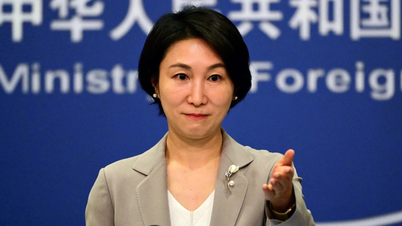
"President Xi noted that Sino-U.S. economic and trade relations are mutually beneficial," the Chinese Foreign Ministry said on May 14.
Investors also reacted rather cautiously. Following the announcement of the Boeing deal, the company's stock fell more than 4%, as the market expected China to purchase around 500 aircraft.
Robert Manning, an expert at the Stimson Center, told CBC that the summit showed a notable shift in Trump's approach to China. For years, Trump had consistently criticized China as the cause of American industrial job losses and promoted a strategy of " economic decoupling." But in Beijing this time, he said the two countries "a lot in agreement on trade" and would "do a lot of deals."
Iran conflict
The conflict that erupted in late February between the US, Israel, and Iran was a key topic of discussion at the meeting. The fighting has led to a "double blockade" of the Strait of Hormuz, the world 's energy lifeline. Iran tightened its control over Hormuz, allowing only ships from "friendly" nations to pass through, while the US imposed a blockade on all of the Islamic Republic's seaports.
The White House said the U.S. and China agreed that Iran should not be allowed to possess nuclear weapons and that the Strait of Hormuz should be kept free for the flow of global energy. U.S. Secretary of State Marco Rubio said China opposes the militarization of the Strait of Hormuz, as well as the imposition of fees on ships passing through the area.
In an interview with Fox News following their May 14th meeting, Trump said Xi "offered to help resolve the Iran issue if possible."
However, China did not fully confirm the contents of the US statement. The Chinese statement mainly emphasized that the conflict with Iran "should never have happened" and that the parties should resolve the issue through dialogue.
Chong Ja Ian, an associate professor at the National University of Singapore, argues that both sides actually share a common interest in maintaining stable oil prices and protecting the global energy supply chain. However, China is currently avoiding showing a stance leaning towards the US and has not committed to increasing pressure on Iran.
According to Chong, the conflict in Iran depends not only on the will of the US and China, but also on the calculations of Tehran and Tel Aviv.
"It seems unlikely that either the U.S. or China will be able to get Iran and Israel to act differently," Chong said.
Taiwan Hotspot
Taiwan has long been a source of tension in US-China relations. China has always considered Taiwan a province awaiting reunification, even by force if necessary. The US is committed to respecting the "One China" principle, but continues to maintain relations with Taiwan and provides the island with advanced weapons for defense.
During the talks, President Xi emphasized that Taiwan "is the most important issue in US-China relations" and warned that mishandling it could lead to clashes, or even conflict, between the two superpowers.
According to a Chinese statement, Xi Jinping said peace in the Taiwan Strait can only be maintained if the US "opposes Taiwan's independence."
The White House did not mention Taiwan in its statement following the summit. However, on Air Force One, Trump confirmed that the two sides "had a great deal of discussion about Taiwan."
"He has a very tough stance on the Taiwan issue. I haven't made any commitments in either direction," Trump said.
Upon returning to the US, President Trump issued a clearer statement. "I don't want to see any side declare independence. You know, we're supposed to be going over 15,000 kilometers to go into a fight. I don't want that. I want both them and China to de-escalate the situation," he said on May 15th.
Mr. Trump added that he did not want to see war break out in the Taiwan Strait and that "if the status quo remains as it is, I think China will accept it."
This statement shows that the US has not changed its policy towards Taiwan and continues to maintain "strategic ambiguity," according to ICG expert Yang. Trump's avoidance of a public confrontation with Xi Jinping over Taiwan is also seen as a success for China, as Beijing wants to ensure this issue remains a "red line" in bilateral relations.
Technology
Technology was one of the most closely watched topics leading up to the conference, particularly concerning chips, artificial intelligence (AI), and US export restrictions. The last-minute appearance of Nvidia CEO Jensen Huang in Trump's entourage fueled speculation that Washington might ease semiconductor controls.
"Huang, Elon Musk of Tesla, and Tim Cook of Apple being in Trump's entourage is intentional," said Lin Han-shen, a China expert at Asia Group.
However, no major breakthroughs were announced in this area. U.S. Trade Representative Jamieson Greer told Bloomberg TV that chip export controls were not "a major topic" in the talks.
Mr. Trump added that the U.S. and China have discussed establishing "risk control measures" in the areas of AI, healthcare, pharmaceuticals, and the military.
Experts believe this reflects the reality that technological competition has become central to US-China relations, and although there have been no major policy changes, the fact that the two sides are discussing risk control mechanisms is still seen as an important signal.
"The core issue now is no longer simply trade, but who will control the technological foundation of the next industrial era," according to Luigi Gambardella, chairman of the ChinaEU.
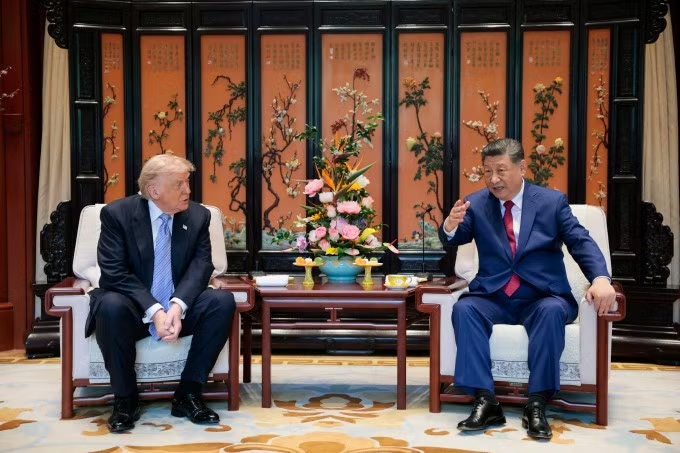
According to expert Yang, US and Chinese leaders used the conference to demonstrate their shared desire to find common ground and manage disagreements.
"Based on statements from both sides, it appears both leaders are trying to emphasize areas where mutually beneficial US-China cooperation remains feasible," Yang observed, referring to trade and economic relations.
Stephen Olson, a researcher at the ISEAS-Yusof Ishak Institute in Singapore, assessed that both US and Chinese leaders achieved what they needed from the meeting.
"President Xi wants to position China as a true competitor to the U.S., and he has achieved that," Olson said. "Trump also returned home with 'deals' that the American leader can declare a 'victory'."
According to Channel News Asia, Guardian, Al Jazeera
Source: https://baohatinh.vn/ong-trump-ong-tap-dat-duoc-gi-tu-cuoc-gap-thuong-dinh-post310760.html
![[Image] Pleasant weather helps students enter the 10th grade entrance exam with confidence.](https://vphoto.vietnam.vn/thumb/1200x675/vietnam/resource/IMAGE/2026/05/29/1780034401612_ngay-1-thi-lop-10-minh-duy-8-5009-jpg.webp)
![[Photo] Ba Lang An Lighthouse - the "eye of the sea" amidst the "rock museum" of Quang Ngai province.](https://vphoto.vietnam.vn/thumb/1200x675/vietnam/resource/IMAGE/2026/05/29/1780038698840_anh-man-hinh-2026-05-29-luc-14-10-42.png)
























































Comment (0)