

In the recent drafting of the new Law on Geology and Minerals, lawmakers, authorities, experts, and managers all agreed that it is necessary to have more specific and stringent regulations on the auctioning of mineral exploitation rights. The goal of the law's drafters and state management agencies is to build a robust and transparent legal framework for mineral management, ensuring that minerals and mining activities effectively serve national development goals and fairly balance the interests of the nation, localities, and businesses through transparent information management, with auctioning being considered a strong solution.
However, as some experts have said, no one can be certain of the absolute perfection of any law. The discrepancy between the principles of the law and the dynamics of real life will inevitably create loopholes, and regulations on auctions in mineral exploitation are no exception. Avoiding or disrupting auctions is a prime example.
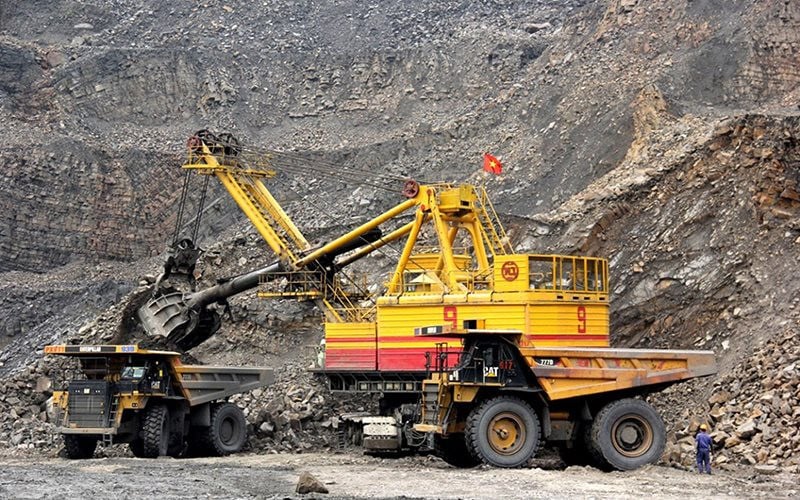
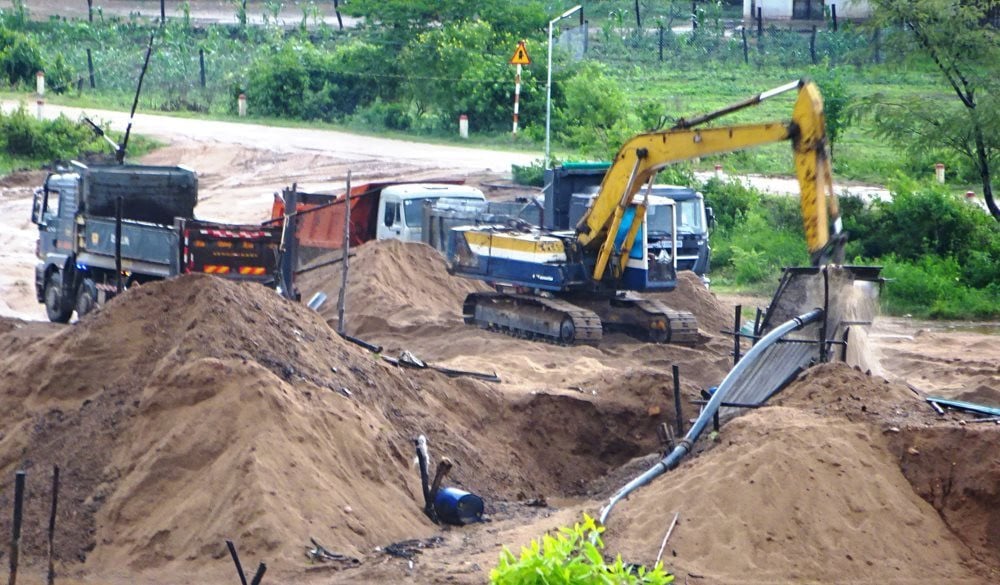
Recently, the Prime Minister himself had to directly instruct a review of issues related to the auction of three sand mines in Hanoi, where the bidding price was hundreds of times higher than the initial starting price.
Several theories have been put forward regarding the successful auction of three sand mines in Hanoi, which fetched prices hundreds of times higher than the starting bids. Each theory raises concerns for society. The first theory suggests that the estimated reserves of the mines were inaccurate. Given their location beneath riverbeds, measuring, assessing, and estimating sand reserves is not easy. Even a small impact, whether subjective or objective, can quickly alter the figures. If this theory is true, the State will suffer a loss of valuable mineral resources.
The next hypothesis is that the auction was rigged and the deposit was forfeited. We will have to wait for further developments before we can draw any conclusions, but it's hard not to be suspicious, because survey results show that the price of sand for construction materials in Hanoi and neighboring provinces is only around 100,000 VND/m3, including transportation costs to the construction site. Meanwhile, the average price per cubic meter of sand remaining at the three mines that were successfully auctioned is as high as 800,000 VND/m3, and even that doesn't include extraction and transportation costs.
This price manipulation is reminiscent of the "silkworm eating mulberry leaves" tactic, which, simply put, means that after being granted a license to mine sand, businesses gradually encroach on the areas where they are legally licensed to mine, taking a little bit each day. After a year, the mining area has expanded many times beyond the legally licensed "core zone".
This has happened in many localities, almost implicitly understood as a matter of course, in order to compensate for the limited sand reserves by increasing quantity. This is also one of the many reasons why businesses compete to push up the price of sand mining rights by tens or hundreds of times compared to the starting price.
For a long time, authorities have discovered numerous cases of illegal sand mining outside the permitted areas in various provinces and cities... Some businesses have used equipment to excavate sand outside the designated mining boundaries and beyond the permitted time frame; exceeded the licensed capacity; failed to maintain weighing stations and surveillance camera systems; kept incomplete records, invoices, and purchase and sale documents; and declared and paid taxes on mineral mining and trading that did not match the licensed output... This situation is undoubtedly related to the fraudulent practices of disrupting auctions that have occurred in the past.
The draft Law on Geology and Minerals, currently under development, has added and clarified regulations on auctioning mineral exploitation rights. The 2015 Penal Code (amended and supplemented in 2017) also clearly stipulates the conditions for criminal prosecution for the crime of "Violating regulations on research, exploration, and exploitation of natural resources." It is hoped that the vision of the draft Law and related laws will create a legal framework to curb and limit the exploitation of minerals through deceptive tactics, with auction sabotage being a prime example. However, ultimately, the law is only a tool; the most important thing is that law enforcement officials do not personally violate their own professional ethical standards or abet and turn a blind eye to those who circumvent or violate the law.
Source
![[Image] Hanoi Police officially crowned champions of V-League 2025/2026](https://vphoto.vietnam.vn/thumb/1200x675/vietnam/resource/IMAGE/2026/05/31/1780244769054_ndo_br_039d561b692be875b13a-jpg.webp)
![[Photo] Admire the coral "masterpiece" amidst the million-year-old heritage of Dak Lak province.](https://vphoto.vietnam.vn/thumb/1200x675/vietnam/resource/IMAGE/2026/05/31/1780221235105_anh-man-hinh-2026-05-31-luc-16-53-27.png)
![[Photo] The General Secretary, President and his wife begin their state visit to the Philippines.](https://vphoto.vietnam.vn/thumb/1200x675/vietnam/resource/IMAGE/2026/05/31/1780230559452_anh-man-hinh-2026-05-31-luc-19-28-11.png)

![[Photo] Solemn bathing ceremony and Buddha procession in Hue](https://vphoto.vietnam.vn/thumb/1200x675/vietnam/resource/IMAGE/2026/05/31/1780228263543_1-jpg.webp)

















![[Video] Sunset at Lap An Lagoon – Where the sun sets over the fishing nets](https://vphoto.vietnam.vn/thumb/340x192/vietnam/resource/IMAGE/2026/05/31/1780192137701_beach-landscape-sea-water-nature-grass-745871-pxhere-com.jpeg)






































![[Photo] Admire the coral "masterpiece" amidst the million-year-old heritage of Dak Lak province.](https://vphoto.vietnam.vn/thumb/402x226/vietnam/resource/IMAGE/2026/05/31/1780221235105_anh-man-hinh-2026-05-31-luc-16-53-27.png)


































Comment (0)