

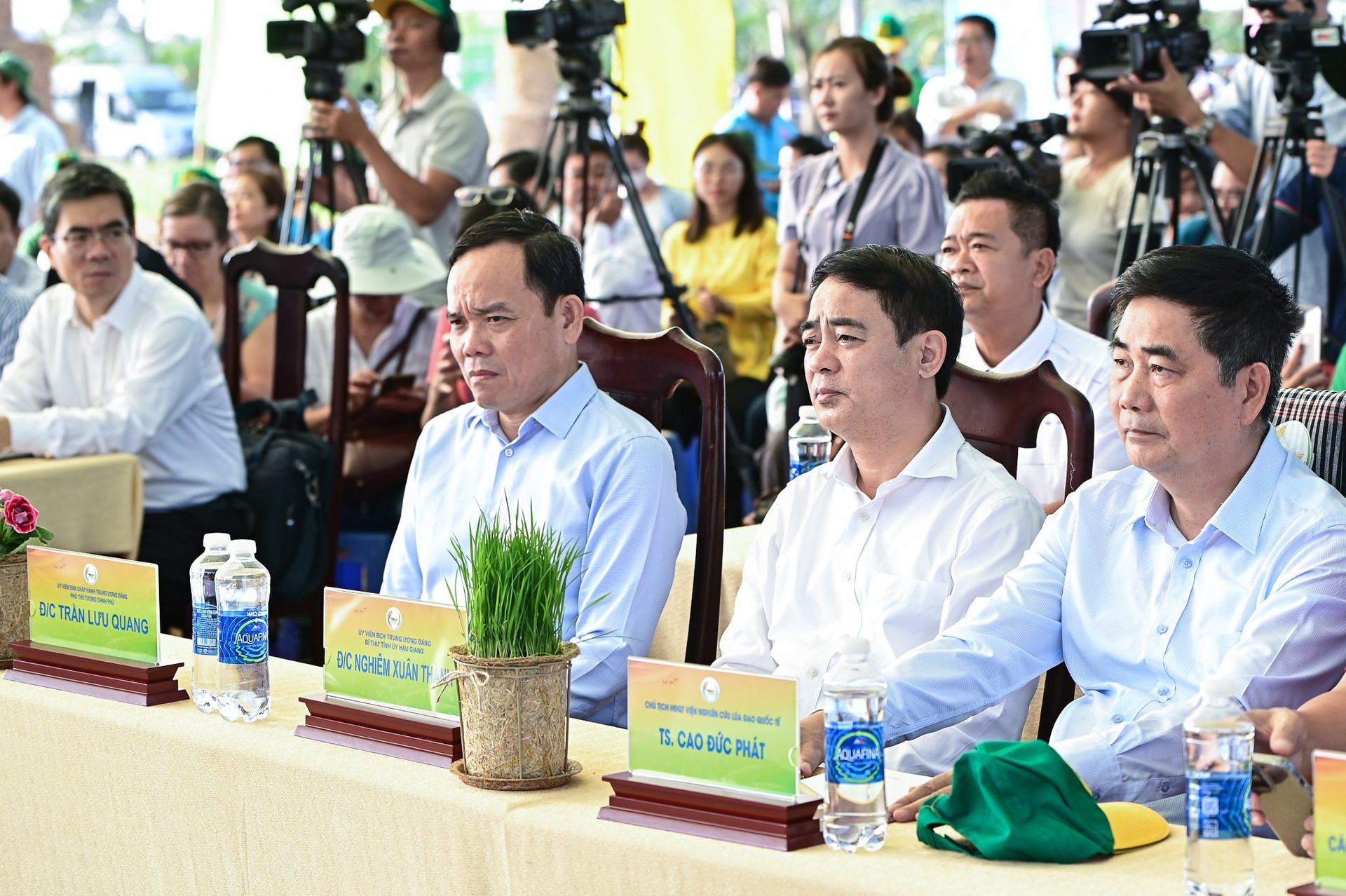
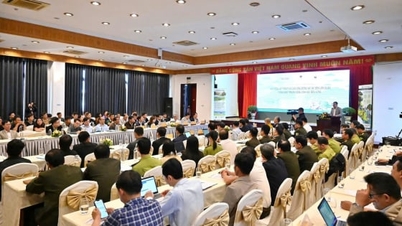
Speaking at the event, Minister of Agriculture and Rural Development Le Minh Hoan said: Rice production is a key industry, not only helping to ensure national food security but also supporting the country's economic development and demonstrating Vietnam's responsibility in ensuring the international food system.
Vietnam is one of the world's largest rice producers and exporters. The position of Vietnam's rice industry is being strengthened and enhanced more than ever: not only from the impressive figures in production and export value in recent years, but also from the positive feedback from global consumers regarding Vietnamese rice. The Mekong Delta, in particular, has always been one of Vietnam's main rice-producing regions. Rice production in the region has remained stable at 24-25 million tons in recent years, accounting for over 50% of the country's total rice production and over 90% of its rice exports, creating jobs and income for millions of agricultural households in the region.
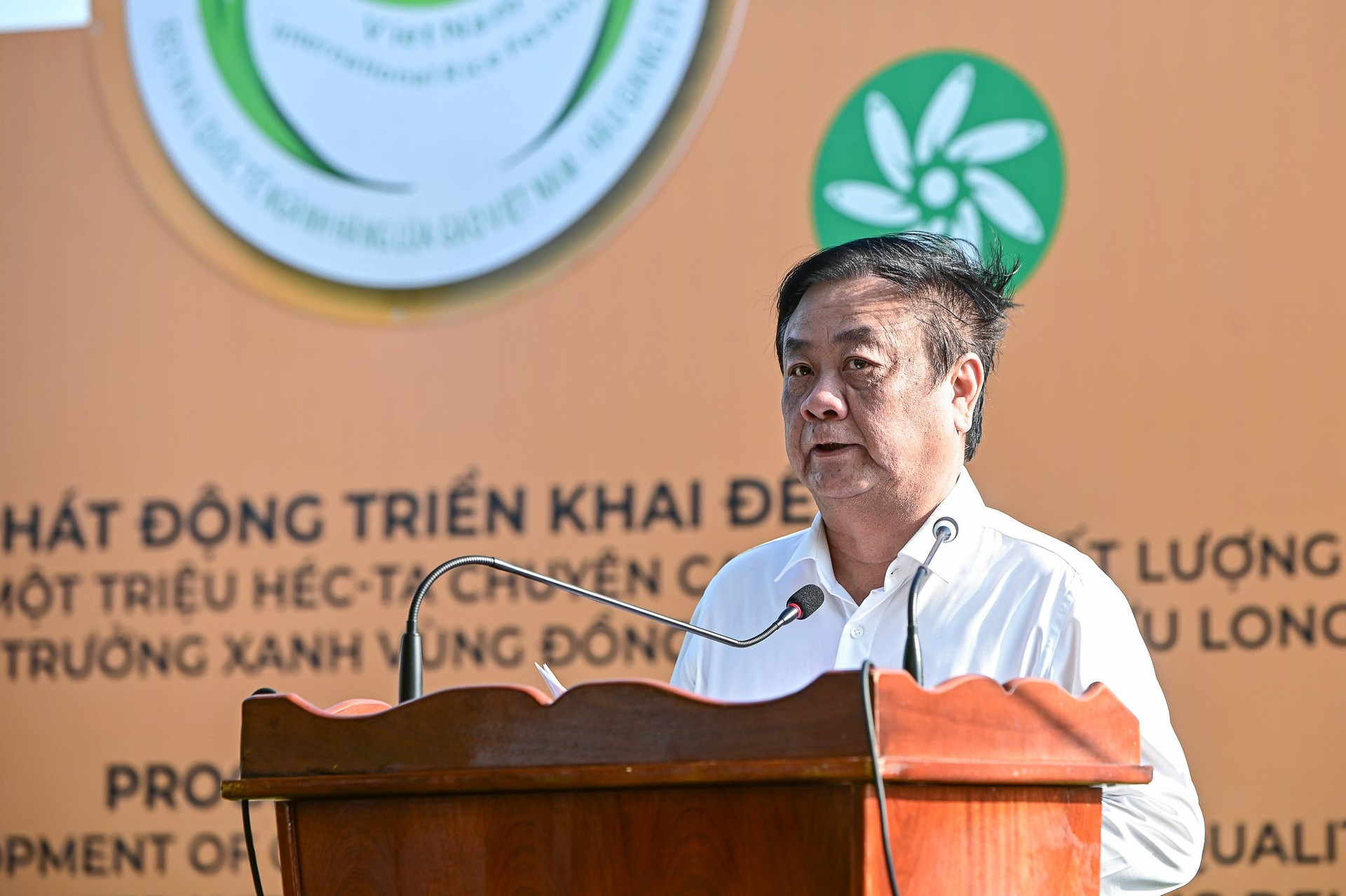
Mr. Le Minh Hoan emphasized the three words "change" that are increasingly impacting agriculture, including the rice industry in the Mekong Delta: climate change, market fluctuations, and shifts in global consumer trends. Market demands are increasingly high, and regulations from importing countries are becoming stricter. This requires improved rice quality, guaranteed food safety and hygiene, and adherence to social responsibility in environmental protection through minimizing the use of chemical inputs and reducing emissions in production. In addition, it is necessary to increase the income of rice farmers per unit of land.
At COP 26, the Prime Minister also signed a commitment to strive for net emissions of "zero" by 2050. Thus, it can be seen that the Vietnamese rice industry is facing many challenges and difficulties and requires a "transformation" – the Minister of Agriculture and Rural Development affirmed.
It is against this backdrop that the Government approved and promulgated the Project "Sustainable Development of One Million Hectares of High-Quality, Low-Emission Rice Cultivation Linked to Green Growth in the Mekong Delta by 2030". The goal is to establish one million hectares of high-quality, low-emission rice cultivation areas linked to the reorganization of the production system along the value chain. The project focuses on piloting new policies such as: performance-based carbon credit payments; focusing on low-emission production linked to green growth; developing a circular agricultural economy, maximizing the utilization of by-products from rice production; exploiting multiple values, creating many processed products from rice... Successful pilot projects in the Mekong Delta will be expanded nationwide, aiming to make "Green Development, Reduced Emissions, High Quality" the brand of Vietnamese rice.
Through these new and groundbreaking policies, the Project aims at the most important goal: creating livelihoods and sustainable development orientations for rice farmers – the key players and decisive factors in the success of agricultural and rural development.
Ms. Carolyn Turk, Country Director of the World Bank in Vietnam, affirmed the commitment to working alongside the Ministry of Agriculture and Rural Development to develop a project to cultivate 1 million hectares of high-quality, specialized rice. This project will provide strong support for farmers and Vietnam's agriculture, directly contributing to the economy and improving people's lives. The World Bank will also support Vietnam in quickly achieving emission reduction results from the VnSAT rice project to mobilize carbon finance. In the long term, this could be a sustainable source of funding to continue agricultural development activities and generate additional income for farmers.
Dr. Cao Duc Phat, Chairman of the Board of Members of the International Rice Research Institute (IRRI), shared: The project to cultivate 1 million hectares of high-quality, low-emission rice linked to green growth in the Mekong Delta by 2030 will simultaneously address three major issues facing the global rice industry and Vietnam in particular: increasing rice production, increasing income for rice farmers, and adapting to and mitigating climate change.
As an international technical advisor for the Project, IRRI has collaborated with scientists to research and improve rice cultivation processes, enhance tools for rice farming, and train personnel in Vietnam. Most recently, they have collaborated on research into rice cultivation processes, straw treatment to reduce greenhouse gas emissions, and techniques for monitoring and measuring greenhouse gas emissions from rice fields to facilitate the commercialization of rice products and the carbon credits generated. In the future, IRRI will continue to refine rice cultivation processes to reduce greenhouse gas emissions; techniques for monitoring and measuring greenhouse gas emissions; propose improvements to relevant policies; and train personnel and farmers.
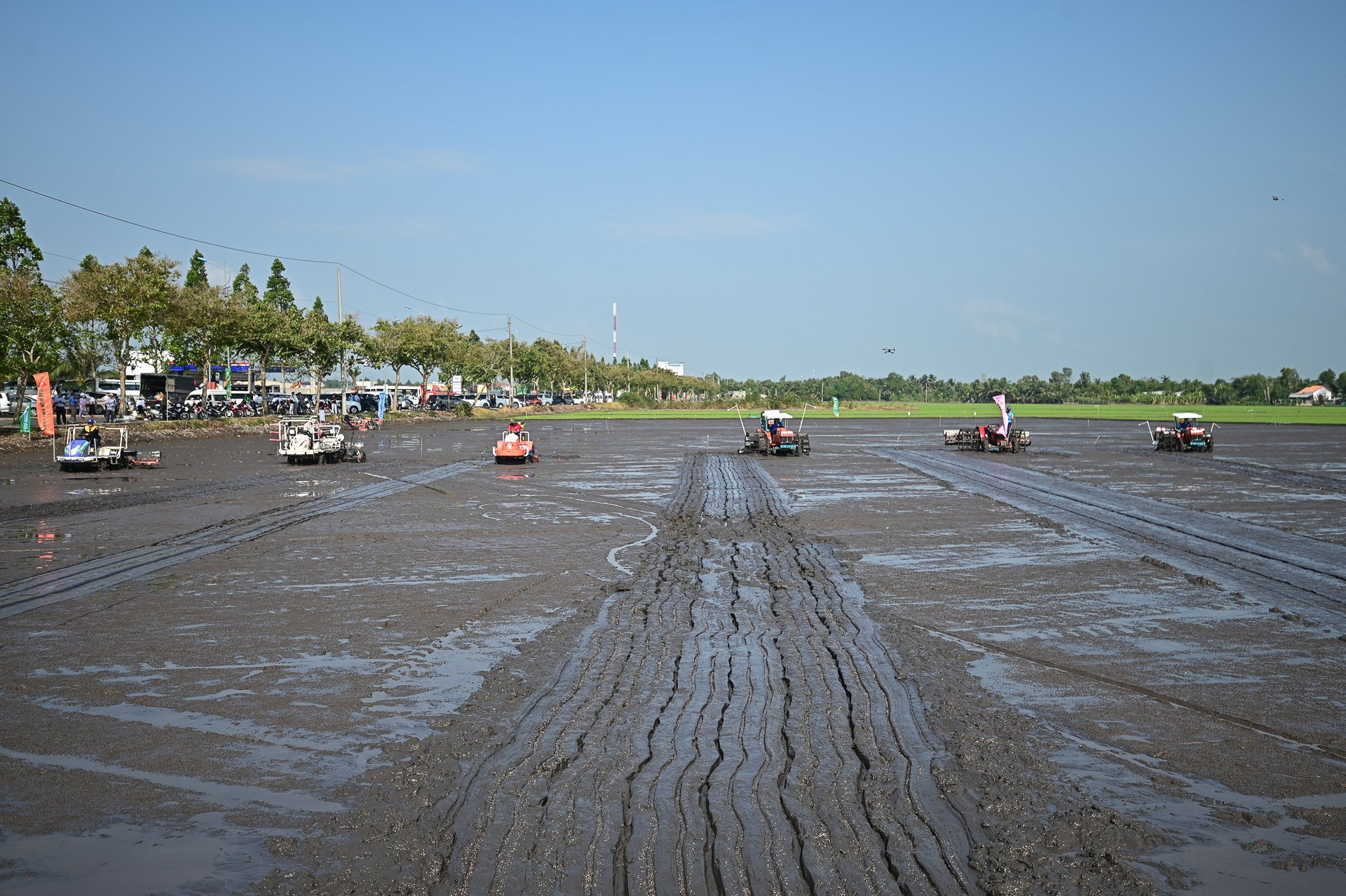
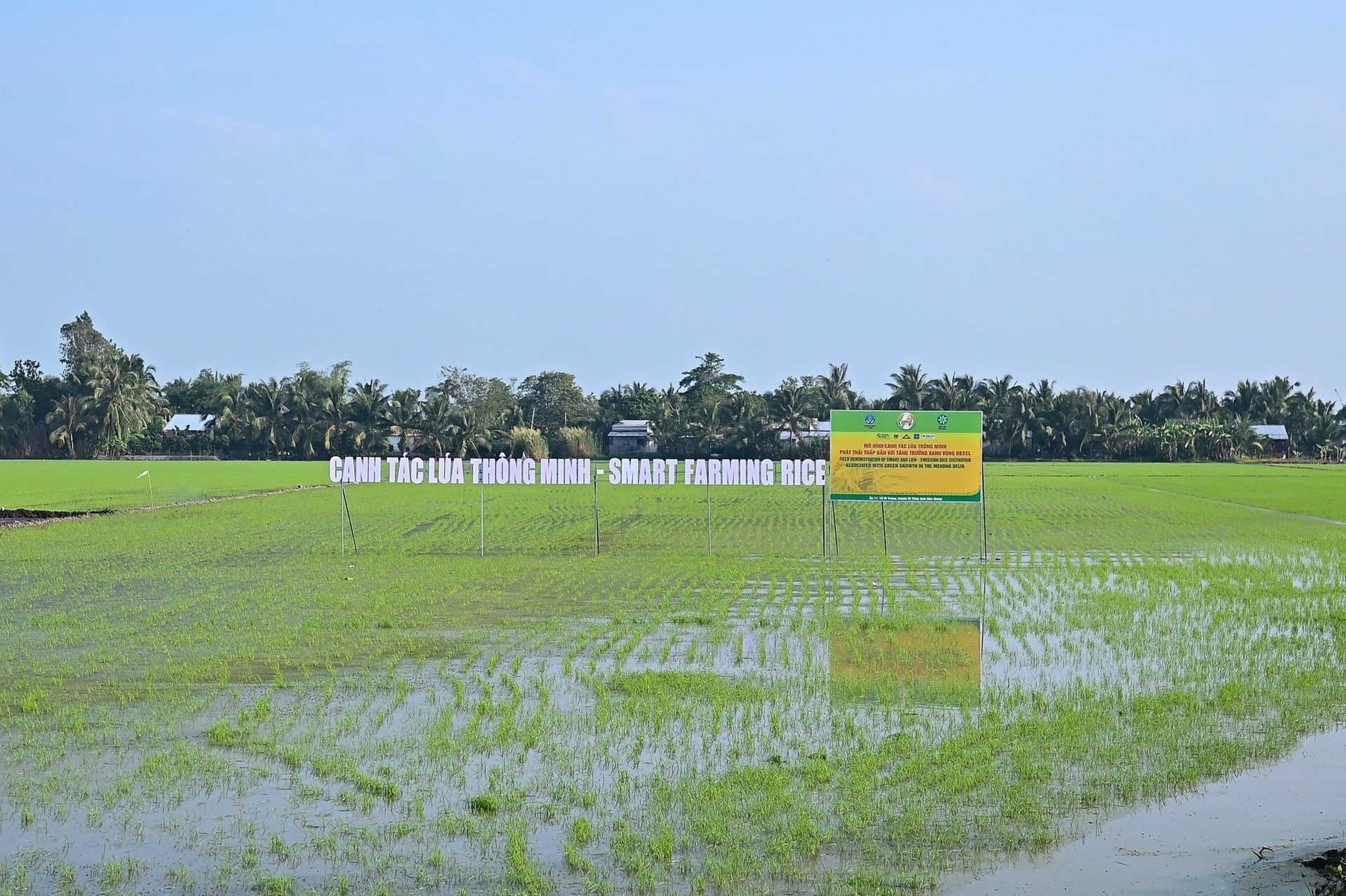
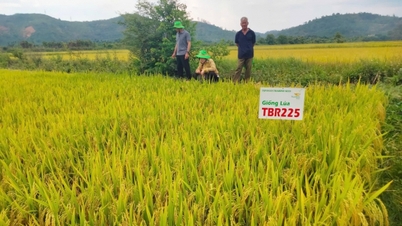
The launching ceremony also included demonstrations of mechanized sowing technology and a circular agriculture model using straw in Hamlet 4, Vi Trung Commune (Vi Thuy District, Hau Giang Province).
The launching ceremony is part of the Vietnam International Rice Festival - Hau Giang 2023, taking place from December 11-14, 2023 in Vi Thanh City, Hau Giang Province. With the theme "Green Rice – Living in Peace," a series of events at this festival will revolve around promoting rice production that adapts to climate change, reduces greenhouse gas emissions, increases people's income, and elevates the position of Vietnam's agricultural sector in the world.
The Festival will also set three Vietnamese records: the longest exhibition and installation space depicting a rice field, themed "The Thousand-Year Journey of Vietnamese Rice"; the largest model of the Vietnamese map assembled from specialty rice varieties of various provinces and cities; and the event showcasing the most dishes made from rice and glutinous rice (200 dishes).
Source















![[Photo] Reception to welcome General Secretary and President To Lam and his wife on their State visit to the Philippines](https://vphoto.vietnam.vn/thumb/1200x675/vietnam/resource/IMAGE/2026/06/01/1780295488620_vna-potal-chieu-dai-chao-mung-tong-bi-thu-chu-tich-nuoc-to-lam-va-phu-nhan-tham-cap-nha-nuoc-toi-philippines-8798060-7855-jpg.webp)
















































Comment (0)