

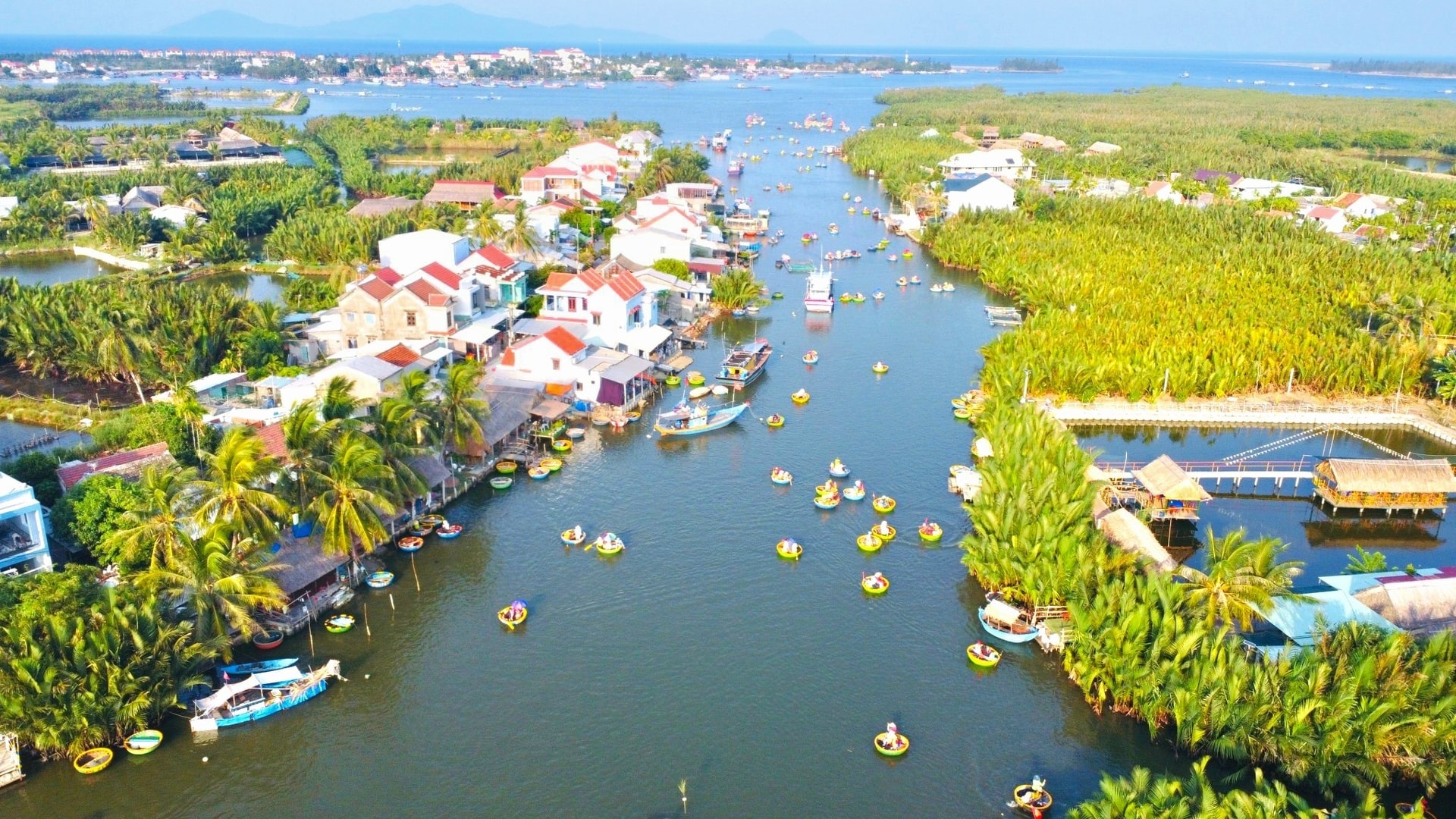
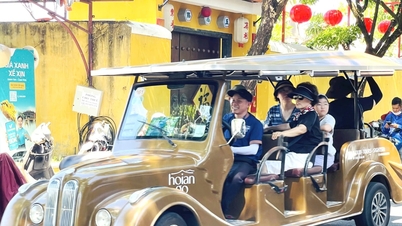
The lower Thu Bon River basin is one of the rare areas that is both rich in cultural resources and has the potential for developing ecotourism and experiential tourism. The ancient boat docks, the silk weaving villages of Ma Chau and Dong Yen, the riverside markets, and the Cham relics are all assets that investors can exploit.
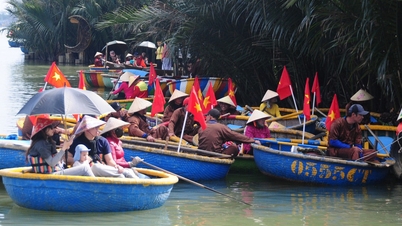
According to Ms. Le Thi Thu Hien, a cultural researcher from Quang Nam province, the Thu Bon River has been a major trade artery for centuries, connecting the mountainous region with the coastal area and creating a bustling trading ecosystem. “Places like Tra Nhieu Lagoon, Hoi An trading port, Ban Thach wharf, and Hong Trieu were once anchorages for traditional boats and foreign ships. If we could recreate the trading scene and boats as they were in the past, this would be a rare tourism product of Central Vietnam,” Ms. Hien said.
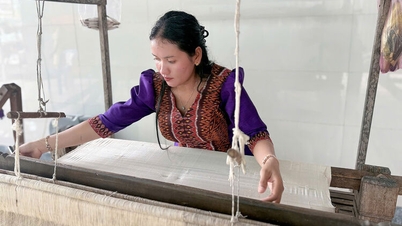
Besides trade, traditional silk weaving villages like Ma Chau, Dong Yen, and Thi Lai, as well as specialty products such as cinnamon, agarwood, and betel nuts, are valuable assets for experiential tourism.
Mr. Phan Le Chung, a destination branding expert, commented: "With proper investment, the Thu Bon River could absolutely become a tourism route linking Hoi An and My Son. This is a great opportunity to build high-end services such as river tours, eco-resorts, and cultural experience centers."
What sets tourism along the Thu Bon River apart is the combination of riverine heritage with community life. If residents participate directly, from rowing boats and making products to performing arts, they will earn additional income, while tourists will experience the authenticity of the experience.
Ms. Hoang Thi Anh Dao (University of Science - Hue University) stated: "The relics of village communal houses, founding churches, and old boat docks are the pillars for shaping cultural tourism tours. Preserving and integrating them with river tourism routes will create a special attraction, alongside Hoi An ancient town."
Researchers and businesses have suggested several viable tourism products for Da Nang's tourism industry to consider.
This river tour features floating markets and traditional craft villages, recreating scenes of traditional boats and trading activities, combined with visits to weaving and pottery villages for hands-on experience in product making.
The culinary and cultural tour features stops where visitors can enjoy Quang Nam's specialties and folk art such as ho khoan and bai choi.
A riverside eco-resort, developing a small resort model, combining kayaking and sunset viewing on the Thu Bon River.
Historical and heritage tourism tours will utilize the system of village communal houses, temples, Champa relics, and old boat landings to create heritage experience tours.
Currently, many communes and wards along the Thu Bon River, such as Dai Loc, Duy Xuyen, Dien Ban, and Hoi An, are collaborating with businesses and researchers to design tours, train residents on services, and promote them online. This is a step towards making the Thu Bon River a "living heritage route" for Da Nang tourism.
Source: https://baodanang.vn/phat-trien-du-lich-song-thu-bon-3297824.html
![[Photo] General Secretary and President To Lam presides over a meeting with the Central Organizing Committee.](https://vphoto.vietnam.vn/thumb/1200x675/vietnam/resource/IMAGE/2026/06/03/1780482764658_a1-bnd-4741-3342-jpg.webp)
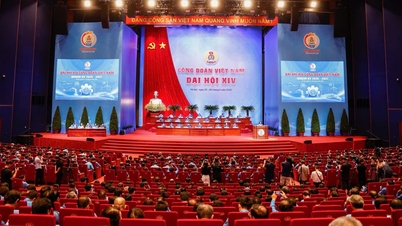
![[Photo] First session of the 14th Congress of the Vietnam Trade Union](https://vphoto.vietnam.vn/thumb/1200x675/vietnam/resource/IMAGE/2026/06/03/1780465947883_ndo_br_img-3852-jpg.webp)
![[Photo] Secretary of the National Assembly Party Committee, Chairman of the National Assembly presides over the meeting of the Standing Committee and Executive Committee of the National Assembly Party Committee.](https://vphoto.vietnam.vn/thumb/1200x675/vietnam/resource/IMAGE/2026/06/03/1780480353201_ndo_br_bnd-2585-jpg.webp)





































![[Video] Sunset at Lap An Lagoon – Where the sun sets over the fishing nets](https://vphoto.vietnam.vn/thumb/1200x675/vietnam/resource/IMAGE/2026/05/31/1780192137701_beach-landscape-sea-water-nature-grass-745871-pxhere-com.jpeg)






















Comment (0)