


Bringing economic benefits
According to Ms. Dinh Thi Phuong Khanh, Deputy Director of the Department of Agriculture and Rural Development of Long An province: "Compared to before participating in the model under the Project on the Development of High-Tech Agriculture associated with the restructuring of the agricultural sector in the province in the period 2021-2025, farmers have made positive changes in dragon fruit production. 100% of dragon fruit growers no longer use fresh chicken manure to fertilize their crops, focusing on using organic fertilizers, and using fertilizers and pesticides rationally, helping to reduce the amount of chemical fertilizers by 10-15%, reduce production investment costs and increase profits by 15-20% compared to before."
Participating households regularly receive training and technology transfer on scientific and technical advancements for application in production. They are also equipped with knowledge and guidance on implementing technical measures in dragon fruit production according to VietGAP standards, which are environmentally friendly and protect consumer health. As a result, investment costs are reduced by 10-20%, and economic efficiency increases by 15-25% compared to areas outside the model.
“In the coming time, the provincial Department of Agriculture will continue to support farmers in applying advanced techniques; at the same time, expanding the scale of standardized growing areas to ensure yield and quality. We believe that, with the concerted efforts of the people and local authorities, the high-quality dragon fruit growing area will become a strong brand, contributing to increasing farmers' income and the sustainable development of the province's agriculture,” added Ms. Dinh Thi Phuong Khanh.
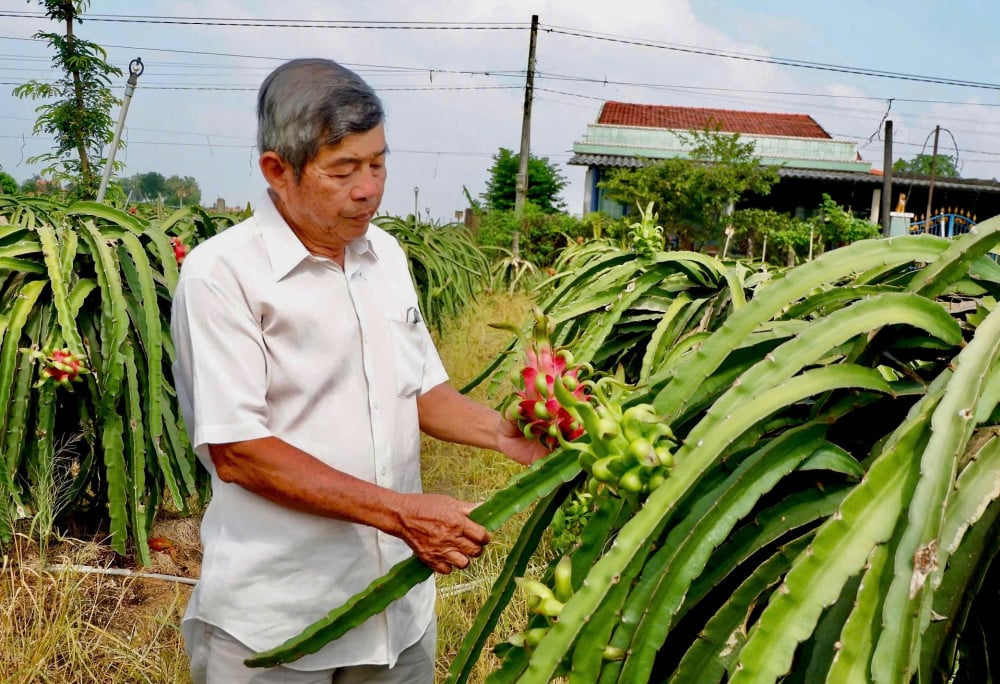
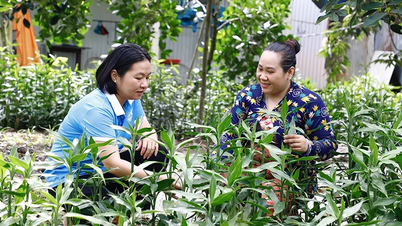
Previously, Mr. Vo Van Be's family (An Luc Long commune, Chau Thanh district) engaged in various activities, from livestock farming to rice cultivation, but without much success. Seeing that dragon fruit cultivation in the area yielded higher economic returns compared to other crops, he decided to convert his rice paddy land to growing red-fleshed dragon fruit.
To achieve high productivity, Mr. Bé actively participates in training courses and diligently researches and explores advanced technologies to apply to production in order to reduce costs and increase efficiency. His entire dragon fruit orchard now uses digital technology to control the irrigation system and lighting for the dragon fruit plants.
Mr. Bé said: "With nearly 1 hectare of dragon fruit, it used to take almost a whole day to pull the irrigation hoses. Since applying the automatic irrigation control system, it only takes about 2 hours to finish watering, saving 80% of labor. The same goes for lighting; previously, because the electrical switch was in the middle of the dragon fruit orchard, it was very inconvenient to turn it on, especially during rain or storms, which was very dangerous. Now, I use my phone to control the lighting, so it's safer."
In addition, Mr. Bé boldly switched from traditional production methods to production according to GlobalGAP standards under the guidance of technical staff from the Department of Agriculture and Rural Development of Châu Thành district. “Since participating in dragon fruit production according to GlobalGAP standards , instead of using fresh manure, I switched to using pesticides more rationally in disease management, saving electricity and water, thereby significantly reducing production costs. On average, I earn a profit of about 200 million VND per year,” Mr. Bé added.
Towards sustainable development
According to information from the Department of Agriculture and Rural Development of Chau Thanh district, dragon fruit production is stable and the planted area is gradually recovering. To date, the area planted with dragon fruit has reached 7,056.03 hectares. The average yield is 280 quintals/hectare, and the average production is 197,569 tons.
The total investment cost for the artificial lighting phase is approximately 92 million VND/ha. With an average selling price of 15,000 VND/kg of dragon fruit, the total revenue is 180 million VND/ha (12 tons/ha/lighting cycle), resulting in a profit of 88 million VND/ha. However, there are times when dragon fruit prices drop, artificial lighting does not yield high productivity, and many dragon fruit orchards break even.
Recently, the price of off-season dragon fruit has fluctuated at a relatively good level, bringing profits to the people. As a result, the destruction of dragon fruit orchards has decreased significantly, and the area of new plantings has increased. Thanks to the application of effective disease control measures, the dragon fruit plants are developing well. High-tech dragon fruit production has been focused on, reaching 5,535.57 hectares to date.
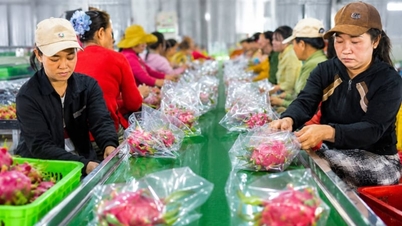
The district's agricultural sector continuously encourages farmers to participate in cooperatives to access science and technology, and to find stable markets for dragon fruit, especially red-fleshed dragon fruit - one of the varieties with high economic value.
According to Truong Minh Chung, Director of Long Hoi Cooperative (An Luc Long commune, Chau Thanh district): “The entire cooperative has over 50 hectares of dragon fruit with more than 60 members producing according to VietGAP and GlobalGAP standards, ensuring stable output. Growing dragon fruit requires rational production organization in the form of cooperatives, with cooperatives working together according to procedures and monitoring each other to achieve the required yield.”
Furthermore, Long Hoi Cooperative has expanded its dragon fruit market by both exporting to other countries and supplying domestic food processing businesses. This helps diversify products and increase income for its members.
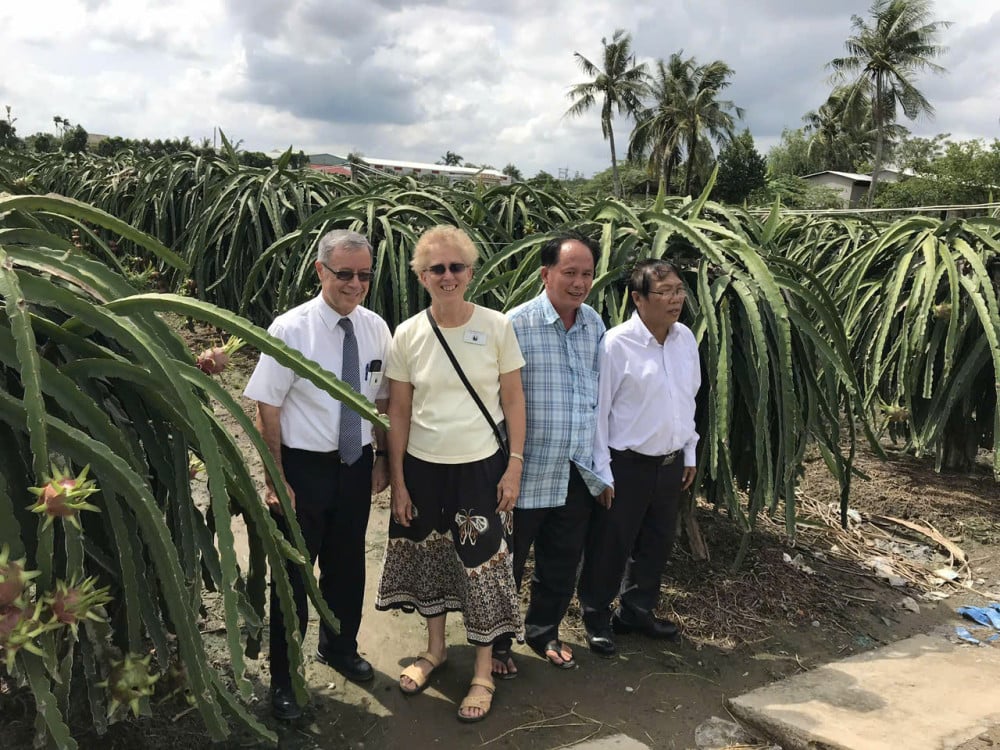
According to Nguyen Van Thanh, Director of Van Thanh Cooperative (Hiep Thanh commune, Chau Thanh district), to ensure export standards, he established a group of 30 members and linked 100 members of the cooperative to keep detailed planting diaries. Through this, growers can understand and adjust the amount of fertilizer accordingly, avoiding excess. From this, they can accumulate experience and evaluate the effectiveness of each type of fertilizer used.
"To increase income, the cooperative facilitates direct contracts between companies and businesses and farmers, allowing farmers to be independent in caring for, harvesting, packaging, and transporting agricultural products... This helps reduce intermediary costs and ensures benefits for both farmers and companies/businesses," said Mr. Nguyen Van Thanh.
In the coming period, the Chau Thanh District Department of Agriculture will continue to coordinate with specialized departments to focus on supporting farmers in converting their farming methods to VietGAP and GlobalGAP standards through organizing in-depth training sessions and establishing planting area codes. At the same time, the district's Department of Agriculture will continue to act as a "bridge" connecting farmers with businesses, creating favorable conditions for signing product purchase contracts and ensuring stable market outlets.
Minh An - Tue An
Source: https://baolongan.vn/phat-trien-vung-trong-thanh-long-chat-luong-cao-a185322.html
![[Photo] General Secretary and President To Lam presides over the meeting to approve the draft report on the results of the second inspection by the Politburo of the Standing Committee of the Hanoi City Party Committee.](https://vphoto.vietnam.vn/thumb/1200x675/vietnam/resource/IMAGE/2026/05/26/1779789811432_a2-bnd-4430-9620-jpg.webp)

















































Comment (0)