

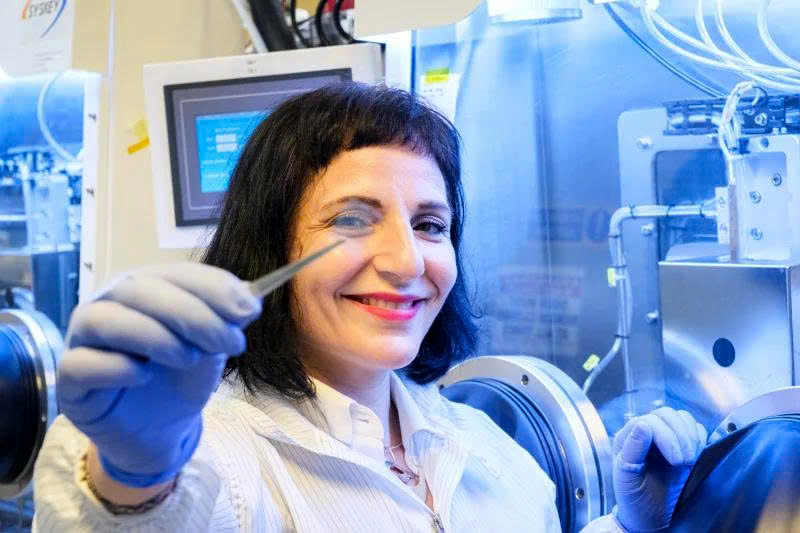
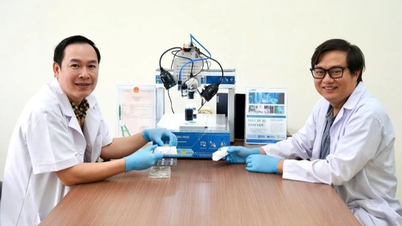
Associate Professor Annalisa Bruno introduced a perovskite solar panel that is only 10 nanometers thick.
The research team, led by Associate Professor Annalisa Bruno at NTU's School of Materials Science and Engineering, designed a new battery using perovskite, a low-cost, high-efficiency solar energy conversion material. Unlike conventional silicon batteries, which perform best in direct sunlight, perovskite batteries can generate electricity even in low-light conditions. This is particularly important in urban areas, where tall buildings often block sunlight from each other and receive little direct sunlight. Instead of relying solely on roofs, the glass surfaces of buildings could theoretically generate electricity throughout the day by being covered with perovskite batteries.
Researchers tested perovskite cells with varying thicknesses. Opaque panels with perovskite layers 10, 30, and 60 nanometers thick achieved energy conversion efficiencies of approximately 7%, 11%, and 12%, respectively. While the efficiency is lower than current solar panels (20%), considering their near-zero weight, ability to convert energy in low light conditions, and other advantageous properties, perovskite technology is considered superior.
Research by NTU scientists, published in the journal ACS Energy Letters, could pave the way for generating electricity from windows, building facades, smart glass, car sunroofs, and other surfaces.
T. TRUC (According to New Atlas)
Source: https://baocantho.com.vn/pin-mat-troi-trong-suốt-co-the-dan-len-cua-kinh-a205783.html
![[Photo] General Secretary and President To Lam presides over a meeting with the Central Organizing Committee.](https://vphoto.vietnam.vn/thumb/1200x675/vietnam/resource/IMAGE/2026/06/03/1780482764658_a1-bnd-4741-3342-jpg.webp)
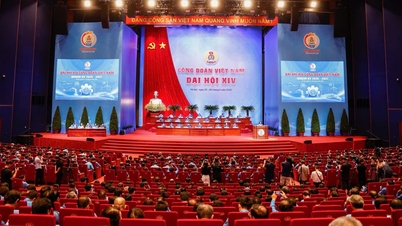
![[Photo] First session of the 14th Congress of the Vietnam Trade Union](https://vphoto.vietnam.vn/thumb/1200x675/vietnam/resource/IMAGE/2026/06/03/1780465947883_ndo_br_img-3852-jpg.webp)

![[Photo] Secretary of the National Assembly Party Committee, Chairman of the National Assembly presides over the meeting of the Standing Committee and Executive Committee of the National Assembly Party Committee.](https://vphoto.vietnam.vn/thumb/1200x675/vietnam/resource/IMAGE/2026/06/03/1780480353201_ndo_br_bnd-2585-jpg.webp)







































![[Video] Sunset at Lap An Lagoon – Where the sun sets over the fishing nets](https://vphoto.vietnam.vn/thumb/1200x675/vietnam/resource/IMAGE/2026/05/31/1780192137701_beach-landscape-sea-water-nature-grass-745871-pxhere-com.jpeg)



















Comment (0)