

On April 15, 2025, at the ceremony announcing the Provincial Public Administration and Governance Performance Index (PAPI) for 2024 in Vietnam, Quang Ninh once again affirmed its leading position nationwide, achieving first place with a total score of 47.82. This is the third year Quang Ninh has achieved this feat, following 2020 and 2022. This result not only demonstrates effective governance and administrative capacity but also reflects the deep consensus between the government and the people, where people's satisfaction is the highest measure of the province's governance and public administration quality.
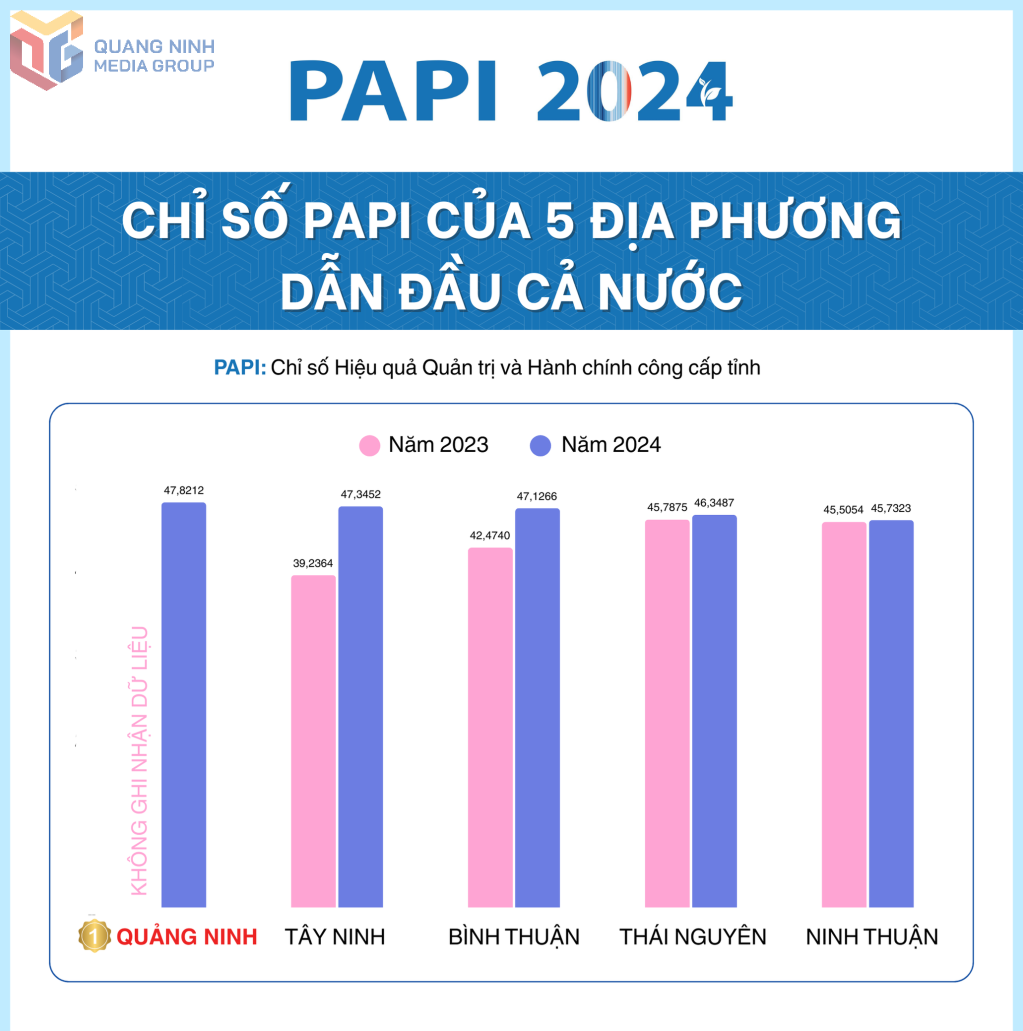
PAPI is an index built on feedback from nearly 19,000 citizens from 63 provinces and cities nationwide, reflecting real-world experiences regarding the effectiveness of government administration, service delivery, and policy implementation. In 2024, Quang Ninh led the nation with an average score of 47.82/80 points, far exceeding the national average of 41.43 points. Notably, Quang Ninh had 7 out of 8 content areas in the highest-scoring group nationwide, including: Citizen participation at the grassroots level (5.43 points), transparency (6.52 points), accountability to citizens (5.09 points), control of corruption in the public sector (7.36 points), public administrative procedures (7.66 points), public service delivery (8.42 points, the highest in the country), and e-governance (4.08 points).
One of the key factors contributing to this success is the consistency in the province's guiding principle: "Putting the people at the center, as the subjects, and as the objects of service." This governance philosophy is not just a slogan but is realized through a series of specific policies and models, implemented synchronously and continuously at all levels of government.

First and foremost, Quang Ninh is a pioneering locality in implementing grassroots democracy and promoting the role of the people in monitoring and providing feedback on policies. With 5.43 points on the "People's Participation at the Grassroots Level" axis, the province is highly rated for organizing regular meetings with voters, gathering public opinions on development plans, land use planning, and new rural construction. Many localities such as Uong Bi, Mong Cai, and Quang Yen have implemented models such as "People's Forums for Contributing Opinions on Party and Government Building" and "Great Unity Day" associated with listening, dialogue, and public accountability. People not only have the opportunity to know and discuss but also to provide feedback, monitor, and participate in the implementation of development programs in their localities.
The "Transparency and Openness" pillar scored 6.52 points, placing it among the highest nationwide. This is the result of a persistent effort to build a multi-channel information disclosure system, from posting information at commune and ward People's Committee offices to the provincial electronic information portal and official media channels. Content such as budget estimates and final accounts, land use planning, lists of poor households, and socio-economic development plans are regularly and frequently updated.
For example, in Ha Long City, immediately after the Prime Minister approved the city's master plan until 2040, the government organized a conference to announce the plan to all communes and wards through a combination of in-person and online methods, while also making all documents publicly available on the electronic information system. This approach not only clarifies the decision-making process but also encourages citizens to proactively learn, provide feedback, and offer constructive criticism.
Quang Ninh's "Accountability to the People" index reached 5.09 points – one of the highest in the country. The survey showed that 71% of people felt it was easy to meet with village heads or neighborhood group leaders when problems arose; 64% could contact commune-level People's Committee officials; and 55% trusted the ability of local authorities to resolve disputes. These figures not only reflect the quality of officials but also clearly demonstrate the people-oriented and people-respecting administrative culture that Quang Ninh has diligently built. Regular public consultation sessions are conducted seriously, with the heads of Party committees and government directly listening to and committing to thoroughly resolving the issues raised.
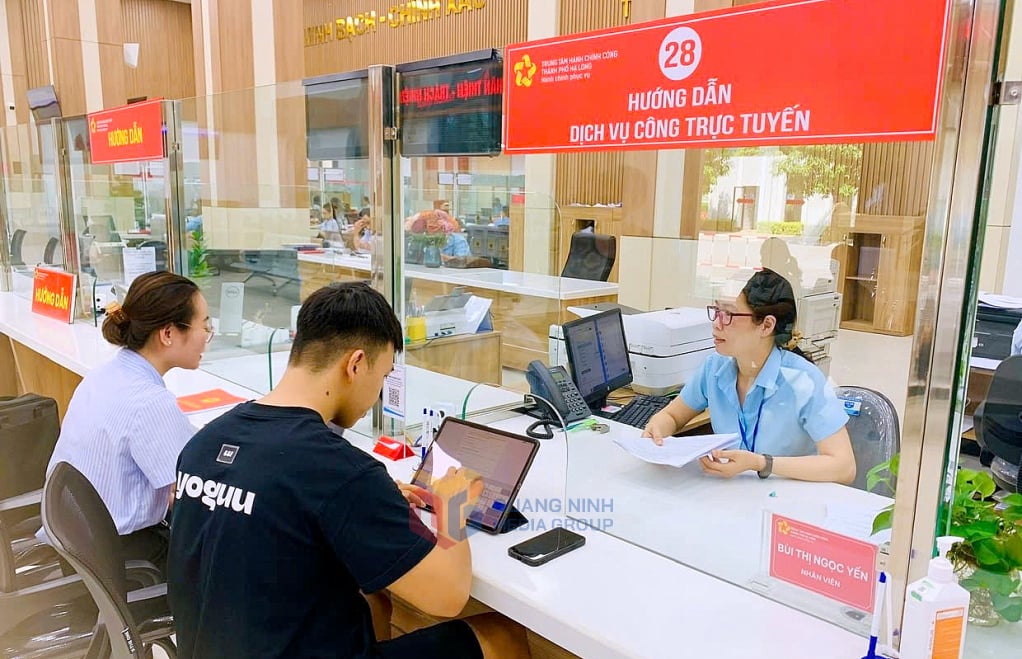
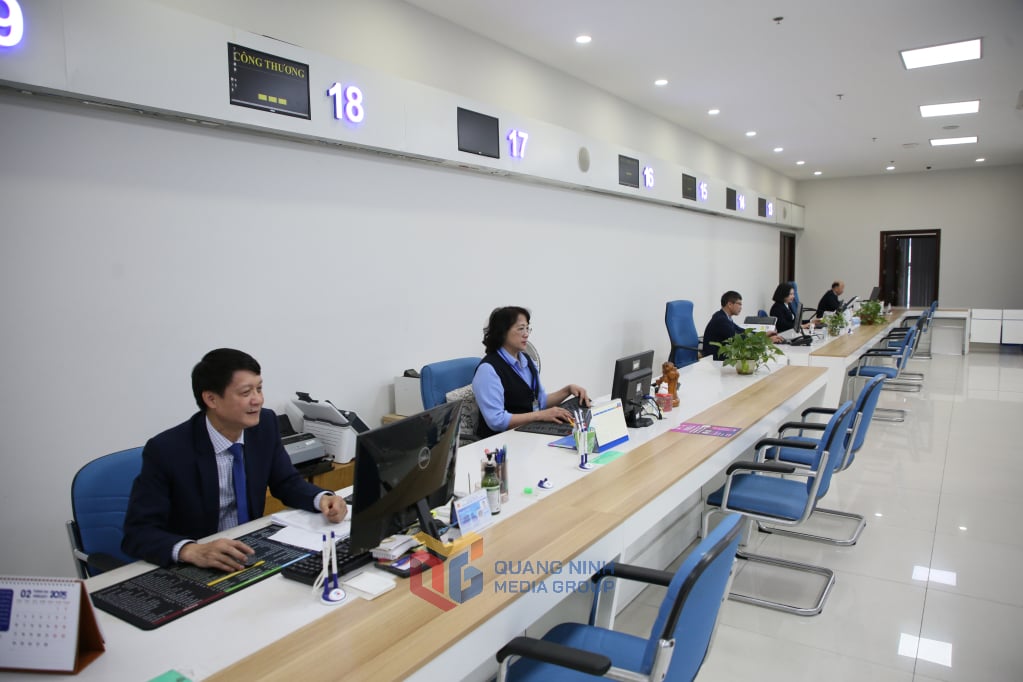
In the field of administrative reform – one of the three strategic breakthroughs – Quang Ninh continues to lead, achieving 7.66 points in the "Public Administrative Procedures" category. Quang Ninh is the first locality in the country to establish a provincial-level Public Administrative Service Center, and has implemented this model in all districts, towns, and cities. The digitization, simplification of processes, and interconnected data between sectors and fields have significantly reduced the time and cost of administrative procedures. By 2024, 94% of applications were processed on time or ahead of schedule, and 92% of citizens rated officials as enthusiastic, providing thorough and professional guidance. Many new models and effective approaches from Quang Ninh in receiving and processing administrative procedures to serve the people have become exemplary highlights, emulated by many other localities.
Most notably, the "Public Service Delivery" sector is where Quang Ninh leads the country with 8.42 points. The province not only invests in infrastructure and equipment but also focuses on improving the quality of its workforce, standardizing processes, and strengthening independent supervision. In the education sector, 90% of the population is satisfied with public primary schools, and most students study in sturdy classrooms with complete equipment. The province has issued a policy to support 100% of tuition fees for preschool and primary school students in both public and private systems, and has implemented a subsidy mechanism for the children of workers in industrial zones – a rare and humane policy in the country.
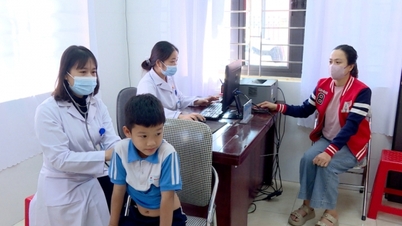
In the healthcare sector, 88% of the population rated the quality of district-level hospitals positively. The province currently has 14.85 doctors, 2.6 pharmacists, and 55 hospital beds per 10,000 people, significantly higher than many large provinces and cities. 100% of commune health stations meet national standards; 80% of advanced medical techniques are mastered at the district level; and the referral rate is only 0.85%. This is the result of a series of comprehensive investment programs in healthcare infrastructure, human resource training, and mechanisms to encourage young doctors to work in disadvantaged areas.
Furthermore, the quality of public utility services has also improved significantly. According to the PAPI Index 2024, 76% of residents rated the residential road system as good; 81% were satisfied with waste collection services. This is the result of mobilizing social resources, decentralizing management, and ensuring transparent supervision in service provision.

Quang Ninh's "Corruption Control in the Public Sector" index reached 7.36 points – ranking among the highest nationwide. The percentage of people who had to pay bribes when processing land-related procedures was only 8%, significantly lower than the national average of 17%. The number of people who believed that personal connections were necessary to secure jobs in the public sector was only 39% (compared to the national average of 48%). These figures reflect the province's political determination to build an "honest and proactive" government apparatus where all negative behaviors are detected and dealt with severely. Quang Ninh has publicly disclosed the entire recruitment process for civil servants and public employees, incorporating performance evaluations into criteria for emulation, rewards, and appointments.
The "E-Governance" axis scored 4.08 points – higher than the national average (3.51 points), affirming the effectiveness of the comprehensive digital transformation implemented by the province. The percentage of citizens using the province's online public service portal reached 41%, demonstrating the user-friendliness, efficiency, and accessibility of the digital platform. The province has integrated population, resource, investment, and labor data into a centralized management system, allowing for quick and interconnected processing of various procedures.
However, the "Environmental Governance" aspect remains an area for improvement, scoring only 3.26 points, placing it in the upper-average group. Despite numerous policies on waste treatment, environmental monitoring, and improving the quality of drinking water, only 66% of residents are satisfied with clean water, and 59% do not regularly wear masks to protect against air pollution. This serves as an important reminder for the province to strengthen inspections and address environmental violations, particularly in industrial zones, coastal urban areas, and mining regions.

Based on the PAPI 2024 results, Quang Ninh has identified key solutions for the next phase. Firstly, it aims to accelerate administrative reform, especially substantive decentralization coupled with accountability. Secondly, it will continue to digitize public services, ensuring easy access for people in all regions. Thirdly, it will strengthen mechanisms for monitoring and feedback from citizens, building a truly service-oriented administration. Fourthly, it will focus on training a team of officials and civil servants who are professional, ethical, and close to the people. The PAPI index is an objective tool that accurately reflects the voice and expectations of the people towards the government.
Quang Ninh's consistent leading position is not only the result of decisive, innovative, and consistent action, but also clear evidence of the consensus between the Party, the government, and the people. This will be an important foundation for the province to continue its journey of building a proactive and service-oriented government, aiming to become a model, modern, civilized, and one of the most livable provinces in the country.
Song Ha
Source


































































































Comment (0)