


That pressure for reform was fueled from many sides. In mid-April 2026, a delegation of over 120 senior leaders representing 52 leading US corporations shared with Prime Minister Le Minh Hung their concerns regarding administrative procedures, business conditions, the proliferation of sub-licenses, taxes, capital markets, and the implementation of large projects. The Prime Minister responded frankly: clearing sub-licenses is not only to facilitate foreign investors, but first and foremost for the national interest of Vietnam.
Working with the Ministry of Education and Training on April 25th, the Prime Minister further emphasized: "If each ministry and sector immediately reduces business conditions and administrative procedures, making them easier for people and businesses to follow, it will immediately make a huge contribution to growth."
The speed and scale of this administrative procedure reduction demonstrate that strong political will has translated into substantive changes. Government resolutions dated April 29th abolished 184 administrative procedures, decentralized 134 procedures to local levels, and simplified 349 procedures – bringing the total number of central-level administrative procedures down to approximately 27% of what it was before.
Regarding business conditions, 890 conditions were abolished and 4 conditions were simplified. The implementation process is expected to reduce implementation time and compliance costs for affected entities by more than 50% compared to 2024.
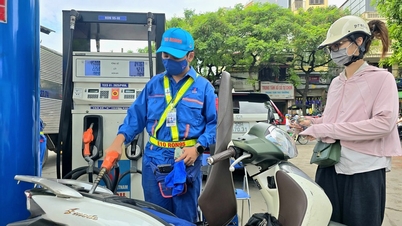
For example, the Ministry of Public Security abolished regulations on DNA and voice recording collection, eliminating a costly process that raised privacy concerns for millions of citizens; the Ministry of Industry and Trade reduced infrastructure requirements for gasoline businesses and abolished the criterion of having "10 gas stations" to be treated as a primary distributor; the Ministry of Health committed to granting hospital opening licenses within 40 days; the Ministry of Agriculture and Environment removed business conditions for land consulting services; and the Ministry of Education and Training relaxed conditions for attracting foreign direct investment (FDI).
Shortly thereafter, on April 30th, Deputy Prime Minister Pham Thi Thanh Tra signed Document No. 464/TTg-CĐS, requesting ministries and ministerial-level agencies to urgently provide guidance on implementation, focusing on the procedures for administrative procedures that have been decentralized to localities; and at the same time, to issue, within their authority, amending and supplementing documents to ensure consistency and uniformity with the Government's resolutions; the deadline for completion is before May 20th.
This close monitoring is absolutely essential, because reducing business conditions is only one part of institutional reform. If we liken the reduction of business conditions and simplification of administrative procedures to cutting off the rotten branches of the "procedural tree," then regular monitoring and supervision are still necessary afterward.
Observers have pointed out several other bottlenecks in the economy that remain unresolved, such as multi-layered fire safety approval processes, environmental impact assessment report reviews, and complex inter-agency construction permitting. Furthermore, to ensure the highest legal validity in the long term, the contents of the resolutions need to be codified into law.
Therefore, the ongoing comprehensive review of the legal framework is absolutely necessary. Reforming fundamental elements such as the rationality, transparency, and feasibility of the legal framework cannot be completed overnight, but it is crucial to do so decisively, persistently, in the right direction, and at the right pace.
Source: https://www.sggp.org.vn/quyet-liet-cai-cach-post850698.html










































![[Workers' Month 2026] Spreading love on the Vinh - Dong Hoi frontline: Nearly 1 billion VND spent on caring for the lives of workers.](https://vphoto.vietnam.vn/thumb/402x226/vietnam/resource/IMAGE/2026/05/20/1779237885217_img_8650.jpeg)





































Comment (0)