

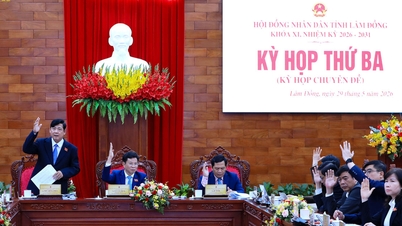
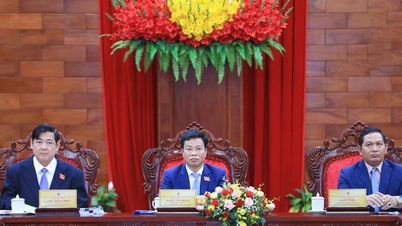
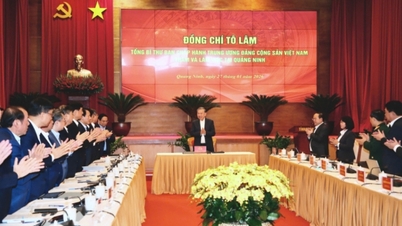
After more than half a day of urgent, scientific , and serious work, the 26th session (special session) of the Quang Ninh Provincial People's Council, 14th term, concluded successfully. Clearly demonstrating a sense of responsibility to the voters and people of the entire province, the session was not only a regular event but also a particularly important milestone, marking a new step forward in the "revolution" of restructuring the local government apparatus; aiming for a streamlined, effective, and efficient system for the sustainable development of the province and the country.
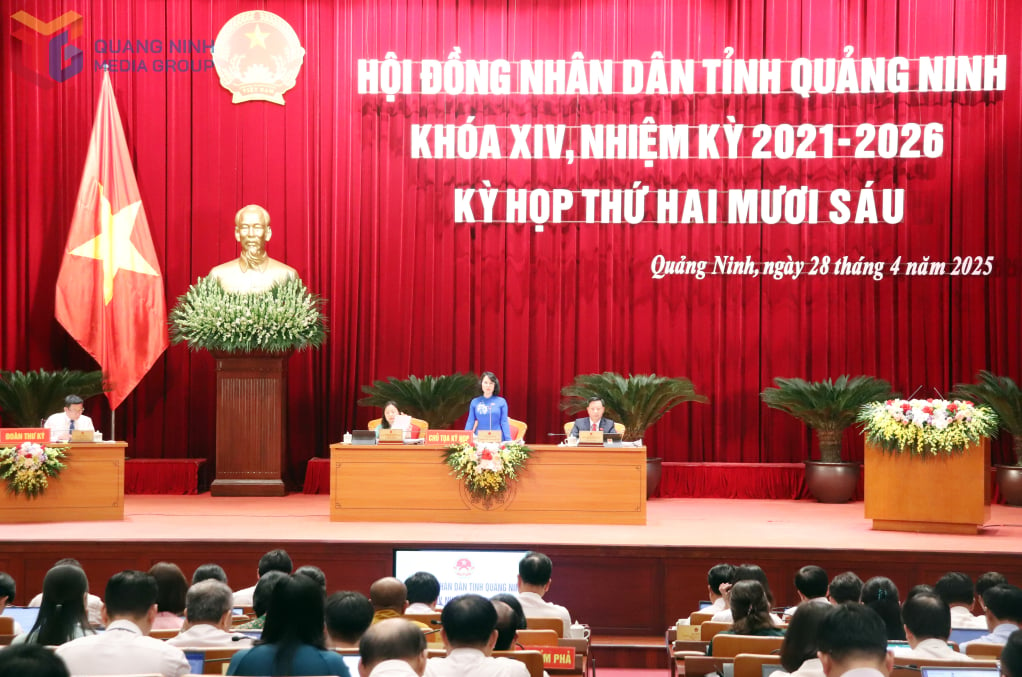
Ready for the "reconstruction" of the system.
The 26th session – a special session of the 14th Provincial People's Council – took place in the context of the whole country in general and Quang Ninh province in particular urgently implementing the revolution to streamline the organizational structure and determined to achieve growth targets. The session considered and approved 9 important resolutions. Among them, many urgent issues were decided upon to serve the revolution of reorganizing and streamlining the organizational structure, unlocking resources to promote economic growth in 2025 to meet the very high demands of the country in the new era.
Notably, the Resolution approves the policy of reorganizing commune-level administrative units in Quang Ninh province. This is a very important content, a concrete step in implementing the major policies of the Party, the State, and the province aimed at reforming and reorganizing the local government apparatus to be streamlined, efficient, effective, and suitable to the criteria and scale for a two-tiered local government model. According to the Resolution, the proposed plan to reorganize commune-level administrative units in the province reduces the number from 171 to 51 units, including 27 wards, 21 communes, and 3 special zones (Van Don, Co To, and Mong Cai), a reduction of 120 units, or 70.17%. In the case that the Mong Cai special zone is not established, Quang Ninh province will have 54 administrative units, including 30 wards, 22 communes, and 2 special zones (Van Don and Co To), a reduction of 117 units, or 68.42%. This is a high percentage, contributing to streamlining the administrative apparatus, reducing budget expenditures, and improving the efficiency of local government operations.
Delegate Lai Thi Hien, from the Tien Yen - Binh Lieu - Ba Che delegation, affirmed: "I agree with the issuance of this Resolution because it implements the major policy of the Party and Government in streamlining the organizational apparatus, improving the effectiveness and efficiency of state management, and creating momentum for socio-economic development. The rearrangement of commune-level administrative units is an urgent requirement, contributing to reducing budget expenditures, concentrating resources, expanding development space, attracting investment, promoting growth, shifting the economic structure, and resolving inadequacies in administrative boundary management. This is also an important preparatory step, creating a legal foundation for urban planning, linked to ensuring national defense and security, and consistent with the policy of promoting decentralization and empowering local governments, laying the groundwork for breakthrough development in Quang Ninh in the coming years."
Many delegates also expressed their agreement and appreciation for Quang Ninh's systematic and thorough approach, from the preparation process and public consultation to ensuring the preservation of historical, cultural, geographical, and local customary elements, with a consensus rate exceeding 99%.
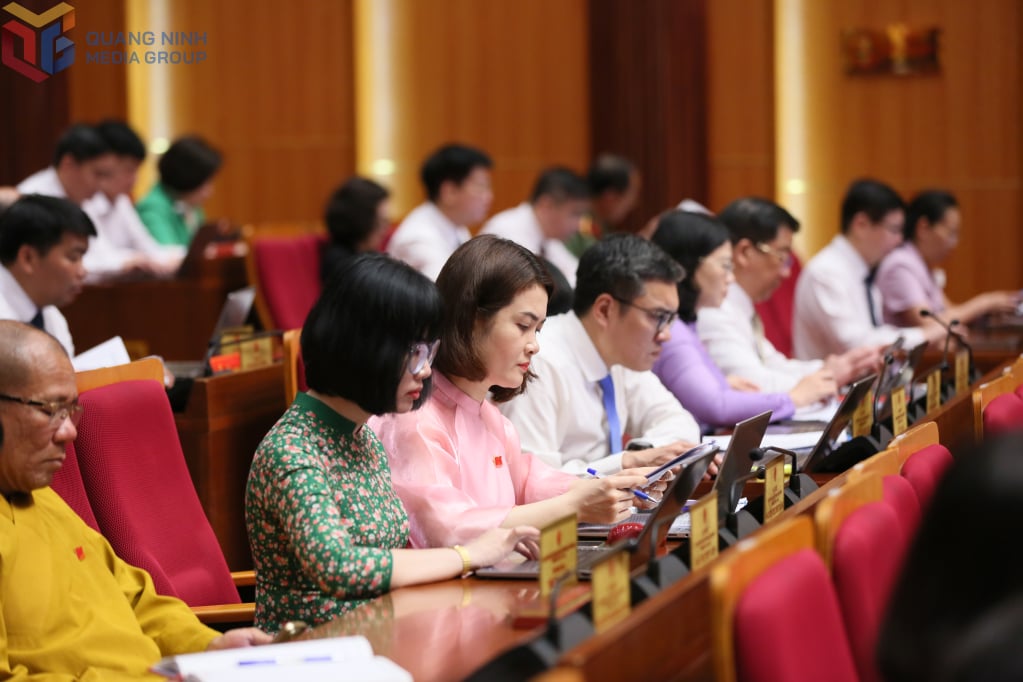
Delegate Nguyen Mai Hung, Head of the Examination and Quality Assurance Department (Ha Long University), Uong Bi Delegation, emphasized: In the past, under the leadership of the Provincial Party Committee, the Provincial People's Committee has directed localities to fully comply with the procedures stipulated in the Law on Organization of Local Government in 2025 and related resolutions to develop a plan for rearranging commune-level administrative units. The plan for rearranging commune-level administrative units has been reviewed by many levels and sectors, and approved by the commune-level People's Councils with absolute consensus, receiving 99.53% (of the total votes cast) of voter agreement. This result demonstrates the high political determination of Quang Ninh province in implementing the Party and State's policies on reforming the local government apparatus towards a streamlined and efficient structure.
Besides the content on the reorganization of commune-level administrative units, the session also adopted many other important resolutions on the medium-term public investment plan for the period 2021-2025; the 2025 public investment plan from the provincial budget; supplementing some mechanisms and measures for managing the local budget in 2025; and approving the list of land plots for bidding on land-use projects; and projects involving land and forest land acquisition and conversion in the second phase of 2025 to ensure the rational and effective use of resources, serving as a basis for implementing socio-economic development projects, prioritizing capital allocation for new and urgent projects serving social welfare and socio-economic development, contributing to the province's growth targets for 2025 and subsequent years.
In addition, the Regulation on the authority to decide on the procurement of assets serving scientific and technological tasks, which was unanimously approved at the session, contributes to concretizing the Central and Provincial Party Committee's policies on breakthroughs in the development of science and technology, innovation and digital transformation; removing bottlenecks in resources in scientific and technological activities and transformation...
Realizing aspirations, shaping the future.
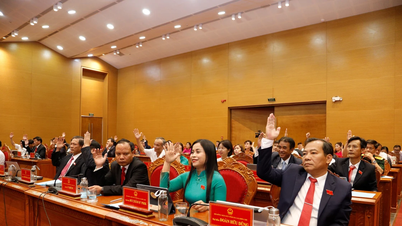
With a high sense of responsibility and strong political determination, along with unanimous approval of the draft resolutions submitted to the session, the provincial People's Council delegates expressed their heartfelt and high-quality opinions and suggestions to contribute to the serious, timely, decisive, synchronized, and effective implementation of the provincial People's Council's resolutions.
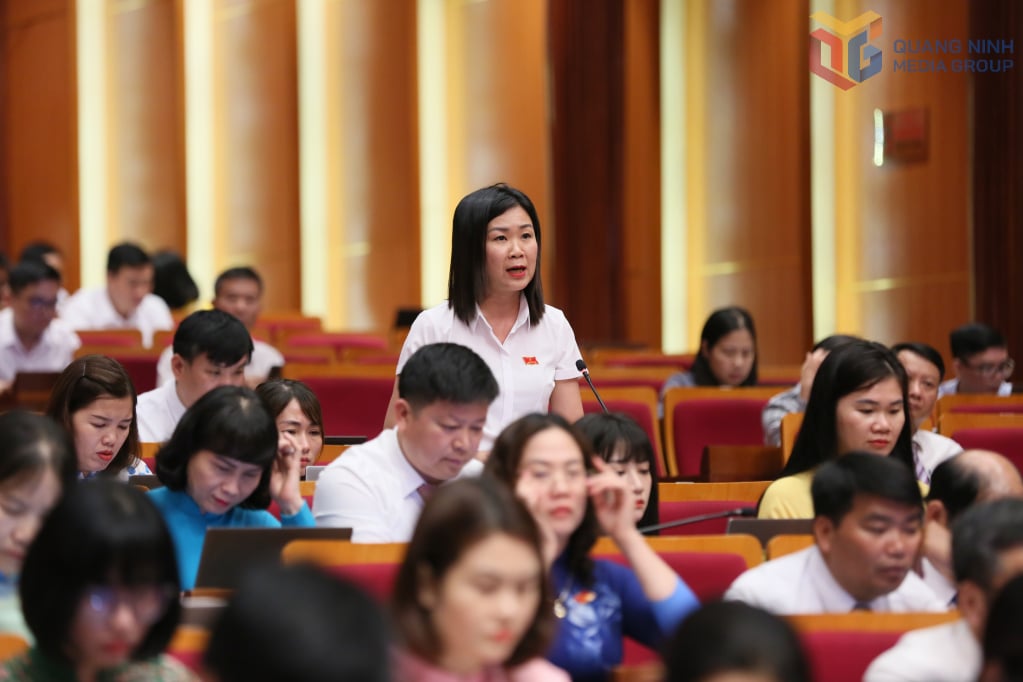
At the session, Provincial People's Council delegate Dao Bien Thuy, Vice Chairman of the Dam Ha District People's Council, representing the Hai Ha - Dam Ha delegation, suggested that: To ensure the effective operation of the new commune-level administrative units, it is necessary to prepare well-planned arrangements for the organizational structure and the placement of officials and civil servants to ensure that local governments operate smoothly, effectively, and efficiently from July 1, 2025; and to ensure continuous and uninterrupted processing of administrative procedures for citizens and businesses. The Provincial People's Committee should promptly direct a review and adjustment of the commune-level regional planning until 2030 (with a vision to 2050), and the land use planning for the period 2021-2030; and have a policy for localities to review and rearrange villages and hamlets to conform with the new commune-level administrative units. Through studying the new administrative units of Tien Yen, Binh Lieu, Ba Che, Dam Ha, Hai Ha, and Mong Cai, I have found that many of these localities have communes in disadvantaged areas with large ethnic minority populations. Therefore, I believe it is necessary to enact specific mechanisms to support these disadvantaged communes and ethnic minority areas, such as those related to forest development, agriculture, job creation, health insurance, and mechanisms to strongly encourage the development of community tourism products. Furthermore, there should be mechanisms to support officials and civil servants working in these disadvantaged communes and ethnic minority areas.
Faced with concerns about administrative boundary divisions, transportation difficulties, geographical distances between households in rural and mountainous areas; ensuring uninterrupted administrative procedures for citizens; staffing; and handling surplus assets… when implementing the plan to reorganize commune-level administrative units, several delegates also proposed many specific solutions to quickly resolve issues and implement the plan to merge communes and wards.
Provincial People's Council representative La Thi Thuy, Head of the Labor, War Invalids and Social Affairs Department of Tien Yen district, Tien Yen - Binh Lieu - Ba Che delegation, proposed: It is necessary to review, revise, and supplement the guiding documents to adjust administrative procedures and regulations to ensure convenience for the people. In addition, it is necessary to review and adjust regulations on titles, number, and allowances for non-specialized officials and civil servants at the commune level after the merger; appropriate solutions are needed to address the issue of surplus officials and civil servants when reorganizing the organizational structure and streamlining the workforce. In particular, attention should be paid to developing policies with appropriate financial mechanisms, taking into account the province's economic conditions, to encourage officials and civil servants to retire early or resign, ensuring stable livelihoods and creating new jobs.
Some delegates also argued that it is necessary to implement strong and clear decentralization and delegation of power to the new administrative units regarding economic management, budget, basic construction investment, land, and other areas to address the activities of voters; to develop specific and clear operating regulations; and to assign appropriate tasks to each official and civil servant to quickly stabilize government operations. At the same time, it is urgent to review and reassess all headquarters and public assets of the reorganized administrative units to develop a plan for rational use and allocation, avoiding waste.
Contributing ideas and suggestions on practical and effective solutions to unlock resources and promote economic growth in 2025; specifically, concretizing the Central and Provincial Party Committee's policies on breakthroughs in science, technology, innovation, and digital transformation, at the meeting, many delegates argued that: It is necessary to ensure the rational and effective use of resources, prioritizing the allocation of capital to new and urgent projects serving social welfare and socio-economic development; and removing bottlenecks in resources for science, technology, and digital transformation activities...
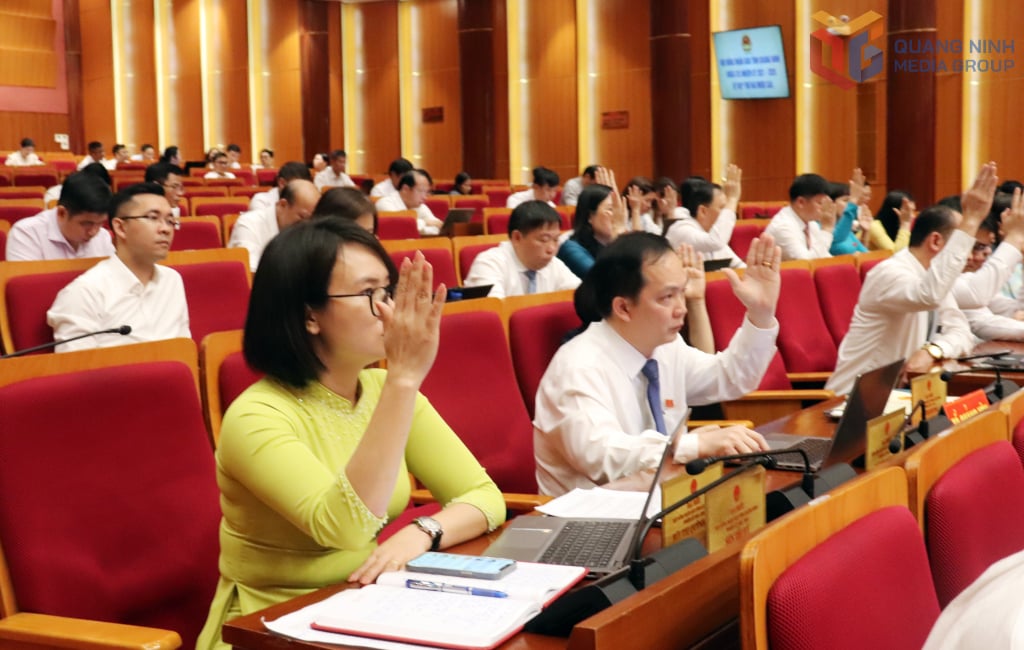
Taking place within a very short period, with a large and particularly important workload, the 26th Session clearly demonstrated the proactive and decisive role of the Provincial People's Council in deciding many urgent issues to serve the revolution of reorganizing and streamlining the organizational structure; creating new momentum for economic growth and promoting the sustainable development of the province.
At the closing of the session, the Chairman of the Provincial People's Council, presiding over the session, requested that all levels, sectors, and localities focus on directing and implementing the plan for rearranging commune-level administrative units immediately after it is approved by the competent authority, ensuring the stability of administrative agencies and units after rearrangement, ensuring smooth and efficient operation, and preventing work disruptions. Simultaneously, they should decisively and effectively implement the directives of the Central Government and the province regarding tasks and solutions to promote socio-economic growth and development in the province in 2025 to achieve a growth target of 14% or more. This includes effectively exploiting new growth drivers and focusing on implementing breakthrough tasks in science and technology development, innovation, and digital transformation as directed by the Politburo, the Secretariat, the National Steering Committee, and the Government.
Thu Chung - Truc Linh
Source

![[Photo] Admire the coral "masterpiece" amidst the million-year-old heritage of Dak Lak province.](https://vphoto.vietnam.vn/thumb/1200x675/vietnam/resource/IMAGE/2026/05/30/1780107638639_y25-jpg.webp)
























































































Comment (0)