


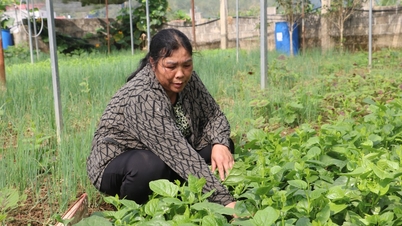
Right after the recent September 2nd holiday, Mrs. Phung Thi Pin, a Nung ethnic woman from Thuy Hung commune, went to make dried rice noodles, selected delicious sticky rice, thorny leaves, and brown sugar from the market, and carefully examined her family's ducks to choose the fattest pair. For her, after more than 30 years as a daughter-in-law, every year, around the 15th day of the seventh lunar month, she busily prepares familiar dishes to celebrate Tet at her maternal grandparents' house. Since her daughter-in-law came to live with her, she and her daughter-in-law prepare for Tet so that her daughter-in-law and son can celebrate Tet at her maternal grandparents' house, while she still maintains the tradition of celebrating Tet with her father at her maternal grandparents' house.
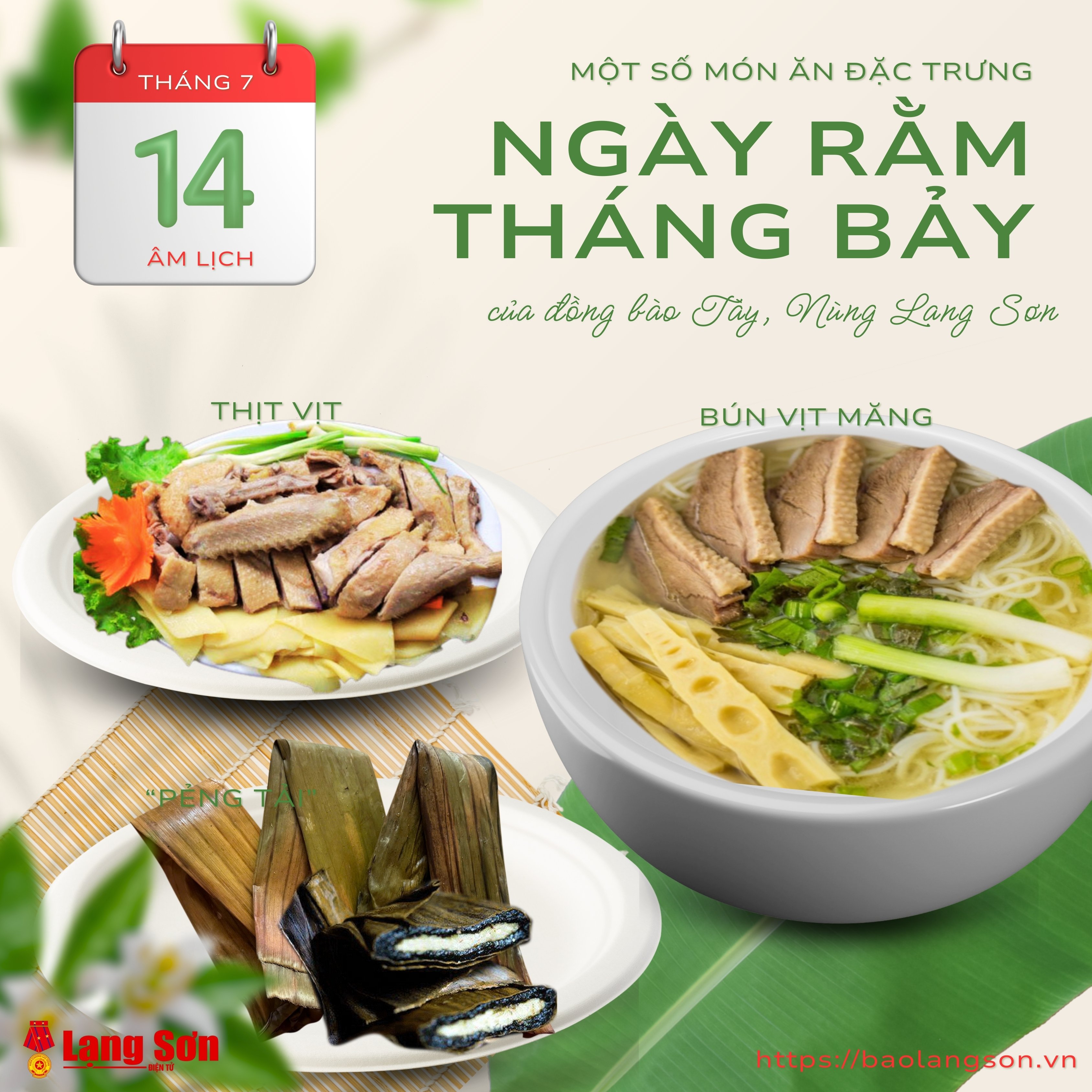
Ms. Pin shared: "No matter what, a meal with 'pẻng tải' (a type of Vietnamese sausage), duck meat, and vermicelli noodles is considered complete and meaningful. I always want my children and grandchildren to maintain this custom, so that each time they visit my parents' home during Tet, it's not just an occasion for sons and daughters-in-law to bring gifts, but also to bring their filial piety and respect to their parents."
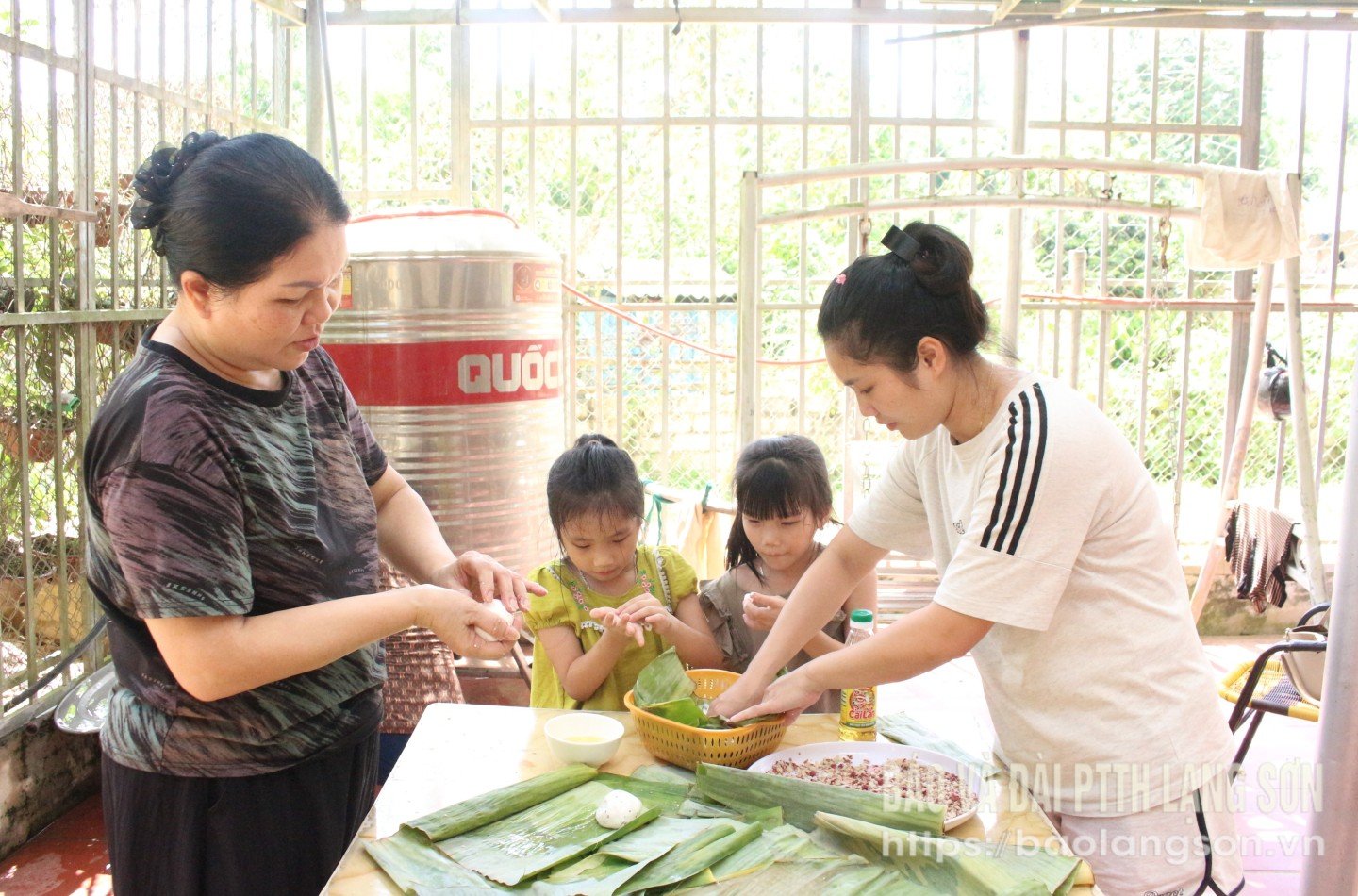
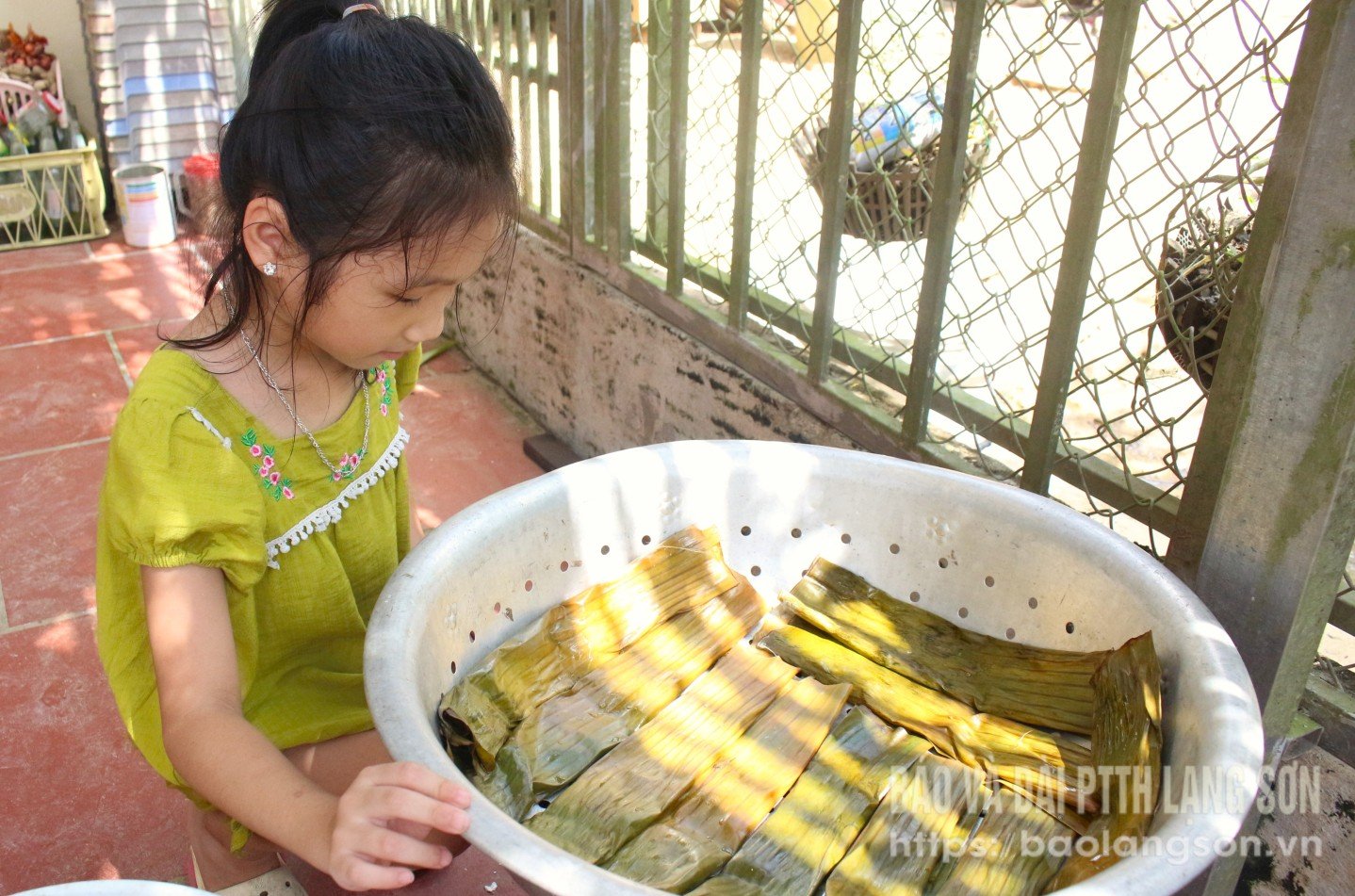
In the Mid-Autumn Festival feast of the Tay and Nung people, "peng tai" is an indispensable dish. The cake is closely associated with the working life and agricultural production of the Tay and Nung people. Around the Mid-Autumn Festival of the seventh lunar month, after the rice planting is complete, the people hold a celebratory feast to thank Heaven and Earth for favorable weather. "Peng tai" is made with ingredients that are the fruits of their labor, such as glutinous rice, thorny leaves, various types of beans, peanuts, and sugar…
The process of making this cake is also very elaborate. The rice used must be high-quality glutinous rice, without any admixture of non-glutinous rice, soaked overnight to absorb enough water, then ground in a stone mortar or milled by machine into a thick, viscous paste, stored in a cloth bag, and hung up to drain. The thorny leaves are boiled until soft, squeezed to remove the water, then the veins are removed and they are dried. The dried leaves are roasted until fragrant. Brown sugar – a type of sugar made manually from sugarcane – is melted. Then, the melted sugar is mixed with the thorny leaves and flour until well combined, and then pounded in a stone mortar until very smooth. In recent years, the pounding process has been largely assisted by machinery.
Through the pounding process, the aroma of glutinous rice flour, honey, and thorny leaves blends together, creating a dark green, sticky, and fragrant dough. The filling is made from finely ground peanuts or mung beans mixed with sugar. Along with thorny leaf cakes, many people also make cakes from ingredients such as bananas and banana stems with glutinous rice flour, or white cakes made from glutinous rice flour with peanut filling... The cakes are shaped into flat, round discs, wrapped in banana leaves, two cakes placed parallel to each other, and then steamed until cooked. After steaming, each pair of cakes is hung on a long pole. Nowadays, although life has changed considerably, many women, especially those in rural areas, still maintain the habit of making "pẻng tải" by hand.
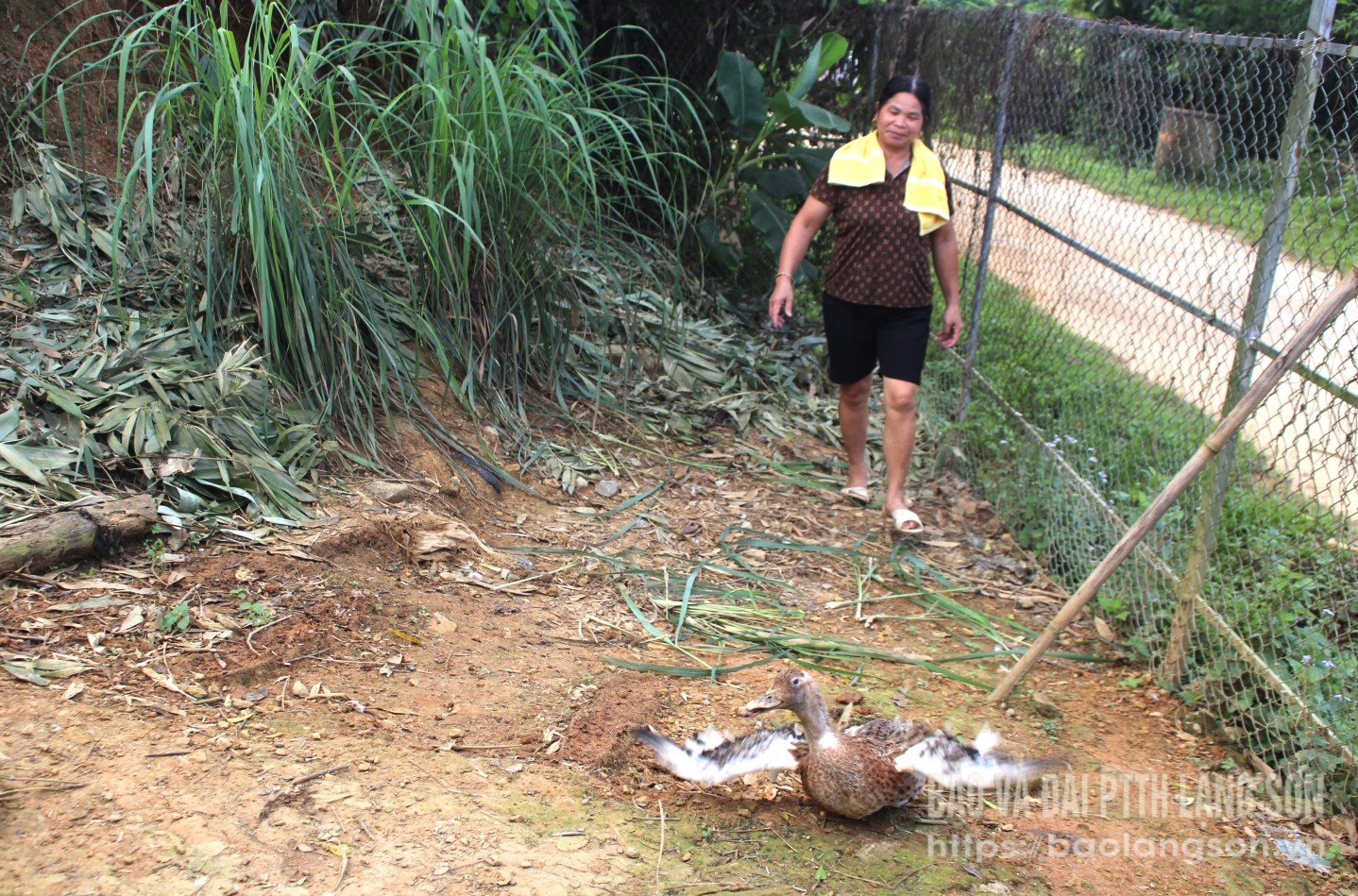
If "pẻng tải" (a type of traditional Vietnamese cake) is an indispensable part of the "pây tai" offering, then duck holds sacred significance in the traditional "pây tai" ceremony. According to folk beliefs, the duck is credited with carrying the rooster across the sea as an offering to the heavens, praying for a bountiful harvest. Ducks are also closely linked to the agricultural production cycle of the Tay and Nung ethnic groups in Lang Son. Ducks are raised from the end of the third lunar month until they are mature, with fragrant meat and golden skin. Therefore, a pair of plump ducks is always an important offering that sons-in-law and daughters bring to their maternal parents on the 15th day of the seventh lunar month.
Mr. Hoang Van Pao, Chairman of the Provincial Cultural Heritage Association, said: "The Pay Tai Tet festival is not just a simple reunion day, but also contains the profound humanistic philosophy of the Tay and Nung people; daughters, even after getting married, always maintain the responsibility of filial piety towards their maternal parents. Dishes like 'peng tai' and duck meat not only have culinary value but also symbolize kinship and the bond between generations. The fact that the Tay and Nung people of Lang Son maintain customs and characteristic dishes on the 15th day of the seventh lunar month contributes to preserving the unique cultural identity of the community."
Nowadays, even with improved living standards, young families, no matter where they go or live, never forget their ethnic customs. Along with pẻng tải (a traditional offering), duck meat, dried noodles, and a bottle of wine, families returning home for "pây tai" (a traditional gathering) also bring roasted pork, fruits, and sweets, depending on their economic circumstances.
Mr. Do Van Nam from Hai Phong city shared: "I am of Kinh ethnicity, and in 2023 I married a Tay woman from Hoi Hoan commune. Since then, every year on the 14th day of the seventh lunar month, my wife and I follow the Tay ethnic custom of bringing a pair of ducks, fruits, and cakes to her family's home. Due to busy work schedules, we don't have the time to make the cakes ourselves, so we always proactively ask relatives on my wife's side to help us make them to ensure we fulfill the 'ritual' according to tradition. I feel that this is not only a matter of etiquette, but also a way to remind myself to always remember my roots and cherish the gratitude I owe to my parents. The meals my wife's family prepared for their son-in-law and daughter, with boiled duck meat or duck noodle soup with sour bamboo shoots, are a rich flavor that I will never forget."
On the 15th day of the seventh lunar month, the significance of characteristic dishes like "pẻng tải" (a type of grilled duck) not only creates the flavor of the festival but also contributes to preserving cultural identity, so that each reunion becomes a memory that the children carry with them throughout their lives. Despite the many changes in modern life, this beautiful tradition has been preserved for generations, becoming a unique cultural feature of the Tay and Nung people of Lang Son province.
Source: https://baolangson.vn/ram-thang-bay-am-ap-sum-vay-5057920.html






























































Comment (0)