

After nearly 10 years living and working in Ho Chi Minh City, in 2021, amidst the Covid-19 pandemic, Mr. Tran Van The (residing in Group 1, Thong Nhat Ward) decided to return to his hometown in Gia Lai to pursue his passion for beekeeping. From 53 beehives, his bee colony has now grown to over 100 hives.
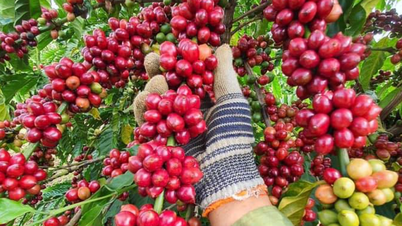
Mr. The said: “ Gia Lai is a land of vast coffee, rubber, and acacia trees, and a diverse range of plant species, creating an abundant source of pollen and nectar for beekeeping. In particular, I prioritize honey from coffee blossoms because it has a unique aroma, beautiful color, low crystallization rate, and is highly favored by customers.”
According to Mr. The, bees can collect honey year-round, as long as there are flowers blooming. However, the most abundant honey season is from December to April of the following year. This is because during this time, trees bloom profusely, and the bees work diligently to produce batches of delicious honey.
"March is the time of year when bees collect the most honey, and the honey is also of the best quality. During this season, trees bloom abundantly, and the bees work diligently to produce batches of delicious honey," Mr. The shared.
Beekeeping is dependent on weather and seasons. Bees only leave their hives to collect honey when the weather is dry and there is no rain. Therefore, to achieve high yields, beekeepers must move their colonies to suitable areas with abundant flowering plants.
“From April to August, I take my bee colonies to Da Nang . Then, at the end of August or September, I transport them back to Gia Lai to harvest honey during the coffee flowering season. Each time I move the bee colonies, it incurs transportation costs, creates risks to the bees' health, leads to the loss of hive units, and increases the workload for the beekeeper.”
Furthermore, traveling with the bee colonies like that is arduous for beekeepers due to the lack of adequate living conditions. And if they don't move, there won't be a source of flowers for the bees to make honey, and the cost of feeding them with flour and sugar is very expensive, and the quality of the honey will not be good," Mr. The explained.
Having been "friends with bees" since the age of 16, Mr. Tran Duy Trung, owner of Duy Trung honey production facility (Tan An village, Ia Hrung commune), has considerable experience in beekeeping. Having gone through many ups and downs in beekeeping, even having to switch to other livelihoods at times, he ultimately returned to his bee colony as a close companion.
“Although the exotic bee species (Apis mellifera) is more difficult to care for than the native bee species, it produces more honey and of higher quality. I have been pursuing this bee species for two decades,” said Trung.
Currently, Mr. Trung owns about 700 beehives. To ensure a large yield of high-quality honey, in addition to raising bees in his garden in Gia Lai, around April-May, he begins moving his bee colonies to northern provinces such as Bac Giang and Hai Duong, where lychee and longan flowers are in full bloom.
“Beekeeping requires moving around a lot, living a ‘nomadic’ life, and adapting to living conditions such as setting up camps, lacking facilities, and having makeshift food and drink… Especially, bees are very sensitive to their living environment, so beekeepers must constantly monitor, care for, and prevent risks that could affect the bee colony,” Trung shared.
Besides harvesting honey himself, Trung also purchases over 50 tons of honey annually from other beekeeping households in the area. With an average selling price of 60,000 to 120,000 VND per liter, after deducting expenses, Trung earns approximately 350-490 million VND per year.
Although beekeeping provides a stable income, beekeepers still face many difficulties such as: high transportation costs, unfavorable weather conditions, pests and diseases affecting the bee colonies, and low and unstable export prices for honey (currently only around 20,000 VND/kg).
Nevertheless, Trung enthusiastically stated: “This year, I will launch a special multi-flower honey product, combining the essence of many characteristic flowers of the Central Highlands such as wild sunflowers, coffee flowers, forest flowers… I hope this product will be well-received and help build the Central Highlands honey brand to reach even more consumers,” Trung shared.
Source: https://baogialai.com.vn/rong-ruoi-theo-canh-ong-bay-post560476.html
![[Photo] General Secretary and President To Lam meets with National Assembly delegates from ethnic minorities.](https://vphoto.vietnam.vn/thumb/1200x675/vietnam/resource/IMAGE/2026/04/20/1776696701056_a1-bnd-8331-3342-jpg.webp)
![[Image] National Assembly discusses the implementation of the socio-economic development plan.](https://vphoto.vietnam.vn/thumb/1200x675/vietnam/resource/IMAGE/2026/04/20/1776696707422_ndo_br_img-20260420-185419-jpg.webp)



















































Comment (0)