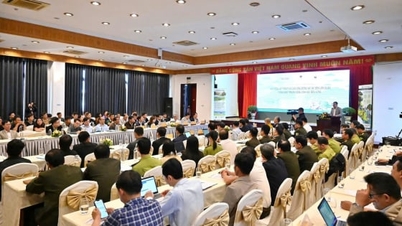
On the afternoon of January 12th, the Ministry of Agriculture and Environment held a meeting with the People's Committee of Son La province regarding the situation of coffee cultivation on forest land and the ability to meet the European Union's Regulation on Deforestation Prevention and Control (EUDR). The meeting focused on discrepancies in forest data, the rate of expansion of coffee cultivation area, and technical and institutional solutions to remove obstacles to export.

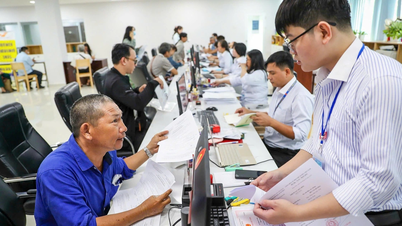
The meeting took place at the headquarters of the Ministry of Agriculture and Environment. Photo: Bao Thang.
According to Mr. Nguyen Do Anh Tuan, Director of International Cooperation (Ministry of Agriculture and Environment), Vietnam is currently classified by the EU as low-risk for coffee, with an expected inspection rate of approximately 1%. However, even the EU is in the process of perfecting its governance system and database to implement a unified EUDR.
This requires producing countries to prepare thoroughly, especially in terms of data and traceability.
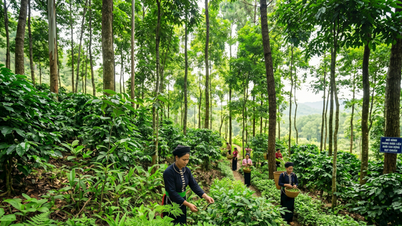
This issue is clearly evident in Son La . According to Vice Chairman of the Provincial People's Committee Nguyen Thanh Cong, the province's coffee growing area has increased rapidly in recent years, especially since 2022 when coffee prices continuously reached new highs. By the end of 2025, the total coffee growing area in the province is estimated to reach 33,628 hectares, an increase of 44.25% compared to 2024, equivalent to an increase of 10,316 hectares in just one year. The harvested area will reach 19,951 hectares, with a coffee bean production of approximately 37,724 tons.
According to Mr. Cong, the area of newly planted trees is concentrated mainly in the southern and southwestern areas of the province. Specifically, Sop Cop increased by 4,176 hectares, Mai Son by 2,666 hectares, Thuan Chau by 1,607 hectares, and Song Ma expanded by an additional 772 hectares.
Due to rapid and short-term growth, some newly planted areas have not yet had their data fully updated and compared with the December 31, 2020 deadline set by the EUDR. This creates difficulties in managing and tracing the origin of this key agricultural product.
In light of this situation, the leaders of Son La province requested the Ministry of Agriculture and Environment and relevant departments to pay attention to and assist the locality in standardizing the database of coffee growing areas. In addition, Son La also aims to develop standardized coffee growing areas, linked with businesses involved in purchasing, processing, and exporting, to organize traceability throughout the supply chain, meeting the requirements of the EU market and other high-end markets.

Mr. Nguyen Thanh Cong, Vice Chairman of the People's Committee of Son La province. Photo: Bao Thang.
Sharing the difficulties faced by Son La, Director of Forestry and Forest Protection Department Tran Quang Bao stated that the maps of the Joint European Research Centre (JRC), when compared with forest data from many countries, including Vietnam, still contain errors. A review revealed that many coffee-growing areas in Vietnam still differ by tens of thousands of hectares from EU figures.
Recently, the Department conducted research and surveys in Nam Lau commune (Son La province), revealing that while the officially recorded coffee growing area is approximately 1,900 hectares, the actual area, after interpretation of remote sensing imagery, has increased to over 4,000 hectares, with the majority being less than three years old.
Based on this, the Department proposes an online data platform solution and a verification process for coffee growing areas by overlaying the growing area map with the forest boundary map at December 31, 2020 (as stipulated by EUDR). Growing areas located entirely outside the forest boundary are eligible for export. Growing areas located within or intersecting the forest boundary require verification and additional explanation.
"The EU system is currently used as a reference in assessing the risk of deforestation. Therefore, Vietnam will continue to standardize data to provide evidence to the EU in a way that increases accuracy and relevance to reality," Mr. Bao emphasized.
Agreeing with this viewpoint, the Director of the Department of Crop Production and Plant Protection, Huynh Tan Dat, acknowledged that if each side uses a different set of data or benchmarks, proving compliance will be very difficult. Therefore, he suggested that localities standardize data first; and at the same time, implement certification for shipments that meet standards, tracing their origin along the entire supply chain from the growing region to the exporter.
Furthermore, strong sanctions are needed, avoiding mere training or general guidance, because the image of Son La coffee directly affects the reputation of Vietnamese coffee and export prices. Since the locality cannot solve all the problems on its own, he proposed developing a comprehensive action plan and establishing a coordination mechanism with the EU through a working group, suggesting that Son La be included in the joint working group.

Mr. Huynh Tan Dat, Director of the Department of Crop Production and Plant Protection. Photo: Bao Thang.
Deputy Director of the Department of Crop Production and Plant Protection, Nguyen Quoc Manh, added that coffee prices have continuously increased over the past four years, leading to a rapid increase in coffee cultivation area nationwide, currently reaching approximately 750,000 hectares. Son La province alone has seen an increase of about 10,000 hectares.
In the plan for developing key industrial crops, the projected scale for coffee cultivation is approximately 650,000 hectares, resulting in a surplus of about 100,000 hectares compared to the plan. The area of coffee with fully traceable origins has only reached about 150,000 hectares, mainly in the Central Highlands. The area in the northern mountainous region and North Central Vietnam remains limited.
In 2026, the Department plans to coordinate the expansion of traceable agricultural land by approximately 400,000 hectares to support local communities. "For areas where traceability is not guaranteed, we need to support people in transitioning to alternative livelihoods," Mr. Manh suggested.
Summarizing the opinions, Director Nguyen Do Anh Tuan proposed selecting Son La as a pilot location for coffee cultivation to address issues related to EUDR. Simultaneously, he suggested conducting a nationwide review by mid-2026 to assess the readiness of various product groups to meet EUDR requirements.
Regarding coffee specifically in Son La, Mr. Tuan agreed on several key issues, including: forest boundary map data for risk zoning; a framework for penalties; adding coffee plants to the Ministry's traceability system; livelihood transformation solutions; and a mechanism for prioritizing budget allocation for key crops.
Source: https://nongnghiepmoitruong.vn/son-la-de-nghi-go-kho-cho-ca-phe-d793374.html



![[Photo] First session of the 14th Congress of the Vietnam Trade Union](https://vphoto.vietnam.vn/thumb/1200x675/vietnam/resource/IMAGE/2026/06/03/1780465947883_ndo_br_img-3852-jpg.webp)

![[Photo] Secretary of the National Assembly Party Committee, Chairman of the National Assembly presides over the meeting of the Standing Committee and Executive Committee of the National Assembly Party Committee.](https://vphoto.vietnam.vn/thumb/1200x675/vietnam/resource/IMAGE/2026/06/03/1780480353201_ndo_br_bnd-2585-jpg.webp)

![[Photo] General Secretary and President To Lam presides over a meeting with the Central Organizing Committee.](https://vphoto.vietnam.vn/thumb/1200x675/vietnam/resource/IMAGE/2026/06/03/1780482764658_a1-bnd-4741-3342-jpg.webp)












































![[Video] Sunset at Lap An Lagoon – Where the sun sets over the fishing nets](https://vphoto.vietnam.vn/thumb/1200x675/vietnam/resource/IMAGE/2026/05/31/1780192137701_beach-landscape-sea-water-nature-grass-745871-pxhere-com.jpeg)
































Comment (0)