

Inorganic fertilizers still play an important role in agriculture. However, long-term use of these fertilizers leads to severe soil degradation and depletion. Therefore, changing from inorganic fertilizers to organic fertilizers is currently being encouraged by experts to improve and restore agricultural land and protect the environment.
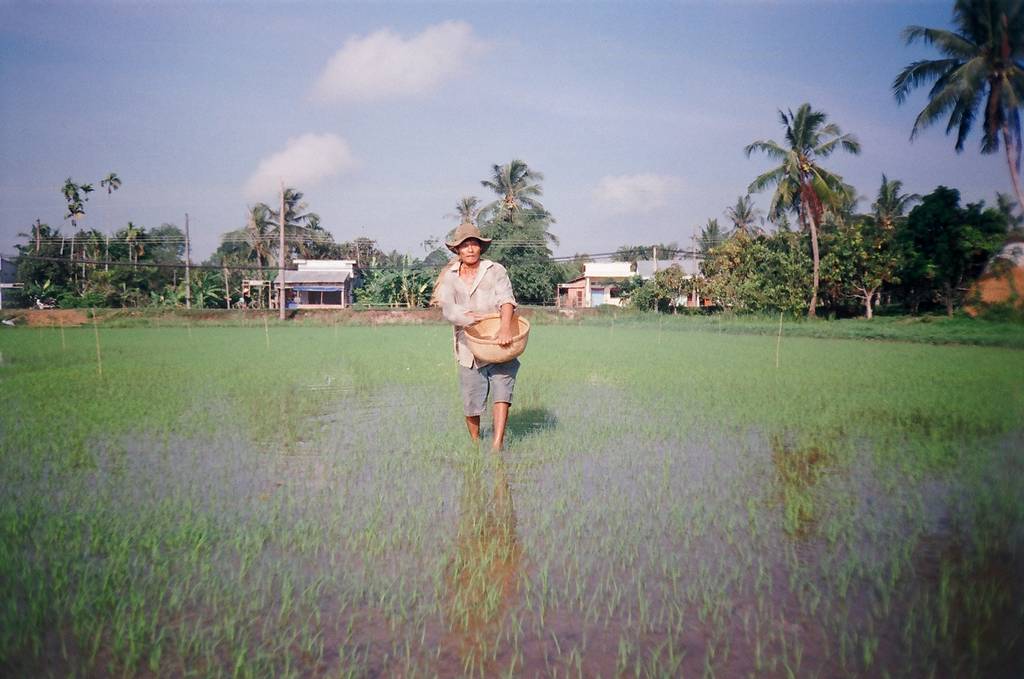 |
| The overuse of inorganic fertilizers over a long period of time leads to soil degradation and depletion, negatively impacting crops, the environment, and human health. |
Organic fertilizers have many advantages, but their use is not yet widespread.
Inorganic fertilizers include main types such as nitrogen, phosphorus, potassium, complex fertilizers, mixed fertilizers, and micronutrient fertilizers, but the most commonly used, in the largest quantities, and most frequently by farmers in agricultural production is nitrogen fertilizer. While it has positive effects such as promoting and increasing crop yields, its effects are not long-lasting.
According to experts, the improper use of inorganic fertilizers—incorrect dosage, timing, type, and overuse over a long period—not only causes severe soil degradation and depletion in agricultural land but also negatively impacts the soil, crops, environment, and human health.
In contrast, organic fertilizers are formed from manure, livestock and poultry waste, plant stems and leaves, agricultural by-products, peat, or organic substances from household waste, kitchen waste, and waste from seafood processing plants, etc.
This is a rich source of fertilizer that helps improve soil, increase fertility, and loosen the soil by providing and supplementing humus, organic matter, and various microorganisms to the soil and plants. Therefore, changing agricultural production practices and switching from the use of inorganic fertilizers to organic fertilizers is currently the best solution for restoring agricultural land and protecting the environment.
However, the use of organic fertilizers is still limited. According to a report by the Plant Protection Department in August 2024, in the Mekong Delta provinces, the amount of inorganic fertilizer used in 2023 was still high, averaging 480 kg/ha of cultivated land, 10% higher than the national average. Meanwhile, the amount of organic fertilizer used remained modest.
The average amount of industrially produced organic fertilizer used in the region is 72 kg/ha of cultivated land, only 50% of the national average. Even the amount of non-commercial organic fertilizer used is only 7.3% of the national average. Provinces like An Giang and Kien Giang do not have data on organic fertilizer use. In 2022, most provinces in the region used this fertilizer negligibly, with only Ben Tre and Vinh Long having higher organic fertilizer use than the national average (58-65%).
Regarding the reasons, according to experts, during organic farming, producers are only allowed to use organic fertilizers and control weeds and pests with biological pesticides. This requires a lot of labor and is difficult to implement on a large scale, especially in hot and humid climates that are very favorable for the development and spread of many pests and diseases.
Furthermore, in areas with intensive farming practices, where inorganic fertilizers and pesticides were previously used extensively, the transition to organic farming resulted in a significant decrease in yield in the initial years. Farmers also faced difficulties in pest and disease control due to high pest and disease pressure, disrupting the ecological balance and requiring time to re-establish it. In addition, farmers' understanding of organic farming was limited, as they believed that implementing organic farming required strict regulations and standards, posing a significant challenge.
Encouraging the increased use of organic fertilizers.
In order to encourage, support, and promote the use of organic fertilizers in cultivation, contributing to the development of agricultural production and the protection of the ecological environment in a sustainable manner, the State has issued legal frameworks for the development of organic fertilizers as stipulated in the Law on Crop Production.
The Ministry of Agriculture and Rural Development issued a directive on strengthening the development and use of organic fertilizers in 2020, an action plan to strengthen the production and use of organic fertilizers, and to promote economical, balanced, and efficient fertilizer use for the period 2022-2025 issued in 2022, and a project on the development of organic fertilizer production and use until 2030, with a vision to 2050, approved in 2023.
In Vinh Long province, on September 13, 2024, the Chairman of the Provincial People's Committee approved the Plan for implementing the Project on the Development of Production and Use of Organic Fertilizers until 2030, with a vision to 2050, in the province.
According to the Plant Protection Department, 24 enterprises nationwide have signed commitments to implement the program for developing organic fertilizers and using fertilizers efficiently and effectively with the Plant Protection Department during the 2019-2025 period. The total budget amounts to 631 billion VND to build models for using organic fertilizers and using fertilizers efficiently on over 45,000 hectares, and to conduct over 1,000 training courses for nearly 20,000 farmers on building model farms for key crops such as rice, fruit trees, and industrial crops.
In 2023 alone, numerous production models utilizing organic fertilizers, promoting economical, balanced, and efficient fertilizer use, were established across more than 15,000 hectares in various provinces nationwide. This included 5,742 hectares of rice, 3,742 hectares of vegetables, 2,725 hectares of fruit trees and industrial crops, 2,660 hectares of tea, and other crops.
Simultaneously, training sessions were organized for tens of thousands of farmers and nearly 2,000 professional staff from the department and localities nationwide on the use of organic fertilizers; the economical, balanced, and efficient use of fertilizers; and the use of fertilizers according to the "5 correct principles". In the first six months of 2024, businesses established 40 models for the use of organic fertilizers and the economical use of fertilizers on rice, fruit trees, and vegetables, covering an area of 61 hectares in various provinces and cities.
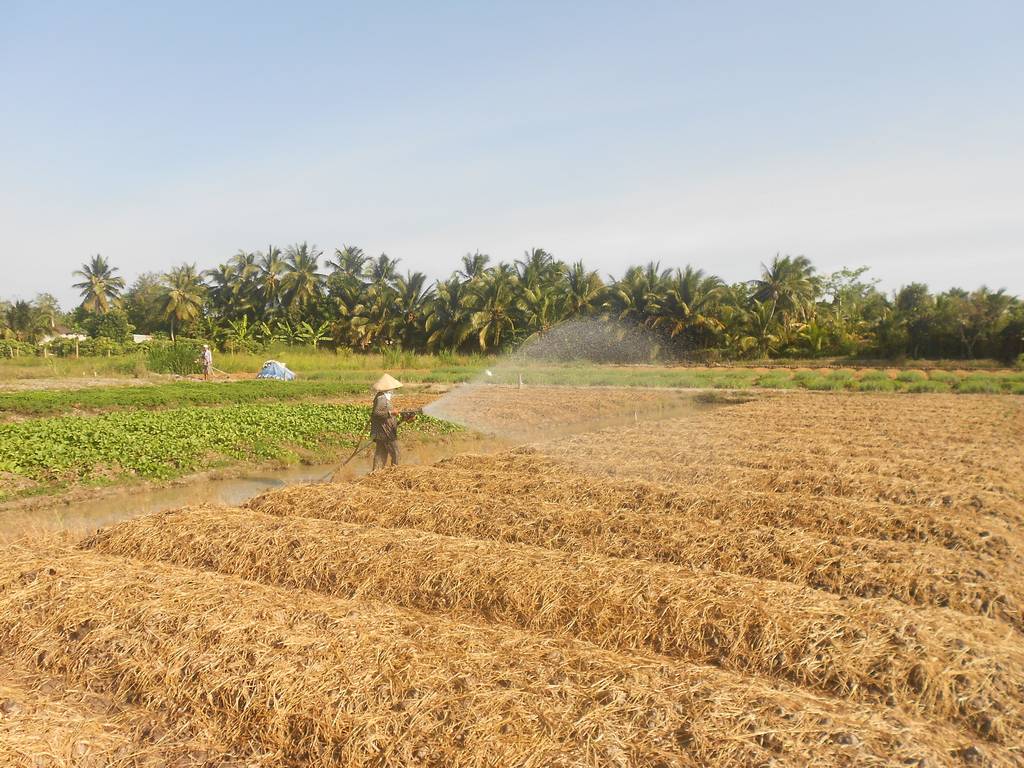 |
| Straw can be used to mulch around plant roots and field edges, or as organic fertilizer to improve soil quality and protect the environment. |
In the Mekong Delta, in 2022, several models were implemented on rice cultivation in provinces in collaboration with local authorities, such as the Ca Mau Petroleum Fertilizer Joint Stock Company (Ca Mau Urea), which implemented 59 models on rice in Dong Thap, Long An, Can Tho, Soc Trang, An Giang, and Kien Giang provinces, covering nearly 240 hectares. These models achieved some positive results, including a 15% reduction in fertilizer use, a 5% increase in yield, and a 19% increase in profit compared to conventional production.
The Plant Protection Department requests that the People's Committees of provinces and cities direct specialized agencies to strengthen the dissemination and guidance on the economical and efficient use of fertilizers; promote the production and use of organic fertilizers, especially encouraging and supporting farmers to produce and use organic fertilizers from readily available domestic raw materials (by-products of crop cultivation, agricultural processing, livestock waste, household waste, etc.) to both improve soil and enhance efficiency, thereby reducing dependence on chemical fertilizers.
Text and photos: MINH HOA
Source: https://baovinhlong.vn/tin-moi/202504/su-dung-phan-huu-co-giup-cai-thien-datbao-ve-moi-truong-a1f3e6b/





![[Photo] High-altitude schools proactively take measures to protect students from the cold.](https://vphoto.vietnam.vn/thumb/402x226/vietnam/resource/IMAGE/2026/01/08/1767883787301_a34-9332-jpg.webp)





















































Comment (0)