

Despite the unfavorable international context, France has maintained its leading position in attracting investment, not only within the Eurozone, but also across Europe.
To better understand how France has maintained its appeal, The News Reporter interviewed a team of experts at the Business France/Ambassade, represented by Mr. Yann FROLLO DE KERLIVIO – Commercial Counsellor, French Embassy in Vietnam – Director of Business France in Vietnam, and Mr. Pierre MARTIN, Deputy Economic Counsellor, French Embassy in Vietnam.

The Arc de Triomphe (L'arco de triomphe de l'Étoile) in Paris, France. Photo: Expert Investor
Reporter (NĐT): France is one of Europe's leading economies. Since 2017, the French government has been promoting a broad reform program to support businesses, including encouraging investment and employment, particularly through corporate tax reductions; strengthening public policies that support business growth and innovation; reshaping the social model by promoting career mobility; simplifying public administration... So, in your opinion, what is the most important aspect of this reform program?
Mr. Yann Frollo de Kerlivio : All these reforms are interdependent and address different sectors of the economy. They are all necessary to address the needs of industry stakeholders and meet the challenges of the future economy.
These reforms – whether related to taxation (reducing the corporate income tax rate to 25%, setting a fixed rate on capital gains at 30%, or cutting production taxes), or reforms to the Labor Code, the Business Growth and Transformation Action Plan, and simplification of administrative procedures – all complement each other in creating a favorable environment for domestic and foreign businesses to invest in France.
These reforms are now being supplemented by eco-planning, aimed at making France a leader in the green industry in Europe. The Green Industry Bill, the Nuclear Acceleration Act, and the Renewable Energy Acceleration Act, soon to be combined with France's National Low Carbon Strategy, will set targets for the decarbonization industry and the circular economy.
Business France/Ambassade has begun discussions with the Vietnamese Ministry of Finance regarding cooperation on green finance and budgeting to share experiences on these issues.
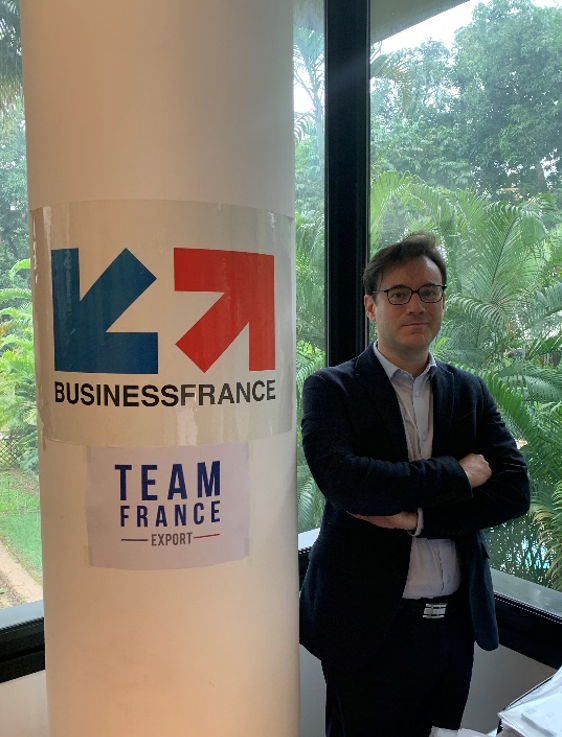
Mr. Yann FROLLO DE KERLIVIO – Commercial Counselor, French Embassy in Vietnam – Director of Business France in Vietnam
These laws are also realized by the ambitious "France 2030" plan, which aims to support investment in disruptive innovations and technologies to facilitate decarbonization and develop industrial competitiveness. With a budget of 54 billion euros, France 2030 will allocate half of its funding to emerging markets, and the other half to decarbonization initiatives.
Interviewer: Could you tell us what impact these reforms have had on the business environment in France after six years of implementation?
Mr. Yann FROLLO DE KERLIVIO : France has undergone a major transformation over the past decade, and this is evidenced by the fact that France has been ranked as the top destination for foreign direct investment (FDI) in Europe for the fourth consecutive year, according to the EY 2023 France Attractiveness Survey.
The achievements of the business-friendly reforms implemented since 2017 are significant. Unemployment has reached its lowest level since 2008, at 7.1% in the first quarter of 2023. Between 2021 and 2022, 200 new factories were built. The French economy remained resilient in 2022 and is projected to experience solid growth in 2024.
This new, more flexible framework benefits both new entrants and French companies, who are all potential customers, partners, or suppliers for foreign investors.
Today, France's appeal depends on its ability to respond competitively to the ecological challenges we face and to create a sustainable and decarbonized industry.
Investor: Besides holding the top position in Europe for attracting FDI for four consecutive years, France has also achieved a milestone on its re-industrialization journey: out of more than 1,200 FDI projects in 2022, 40% were related to the industrial sector. In your opinion, what contributed to this milestone? Was it due to the policies of the French government or the efforts of the businesses themselves?
Mr. Pierre Martin : Success comes from the fact that the French government's policies have addressed the needs of businesses and industries, resulting in win-win outcomes.
Re-industrialization – through low-carbon industries – is one of the priorities in the French government's economic policy. Since 2017, the French government has actively pursued a policy of re-industrialization and investment in industries of the future with its France 2030 plan. These reforms have created a more business-friendly environment while also meeting the need to reduce greenhouse gas emissions.
The top priority is understanding the needs of businesses to facilitate the establishment of industrial facilities in France. Thanks to reforms, France has been able to halve the time required for businesses to obtain operating permits for a location – a trend consistent with all other European countries.
France can also offer pre-developed sites, provided the necessary administrative procedures are completed. Within the framework of France 2030, 50 "turnkey" sites will be selected by the end of 2023, and then gradually developed.

Mr. Pierre Martin, Deputy Economic Counselor, French Embassy in Vietnam
There will be designated sites for gigafactory projects, and a separate, even simpler and faster process will be introduced under the Green Industry Bill.
Furthermore, a highly skilled workforce is a key criterion for all industries today. Therefore, a significant investment in skills has been made within the framework of the €15 billion Skills Investment Plan over five years. This plan helps low-skilled workers improve their skills and meet the needs of the French economy in the short term (areas with shortages) and the long term (digital transformation and the environment).
The France 2030 plan allocates €2.5 billion to training future professions, aiming to train 400,000 people annually through the selection and funding of innovative training programs, such as quantum training, and 56 "work-study" schools that train 10,000 young people each year. The Green Industry Bill outlines measures to ensure 50,000 engineers graduate annually by 2027.
At the same time, France has a distinct advantage in the industrial transition with a competitive energy model thanks to its low-carbon electricity generation structure. With 60g CO2/kWh, France has the lowest carbon emission ratio in the world's energy mix. France can also guarantee attractive energy prices for manufacturers.
Therefore, the French government's policies have met the needs of businesses in the industry by striving to provide an optimal business environment, allowing for the start of the re-industrialization process.
Investor: Regarding attracting FDI, investment projects are no longer concentrated in Paris and its surrounding areas, but have spread across many cities and regions throughout the country. This is quite different from Vietnam, where foreign investors tend to focus their investments on large cities with favorable infrastructure, such as Ho Chi Minh City and Hanoi. In your opinion, what accounts for this difference?
Mr. Yann FROLLO DE KERLIVIO : Indeed, in France, 43% of investment decisions involve municipalities with fewer than 20,000 inhabitants, and production projects are established nationwide, with three-quarters of these projects located in cities with fewer than 20,000 inhabitants. It can be said that foreign investors create jobs and added value throughout France.
One explanation for this is the enormous amount of work undertaken by the territories to meet the demands of investors in order to expedite and facilitate access to industrial zones.
Regions in France have designated “ready-to-use” industrial zones on their land, where administrative procedures related to urban planning, preventative archaeology, and environmental considerations have been planned in advance to ensure that investors are provided with land ready for immediate or very short-term use.
The efforts of the regions to highlight their territorial strengths and the highly effective support of regional and local development agencies in providing practical assistance to industrial projects across France have helped them attract new industrial projects.
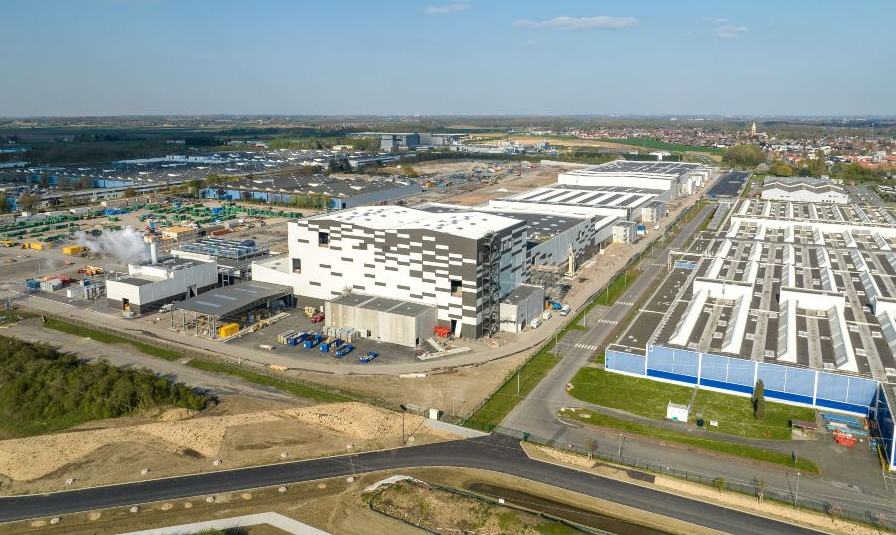
The newly constructed Billy-Berclau Gigafactory ACC, a battery manufacturing plant, is located in Billy-Berclau, northern France. Photo: Automotive News Europe
Interviewer: Finally, what does Vietnam need to do to create similar "milestones" as France has done?
Mr. Yann FROLLO DE KERLIVIO : In recent years, Vietnam has proven to be an attractive destination for foreign investors in Asia, mainly due to tax incentives, a well-skilled and relatively inexpensive workforce, a strategic location, and trade policies that place the country at the center of a network of free trade agreements (FTAs).
However, some of these advantages will erode in the coming years as Vietnam's population begins to age, labor costs and energy prices rise, minimum corporate income tax rates are implemented, etc.
To maintain and enhance its attractiveness, Vietnam could undertake reforms aimed at making the overall business environment less costly and more predictable for foreign businesses. This means strictly enforcing trade agreements, including the Vietnam-EU Free Trade Agreement (EVFTA), reducing operating costs by accelerating the development of necessary transport infrastructure, and simplifying administrative procedures for companies – both Vietnamese and foreign.
Foreign businesses in the energy, pharmaceutical, and many other sectors will also appreciate the greater feasibility and stability in terms of industrial policy and planning.
In addition to perfecting a transparent, rules-based institutional environment, investment in education and innovation is also essential to continue attracting more value-added investments and ensuring the country's long-term growth.
Investor: We would like to express our sincere gratitude to Mr. Yann Frollo de Kerlivio and Mr. Pierre Martin, representatives of Business France/Ambassade, for granting us this interview .
Source


![[Image] Pleasant weather helps students enter the 10th grade entrance exam with confidence.](https://vphoto.vietnam.vn/thumb/1200x675/vietnam/resource/IMAGE/2026/05/29/1780034401612_ngay-1-thi-lop-10-minh-duy-8-5009-jpg.webp)

![[Photo] Ba Lang An Lighthouse - the "eye of the sea" amidst the "rock museum" of Quang Ngai province.](https://vphoto.vietnam.vn/thumb/1200x675/vietnam/resource/IMAGE/2026/05/29/1780038698840_anh-man-hinh-2026-05-29-luc-14-10-42.png)












































































Comment (0)