Unique indigenous resources
In the memories of those who visited before 2020, Ta Lang emerges with a full spectrum of flavors and aromas. There's the fragrant sticky rice cooked in bamboo tubes, the rich, savory buffalo horn-shaped cakes, and the unique Zará dish – a magical blend of wild game and vegetables wrapped in bamboo tubes. People remember the intoxicating nights infused with tr'din and tà vạt rice wine, where the songs of ba boóch and bh'noóch soared through the valley, harmonizing with the tâng tung da dá dance; and the majestic yet gentle R'Cung stream, which has captivated countless visitors…
At that time, Ta Lang was not just a stopover point; it was a vibrant entity. Visitors could "enter the village" through solemn prayer ceremonies, float down the Ch'Lang river on bamboo rafts, or trek through the forest to discover historical traces along the Ho Chi Minh Trail.
This destination boasts a perfect blend of strategic location connecting Da Nang and Hue, pristine local resources including well-preserved traditional ghettos (gươl), brocade weaving, and wood carving. Even the neighboring village of Aur is considered a hidden gem, holding the title of the cleanest and most hospitable village in Vietnam.
However, after the COVID-19 pandemic, that pace of life suddenly slowed down, sinking into silence. A lingering sense of regret remains, as Lưu Văn Khương, Vice Chairman of the People's Committee of Avương commune, said: "Before the COVID-19 pandemic, tourism was doing quite well, but after that, it became stagnant, and the infrastructure was neglected."
The current challenge in Ta Lang is not just material, but a struggle to find a way out. The reality shows a clear deterioration in infrastructure; the spontaneously developed homestays lack uniformity, and signage is sparse. When will those vibrant memories return to the present, so that it remains a familiar yet enduring "touchpoint"? The locals are honest, but lack many things, have limited business acumen, and need guidance.




A systematic and professional investment is needed.
For mountainous districts, Ta Lang and the A Dứt junction of Avương are "golden spots" for tourism at the western border junction of the city, a rarity. This is the gateway to the former Tây Giang district, then to A Lưới in Huế, situated right on the bustling Ho Chi Minh Highway. The Ch'Lang River flows through here, like a leisurely, unhurried step, offering a friendly greeting. The rhythm of life of the Cơ Tu people remains unchanged. It's a "golden spot," but it cannot shine on its own without fire, and the community cannot rise on its own without a professional launching pad.
Mr. ALăng Mít, one of the four remaining households still clinging to the homestay business, lamented when guests came to stay: "Please understand that guests are temporarily staying in my son's room. The electricity in the other two rooms is broken and there's no one to fix it. We can't welcome Western guests because we don't speak English. Since Tet (Lunar New Year), we haven't had any guests."
Furthermore, another awkward situation was shared by Mr. Briu Quan, Chairman of the People's Committee of the commune: "According to the new regulations, foreign visitors are not allowed to stay in the border area for more than 24 hours, so the locals have to regretfully watch the visitors move down to Dong Giang to stay."
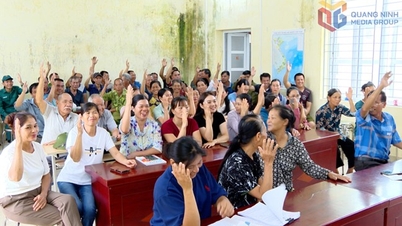
Mr. Luu Van Khuong, Vice Chairman of the People's Committee of Avuong commune, added: "We must organize cultural festivals that are rich in Co Tu identity to introduce the cultural layers, from cuisine and people to this land. Only then can we hope to develop ecotourism. To do it, attract and retain tourists, the local authorities will create the best conditions, but especially, we need businesses with sufficient capacity and dedication to get involved. They invest, create tours and connecting routes, and organize things professionally, systematically, and for the long term. Why are they doing so well in Hoa Bac?"
The answer lies in professionalism. Currently, Ta Lang lacks a dedicated management team, and its workforce consists mainly of farmers lacking service skills, financial expertise, and business acumen.


To ensure Ta Lang is not just a name "left behind in memories," the Avuong commune government is charting a sustainable revival with the message: "Cultural preservation linked to economic development, with the community at the center." Accordingly, it is necessary to professionalize and improve activities, from establishing a well-structured management team as soon as possible, to training foreign languages and hospitality skills for the children of the Co Tu ethnic group, and diversifying products from trekking in the old-growth forest to agricultural experience tours combined with unique cuisine.
To realize its dream, Ta Lang needs support from the city in upgrading infrastructure (roads, parking lots, public sanitation systems) and preferential loan policies for homestay households. In addition, it needs to connect and promote itself, build modern communication channels, social media, and integrate Ta Lang into a chain of major players like Ba Na Hills and Hoa Phu Thanh to create a stable flow of customers.
Source: https://baodanang.vn/ta-lang-doi-phut-cham-de-hoi-sinh-3330113.html