

However, gaps in technology, governance, and green standards remain significant challenges, requiring businesses to rapidly upgrade in order to become integral links in the global value chain.
Great opportunities arising from the supply chain relocation wave.
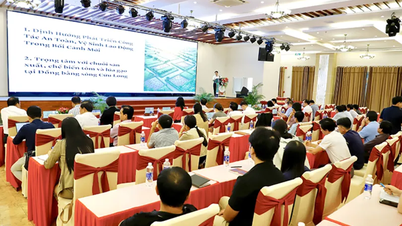
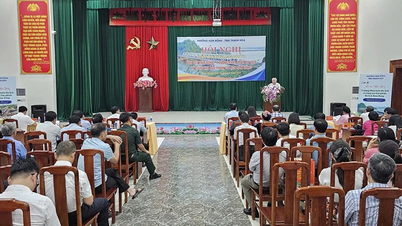
At the seminar "Trends and Solutions to Support Businesses Participating in Global Production and Supply Chains" held on the afternoon of May 26th, many experts noted that global supply chains are entering a period of profound restructuring under the impact of geopolitical shifts, strategic competition, and increasingly stringent demands for sustainable development.
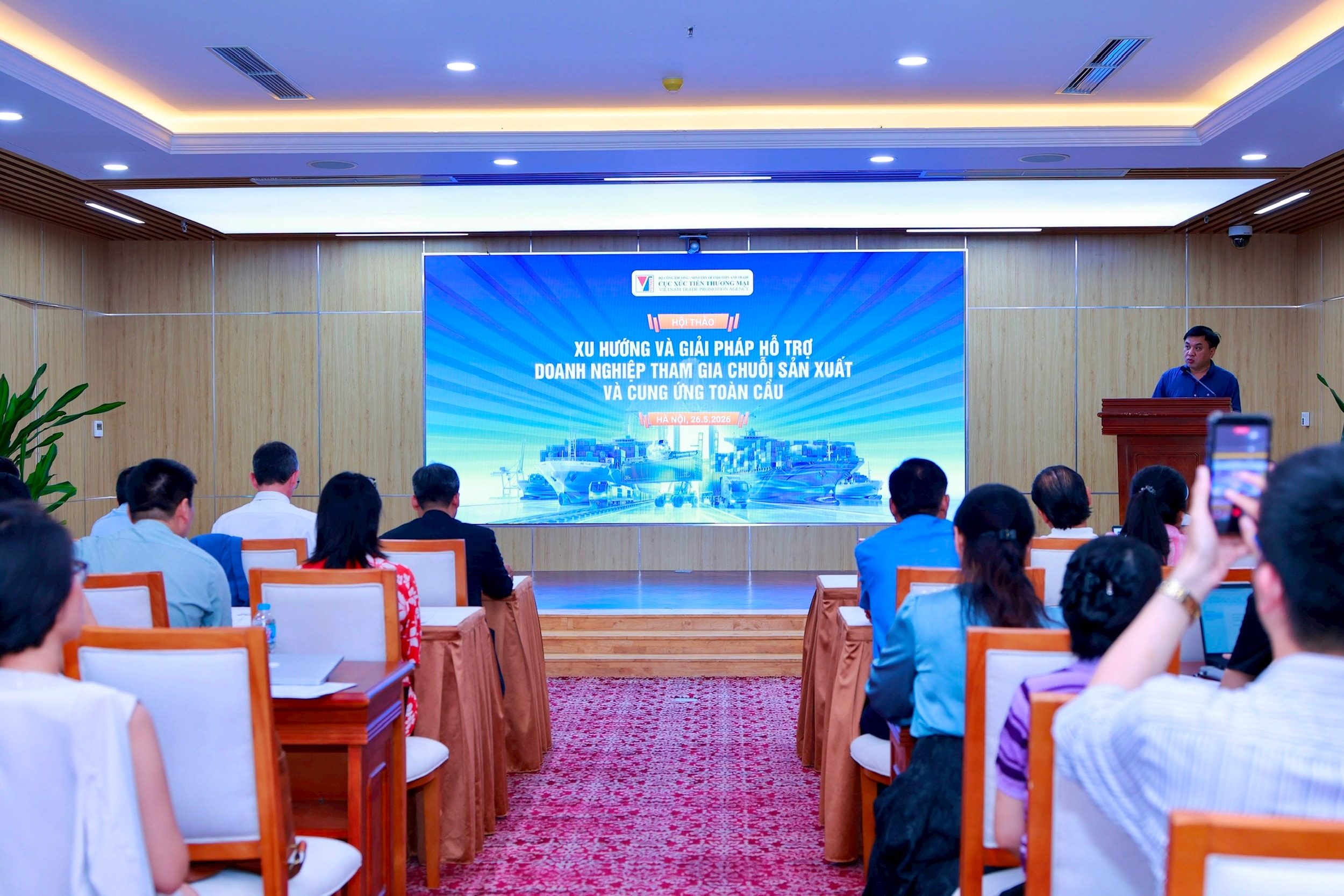
According to Mr. Le Hoang Tai, Deputy Director of the Trade Promotion Department, Ministry of Industry and Trade , multinational corporations are accelerating their strategies to diversify supply sources, shift production closer to consumer markets, and move value chains to countries with similar policies.
In this wave of relocation, Vietnam is emerging as an attractive destination thanks to its stable macroeconomic environment and the 17 free trade agreements (FTAs) it has signed and implemented.
"We are facing a great opportunity to transform from a mere processing link into a high-value-added production and supply center in the global network," Mr. Tai stated.
Sharing the same view, Ms. Vuong Thi Oanh from the Import-Export Department (Ministry of Industry and Trade) stated that global trade no longer prioritizes low costs but instead emphasizes supply chain security, resilience, and sustainable development.
The continued expansion of production in Vietnam by major corporations such as Apple, Samsung, Intel, Foxconn, and Pegatron is driving an increasing demand for localized supply chains.
This is seen as an opportunity for Vietnamese businesses to move beyond simple outsourcing and gradually participate more deeply in the production chains of multinational corporations.
Participation in global supply chains not only expands markets but also puts pressure on domestic businesses to adopt modern management models in order to upgrade their production capabilities to international standards.
However, the greater the opportunity, the stronger the selection pressure. According to Mr. Le Hoang Tai, to participate in the global supply chain, Vietnamese businesses must meet a series of stringent standards related to the environment, social responsibility, corporate governance, traceability, and digital transformation.
Meanwhile, the majority of Vietnamese small and medium-sized enterprises (SMEs) still lag significantly behind the requirements of multinational corporations. Limitations in capital, technology, data management, and logistics infrastructure are becoming major obstacles hindering their growth.
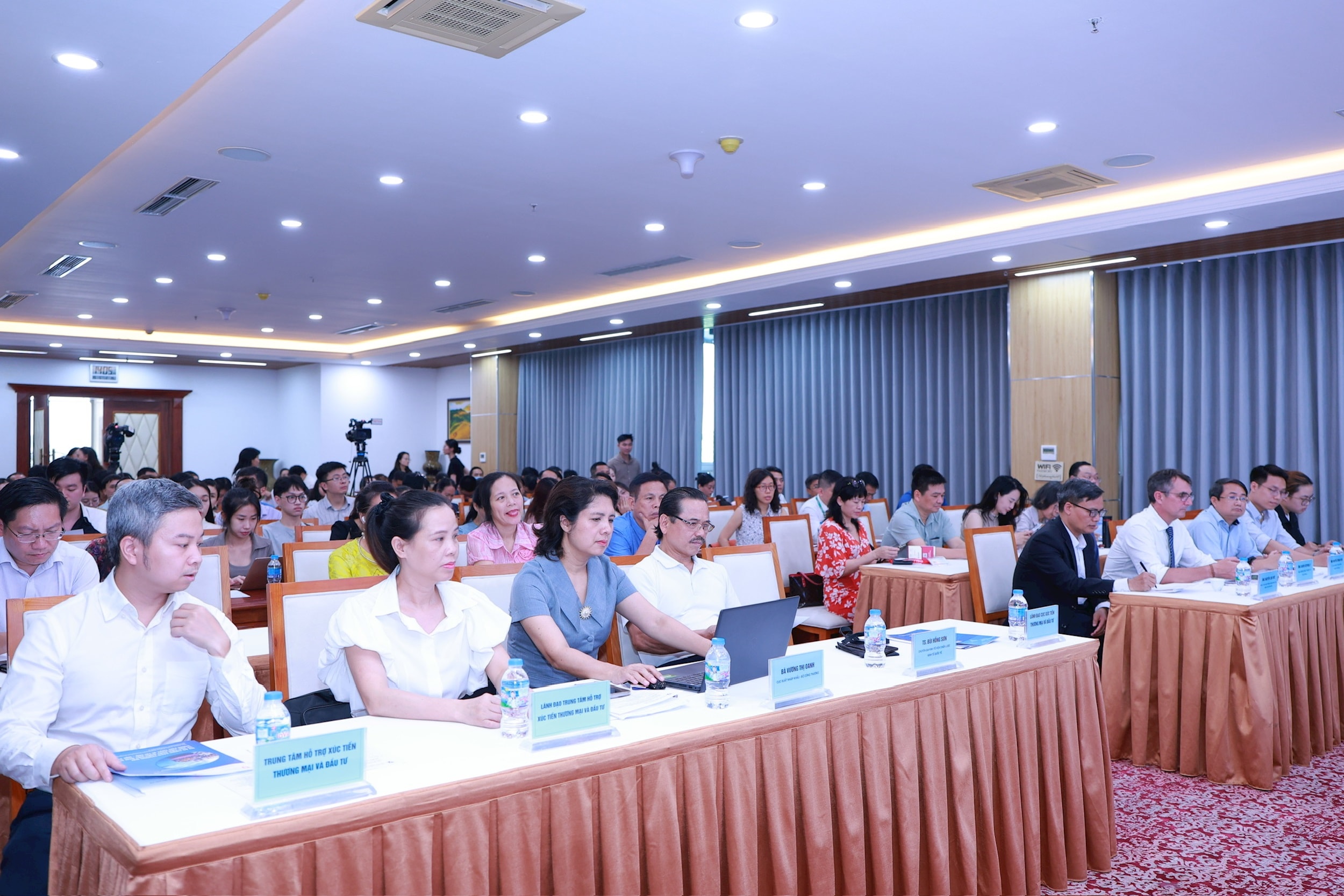
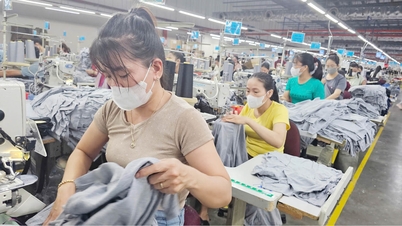
According to Ms. Vuong Thi Oanh, the localization rate in many industries such as electronics, automobiles, and precision mechanics remains low. The majority of domestic businesses only participate in low value-added stages such as packaging, simple components, or basic processing.
Notably, pressure from green standards is increasing. Regulations such as carbon-at-border accounting (CBAM) and ESG standards have become mandatory in many major markets such as Europe and North America.
"Any business that lags behind in obtaining the 'green passport' risks being excluded from the global supplier list," Ms. Oanh warned.
Besides environmental pressures, digital transformation has also become a matter of survival. Modern supply chains operate based on big data and real-time connectivity. If businesses continue to maintain manual management models and cannot connect with the systems of FDI partners, the risk of being excluded from the supply chain is very clear.
According to Mr. Nguyen Cao Duc, Deputy Director of the Institute for European and American Studies, current geopolitical shocks have altered the operational structure of global supply chains. Major economies are simultaneously promoting new strategies to reallocate production in a safer direction.
The relocation trend is opening up many opportunities for Vietnam, but most businesses have only shifted to the assembly stage, while core processes such as chips, core components, or foundational technologies still heavily depend on China.
We need to focus on raising technological and management standards.
Experts believe that in the context of significant restructuring of global supply chains, it is crucial not only to participate in the supply chain but also to gradually improve one's position within the global value chain.
To bridge the capabilities gap, Ms. Vuong Thi Oanh suggested that businesses need to quickly standardize their processes according to international standards, considering digital transformation and green transformation as vital investments rather than short-term expenses.
According to a representative from the Import-Export Department, businesses need to quickly develop an ESG roadmap, invest in technology and automation, and strengthen linkages instead of operating in isolation and in a fragmented manner.
"Only when business alliances of sufficient scale, technological capacity, and financial resources are formed can Vietnamese businesses meet large orders from multinational corporations," Ms. Oanh emphasized.
Mr. Nguyen Cao Duc also stated that requirements for ESG, green economy, circular economy, and traceability are no longer just trends but have become mandatory standards in many major markets.
Furthermore, in the context of rapidly developing digital commerce, digital data and digital transformation will become decisive factors in the competitiveness of businesses. Businesses that fail to leverage technology and data will face many difficulties when participating in global value chains.
According to Mr. Duc's recommendation, Vietnamese businesses should gradually participate in global supply chains first, then progressively improve their position through investment in research and development (R&D), brand building, improved corporate governance, and green transformation.
With multinational corporations continuing to expand their investments in Vietnam, domestic businesses, if they effectively leverage opportunities for technological transformation, management, and green standards, can absolutely become important links in the global supply chain, instead of just playing the role of subcontractors as before.
Source: https://hanoimoi.vn/tai-cau-truc-chuoi-cung-ung-toan-cau-co-hoi-nao-cho-doanh-nghiep-viet-972196.html




![[Photo] General Secretary and President To Lam presides over the meeting to approve the draft report on the results of the second inspection by the Politburo of the Standing Committee of the Hanoi City Party Committee.](https://vphoto.vietnam.vn/thumb/1200x675/vietnam/resource/IMAGE/2026/05/26/1779789811432_a2-bnd-4430-9620-jpg.webp)





































































Comment (0)