

The FireAId initiative is the result of a collaboration between the World Economic Forum's Fourth Industrial Revolution Centre, Koc Holding, the Turkish Ministry of Agriculture and Forestry, and Deloitte. As part of a pilot program in Turkey, an interactive forest fire risk map has been developed, leveraging AI and machine learning algorithms. Using multiple data sources including historical, meteorological, and geographical data, the map builds a model based on optimal resource allocation.

According to Weforum, thanks to successful implementation in Turkey, the accuracy rate in predicting forest fires 24 hours in advance has reached 80%. This information helps authorities prepare and respond proactively. The success of the pilot program demonstrates how effective AI is in assisting management agencies, saving lives, protecting property, protecting the environment, and significantly reducing damage caused by forest fires.
In addition to AI, the community is also exploring the application of other emerging technologies in wildfire management, such as drones.
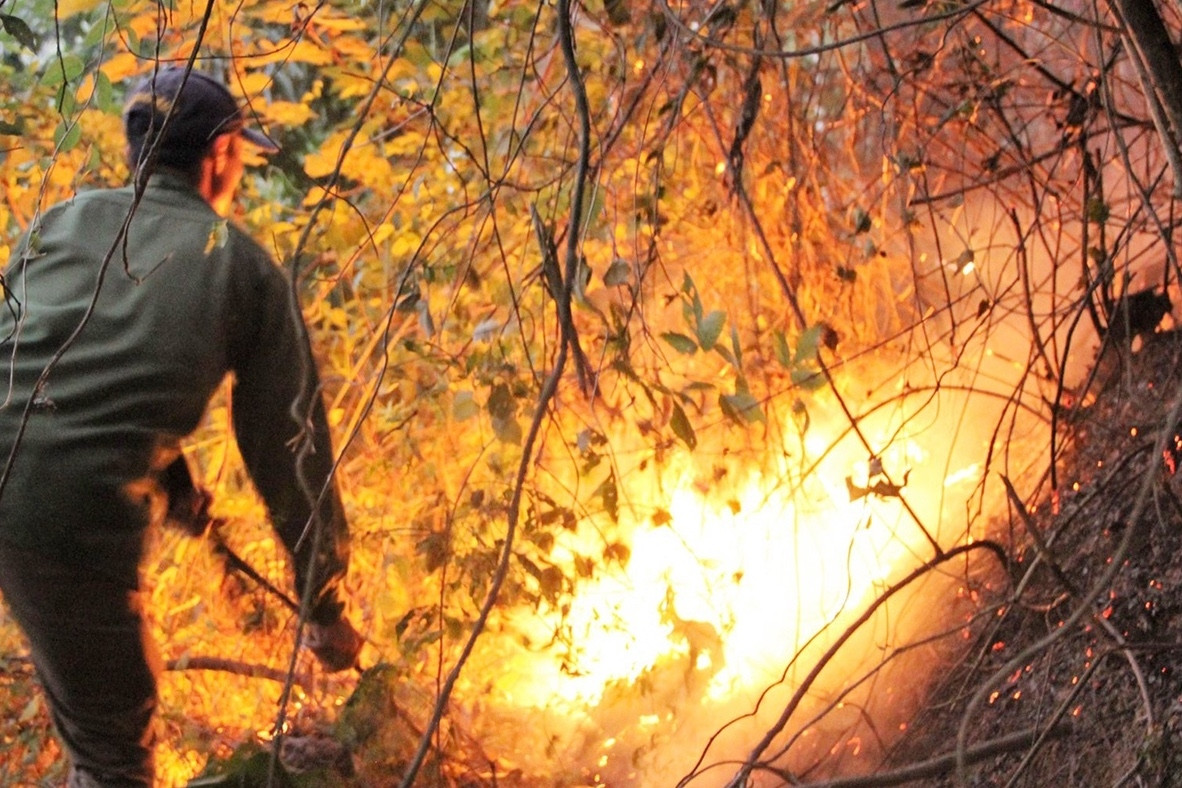
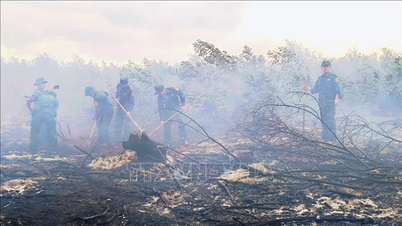
Climate change continues to be one of the most pressing concerns today, its impact clearly visible through the frequency, severity, and spread of wildfires. According to data from the National Interagency Fire Centre (NIFC), approximately 3 million acres of land have been affected by fires each year since 1982. Since 2000, that number has increased to 7 million acres per year.
Wildfires pose a significant threat to rural areas due to their ability to rapidly destroy homes, infrastructure, and farmland . Large numbers of wildlife are also lost. Beyond destroying natural resources and property, wildfires have serious health consequences for those living in affected areas.
At the 2023 World Economic Forum annual meeting in Davos, the forum released a report presenting the results of the FireAId pilot project in preventing forest fires. Koc Holding CEO Levent Çakıroğlu emphasized that the algorithm and source code could be made public, increasing the capabilities and impact of the FireAId initiative.
With more training data, the algorithm becomes more efficient and can make complex predictions based on many different variables. Previous AI technologies for predicting wildfires struggled to interpret nonlinear data patterns, while the new algorithm interprets them on a daily basis. Wildfires don't always follow a pattern, and machine learning models must overcome this. Scientists are applying many new techniques to optimize FireAId to handle unpredictable wildfires.
The global FireAId Alliance was established building on the success of the initial pilot and aims to raise global awareness of wildfire management by leveraging the power of AI. Prioritizing AI in wildfire prediction and prevention will lead to cost savings and increased efficiency at scale.
(According to Weforum)
Source


![[Photo] Prime Minister Pham Minh Chinh attends the Conference on the Implementation of Tasks for 2026 of the Industry and Trade Sector](/_next/image?url=https%3A%2F%2Fvphoto.vietnam.vn%2Fthumb%2F1200x675%2Fvietnam%2Fresource%2FIMAGE%2F2025%2F12%2F19%2F1766159500458_ndo_br_shared31-jpg.webp&w=3840&q=75)






















































































Comment (0)