

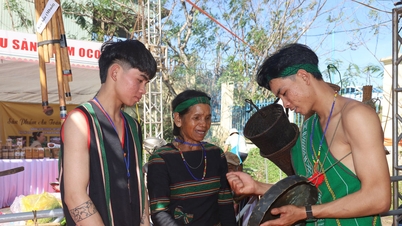
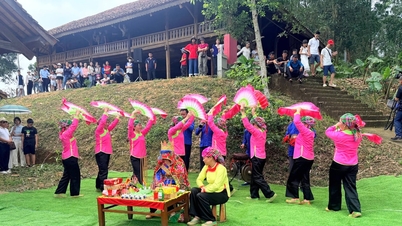
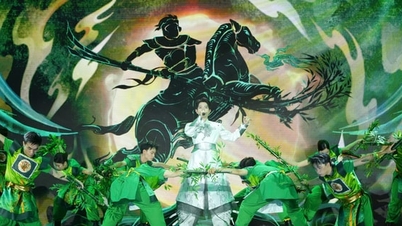
Throughout the rich series of events of the festival, there will be reenactments and performances of unique folk cultural and artistic forms, along with daily life activities, festivals, and folk games of the ethnic communities living in Gia Lai province.
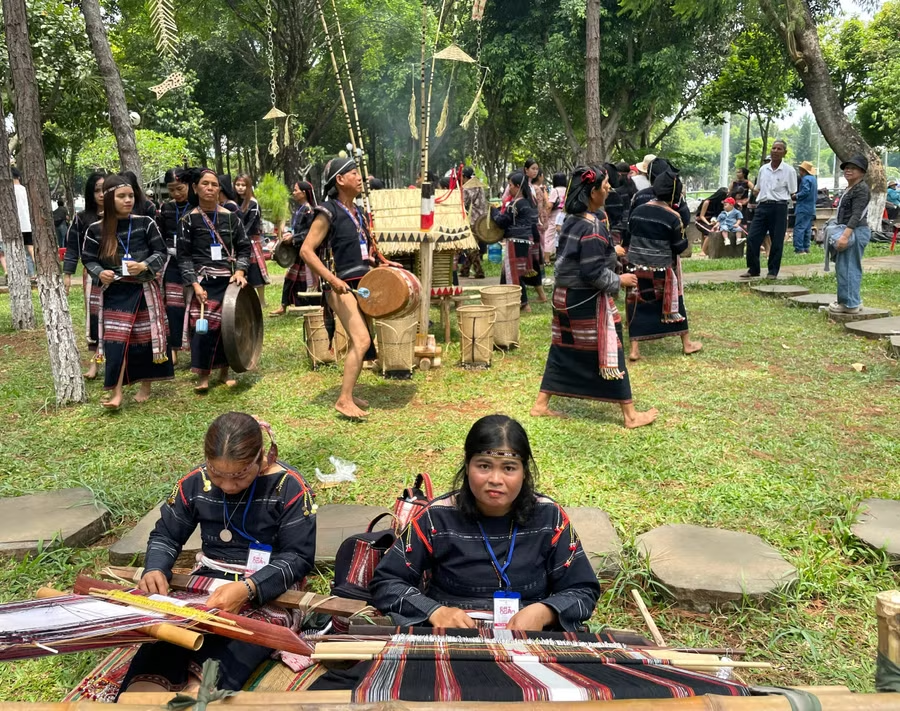
These include gong performances, statue carving, brocade weaving, rice pounding... by the indigenous people, or bamboo pole dancing, Xoe dance, and Muong dance performed by ethnic groups from the North who migrated to live on the plateau decades ago.
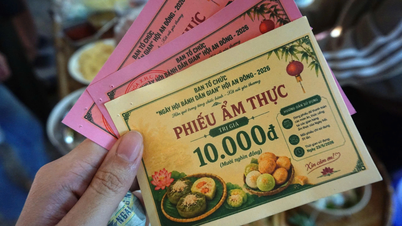
It becomes even more appealing when visitors are invited to join in the traditional dance or participate in preparing and enjoying the unique traditional dishes of the artisan groups.
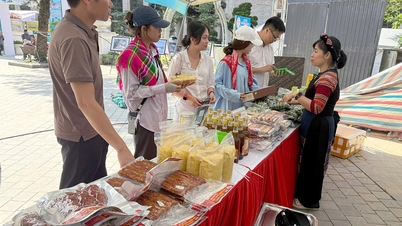
These cultural activities were enjoyed and highly appreciated by tourists from within and outside the province, as well as from abroad. According to our reporter's observations, a large number of visitors flocked to Dai Doan Ket Square (Pleiku ward) to join in the festive atmosphere, especially since the event coincided with the peak tourist season during the holiday and benefited from the media coverage of the National Tourism Year - Gia Lai 2026.
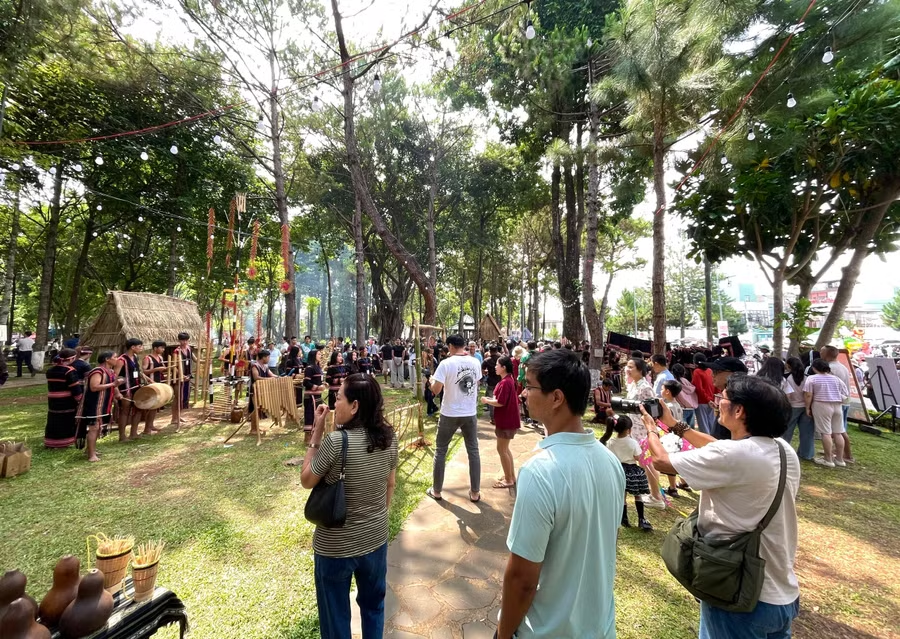
Nevertheless, the event still causes some confusion for tourists, as they find themselves "lost" amidst a forest of cultural traditions, struggling to distinguish between performances by the Bahnar, Jrai, Cham H'roi, H're, Tay, Nung, and Dao ethnic groups. Therefore, those experiencing it only feel a sense of admiration at first sight, along with beautiful check-in photos. As for "understanding to truly love"—as the French ethnologist Jacques Dournes put it—there remains a gap.
So how can we send useful, in-depth information to tourists? Those who have visited destinations in provinces and cities like Ho Chi Minh City, Nha Trang, Tay Ninh, etc., may recognize that a way to help tourists access information quickly and proactively is by placing QR codes in certain areas. Simply by scanning the code, tourists can immediately grasp the relevant details they need to find out.
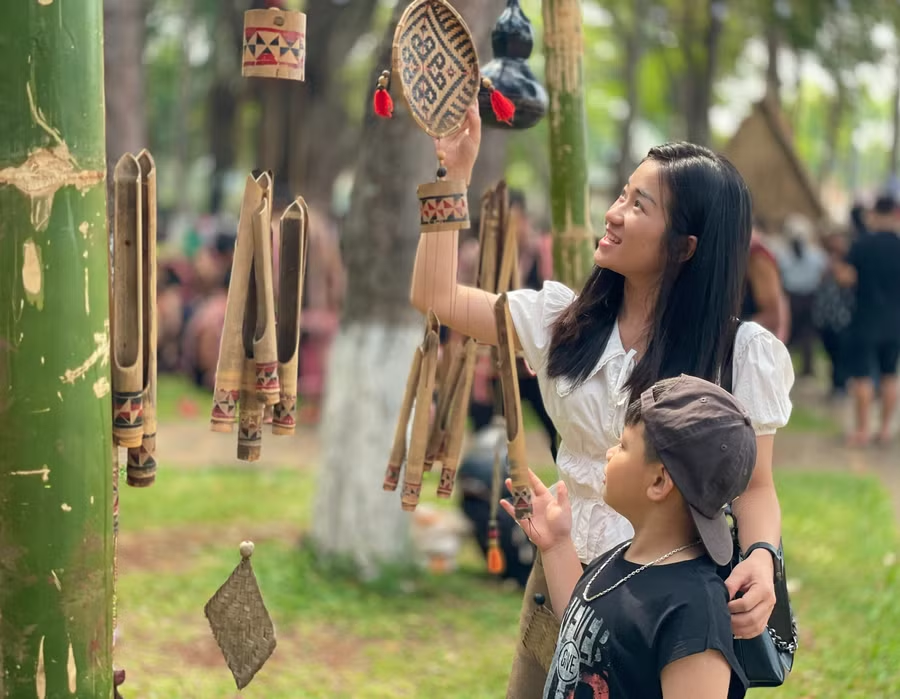
At the performance venues during the recent Gia Lai Province Ethnic Culture Festival, if QR codes were placed in each area, visitors could easily distinguish the unique cultural spaces of each ethnic group they were immersing themselves in and experiencing, from costumes and music to cuisine, with just a click of the link.
Or, more simply, in each area, just add a short bilingual (Vietnamese-English) explanatory board about the ethnic group and cultural activities being recreated, thereby highlighting each distinct cultural aspect.
Furthermore, according to our observations, many international tourists were enthusiastic about participating in the aforementioned large-scale cultural event. However, most of them explored and experienced the event on their own, with little interaction or assistance from locals or other tourists, perhaps due to the language barrier.
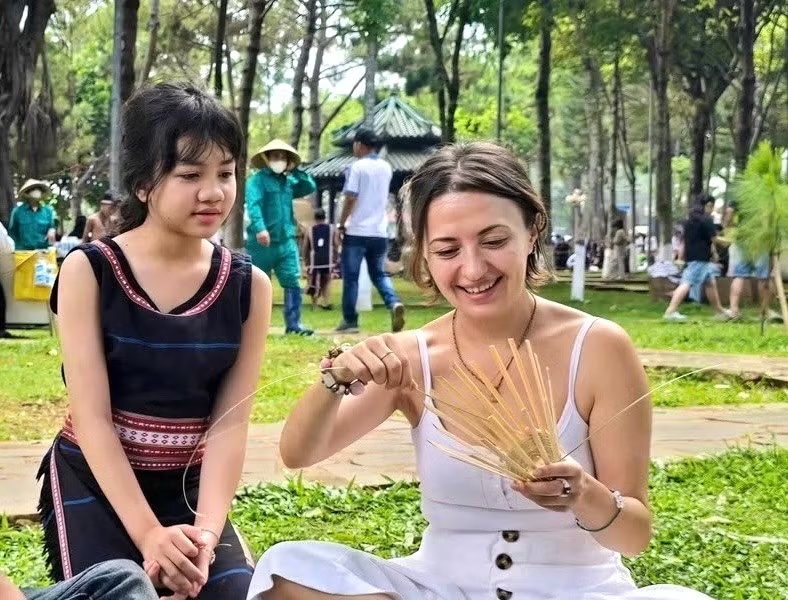
Perhaps, for some upcoming events and festivals, the organizing committee should deploy a force of volunteers proficient in foreign languages and who have received training to be ready to assist tourists in learning more about the local culture. From this, Gia Lai will score even more points thanks to its professionalism and friendliness in its approach to tourism.
For a long time, the Central Highlands has been a "dreamland" with so much to explore and discover. The more mystical it is, the more captivating it becomes. The migration of ethnic groups from the North to Gia Lai has created a cultural diversity not found in many other places. Therefore, strengthening communication and adding "depth" to festivals is a necessary goal to provide tourists with a profound experience, promising repeat visits to continue exploring.
Source: https://baogialai.com.vn/tang-chieu-sau-cho-le-hoi-post586677.html
























































Comment (0)