

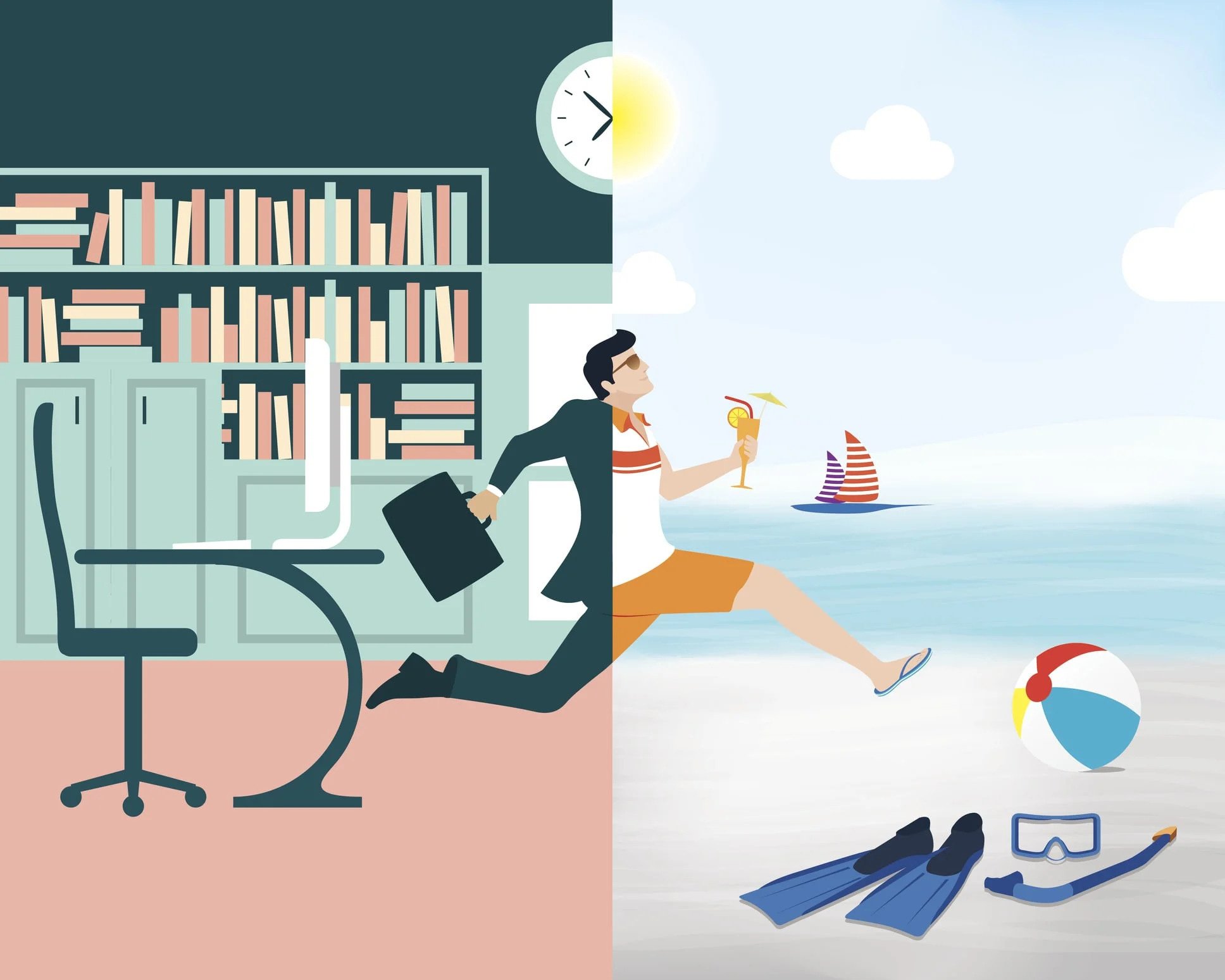
Young workers are not taking time off because they feel pressured to meet deadlines and perform well - Photo: BestColleges.com
That's the result of a new Harris Poll survey of 1,170 American workers. A large majority, about 78% of U.S. workers surveyed, said they weren't using all of their paid vacation days. This percentage was highest among Gen Z and millennial workers.
I don't want to take time off but I still have to work.
Libby Rodney, chief strategy officer at The Harris, said young workers reported they weren't taking time off because they felt pressured to meet deadlines and be productive. At the same time, they were also apprehensive about applying for paid leave, not wanting to appear lazy.
That doesn't mean they work day after day without a break. It just means they don't report to their boss.
In particular, millennials are the group most likely to "quietly quit" without notifying their manager. Nearly 4 out of 10 say they took time off without informing their manager.
Gen Z: People born from the late 1990s to the early 2010s.
Millennials: People born between 1982 and 1994.
The posts revealed that while not actually working, the millennial employees would occasionally move their mouse cursor to show everyone that they were still active on company messaging platforms like Slack or Microsoft Teams.
They also scheduled messages to be sent outside of normal working hours, to "check for existence," showing that they were working overtime.
"There's a culture of problem-solving going on," Rodney said. While Gen Z tends to be more open about taking time off work, millennials tend to handle problems quietly, avoiding attention.
"They'll find a way to achieve the right work-life balance, but that happens behind the scenes. It's not exactly a quiet resignation, but more like a secret vacation," Rodney added.
We need to build a culture of paid leave.
According to Rodney, when people feel the need to sneak off on vacation, it's a sign that at their workplace, the culture of paid leave isn't prevalent, or isn't viewed in a healthy way.
She added that company owners can reduce stress surrounding employee leave in several ways. They can be more transparent about how time off requests are made, normalize paid leave, support employees when they request leave, and set specific leave durations.
Unlimited paid vacation isn't necessarily the solution. Rodney says workers who receive 11-15 days of paid vacation per year are more likely to use all of their days. However, there's a significant drop when people receive 16 or more days.
Instead, employers can be creative in offering paid leave benefits at the company.
For example, allow the entire company to shut down for a week on major holidays, pay new employees to take time off before starting work, or require employees to take a certain number of days off each quarter to measure their level of absence throughout the year.
More broadly, many Americans in the survey believe the United States should adopt laws common in Europe to make boundaries on working hours and personal time more effective.
This includes policies for extended leave, such as a month off in August; longer lunch breaks; shorter work weeks (less than 40 hours); and protective regulations that allow for slower response times outside of working hours.
Source: https://tuoitre.vn/thich-lang-lang-di-choi-thay-vi-xin-nghi-phep-20240523050113475.htm



































































































Comment (0)