

The situation is complex, and the WHO warns of the risk of further spread.
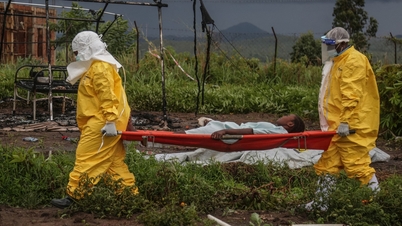
On May 17, the World Health Organization (WHO) officially declared the Ebola outbreak in the Democratic Republic of Congo and Uganda a public health emergency of international concern. As of May 18, Congo had recorded 516 suspected cases, including 131 deaths. Notably, four healthcare workers in Ituri province died from the Bundibugyo strain of the virus, raising concerns about cross-infection in healthcare facilities.
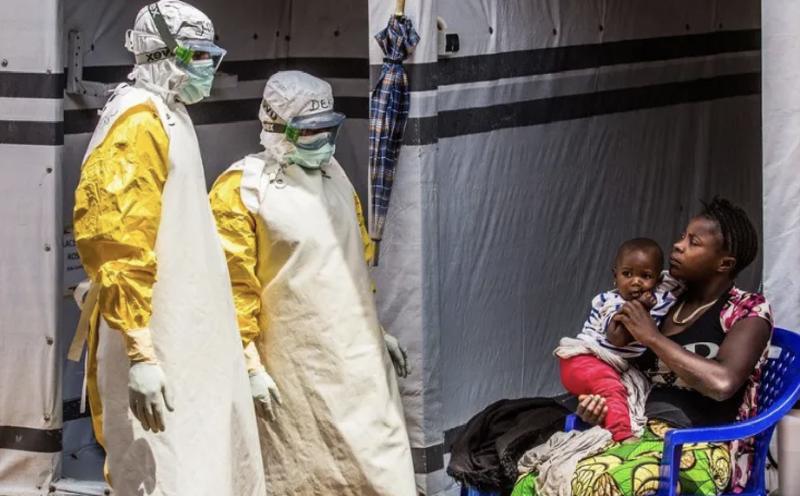
WHO warns of Ebola outbreak in Africa, which has killed more than 130 people. Photo: UNICEF
In Uganda, the disease also emerged through imported cases from Congo. This 17th outbreak is considered to have many unusual characteristics, with scattered clusters of deaths in the community, a high rate of positive test results, and a risk of spreading to border areas.
The MRC Centre for Global Infectious Disease Analysis (UK) warns that the actual scale of the outbreak may be larger than current statistics. There are currently six strains of Ebola belonging to the Orthoebolavirus genus, and global medicine still faces many challenges in treating the Bundibugyo strain.
Although not yet at a point requiring border closures, many countries have tightened health security measures to prevent the risk of entry.
In Asia, South Korea and China have mandated health declarations for passengers arriving from affected areas such as Congo, Uganda, and South Sudan. The Hong Kong Special Administrative Region (China) has prepared a quarantine facility in Penny's Bay to be activated if needed. Singapore, Japan, Indonesia, Thailand, and India have all implemented temperature checks at border crossings and health monitoring of passengers for 21 days – corresponding to the incubation period of the Ebola virus.
In the US, starting May 21st, new regulations require flights carrying passengers who have stayed in countries with outbreaks within the past 21 days to land at Washington-Dulles International Airport for thorough medical screening. This measure was implemented amid heightened caution following several incidents involving passengers originating from Congo.
Vietnam is proactively monitoring and preparing response scenarios.
On the morning of May 22nd, the Department of Disease Prevention ( Ministry of Health ) held an online meeting to review and implement measures to monitor and prevent the Ebola epidemic. To date, Vietnam has not recorded any cases of Ebola.
The Department of Disease Prevention and Control assesses that the risk of disease entering through international border crossings is real, especially through flights from areas experiencing outbreaks. The WHO assesses the risk to public health from the Ebola outbreak in Congo and Uganda as high within the affected countries and regions, and low globally, including in Vietnam.
Dr. Hoang Minh Duc, Director of the Department of Disease Prevention, stated: "The WHO assesses the risk of disease outbreaks to public health caused by the outbreaks in Congo and Uganda as high at the national and regional levels, and low globally, including in Vietnam."
To proactively respond to the risk of spread, the Ministry of Health has directed increased monitoring of incoming travelers, especially those returning from countries experiencing outbreaks. At the same time, it has requested localities to prepare rapid response teams, provide training in sample collection, and develop contingency plans for handling various situations.
Currently, the two leading institutions, the National Institute of Hygiene and Epidemiology and the Pasteur Institute of Ho Chi Minh City, have the capacity to test for Ebola virus using Realtime PCR and gene sequencing techniques under biosafety level III conditions. The Ministry of Health is also urgently supplementing diagnostic reagents, expected to arrive within the next 7-10 days, to ensure sufficient capacity to respond in case of an outbreak.
According to the Department of Disease Control, the Ebola virus is transmitted to humans from wild animals such as fruit bats, hedgehogs, and non-human primates, and spreads through direct contact with the blood, secretions, organs, or other bodily fluids of infected individuals, or through contact with surfaces and objects (such as bedding, clothing) contaminated with these fluids.
Source: https://congthuong.vn/thong-tin-moi-nhat-ve-dich-ebola-bo-y-te-san-sang-ung-pho-457759.html

![[Image] Hanoi Police officially crowned champions of V-League 2025/2026](https://vphoto.vietnam.vn/thumb/1200x675/vietnam/resource/IMAGE/2026/05/31/1780244769054_ndo_br_039d561b692be875b13a-jpg.webp)

![[Photo] Admire the coral "masterpiece" amidst the million-year-old heritage of Dak Lak province.](https://vphoto.vietnam.vn/thumb/1200x675/vietnam/resource/IMAGE/2026/05/31/1780221235105_anh-man-hinh-2026-05-31-luc-16-53-27.png)
![[Photo] The General Secretary, President and his wife begin their state visit to the Philippines.](https://vphoto.vietnam.vn/thumb/1200x675/vietnam/resource/IMAGE/2026/05/31/1780230559452_anh-man-hinh-2026-05-31-luc-19-28-11.png)
![[Photo] Solemn bathing ceremony and Buddha procession in Hue](https://vphoto.vietnam.vn/thumb/1200x675/vietnam/resource/IMAGE/2026/05/31/1780228263543_1-jpg.webp)


















![[Video] Sunset at Lap An Lagoon – Where the sun sets over the fishing nets](https://vphoto.vietnam.vn/thumb/340x192/vietnam/resource/IMAGE/2026/05/31/1780192137701_beach-landscape-sea-water-nature-grass-745871-pxhere-com.jpeg)


































![[Photo] Admire the coral "masterpiece" amidst the million-year-old heritage of Dak Lak province.](https://vphoto.vietnam.vn/thumb/402x226/vietnam/resource/IMAGE/2026/05/31/1780221235105_anh-man-hinh-2026-05-31-luc-16-53-27.png)





























Comment (0)